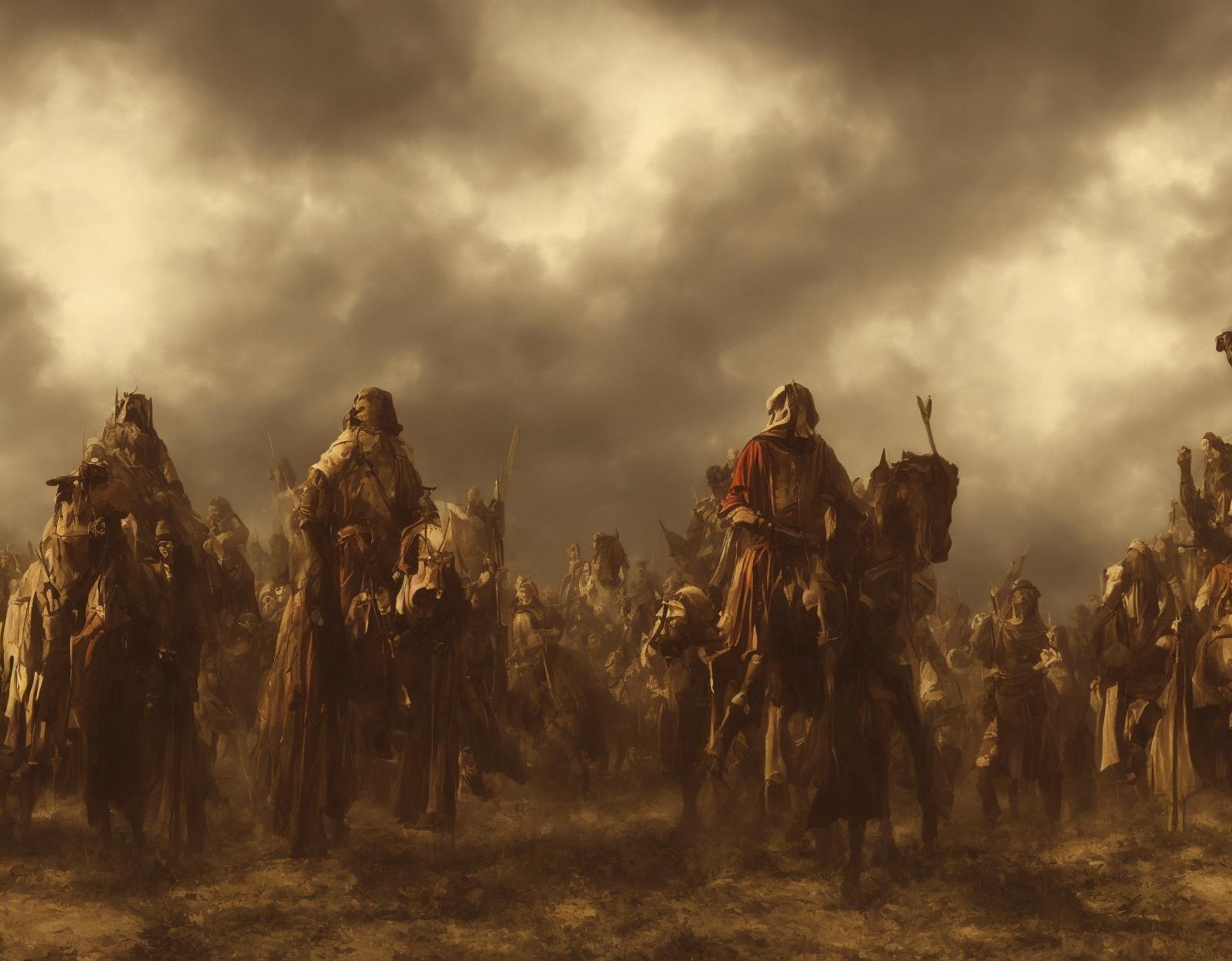
Templars Unveiled: Myths, Money, and the True History
The story of the Knights Templar belongs to a peculiar category of history that moves easily between documentary record and imaginative projection. From their modest foundation on the Temple Mount in Jerusalem in the aftermath of the First Crusade to their violent suppression in the early fourteenth century, the Templars were both a product of their turbulent age and the authors of a legend that would outlive them. Their white mantles and red crosses became symbols of religious-military zeal; their network of houses, preceptories, and castles expanded across Europe and the Levant; and their sudden fall—prompted by Philip IV of France’s arrests in 1307 and culminating in the execution of Grand Master Jacques de Molay in 1314—sparked centuries of questions, conspiracy theories, and cultural reinventions.
Yet to separate myth from reality we must insist on primary sources, papal bulls, contemporary chronicles, and not the novels, films, or frenzied speculation that later centuries produced. Documents such as the Concordat of 1128 and the Rule composed under Cistercian guidance, papal letters from Innocent II and Clement V, fiscal records, and notarial acts anchored the Templars in the administrative and military fabric of medieval Christendom. Archaeological remains—ruins of preceptories in England, France, and the Iberian Peninsula; excavations at their holdings in the Levant—help fill in how they lived and worked. Even so, gaps in the record left room for rumor: secret initiation rites, fabulous treasure, esoteric rituals, or hidden artifacts (from sacramental relics to the Holy Grail) were often projected onto this order because it combined sanctity, military prowess, and extraordinary wealth.
This article pursues a disciplined, narrative approach: it will follow the Templars’ origin, structure and daily life; their economic role and the sources of their wealth; the legal and political campaign that led to their arrest and dissolution; the corpus of myths that accreted afterward; and the long shadow they cast on later institutions, art, and popular imagination. Each section mixes factual grounding with analysis of why certain myths emerged. Rather than dismissing legends outright, we will ask how and why such legends were plausible to contemporaries and later audiences, and what surviving evidence actually supports or contradicts those tales.
Did you know? The order’s informal beginnings—Hugues de Payens and eight companions—are reliably attested in chronicles and later confirmations, and that small number is the origin of various symbolic numerologies attached to the Templars.
The tone here is deliberately atmospheric: the medieval world of swashbuckling knights and solemn cloisters lends itself to mystery, and yet the documents—letters, papal bulls, trial records—are often plain and administratively precise. Where the sources allow, we follow the paper trail. Where they do not, we trace the patterns of rumor and reception history. In doing so we meet figures who shaped the order and its fate: Hugues de Payens, the first master who secured recognition for a new brotherhood; Bernard of Clairvaux, whose eloquence and theological authority made the order acceptable to Christendom; Philip IV of France, whose fiscal crises and political ambitions intersected tragically with the Templars; Pope Clement V, an instrument and victim of royal pressure; and Jacques de Molay, the last Grand Master who died proclaiming innocence. The tale is at once legal, financial, devotional, and martial—and that hybridity explains much of its posthumous allure.
Origins and early role: Jerusalem, pilgrimage, and the first vows
The Knights Templar began as an experiment in the shadow of Jerusalem’s Temple Mount, where a small band of knight-monks intended to protect pilgrims traveling to the Holy Sepulchre and the holy places. The traditional founding date is c.1119–1120, when Hugues de Payens, a minor Champagne knight, and eight companions presented themselves at the court of King Baldwin II of Jerusalem, expressing a wish to dedicate themselves to guarding pilgrims and protecting the kingdom’s fragile communications. The group benefited from the broader momentum of the crusading movement: the capture of Jerusalem in 1099 had created a Latin kingdom that needed military resources, while pilgrimage traffic to the East had increased. The new brotherhood initially lodged on or near the ruins associated with the Temple of Solomon—hence their popular name, “Knights of the Temple” or Templars.
Formal recognition was slow but decisive. It was not until 1129 that the order secured papal approval in a broad public way; a council at Troyes, convened with the support of Bernard of Clairvaux, gave the Templars a formal rule and presented them as a religious order with a martial mission. Bernard’s letter, and the Rule he endorsed, placed the Templars inside the accepted monastic framework even as they retained distinctive features: brothers took vows of poverty, chastity, and obedience but engaged in armed service. This hybrid identity attracted recruits across Europe and drew donations of land and revenue. By the mid-twelfth century the Templars had established preceptories—estates that combined agricultural production with administrative functions—in England, France, Iberia, and the Holy Land. These houses were crucial to sustaining campaigns and organizing supplies for the East.
Did you know? The famous image of two knights on a single horse appears on early Templar seals and reflects initially small numbers and vows of poverty; later it came to symbolize fraternity and humility.
The Templars’ early military role reflected both pragmatic logistics and ideological concerns. They garrisoned frontier castles and acted as a mobile reserve for the Latin kings; their presence on certain roads and at key fortresses reduced raiding and secured routes for crusaders. At the same time, they were a symbol: the image of disciplined, pious warriors dedicated to protecting Christendom resonated strongly with Western patrons and donors. They also developed a reputation for discipline, strictness of rule, and communal life that stood out among other warbands. Their successes and occasional failures were recorded by chroniclers such as William of Tyre, and later, by kings and notaries who documented donations, treaties, and military campaigns.
One of the lasting features of their early years was how quickly they expanded from a small protective brotherhood into an international order with centralized leadership and significant economic holdings. A traveler or pilgrim in the mid-twelfth century might see the Templar cross in places as far-flung as London, Lisbon, and Antioch. That geographic reach laid the groundwork for both their strength and their vulnerability: wealth and influence attracted both royal patronage and eventual royal envy.

Rule, organization, and daily life: monastic discipline in a martial order
Understanding the Templars requires attention to their Rule and organizational structures. The Rule approved at Troyes in 1129 drew heavily on Cistercian monastic practices and on the moral authority of Bernard of Clairvaux, who advocated for the combination of martial activity and contemplative life. The Templars took the three canonical vows—poverty, chastity, obedience—but their poverty functioned under a distinctive institutional logic: while individual brothers were supposed to hold nothing personally, the Order as a corporate body could and did own land, castles, and resources necessary for its mission. This legal distinction—corporate ownership—was critical to their capacity to operate across political boundaries.
Did you know? Letters of credit and deposit practices used by the Templars allowed a pilgrim or noble to deposit funds in Europe and withdraw them in the Holy Land, a rudimentary precursor to modern banking instruments.
Hierarchy in the Order was precise. At the head stood the Grand Master, elected by the chapter and accountable to the community and to the papacy. Under him were marshals and constables who oversaw military matters, seneschals who administered estates, and a network of preceptors who managed preceptories—the local administrative units that served both as pastoral centers and as revenue producers. Brothers were divided into knights, sergeants (non-noble professional soldiers), chaplains, and serving brothers who performed domestic and agricultural labor. This division created a complex economy and a chain of command that mirrored feudal organization while remaining distinct because of the vow structure.
Daily life blended prayer and military training. Monastic offices—matins, lauds, prime, terce, sext, none, vespers, compline—structured the day, and chaplains administered sacraments and spiritual guidance. Training and maintenance of weapons, horses, and fortifications occupied significant time. Preceptories served as training centers and logistical hubs, producing horses and supplies and managing tenants on Templar lands. Financial administration was meticulous: the Order kept inventories and accounts that allowed it to direct resources between Europe and the Levant, sustain garrisons, and finance military expeditions.
The Rule also contained provisions intended to prevent abuses: severe penalties for theft or sexual misconduct, limits on hunting or entertainment, and strictures on the conduct of brothers. Yet the Order was not immune to human failings; like other medieval institutions, it faced internal disputes, occasional breaches of discipline, and charges from outsiders about the behavior of individual members. Contemporary chroniclers sometimes criticized the Templars—especially when they appeared to act as autonomous power brokers—but many also praised their bravery and piety.
Did you know? The arrests on October 13, 1307, are sometimes linked to the superstition of Friday the 13th; while the coincidence contributed to later folklore, the day’s notoriety grew only in subsequent centuries.
The Templars’ corporate nature allowed them to negotiate privileges. They enjoyed papal exemptions from local episcopal authority in many cases, the right to build chapels, and sometimes exemption from certain taxes. Such privileges made the Order attractive to donors seeking spiritual benefits and effective management of estates, but they also made the Templars politically potent and occasionally resented by bishops and landlords who saw their jurisdiction as encroaching.

Wealth, banking, and the economic network: how the Templars funded crusade and landholding
One of the principal reasons the Templars captured public imagination—then and now—was their extraordinary economic footprint. The Order accumulated donations in land, money, and privileges across Europe and the Near East. Donors included peasants, nobles, monarchs, and entire municipalities who sought spiritual benefits, protection of pilgrimage routes, or political favor. The pattern of donations often reflected relationships: noble patrons might endow a preceptory with land; towns might grant market privileges; kings might cede castles or rights in return for Templar garrisons. These assets produced income through rents, agricultural surplus, and sometimes commercial activity.
The Templars are often credited with early forms of banking. They held funds for pilgrims and nobles and created a system where money deposited in one preceptory could be withdrawn in another—using letters of credit or a notarial instrument. Contemporary accounts attest to transactions that resemble deposit and transfer systems, and European rulers sometimes used Templar treasuries for loans or fiscal operations. The Order’s involvement in finance did not mean they were bankers in a modern sense, but their international structure and habit of record-keeping made them reliable stewards of wealth for clients who needed to move finances across political boundaries.
Did you know? The notion that Templar rituals involved a strange idol called Baphomet originated in confessions extracted under torture; the word’s meaning and origin remain debated among historians and philologists.
Their economic activities included direct management of agricultural estates, leasing out lands, collecting tithes and rents, raising funds through appropriation of bequests, and engaging in trade when necessary to provision outposts. The Templar fleet in the Mediterranean supported shipping, transport of pilgrims, and military logistics; it was a strategic asset. The Order’s capacity to mobilize resources rapidly across Europe and the Levant was one of its defining strengths, enabling it to garrison castles in the Holy Land and to fund military expeditions when kings or nobles lacked immediate cash.
This financial power produced both praise and suspicion. Chroniclers and officials noted the Order’s capacity to raise and hold sums, and that visibility made them targets for royal demands, especially under fiscal duress. The idea of a hidden Templar treasury likely has roots in the simple fact that the Order did centralize funds and moved them geographically; to observers unfamiliar with corporate legal forms, large amounts of wealth held by a quasi-religious, quasi-military body could seem secret and threatening. Yet precise inventories and notarial records from various preceptories show very ordinary administrative practices—accounts, receipts, and property registers—rather than a single legendary hoard.

Arrest, trials, and dissolution: politics, torture, and papal decisions
The dramatic collapse of the Templars was not simply the result of doctrinal suspicion but of political calculation and fiscal necessity. By the late thirteenth and early fourteenth centuries Philip IV of France—later called Philip the Fair—confronted acute fiscal pressures, frustrated feudal relationships, and the need to assert royal authority over independent institutions. Philip’s conflict with Pope Boniface VIII and the general mood of asserting royal prerogatives against ecclesiastical power provide the broader political backdrop for his action against the Templars.
Did you know? Portugal’s Order of Christ, founded in 1319, used former Templar resources to fund maritime expeditions that would underwrite Portugal’s Age of Discoveries.
On October 13, 1307, Philip ordered the simultaneous arrest of many Templars across France, charging them with heresy, sodomy, idolatry, and other crimes. The arrests were dramatic and coordinated: Templars were seized, their property inventoried, and many subjected to intense interrogation and torture. Under torture, several confessed to charges that later they would recant. Torture as a legal practice was common in inquisitorial proceedings of the period and shaped the evidentiary record: confessions obtained under duress cannot be treated as reliable testimony by modern standards, and contemporaries too recognized the problematic nature of such methods.
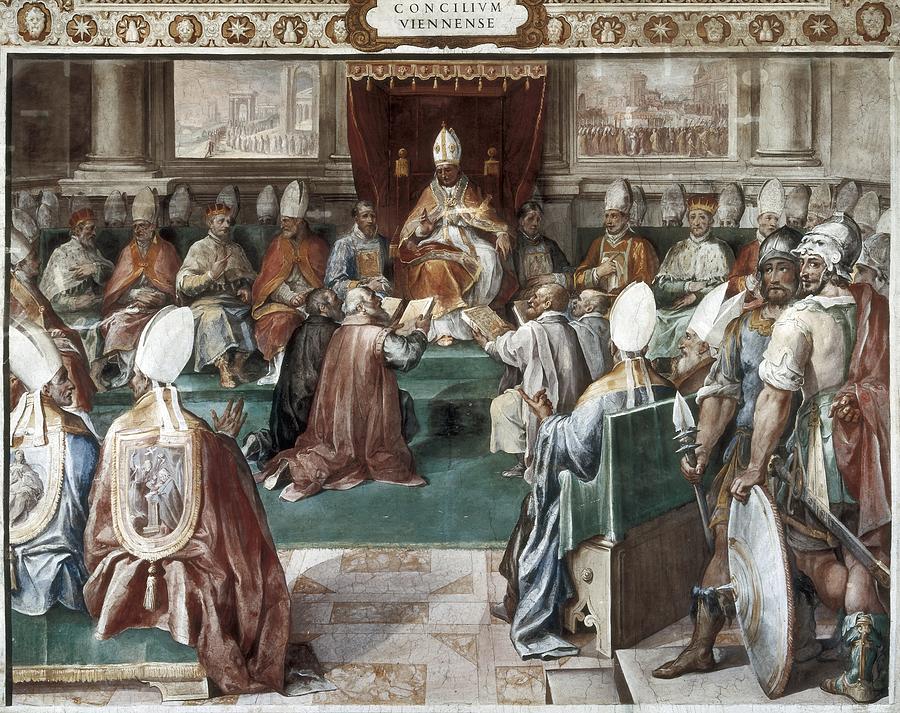
Pope Clement V initially hesitated but eventually acceded to a papal inquiry. The papal curia sought to investigate the charges and to assert its jurisdiction. The trials stretched across years and jurisdictions; some Templars were absolved, others convicted in regional proceedings, and some punished with imprisonment or penance. The decisive legal act was the papal bull Vox in excelso (1312), by which Pope Clement V suppressed the Order as an institution, though he did not condemn every individual member. The Order’s assets were, in principle, to be transferred to the Hospitallers, another military order; in practice, the disposition of property varied regionally and kings often seized or appropriated Templar holdings.
The final, symbolic chapter came with Jacques de Molay, the last Grand Master, who after years of imprisonment and retraction of earlier confessions was burned at the stake in 1314 in Paris. Contemporary chroniclers record that de Molay protested his innocence and urged a papal review; legend added that he cursed Philip IV and Clement V from the pyre, predicting they would soon face divine justice—both men died within months, an occurrence which fed the aura of conspiracy and vindication and influenced later myths.
Did you know? Both Pope Clement V and King Philip IV died within a year or so after Jacques de Molay’s execution, an outcome that fed later tales of prophetic curses but which can also be read as coincidence within a period of high mortality and political turmoil.
Legal historians have emphasized that the Templar trials were a complex mixture of politics, legal procedure, coercion, and local negotiation. Modern historians such as Malcolm Barber, Alain Demurger, and Helen Nicholson have shown that while unacceptable behavior may have occurred among individuals, the sweeping charges of heresy were not substantiated in the manner required by papal courts when free from royal pressure. The process bears the marks of a medieval state using available legal mechanisms to dismantle a body whose independence threatened royal prerogative and whose wealth was tempting in times of fiscal crisis.

Myths, legends, and cultural reinvention: the Holy Grail, treasure, and Freemasonry claims
After their suppression, the Templars became a fertile substrate for mythmaking. Several themes recur in post-medieval representations: the order as guardians of esoteric knowledge or relics (including claims about the Holy Grail), the existence of a secret hidden treasure confiscated or concealed at the time of arrest, and alleged ties between Templar ritual and later organizations like Freemasonry. Each of these claims has to be evaluated against documentary evidence and the historical processes of reception.
The Grail legend is medieval in origin but only rarely connects to the Templars in contemporary sources. It was in later romantic literature and nineteenth-century Gothic revival that authors and antiquarians began to weave the Templars into Grail narratives, often linking the order to lost knowledge or sacred artifacts allegedly found in Jerusalem. While imaginative and powerful culturally, these links lack direct documentary support. Similarly, the notion of a single enormous treasure hidden by the Templars is improbable in light of evidence: property inventories, transaction records, and royal confiscation registers suggest assets were tangible and traceable, widely distributed across Europe. Some assets were indeed taken by the crown or dispersed, and some local treasures might have been hidden or moved during the chaos, but a global secret hoard more easily inhabits fiction than archival evidence.
Claims of a direct institutional continuity between medieval Templars and modern Freemasonry are also problematic. Freemasonry, as an organized fraternity, has eighteenth-century origins and draws on ritual, symbolic craft, and Enlightenment-era sociability. Masonic mythologies sometimes invoke Templar survival to confer antiquity and prestige; Masonic documents and rituals in some branches adopt Templar symbols, but there is no credible documentary chain linking medieval Templar structures and initiation rites directly to the early modern lodges. Historians of both movements caution against reading symbolic reuse as proof of uninterrupted lineage.
Why did such myths take hold? The Templars’ combination of monastic discipline, military presence, international reach, and sudden, scandalous fall made them an ideal canvas for projection. In times of political or cultural anxiety, groups search for secret masters, hidden treasures, and narratives of betrayal. The vividness of medieval ritual and the partiality of surviving records—many written by enemies or after the fact—left interpretative gaps that later authors filled with speculation. The Templars’ surviving iconography—the beauséant banner, the two-knight seal, the white mantle with red cross—offered symbolic hooks for imaginative re-creation.
Legacy and reinterpretation: orders, memory, and modern uses of the Templar past
The immediate institutional legacy of the Templars was varied. In Portugal, the Order of Christ was founded with Templar personnel and properties transferred into a new national framework; this continuity had political and economic motives and functioned as an instrument of royal policy for overseas expansion in the fifteenth century. In other polities, Templar assets passed to the Hospitallers or were seized by crowns, and the Templar name largely disappeared as a legal entity. Nonetheless, the memory of the order persisted in local toponyms, oral traditions, and notarial archives that preserved property histories.
In the early modern period and especially from the Enlightenment onward, the Templars were reimagined repeatedly. Enlightenment writers sometimes depicted their suppression as a martyrdom of a chivalric and pious brotherhood; romantic and Gothic authors transformed them into secret keepers or villains; nationalist movements adapted Templar imagery for symbolic capital. The nineteenth-century Gothic revival in architecture and literature drew heavily on Templar motifs, as did later artistic and popular depictions that emphasized mystery and conspiracy.
Modern scholarship has sought to retrieve a balanced picture: to celebrate the Order’s organizational innovation and military role while exposing the political causes of its downfall. Historians have valuable tools—archival research across national and episcopal repositories, trial records transcribed and published in modern editions, and archaeological surveys of preceptory sites—that allow a grounded reconstruction of Templar life. The Templars thus remain a subject where rigorous academic history interacts with popular fascination, and the best modern accounts try to explain both the historical reality and the cultural reasons for the Templar legend’s long life.

Conclusion: between document and fable—what the Templars teach us about medieval power
The Knights Templar exemplify how a medieval institution can be both astonishingly well documented in administrative detail and surprisingly open to myth. Their Rule, preceptory records, papal bulls, and trial transcripts show a complex, efficient, and sometimes contentious organization. They were knights and monks, administrators and warriors, stewards of property and, occasionally, creditors. Their success derived from an ability to combine spiritual legitimacy with practical competence—managing estates, defending frontiers, and mobilizing cross-regional resources.
At the same time, the Templars’ distinctive features—international presence, relative autonomy, and corporate wealth—made them particularly vulnerable to royal predation. When the politics of early fourteenth-century France favored decisive action, and when a monarch with fiscal motives and political grievances confronted a semi-autonomous, wealthy institution, the result could be catastrophic. The trials of 1307–1314 show how legal forms and coercive methods can be used to legitimate political objectives. The narrative of heresy, while partially dependent on confessions obtained under torture, reflects the darker side of medieval justice and of the instrumentalization of ecclesiastical procedure by secular power.
Finally, the ongoing afterlife of the Templars reminds us that history is never wholly a record of past events but also a conversation with later generations. The appetite for mystery, the hunger for ancestral connections, and the political or cultural needs of later eras have repeatedly refashioned the Templar image. For historians, the duty is to keep returning to the sources, to differentiate reliable witness from fiction, and to explain why certain fantasies—about treasure, relics, or secret rites—persist. For readers, the Templar narrative offers a rich field where economic history, military history, religious devotion, and myth converge. In that convergence, the medieval world remains vividly present: not as an archive of secrets waiting to be uncovered but as a lived reality whose traces we can interrogate and interpret.
How we verify this article
By the History Unlocked editorial team
This text is built on historical facts stored in our database and drafted with AI assistance. No signed human review is recorded for this article. Report any inaccuracy: we correct it and update the modified date.
Updated on
AI-assisted drafting.
Read our editorial standardsEnjoyed this? Discover more articles in the category Knights Templar