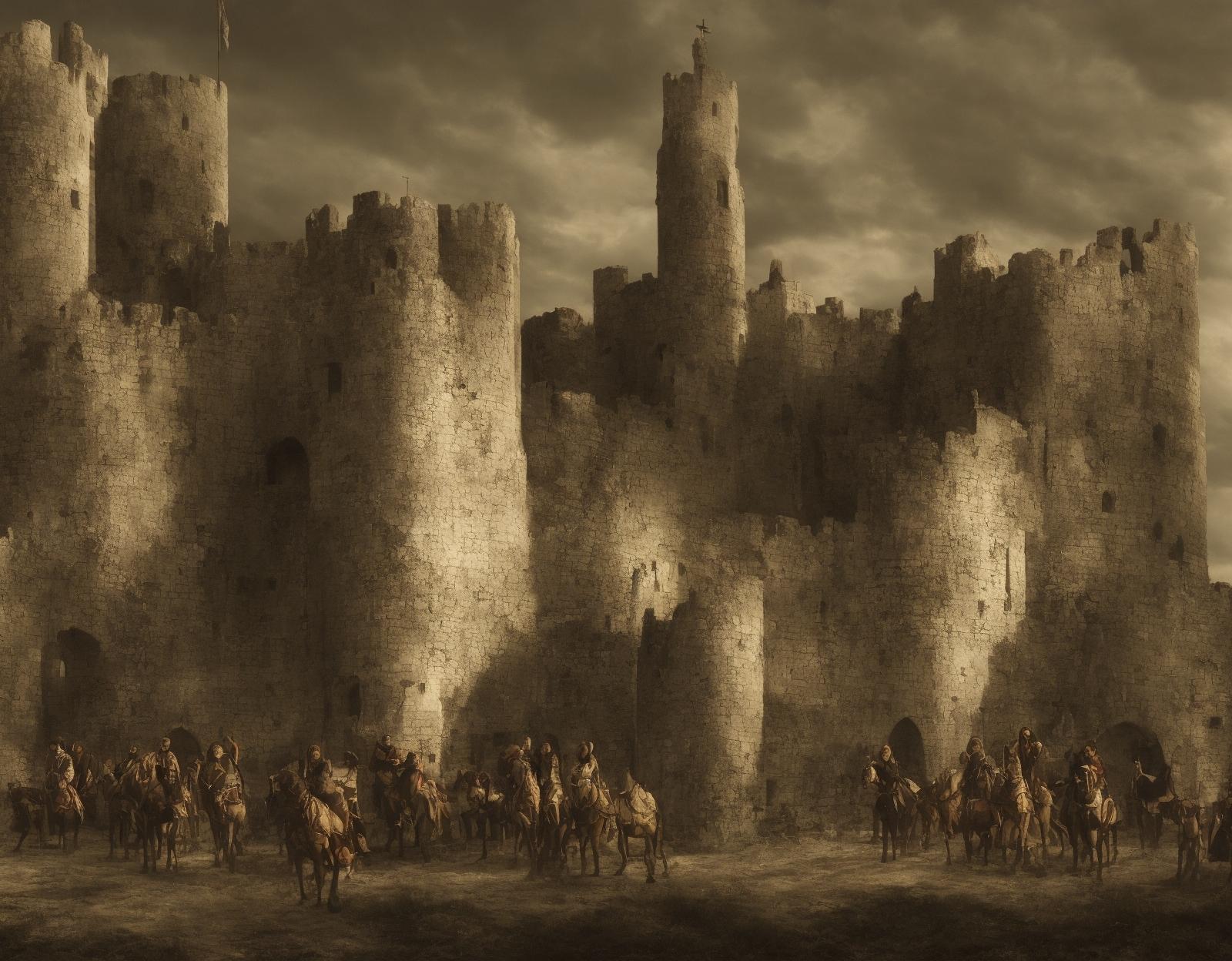
Crusades and the Holy Land: Secrets, Sieges, and Shadows
The air of the eastern Mediterranean in the late eleventh century carried a different sort of wind: not a maritime breeze but a current of purpose, fear, and rumor that would sweep thousands of strangers across continents. What began as Pope Urban II's call at Clermont in 1095 morphed into a series of campaigns, sieges, alliances and betrayals that reshaped the medieval world. The Crusades to the Holy Land have been told in many voices — clerical histories, chronicles of knights, Muslim court annals, and the whispered legends that grew in the decades after each campaign — yet the reality is both clearer and stranger than the myths. The motives that drove men and women to journey, the brutal logistics of moving armies, and the fragile polities that emerged in the Levant combine into a tapestry of devotion, greed, and pragmatic statecraft.
This narrative will take the reader along those dusty roads and into the stone fortresses, reconstructing the material and human textures of the Crusader experience. We will listen to the rhetorical thunder of papal sermons and then step into the cramped hulls of transport ships; we will stand beneath the battered walls of Antioch and Jerusalem and attempt to see what commanders on both sides saw. Along the way the story will examine lesser-known details: the everyday coexistence in port towns, the role of naval power, the indispensable contributions of local levies and mercenaries, and the surprising legal and cultural innovations that the Crusader states produced. The investigation privileges primary, verifiable facts while preserving a sense of mystery — the kinds of unanswered questions and small enigmas that scholars still argue over in footnotes and seminars.
Rather than a linear chronicle of battles alone, the structure that follows maps the Crusades as a series of interlocking phenomena: the ideological mobilization in Europe; the practical realities of movement and supply; the military culture and siegecraft in the Levant; the governance and alliances of the Crusader states; and the cultural entanglements among Latin Christians, Byzantine Greeks, Muslims, Jews and others in the region. Each section blends the large-scale events with the micro-histories of people and places to reveal how the same campaigns could be remembered as holy pilgrimage by some and as episodes of catastrophic violence by others. Expect dates, names, and documentary anchors—Real events, real sources—presented in a voice that seeks to engage as a storyteller and to provoke as a historian.
Did you know? Pope Urban II’s sermon at Clermont is preserved in several versions; Fulcher of Chartres’ account is often used as the most direct eyewitness testimony.
The Call to Arms: Origins and Motivations
The First Crusade did not arise from a vacuum. The backdrop was a Europe undergoing religious reform, demographic growth in some regions, and the political shocks of the Byzantine world’s plea for help after the Seljuk Turks' victory at Manzikert in 1071. Pope Urban II’s speech at Clermont in 1095, reconstructed from several contemporary accounts (Fulcher of Chartres, Robert the Monk, and the Gesta Francorum), fused spiritual incentives—remission of sins, the promise of pilgrimage—with temporal rhetoric about aiding fellow Christians and recovering sacred sites. Urban’s sermon resonated in a Europe where personal salvation, feudal obligation, and a growing culture of militancy among knights intersected. But motivations were not uniform: for many nobles, crusading offered an outlet for violence, a chance at land and title; for peasants and urban poor, it promised liberation and heavenly reward; for the Byzantine emperor Alexios I Komnenos, it was a geopolitical gamble to restore lost lands and enlist Western military aid.
The ideological framing mattered. Crusading language transformed a fight into a penitential pilgrimage. The Church endowed participants with spiritual benefits—indulgences—that altered how warfare was perceived: killing in the context of a holy war could be interpreted as meritorious rather than sinful. Recruitment mechanisms involved bishops, monasteries and often charismatic lay preachers. The enthusiasm that followed Urban’s call saw contingents of all ranks, from knights to simple foot-soldiers, join the campaign. Yet the era’s chroniclers also reveal darker incentives: debt relief through mass emigration, elimination of rivals, and simple opportunism at the frontier. The papal message was never the sole factor.
Crucially, the First Crusade’s success owed as much to the military and political fragmentation of the Islamic world in the Levant as to Western zeal. The Seljuk Sultanate had fractured into competing beyliks, and local emirs often fought each other. At times, alliances formed across religious lines against common foes. The Byzantine Empire’s internal weakness had opened the door for Turkish advance; paradoxically, Byzantium’s partnership with Western forces produced mutual distrust as well as collaboration. Byzantine leaders required oaths of fealty and territorial concessions from Latin princes—promises that would later be remembered as betrayals by some Western chroniclers.
Did you know? Venice agreed to transport the Fourth Crusade’s forces in exchange for a huge fee; when the crusaders failed to pay, the diversion to Zara and later Constantinople became possible.
The rhetoric of sanctity, however, was crucial in shaping how the Crusades were remembered. Pilgrimage images — the protection of the Christian flock and return of sacred relics — transformed military conquest into a moral quest. The recovery of Jerusalem in 1099 was celebrated across Latin Christendom as the culmination of a divinely blessed venture, even as it involved mass violence against the city's Muslim and Jewish inhabitants. That paradox—sacred intent colliding with devastating reality—becomes a recurring theme in Crusader history: sanctified by prayer, complicated by politics, and marked by acts that would echo through centuries.

Logistics and Journeys: Routes, Ships and Armies
The Crusader campaigns were as much feats of transport and logistics as of arms. Moving an army across the breadth of medieval Europe, and then across the waters into the Levant, required networks of supply, seasonal calculation, and an assortment of vessels. Contemporary accounts make clear the hardships: hunger, disease, desertion, and the merciless arithmetic of supply often shaped campaign outcomes as decisively as any battle. The routes taken by crusaders varied: some marched overland through Anatolia, others traveled by sea from Italian ports, and many combined both approaches in successive expeditions. The First Crusade famously involved overland columns that suffered in Asia Minor before reaching Antioch — a reminder that geography, not only enemy action, killed as many as conflict.
Naval power was a decisive factor in later crusades. The Italian maritime republics—Venice, Genoa, Pisa—both facilitated and profited from crusading ventures. Venice’s role in the Fourth Crusade (1202–1204) and in supplying transport and siege materiel underscores how commercial interests and crusading zeal often intertwined. Ships provided more than mere passage; they were the lifeline for besieged ports like Acre, enabling relief, trade, and the projection of force along the coast. Control of Mediterranean sea lanes thus translated into strategic advantage for those who could muster fleets and negotiate terms with local powers.
Did you know? The fortress Krak des Chevaliers was expanded and fortified significantly by the Knights Hospitaller in the 12th and 13th centuries, becoming one of the most powerful Crusader castles.
The composition of crusading forces changed over time. The early campaigns were dominated by Western knights and their retinues, but as the Latin states in the Levant stabilized, local levies, Frankish settlers, mercenary knights, Genoese and Venetian sailors, and even non-combatant pilgrims became part of a complex demographic mix. Language barriers and cultural differences required pragmatic accommodations: the use of interpreters, marriage alliances, and sometimes outright employment of local troops. Disease was a chronic companion; dysentery, scurvy, and other ailments could decimate ranks. The presence of women—camp followers, wives of knights, and independent pilgrims—complicated the logistics but also reinforced the social aims of colonization: to settle, reproduce and replicate Latin Christian institutions.
Supply lines had to be meticulously maintained. Fortified coastal cities such as Jaffa, Acre, and Tyre served as hubs where shipments of grain, timber and siege equipment arrived. Control of these ports allowed the Crusader states to import agricultural produce and artisans while exporting raw materials and taxes. The relationship between inland fortresses and maritime nodes often determined strategic priorities: keeping open a single port could sustain a duchy or principality for years. The fall of Acre in 1291 dramatically demonstrated how the loss of a maritime hub would doom the remaining Latin enclaves inland.
The human dimension of these journeys is particularly poignant. Chronicles preserve episodes of extreme piety—pilgrims praying at shrines in the midst of famine—and intimate tragedies of families separated by the years-long campaigns. The decision to crusade implied a long-term commitment to a milieu at once exotic and unforgiving, where survival depended on alliances that crossed cultural and confessional lines.
Did you know? The County of Edessa’s fall in 1144 to Zengi directly prompted the launch of the Second Crusade, as its loss signaled vulnerability in the Frankish eastern frontier.

Siegecraft and Warfare in the Holy Land
Medieval warfare in the Levant combined Western heavy cavalry tactics with the realities of siegecraft demanded by fortified cities and rugged terrain. The capture of key fortresses required a sophistication in military engineering: mining tunnels to undermine walls, building siege towers and mantlets, and orchestrating coordinated assaults with crossbowmen, spearmen and cavalry. At Antioch (1097–1098), besiegers and besieged endured months of starvation and disease before Bohemond of Taranto’s stratagems — and the capture of Kerbogha’s disarray — turned the tide. Siege warfare was both technical and psychological: constant bombardment, night sorties, and the use of religious relics to inspire defenders or attackers were common.
The balance between open-field battles and sieges was influenced by terrain and the distribution of fortified towns. Muslim commanders such as Saladin demonstrated the value of mobile warfare, employing light cavalry and raiding tactics that could sap the Crusaders’ resources. The pitched battle at Hattin in 1187, where Saladin annihilated the main Crusader army and captured King Guy of Lusignan, showcased tactical acumen—cutting off water supplies and encircling the Crusader forces in a hostile landscape. Hattin’s aftermath precipitated the rapid loss of Jerusalem and much of the kingdom, demonstrating how a single decisive engagement could undo decades of effort.
Siegecraft also incorporated diplomatic and economic levers. Negotiated surrenders, ransom of nobles, and the exchange of prisoners were routine. The treatment of non-combatants could be brutal — the sack of Jerusalem in 1099 involved slaughter and enslavement — but there were also pragmatic deals: cities sometimes preferred to surrender under negotiated terms that protected life and property in exchange for tribute or allegiance. Crusader fortification styles blended Western masonry with local techniques; castles like Krak des Chevaliers (in modern Syria) epitomize the adaptation of Frankish military architecture to Levantine contexts, becoming formidable nodes in a defensive network.
Did you know? King Baldwin IV of Jerusalem (the “leper king”) reigned in the late 12th century and became a potent symbol in both Latin and later literary traditions for his bravery and tragic illness.
Technology played a role: the increasing use of crossbows and improved siege artillery in later centuries changed the calculus of defense and offense. The crossbow’s power to pierce mail and early plate transformed infantry capabilities, while trebuchets and mangonels became central to breaching walls. Additionally, psychological warfare — the display of relics, nightly trumpets, and the staging of martyrdom narratives — could strengthen resolve or provoke panic. The mixture of religion and military ritual was a constant: processions and prayers went alongside the drilling of troops.
The heterogeneity of forces meant that commanders had to negotiate authority constantly. Latin princes could be insubordinate or driven by personal ambitions; alliances with local Muslim emirs could shift quickly. The interplay of patience, diplomacy and raw force determined the lifespan of territories. Ultimately, military success in the Holy Land hinged upon not just martial valor but steady supply, maritime control, and the ability to forge and maintain political coalitions.

Kingdoms, Orders and Alliances: Crusader States
After the success of the First Crusade, a patchwork of Latin polities emerged: the Kingdom of Jerusalem, the Principality of Antioch, the County of Edessa (which fell early, in 1144), and the County of Tripoli. These Crusader states were atypical medieval kingdoms: small, militarized, dependent on maritime commerce, and in constant need of reinforcements from Europe. They were also cosmopolitan spaces where Western norms intersected with Byzantine, Islamic and local practices. The feudal structures transposed to the Levant often adapted to local realities: land tenures, military obligations and legal institutions were grafted onto a multi-confessional society that included Muslims, Eastern Christians and Jews.
Did you know? The fall of Acre in 1291 effectively ended major Latin political presence in the Levant, but smaller communities and pilgrim travel continued intermittently into the subsequent centuries.
Military orders played a central role. The Knights Templar and Knights Hospitaller (Order of Saint John) emerged from the chaos of the early 12th century as organizations that combined monastic vows with martial responsibilities. The Templars became essential bankers and financiers, offering safe-keeping of valuables and loans to crusaders, while maintaining fortresses and heavy cavalry. The Hospitallers began as a care institution for pilgrims and evolved into a territorial power with substantial military capabilities. Later orders like the Teutonic Knights would focus more on the Baltic, but the Levantine orders remained influential in politics, warfare and landholding. Their independence and wealth sometimes made them both indispensable and suspect to local rulers.
Alliances were fluid. Latin rulers negotiated marriages with local noble families, made temporary truces with Muslim neighbors, and sometimes sided with Byzantine or Armenian princes against other Franks. The fragility of these polities stemmed from their reliance on external aid: without reinforcements, taxes and supplies arriving from Europe, their manpower dwindled. The defeat at Hattin, the loss of Jerusalem and later the internal disputes within the Frankish community often accelerated decline. External events in Europe—papal politics, wars in Italy, or changing priorities of monarchs—also affected the flow of support to the Levant.
Still, the Crusader states were not mere colonial outposts. They developed local economies, minted coins (in several cases imitating Byzantine or Islamic styles), and fostered urban life in ports like Acre, which became hubs for trade between East and West. The cultural pluralism produced legal accommodations: courts could be based on different laws depending on the parties involved, and commercial treaties often protected merchants across confessional lines. The Crusader elite's identity was complex: they were Latin Christians by rite and allegiance but also residents of the Levant with vested local interests.
Did you know? Many crusader castles were later reused or rebuilt by Muslim dynasties and, centuries later, became important archaeological sites for modern historians and conservationists.
The orders themselves left architectural and documentary legacies that continue to inform scholarship. Their archives, charters and building programs reflect a bureaucratic sophistication and an ability to operate transnationally. Yet their power also generated resentment and suspicion; allegations against the Templars in the early 14th century culminated in their dramatic suppression by Philip IV of France and Pope Clement V—an episode that reveals how European politics could abruptly reshape institutions vital to the Crusades.
Culture, Memory and Interfaith Encounters
The Crusades created sustained cultural contact between Latin Christendom and the diverse societies of the eastern Mediterranean. Trade, diplomacy, and daily life in cosmopolitan ports encouraged exchanges of technology, ideas, and artistic motifs. Latin elites adopted elements of local dress and dietary habits; in turn, artisans in the Levant worked for Frankish patrons and vice versa. Manuscripts show borrowings in scientific knowledge and medicine: Arabic medical texts were translated into Latin and circulated in Europe, influencing universities and physicians. The port cities acted as conduits that transmitted not only goods but also intellectual resources.
Religious interactions were complex. While the Crusader endeavor was premised on reclaiming sacred space, lived realities required negotiation with Eastern Christian churches—the Greek Orthodox, Syriac and Armenian communities—whose relationships with Latin authorities could range from cooperation to deep antagonism. Jews and Muslims continued to live under Frankish rule in many cities even after conquest; their legal status varied but often involved paying tribute and living under dhimma-like protections or other locally negotiated terms. This coexistence was sometimes pragmatic and stable for decades, punctuated by episodes of violence and persecution. Memory of atrocities, like the massacre in Jerusalem in 1099, would mark intercommunal relations for generations.
Did you know? The maritime republics of Venice and Genoa profited immensely from crusading trade and used their naval power to secure long-term commercial privileges in the eastern Mediterranean.
The Crusades also entered literary and artistic memory in striking ways. Troubadour songs and chansons de geste celebrated martial exploits; Islamic historians such as Ibn al-Qalanisi and Ibn al-Athir recorded the Muslim perspective; and a range of pilgrim accounts and travel narratives contributed to an evolving European imagination of the East. Over time, myth-making intensified: tales of rich Eastern courts, monstrous peoples, and chivalric confrontations colored later retellings. The imprint on European institutions was significant. Crusading rhetoric normalized the idea of holy war, influencing later campaigns in Iberia and beyond, while the orders and their administrative practices contributed to the growth of financial instruments and networks in Europe.
Historiographically, memory has been contentious. The nineteenth and twentieth centuries reframed the Crusades to serve national narratives and ideological projects—some depicting them as heroic colonizers, others condemning them as medieval imperialism. Contemporary scholarship emphasizes complexity: religious impulse, political expediency and economic interest were interwoven. There is also a growing appreciation for local voices: Muslim, Jewish, and Eastern Christian sources that show how societies adapted, resisted or collaborated under Latin rule. The legacy is not monochrome; it is layered with human experiences of faith, aspiration and suffering.
Conclusion: Legacy and Shadows of the Crusades
By the time Acre fell in 1291, concluding centuries of intermittent Latin presence in the Levant, the geographic map had been redrawn—and so had mental geographies across Europe and the Near East. The Crusades left enduring marks: the introduction of new economic links, the militarization of religious rhetoric, and a catalogue of cultural exchanges that shaped art, science and law. Yet equally important are the scars: memories of siege and massacre, displaced populations, and narratives of holy entitlement that would be invoked in later centuries. The failure to permanently consolidate Latin rule in the Holy Land did not erase the long-term transformations set in motion.
Modern perceptions of the Crusades reflect as much about later eras as about medieval realities. Nineteenth-century romanticism and imperial projects reimagined crusading as noble expansionism; contemporary political discourses sometimes retrieve crusader imagery for polemical ends. As historians, the challenge is to hold multiple truths together: the Crusades were acts of piety and violence, of diplomacy and plunder, of architectural ingenuity and cultural exchange. They were also human dramas full of smaller stories—of pilgrims who found refuge, of navies that stitched economies together, of orders that evolved into banking institutions, and of populations that negotiated daily life under shifting sovereignties.
The mysteries remain valuable. Why did certain alliances succeed while others failed? How did ordinary non-combatants navigate survival amid chronic warfare? What can the administrative records of hospitals and orders reveal about the social history of the East Mediterranean? These questions drive ongoing research and invite readers to revisit primary sources: charters, chronicles, coins and architectural remains that preserve voices obscured by grand narratives. The Crusades are not merely a closed chapter but a living field of inquiry where new findings continually reshape interpretations.
In the end, the story of the Crusades in the Holy Land is both intimate and immense: intimate in the details of a family torn apart by travel or disease; immense in the geopolitical shifts and cultural currents that crossed and recrossed the medieval world. To engage with it is to walk the old roads, stand beneath the crenellations, and listen for the echoes of voices that have survived in stone, parchment and memory.


How we verify this article
By the History Unlocked editorial team
This text is built on historical facts stored in our database and drafted with AI assistance. No signed human review is recorded for this article. Report any inaccuracy: we correct it and update the modified date.
Updated on
AI-assisted drafting.
Read our editorial standardsEnjoyed this? Discover more articles in the category Middle Ages