The Templar Bank: How Warrior Monks Created Modern Finance & Lost It All
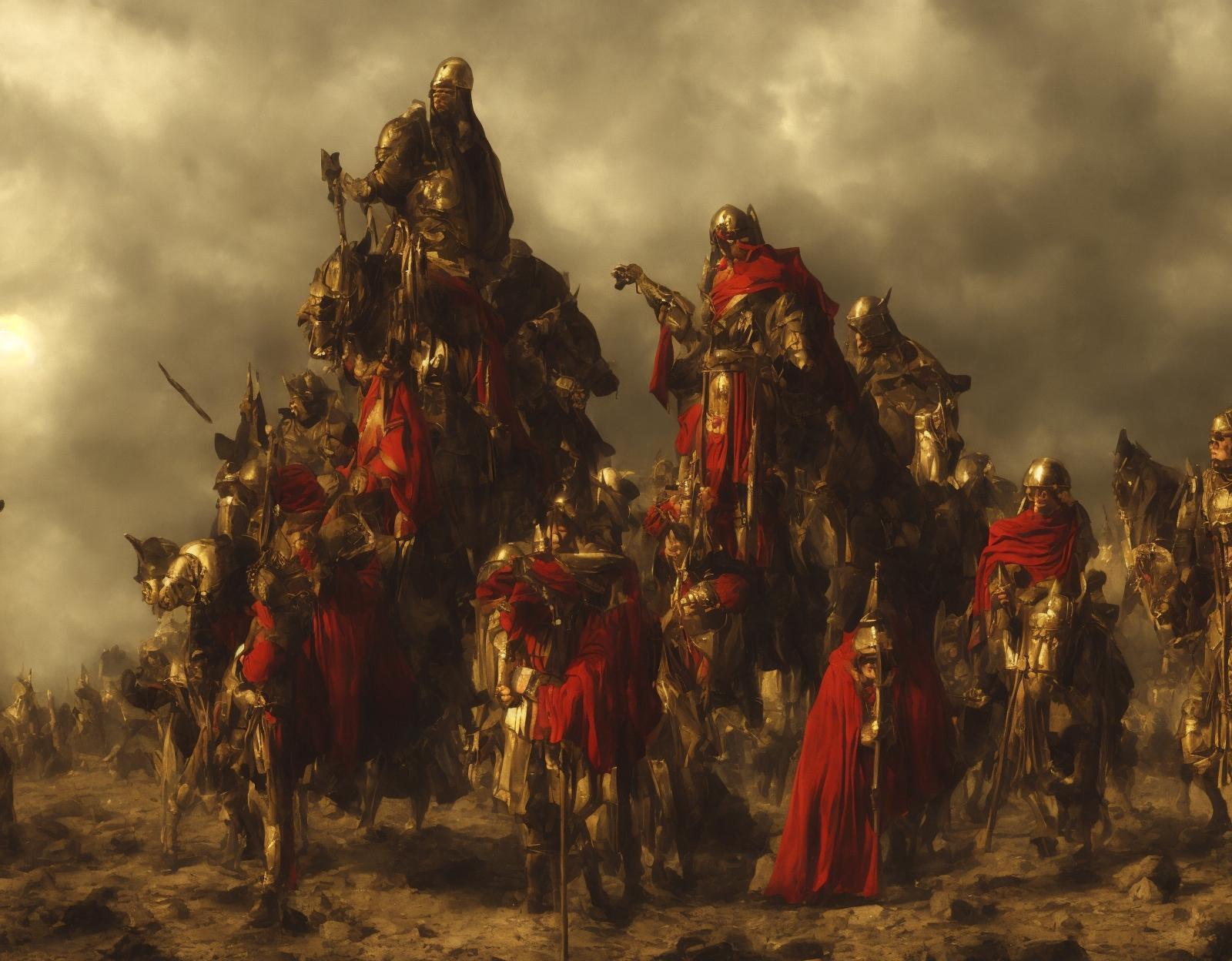
we conjure images of the Knights Templar, our minds are swift to paint pictures of warrior monks clad in white mantles emblazoned with a red cross, charging into battle in the Holy Land. We see them as the elite fighting force of the Crusades, pious and formidable soldiers of Christ. While this image is undeniably true, it is startlingly incomplete. Behind the steel-clad facade of the martial zealot lay another, far more influential identity: that of the world’s first multinational banker. This is not a tale of swords and sieges, but one of ciphers, credit, and colossal wealth that would ultimately seal their fate. The Poor Fellow-Soldiers of Christ and of the Temple of Solomon, as they were formally known, stumbled into finance not through greed, but through necessity. Their primary mission was to protect Christian pilgrims on the treacherous roads to Jerusalem. These pilgrims were frequent targets for bandits, not just for their lives, but for the considerable sums of money they had to carry to finance their long and arduous journey. The Templars, with their network of fortified preceptories stretching from the heart of Europe to the shores of the Levant, offered a simple, yet revolutionary solution. They transformed their military infrastructure into a financial network, inadvertently creating a system that would lay the very foundations of modern banking. This financial empire, built on trust and innovation, grew to a scale that dwarfed the treasuries of European kingdoms, making the Templars not just soldiers, but kingmakers, financiers, and economic custodians. Their wealth became legendary, their influence unparalleled, and their fate a dark and enduring cautionary tale of how financial power can incite the deadliest form of envy. The story of Templar banking is the secret history of their true power, a power so immense that a paranoid king would rather burn an entire order to the ground than remain in its debt.
From Warriors to Financiers: The Birth of a Banking Empire
The genesis of the Knights Templar banking system was a direct and practical response to the brutal realities of medieval travel. In the early 12th century, a pilgrimage to the Holy Land was an undertaking fraught with peril. Beyond the physical hardships of the journey itself, the greatest threat was often human. Roads were infested with highwaymen and pirates patrolled the seas, all eager to prey on travelers carrying their life savings. A wealthy noble or even a moderately prosperous merchant wishing to visit the holy sites had to transport substantial amounts of gold and silver coinage, making them a moving target for the duration of their months-long expedition. The Order of the Knights Templar, founded around 1119, was established with the specific mandate of protecting these very pilgrims. Their initial role was purely martial, acting as armed escorts for caravans moving between the port of Jaffa and the city of Jerusalem. However, they soon realized that protecting the pilgrim’s body was only half the battle; protecting their wealth was just as critical. This realization sparked the transition from a purely military order to a financial behemoth. The solution was born from their unique organizational structure. The Templars had rapidly established a widespread network of properties, known as commanderies or preceptories, throughout Western Europe, in addition to their castles and garrisons in the Crusader States. A pilgrim could, for instance, deposit a sum of money at the Templar Temple in London. In return, they would receive a coded letter of credit. This document, incomprehensible to a common thief, was the key to their fortune. Upon arriving in a city like Acre or Jerusalem, the pilgrim could present this letter to the local Templar preceptory and, after a process of authentication, withdraw the equivalent sum in local currency. This simple act of dematerializing wealth for the purpose of safe travel was nothing short of revolutionary. It was a system built on the two pillars of the Templar Order: immense, unquestioned trust and a formidable, secure infrastructure. The Templars were renowned for their piety and incorruptibility, making them ideal custodians of wealth. Their fortified commanderies were the medieval equivalent of high-security bank vaults, impenetrable to all but the most determined armies. This system was not offered for free, of course. The Order charged a fee for the service, often described as an administrative cost or a "gift" to the Order, to cleverly circumvent the Church’s strict prohibitions on usury (lending money at interest). These fees, collected from thousands of pilgrims across Europe, began to build a formidable treasury, marking the first step in the Order’s ascent to unimaginable financial power.

The Templar Letter of Credit: An Innovation That Changed the World
The Templar letter of credit was the linchpin of their financial system, a piece of parchment that held more power and security than a chest full of gold. Its genius lay in its sophisticated simplicity and the robust security measures that underpinned it. When a depositor entrusted their funds to a Templar commandery, a meticulously detailed process was initiated. A clerk would record the transaction in their extensive ledgers and then draft a letter of credit. This was no ordinary letter. It was written using a complex cipher unique to the Templar Order. While the exact details of their cryptographic methods are lost to history, it is believed to have involved a combination of alphanumeric substitutions and coded phrases. The letter would specify the amount deposited, the name of the bearer (often also in a coded form), and the intended place of withdrawal. To prevent forgery, which was a significant concern, multiple layers of authentication were employed. The letter would be authenticated with the Order’s distinctive wax seal, featuring the iconic image of two knights on a single horse. Furthermore, it is believed that a form of two-factor authentication was used. The depositor might be given a specific verbal password or a unique physical token, such as one half of a coin or medallion broken in two, which would have to be presented along with the letter to the receiving Templar treasurer. The other half would have been sent separately to the destination preceptory via the Order’s own rapid and secure courier network. Upon arrival at their destination, the traveler would present their letter and secondary authenticator. The local Templar treasurer would then consult their own ledgers, which would have been updated by couriers from the originating commandery, to verify the transaction. Once everything was confirmed to be in order, the funds were dispensed in the requested local currency, whether it was Byzantine bezants, Syrian dinars, or French livres. The Templars, with their extensive operations across different cultures, were also expert money changers, understanding the complex exchange rates between the dozens of currencies used across Europe and the Middle East. The fee for this service, while significant, was a price most were willing to pay for the near-absolute security it provided. This system did more than just protect pilgrims; it effectively created the first international wire transfer, lubricating the wheels of commerce and mobility in an age where both were constantly under threat. It was a financial product so advanced and reliable that it would not be matched in scope or security for centuries to come.
Did you know? The Templar's encrypted letters of credit used a complex system of ciphers, and the final withdrawal often required a verbal password or a piece of a "broken" token for authentication.
The Temple of Paris and London: The Fortresses of Finance
The immense wealth flowing through the Templar network needed a central nervous system and secure repositories. These came in the form of their two most powerful and influential commanderies: the Temple in Paris and the New Temple in London. These were not mere administrative offices; they were sprawling, heavily fortified complexes that functioned as the primary treasuries for two of Europe’s most powerful nations. The Paris Temple was a colossal fortress within the city walls, a state within a state. Its imposing keep and multiple defensive walls made it one of the most secure locations in all of Christendom. This security made it the preferred depository for the French crown. For much of the 13th century, the royal treasury of France was not held in the Louvre or any other royal palace, but within the stone vaults of the Paris Temple. Templar knights and sergeants, sworn to protect the Order’s assets, effectively became the guardians of the kingdom’s finances. The Templar Treasurer of France was one of the most powerful figures in the realm, overseeing royal revenues, managing disbursements, and providing detailed financial audits to the king. The scale of the operation was staggering. It functioned as a national bank, a safe deposit, and an accounting office all rolled into one. Across the channel, the New Temple in London played a nearly identical role. Situated on the banks of the Thames, this large and prosperous estate became the financial heart of England. It served as a depository for the English Crown Jewels, important state documents, and the private wealth of the English nobility. Kings from Henry II to Edward I relied on the Templars not just for safekeeping but for complex financial services. The Master of the Temple in England was a permanent fixture at court and in Parliament, a testament to the Order’s deep integration into the machinery of the state. These two great Temples were more than just banks; they were centers of power, diplomacy, and administration. Within their walls, nobles left their last wills and testaments, treaties were negotiated, and royal marriages were financed. The day-to-day business involved managing huge agricultural estates owned by the Order, collecting rents, and overseeing a vast portfolio of assets that made the Templars the largest landowners in many parts of Europe. The image of a Templar had evolved from a simple warrior to a sophisticated administrator and financier, as comfortable with a ledger book as with a sword. These fortresses of finance symbolized the peak of Templar power, but their visible, concentrated wealth also made them an irresistible target.
Bankers to Kings and Popes: The Templars' High-Stakes Game
While the pilgrim protection service was the foundation of their financial empire, it was the Order’s role as bankers to the elite that elevated them to an unprecedented level of power and influence. The trust and efficiency they demonstrated quickly caught the attention of popes, kings, and the highest echelons of the European aristocracy. Soon, the Templars were not just safeguarding money; they were actively lending it, managing vast estates, and transferring funds for massive state-level projects. Their most important clients were the monarchs of Europe. The costs of medieval statecraft, and particularly of warfare, were astronomical. Kings constantly found themselves in need of vast sums of cash to fund armies, build castles, and wage campaigns. The Templars, with their enormous and liquid capital, became the go-to source for royal loans. For example, the French king Louis IX’s Seventh and Eighth Crusades were financed in large part by massive loans from the Templar Order. When the king was captured in Egypt, it was the Templars who helped arrange and transfer the colossal ransom for his release. In England, King John and his son Henry III were perpetually in debt to the New Temple in London. The Templars even managed the collection of certain royal taxes and held the crown jewels as collateral for loans. This relationship was mutually beneficial, for a time. The kings gained access to unparalleled financial resources, and the Templars received royal charters, tax exemptions, and legal privileges that placed them above the jurisdiction of local lords and bishops. They became a truly sovereign entity, answering only to the Pope. Their services extended beyond simple loans. When a noble decided to join a crusade, he would often mortgage his entire estate to the Templars for the duration of his absence. The Order’s skilled administrators would manage the property, collect rents, and keep meticulous accounts, providing a steady income for the absent lord’s family and ensuring the estate was productive and secure until his return—or, in the frequent event of his death, to be managed according to his will. This made them the largest property managers in Europe. They also acted as financial agents for the Papacy, collecting and transferring the "crusading tithe" and other ecclesiastical funds across the continent. This high-stakes game of international finance placed the Templars at the very center of European power politics, but it was an incredibly dangerous game. Being a creditor to powerful, absolute monarchs was profitable, but it created a perilous dynamic where the debtor might find it easier to eliminate the creditor than to repay the debt.

The Seeds of Destruction: When Debt Becomes a Death Warrant
The downfall of the Knights Templar was as swift and brutal as their rise had been spectacular, and its roots lay directly in the financial power they had so masterfully cultivated. Their greatest client, and their ultimate destroyer, was King Philip IV of France, known as "Philip the Fair." By the early 14th century, Philip had an expensive problem: his kingdom was on the verge of bankruptcy. A series of costly wars against the English and the Flemish had drained the royal coffers. Philip, an autocratic and ruthless monarch, had already debased the currency and expelled the Jewish and Lombard bankers to seize their assets, but it was not enough. His eyes, and his debts, fell upon the Knights Templar. The Paris Temple held a significant portion of the French national debt, and Philip himself was personally indebted to the Order. The Templars, once his trusted bankers, were now his biggest creditors. In the king’s mind, a simple and diabolical solution began to form. Seizing the Templar’s legendary wealth would not only solve his debt crisis in a single stroke but would also transfer their immense financial power directly into his own hands. However, he could not simply attack the Order. The Templars were heroes of Christendom, protected by papal decree and revered by the populace. To move against them, Philip needed a pretext, a justification so shocking it would override their protected status. Working with his duplicitous minister, Guillaume de Nogaret, Philip constructed a propaganda campaign of breathtaking audacity. He secretly collected a list of dark accusations against the Order, leveraging disgruntled ex-members to fabricate stories of heresy, blasphemy, and obscene rituals. The charges were designed to be as vile as possible: spitting on the cross, denying Christ, institutionalized sodomy, and worshipping a demonic idol named Baphomet. The financial motive was carefully hidden behind a mask of pious outrage. On Friday, October 13, 1307, his plan was put into motion. In a coordinated, pre-dawn raid across France, Philip’s agents arrested every Templar they could find, including the Grand Master, Jacques de Molay. The Order was caught completely by surprise. Their assets were seized, their properties confiscated, and their members thrown into dungeons. Under horrific torture administered by royal inquisitors, many knights confessed to the fabricated charges. These forced confessions were then used by Philip to pressure the weak Pope Clement V, whom the king effectively held captive, into formally dissolving the Order. The trial was a sham, a brutal piece of political theatre designed to legitimize the greatest corporate heist in medieval history. The Templars
Did you know? The Paris Temple was so secure that even King Philip IV of France had to formally request access to his own treasury stored within its walls before he decided to dissolve the order.
How we verify this article
By the History Unlocked editorial team
This text is built on historical facts stored in our database and drafted with AI assistance. No signed human review is recorded for this article. Report any inaccuracy: we correct it and update the modified date.
Updated on
AI-assisted drafting.
Read our editorial standardsEnjoyed this? Discover more articles in the category Knights Templar