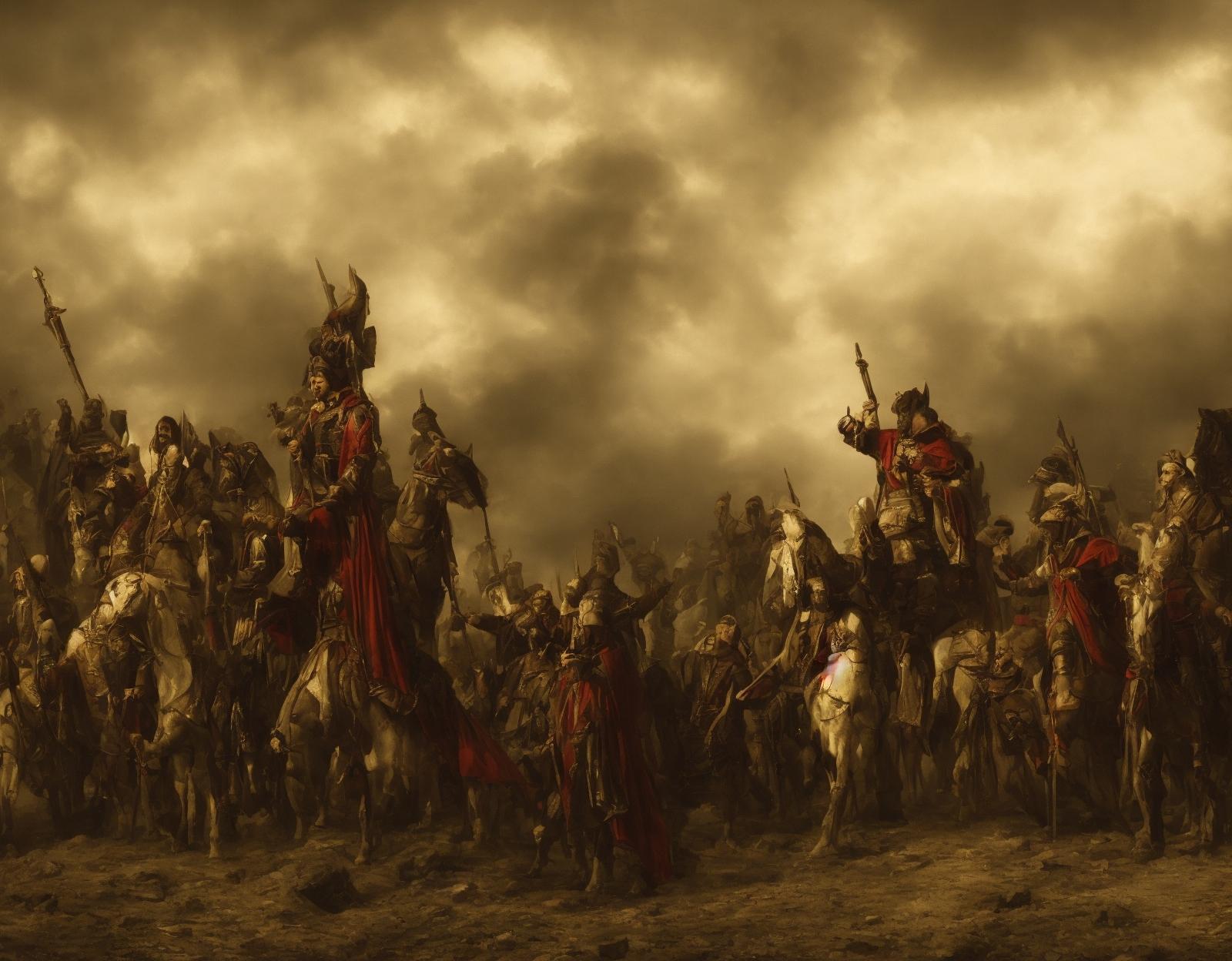
Templars and Freemasonry: Secrets, Myths, and Historical Truth
The narrative that binds the medieval Knights Templar to modern Freemasonry is one of the most enduring historical entanglements of mystery, romance and scholarly dispute. For centuries, storytellers, occultists, and later popular novelists wove an image of a direct lineage: a secretive chivalric order purged in the early fourteenth century, whose surviving initiates passed arcane knowledge and ritual into the hands of speculative masons and esoteric societies. That story is seductive — it combines the drama of crusading knights, the brutality of royal purge, forbidden knowledge and the familiar lodges of the Enlightenment. It also promises a tidy continuity between the medieval and the modern that many find irresistible.
But history demands examination of documents, contexts and processes: the foundation of the Templar order in the twelfth century, their meteoric rise and economic sophistication; the political and fiscal crises that led Philip IV of France to act in 1307; the papal maneuvers that culminated in the Council of Vienne and the formal dissolution of the order; and the emergence of Freemasonry in early modern Britain, a movement born from operative stonemasons transforming into speculative societies in the seventeenth and early eighteenth centuries. Modern archival discoveries, particularly documents preserved in papal and royal registers, and the careful work of historians, have complicated the romantic myths while leaving space for symbolic and ritual affinities that developed centuries later.
This article aims to separate verifiable history from myth-making. It follows the factual journey of the Templars and traces the documented emergence of Masonic structures, examines the nineteenth-century romantic revival that conflated the two, and highlights the scholarly consensus and contentious points that persist. The story is both archival and cultural: how a dissolved medieval order came to live on in the imaginations of modern movements, how ritual and symbolism migrate across centuries, and how historians reconstruct the past with a blend of skepticism and awe. What follows is a measured, narrative exploration of the historical record, the trials of the Templars, the birth of Freemasonry, the origin of Templar-inspired Masonic rites, and the place where myth and fact meet.
Did you know? The Knights Templar were founded by Hugues de Payens and eight companions, often cited as the 'nine founders', and their earliest quarters were associated with the Temple of Solomon in Jerusalem.
Origins of the Knights Templar
The Knights Templar were founded in Jerusalem around 1119–1120 by Hugues de Payens and eight companions, a small band of knights who proposed to protect Christian pilgrims traveling to the Holy Land after the First Crusade. Their original name in Latin was Pauperes commilitones Christi Templique Salomonis, the Poor Fellow-Soldiers of Christ and of the Temple of Solomon, referencing the Templum Salomonis in Jerusalem where they were initially quartered. Their humble beginnings — reputedly sleeping two to a horse in some early representations — belied the political and economic power they would accrue over the next two centuries.
Recognition and formal endorsement came at the Council of Troyes in 1129, where the Templars were granted a formal rule and papal support; Bernard of Clairvaux wrote the influential Latin Rule, which shaped their monastic-military character. The combination of monastic discipline and martial purpose made them a unique force within Christendom: vowed celibates, monks in terms of spiritual discipline, yet professional soldiers fighting in the name of Christendom. Their rapid expansion across Europe — receiving land, donations and privileges — was fueled by pilgrimage economies, crusader needs and savvy administration.
The Templars developed an infrastructure far beyond mere fighters. They acquired properties, farms, commanderies and castles across Europe and the Levant. Their estates were administered autonomously, and they developed early forms of financial instruments that historians often characterize as proto-banking: letters of credit, deposit and transfer systems which enabled pilgrims to deposit funds on the route and receive them elsewhere. This network, coupled with a reputation for discipline and loyalty, made the Templars both wealthy and indispensable to rulers and pilgrims alike.
Did you know? On October 13, 1307, mass arrests of Templars across France were ordered by Philip IV; the date later became a focal point for myth and conspiracy about the Order's destruction.
Architecture and material culture reflected their dual role. Commanderies served as administrative centers, agricultural hubs and recruitment points; fortresses like Château Pèlerin and Tomar in Portugal testify to their military role. Their emblems, most famously the seal showing two knights on a single horse, were rich in symbolism: poverty, brotherhood and martial humility. Yet behind the chivalric trappings lay a bureaucracy that moved money and lands across borders, and that visibility would later become a target when political tides shifted.

The Fall: Arrests, Trials, Chinon and Dissolution
The dramatic collapse of the Knights Templar in the early fourteenth century is one of medieval history's most vivid episodes. On October 13, 1307, agents of King Philip IV of France arrested scores of Templars across his realm on a set of charges that included heresy, idolatry, sexual misconduct and financial corruption. The synchronous arrests — often described as happening 'at dawn' across France — were the product of a calculated political campaign. Philip IV, known as Philip the Fair, was deeply indebted to the Templars and constricted by fiscal crises; removing their legal and material privileges offered an avenue to seize assets and neutralize a power that had become politically inconvenient.
Under torture, many Templars confessed to lurid and sometimes absurd charges. The legitimacy of confessions obtained under duress is a key issue for historians; Philip's agents extracted statements that suited a narrative of guilt, allowing the king to justify divestiture of Templar property. The papacy under Clement V, then heavily influenced by France and resident in Avignon, found itself in a fraught position. Rather than immediately condemning the Templars, the papacy ordered investigations and presided over inquisitorial proceedings. In 1308, a set of papal interrogations took place at Chinon: a parchment (now known as the Chinon Parchment) preserved in the Vatican archives recorded meetings between papal commissioners and senior Templar leaders, including Jacques de Molay.
Did you know? The Grand Lodge of England's founding meeting in 1717 brought together four London lodges at the Goose and Gridiron Alehouse near St Paul's Churchyard, setting a template for future Masonic organization.
The Chinon documents, long inaccessible or little-known in the public sphere, were researched and publicized by scholars in the late twentieth and early twenty-first centuries. They indicate that Pope Clement V's envoys absolved certain Templar leaders of heresy contingent on confession and reconciliation with the Church. This contradicts simplified accounts that the pope uniformly condemned them; it shows a more complex papal approach involving negotiation, conditional absolution and political pressure. Yet political reality prevailed. At the Council of Vienne (1311–1312), under intense pressure from Philip, the papacy issued the bull Vox in Excelso (1312) formally suppressing the Order. The dissolution did not equate to wholesale condemnation of every individual; it dissolved the corporate entity of the Templars and redistributed many of their assets, notably to the Knights Hospitaller in some regions.
The fate of individual leaders was more tragic and public. Jacques de Molay, the last Grand Master, was burned at the stake in Paris in 1314, after years of imprisonment and retraction of confessions. The spectacle of his execution and his alleged final curse against the king and pope — a dramatic anecdote frequently told by later chroniclers — fed the mythic aura of the order's martyrdom. Thus the Templars' end combined legal procedure, political calculation, brutal coercion and public theatre — elements that fertilized centuries of later speculation.

The Birth of Freemasonry: From Operative to Speculative Lodges
Freemasonry as we recognise it today emerged in early modern Britain out of operative stonemason guilds but evolved into a speculative philosophical society where the tools of masonry became moral allegory. Operative lodges — groups of craftsmen working on cathedrals and castles — had existed for centuries, with documented lodge records and charges. Over the seventeenth and early eighteenth centuries, these operative lodges admitted non-operative members, gentlemen who participated in philosophical and social fellowship while adopting the symbolic language of the craft. This transformation is crucial: modern Freemasonry is not a medieval guild preserved intact but a new cultural formation that appropriated and repurposed masonry imagery.
Did you know? The romanticization of the Templars in the 18th and 19th centuries helped popularize the idea of a direct bond with Freemasonry, even though documentary continuity is absent.
A milestone often cited is the formation of the Grand Lodge of England in 1717, when four London lodges met and formed a central organisation. This institutional consolidation gave shape to standardized rituals, minutes, and the growth of a fraternity that spread rapidly across Britain and into the colonies. James Anderson's Constitutions, first published in 1723, offered a semi-official history and a set of regulations that further codified Masonic identity. Anderson's account mixed genuine lodge history with a laudatory narrative that ascribed noble origins to the craft; it is notable for early attempts to create venerable antiquity through selective literary reconstructions.
Into this environment stepped thinkers and orators who sought to ennoble Freemasonry with grand historical lineages. One such figure was Andrew Michael Ramsay (Chevalier Ramsay), a Scottish-born courtier who, in a speech to a Parisian Masonic lodge in the 1730s, presented Freemasonry as a spiritual heir to the Crusading orders and the chivalric traditions of medieval Europe. Ramsay's rhetoric was influential in Continental lodges and encouraged the development of higher degrees and chivalric rites within the Masonic world. It is important to emphasise that Ramsay articulated a symbolic genealogy, not documentary continuity: he offered a noble myth that explained Masonic ideals in terms of knightly virtues.
These developments saw the emergence of 'speculative' lodges that embraced philosophical discourse, ritual, and philanthropy rather than operative craftsmanship. The organization of degrees — basic Craft degrees (Entered Apprentice, Fellowcraft, Master) followed by appendant bodies like the Royal Arch, Scottish Rite and York Rite — created a layered structure in which chivalric motifs could be introduced. The Knight Templar degree, appearing within some of these appendant systems, drew upon the imagery of medieval knighthood and Christian symbolism to craft a Masonic experience that resonated with aristocratic and military sensibilities in the eighteenth and nineteenth centuries.
Did you know? Certain Masonic Templar orders require members to profess the Christian faith, reflecting the explicitly Christian character of those particular appendant bodies.

The Templar Myth: Romanticism, Ritual Adoption and the Eighteenth-Century Imagination
The connection between Templars and Freemasons is less a straight genealogical line than a series of cultural borrowings and imaginative reconstructions. During the eighteenth and nineteenth centuries a fertile period of romantic historicism and esoteric curiosity, writers and Masonic ritualists wove the symbols, language and heroic narratives of the crusading knight into the ceremonial fabric of speculative masonry. This did not happen uniformly nor on documentary grounds; rather, it flowed from a wider European hunger for historical legitimacy, legend and the aesthetics of chivalry.
Chevalier Ramsay's orations aided this trend by offering a rhetoric of continuity: if Freemasonry could be spoken of as the heir to chivalric virtues, then Masonic orders could claim moral gravity and antiquity. Around the same time, continental European lodges and Rosicrucian-influenced circles elaborated higher degrees that dramatized knightly initiations, transmuting medieval motifs into eighteenth-century ritual drama. The Scottish Rite and several continental systems developed degrees invoking the Temple of Solomon, crusader imagery and symbolic battles between faith and doubt. In Britain, the York Rite and the Knights Templar degree appealed to Masons who were Christians and who found in the chivalric narrative a natural complement to the moral teachings of Masonry.
The nineteenth century intensified the trend. Romantic historians and popular authors embellished Templar history with epic narratives that appealed to nationalistic and esoteric sensibilities. Freemasonry's own increasing institutionalization provided more space for chivalric appendages; knights' regalia, stylized crosses and templar insignia became part of the ritual wardrobe for certain Masonic orders. Yet critical historians began to interrogate claims of direct descent. By the late nineteenth and twentieth centuries, meticulous archival work revealed the discontinuities between the dissolved medieval order and the emergent modern fraternity.
Did you know? The Chinon documents, made accessible to scholars in the late 20th and early 21st centuries, revealed papal interrogations that modified earlier understandings of papal relations with Templar leaders.
This divergence between romantic narrative and archival reality is part of the reason for persistent confusion. Where popular culture sees secret continuity and hidden lodges spanning centuries, historians see reinvention: medieval symbols reused by early modern societies to craft new meanings. The Templar image served as a potent symbol — martyrdom, secrecy, sacred architecture — that Freemasons and other groups repurposed to legitimize, dramatize and aestheticize their rituals.

Rituals, Symbols and the Language of Continuity
One of the most tangible connections between the Templar past and Masonic practice is symbolic rather than institutional. Shared imagery — the Temple of Solomon, the two pillars Boaz and Jachin, the plain and the pillar and various biblical allusions — provided a symbolic vocabulary that suited both medieval monastic-knights and Enlightenment moral philosophy. The Temple of Solomon motif, central to Masonic ritual, is not an exclusive appropriation of the Templars; it is a broader Judeo-Christian architectural metaphor. Yet because the Templars were explicitly associated with the Temple of Solomon, their iconography presented an appealing source for Masonic dramatization.
Masonic chivalric orders, especially the Knights Templar within the York Rite and certain continental rites, adopted crosses, swords and regalia that evoke medieval pageantry. In the United States and Britain, the Masonic Knights Templar and similar bodies explicitly positioned themselves as Christian, requiring a profession of Christian faith for membership in those particular orders. This contrasts with the pluralistic approaches of other Masonic bodies which are religiously non-sectarian. The Templar degree's rituals, oaths and emblematic narratives are modern compositions — constructed in the eighteenth and nineteenth centuries — that borrow liberally from medieval motifs and biblical symbolism.
Did you know? Jacques de Molay, the last Grand Master, was publicly executed in 1314, an event that greatly amplified the Templar legend and subsequent romantic interpretations of their fate.
Opposition from the Church also forms part of the comparative history. The papacy's condemnations of Freemasonry, beginning with Pope Clement XII's bull In Eminenti (1738), were motivated by concerns over secrecy, oaths and perceived doctrinal dangers. Later papal pronouncements, including Pope Leo XIII's 1884 encyclical Humanum Genus, reiterated concerns about the compatibility of Freemasonry with Catholic doctrine. These ecclesiastical actions complicated any notion of a Church-sanctioned lineage from Templar monastic-knights to modern Masonic orders; rather, they show a spectrum of Church responses — from conditional absolution in the Templar case to outright ban in the case of speculative Freemasonry.
This codified opposition transformed how the narrative circulated. Where Masonic rituals borrowed Templar imagery, the Church's stance against Freemasonry added a new layer of friction and, paradoxically, a new appeal for those who relished secretive or persecuted identities. Still, historical methods caution us: symbolism and stylistic borrowing are not evidence of corporate continuity. They are, however, evidence of cultural memory and the adaptability of powerful symbols across centuries.

Historical Evidence, Scholarship and the Persistent Myths
Modern historical scholarship approaches the Templar–Freemasonry question with rigorous source criticism. The consensus among specialist historians is straightforward: there is no reliable documentary evidence showing organizational continuity from the medieval Knights Templar to modern Freemasonry. Authors such as Malcolm Barber have demonstrated through archival analysis that the Templars' administrative records, royal charters and papal bulls do not support a survivorship narrative. Instead, what we observe are later constructions: eighteenth-century masons creating ritual systems and drawing on romanticized medieval iconography to lend gravity to their societies.
That said, the academic story is not wholly dismissive of connections of a different kind. Cultural memory, legends, and the reuse of symbols can create meaningful forms of continuity that operate outside legal or organizational descent. The Chinon Parchment's publication in modern scholarship in the late twentieth and early twenty-first centuries complicated simple narratives of papal condemnation and underscores how archival finds can nuance our understanding. The Parchment suggested that the papacy engaged in some conciliatory acts toward individual Templars, even as political pressures made the dissolution of the Order inevitable. This documentary complexity helps historians separate juridical actions from political expediency.
Another layer of complexity is regional variation in the fate of former Templars and their properties. In some jurisdictions, local lords and ecclesiastical authorities integrated ex-Templars into other orders or local militias; in others, assets were seized by secular rulers. The Hospitallers absorbed many properties but not uniformly. As for ritual heritage, while some local customs and legends may have persisted in popular memory, the leap from folklore to institutional continuity remains unproven.
Contemporary popular culture — from nineteenth-century romantic novels to twentieth- and twenty-first-century thrillers — has amplified the myth, sometimes obscuring the very archival work that denies easy conclusions. Yet the persistence of the myth also reveals why the Templar story resonates: it combines a dramatic fall, vivid symbols, and a human fascination with the secret and lost. For historians, the task is to honor the allure while insisting on sources: where we have records, we base claims on them; where we lack documents, we describe conjecture as such.
The relationship between the Knights Templar and Freemasonry is an instructive case of how symbols, myths, and institutional histories interact. The Templars, founded in the crucible of the crusading era, became wealthy, visible, and ultimately vulnerable to royal predation; their violent and public downfall supplied centuries of speculation. Freemasonry, a product of early modern social transformation, adopted and re-fashioned architectural and religious motifs — including those associated with the Temple of Solomon and chivalric language — into a moral and philosophical framework that suited the Enlightenment and later sensibilities.
When we seek a direct institutional lineage we come up against the weight of documentary absence: no reliable records show a continuous Templar organization surviving into early modern lodge culture. What we do find is explicit reinvention: masonically authored degrees and rituals that consciously borrowed the romance of knighthood to provide moral narrative and ceremonial drama. In many ways the Templar image was ideal for that purpose — it blended sanctity and militancy, secrecy and grandeur.
This does not diminish the cultural truth of the connection. Symbols travel; rituals are invented; societies adopt the past selectively to craft identity. Freemasonry's use of Templar motifs is a testimony to the enduring power of medieval imagery and to the eighteenth-century hunger for legitimation through antiquity. The Chinon Parchment and other archival finds remind us that history is often more ambiguous than myth, and that archival silences and political manipulations shape the stories that later generations tell.
Ultimately, the Templar–Masonic link is best understood as symbolic inheritance rather than literal descent. That distinction matters for historians and enthusiasts alike: it preserves the emotional power of the story while acknowledging the responsibilities of source-based scholarship. The mystery endures because symbols are compelling and because the human appetite for continuity across catastrophe is perennial. Yet, for those who value empirical history, the truth is both more subtle and, in its own way, more fascinating: a vanished medieval order leaves behind architecture, archives and legends; those materials are later repurposed by modern societies that create new rituals in conversation with a selectively remembered past.

How we verify this article
By the History Unlocked editorial team
This text is built on historical facts stored in our database and drafted with AI assistance. No signed human review is recorded for this article. Report any inaccuracy: we correct it and update the modified date.
Updated on
AI-assisted drafting.
Read our editorial standardsEnjoyed this? Discover more articles in the category Knights Templar