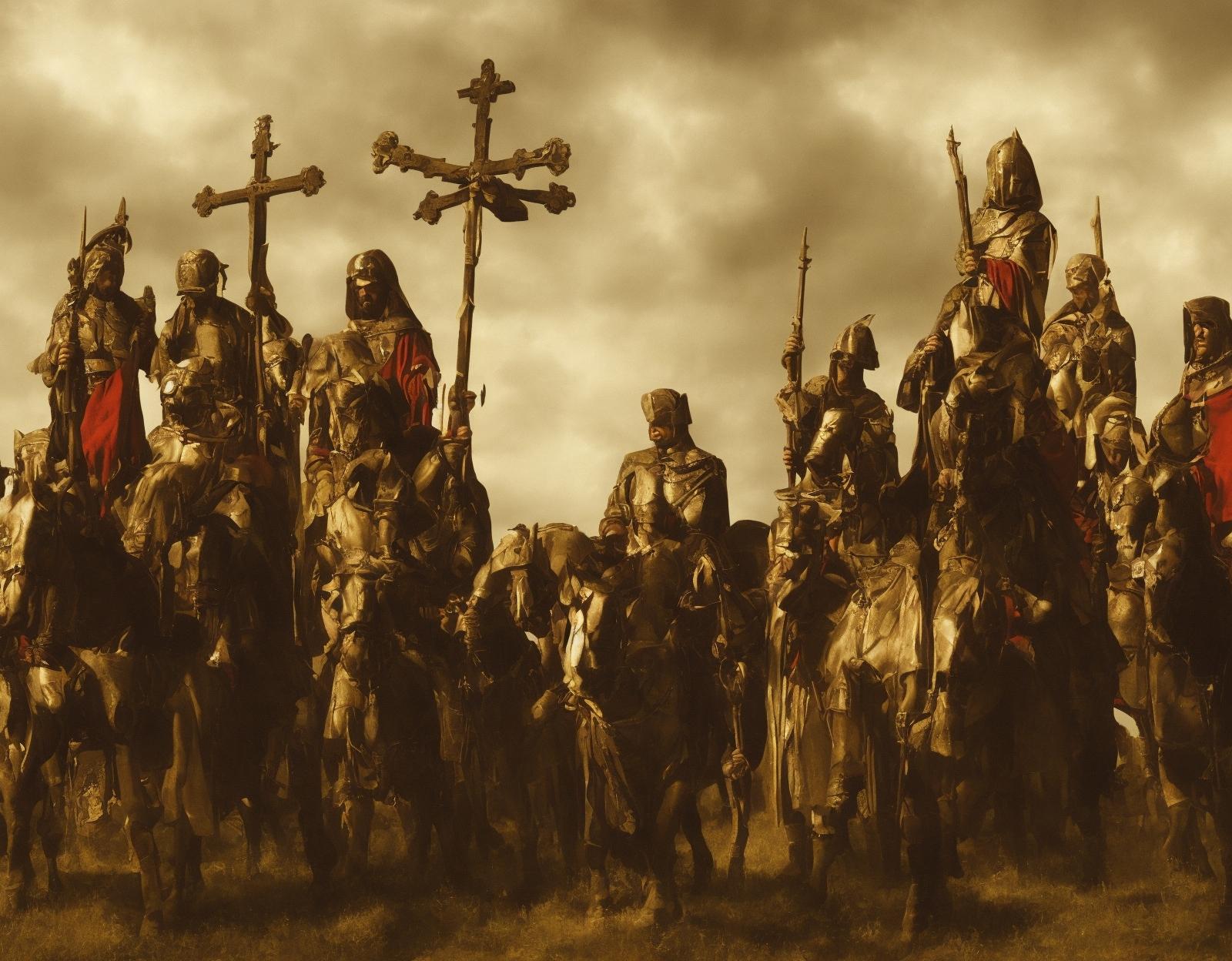
Templars in Portugal: Secrets of Tomar and the Order of Christ
In the hush before dawn, stone silhouettes of towers and keep rise from the mist along the River Tagus. The air still seems to hold the clang of sword and the murmur of Latin prayers, as if the Middle Ages had left an imprint that refuses to fade. Portugal’s landscape is imprinted with such traces: hilltop fortresses, convent-castles, and rural commanderies that once formed a network of the Knights Templar. Their arrival in the Iberian Peninsula is a tale woven into the larger tapestry of the Crusades and the Reconquista—an era where faith, politics, and violence intersected and where military orders like the Templars became actors of territorial transformation. But Portugal’s encounter with the Templars evolved into a distinct story. Far from the dramatic public trial and dissolution that unfolded in France, the Templars’ experience in Portugal culminated in a negotiated continuity: a transfer of resources, personnel, and purpose that helped seed one of the institutions behind Portugal’s maritime expansion.
This article traces that arc: the earliest holdings offered by Portuguese monarchs, the rise of Gualdim Pais and the foundation of Tomar as the order’s Iberian citadel, the tapestry of castles and rural commanderies that buttressed the new kingdom, the grim silhouette of the early 14th-century trials that reshaped Europe’s military orders, and ultimately the rebirth of Templar assets within the Order of Christ—which would, centuries later, hang its cross on sails bound for unknown oceans. Along the way, we will separate myth from archival reality, examine the surviving architecture and documentary traces, and follow how scholarship over two centuries has revised our view of what it meant to be a Templar in Portugal. The narrative is at once concrete and mysterious: archaeology reveals kitchens and hoardings; charters reveal donations and privileges; legend whispers of hidden treasuries and Grails—but the facts are anchored in royal diplomas, papal bulls, and the surviving stones of Tomar, Almourol, Pombal, and other sites. To understand the Templars in Portugal is to see how a transnational order adapted to a frontier kingdom and how its legacy shaped a nation’s destiny.
Origins and Arrival of the Templars in Portugal
The Knights Templar, founded in the early 12th century to protect pilgrims to Jerusalem, quickly grew from a handful of warrior-monks into a pan-European institution with military, financial, and political reach. Their specialization in fortified warfare and frontier settlement made them natural allies to Christian monarchs engaged in the Reconquista—the centuries-long effort to reconquer Iberia from Muslim rule. Portugal, carved out of the County of Portugal and consolidated under King Afonso Henriques in the mid-12th century, welcomed the Templars as both military auxiliaries and colonizing partners. From the 1120s onward, donations of land and castles to the Templars by Portuguese rulers were pragmatic acts: these lands lay on the volatile frontier, needed defense, settlement, and the imposition of Christian institutions.
Did you know? The Templars in Portugal were often granted entire villages and judicial privileges, meaning they could hold courts and collect taxes in their domains—powers rarely entrusted to non-royal institutions.
Early documentary evidence shows that Afonso Henriques (Afonso I), who became the first king of Portugal, granted privileges and lands to groups of military religious concerned with frontier defense. The Treaty of Zamora (1143) and later grants formalized the kingdom’s independence and created a context in which military orders could be essential instruments of state-making. The exact chronology of early Templar gifts in Portugal is entwined with the kingdom’s expansion: as towns were taken and frontiers pushed southward, the crown ceded strategic points—castles, villages, and agricultural lands—to the order to garrison them and to repopulate them with loyal settlers. This was a quid pro quo: the Templars received revenues and autonomy; the crown secured the frontier at less cost and created a layer of governance committed to Christian colonization.
The Templars’ arrival in Portugal also reflected international networks. Knights from across Europe traveled to Iberia, motivated by both piety and opportunity. They brought with them the order’s rules, its distinctive red cross on a white mantle, and an organizational model: masters and commanderies (commendations) that combined military obligations with land management. The Templar master in Portugal was linked to a broader European hierarchy, yet the Iberian context demanded local adaptation. Here, the order took on responsibilities that combined military garrisoning with judicial authority over its tenants, the administration of agricultural production, and the financing of further colonization. The result was a powerful landholding body with a martial core—a form of state within the state that would profoundly influence Portugal’s territorial consolidation.
Important early Templar sites in Portugal include castles and towns that were strategically granted to the order to secure river crossings and high ground: Tomar, Almourol, Monsanto, Pombal and others. These were not merely defensive posts; they were centers of settlement, legal authority, and economic activity. The Templars encouraged settlers—farmers, craftsmen, and merchants—to inhabit recently conquered or vulnerable lands, offering them protection and sometimes fiscal privileges. To modern eyes, these medieval arrangements may appear exceptional, but they were a pragmatic response to the demands of frontier governance.
Did you know? Gualdim Pais, aside from founding Tomar, is often credited in local legend with miraculous defenses against Almohad raids; contemporary chronicles praise his leadership in retaining strategic towns for the Portuguese crown.

Gualdim Pais and the Foundation of Tomar
Few figures embody the Templar presence in Portugal as vividly as Gualdim Pais. Born around 1118 and dying in 1195, Pais was a Portuguese knight who fought in the Holy Land before returning to serve Afonso Henriques. He became the fourth Grand Master (or Master) of the Templars in Portugal and is credited with founding the fortified settlement of Tomar in 1160, a foundation that would come to represent the Templars’ Iberian identity. Tomar’s Convent of Christ grew around a medieval castle and commandery, combining the order’s military and monastic functions in a single monumental complex. The castle at Tomar, perched on a rocky outcrop above the Nabão river, was both a defensive bastion and an administrative center for large swathes of central Portugal.
Gualdim Pais’s experience in the Crusader states shaped his approach to fortification and settlement. On his return to Portugal, he imported defensive designs, organizational models, and perhaps the sober combination of piety and military zeal that characterized the order. Under his leadership, Tomar became not only a fortress but a hub from which the Templars radiated power into the surrounding countryside. He ordered the construction of robust walls, towers, and a keep; he also ensured that the community housed canons and servants, that it had an agricultural base, and that it maintained the ritual life required by the order’s rule.
Tomar’s significance grew over the centuries. The complex’s original Romanesque and early Gothic features were later transformed with Manueline and Renaissance embellishments, particularly after the creation of the Order of Christ, which would inherit the Templar sites in Portugal. But the medieval core—Gualdim Pais’s walls and the Convent’s chapel—remains a testimony to 12th-century strategy and spirituality. Archaeological studies at Tomar have revealed the stratigraphy of occupation: evidence for kitchens, storage, ceramic assemblages, and the layout of enclosures used both for defense and daily life. The charter evidence complements these physical remains: donations to the Tomar commandery, diplomatic correspondence, and royal privileges highlight Tomar’s role as a regional center of control.
Did you know? Almourol Castle's island position was intentionally chosen to block passage on the Tagus; it was reconstructed under Templar oversight in the late 12th century to strengthen river control.
The mystique of Tomar grew in later centuries. Its architecture, with the enigmatic round Charola (the Templar chapel modeled on the Church of the Holy Sepulchre in Jerusalem), invites speculation about liturgy and symbolic meaning. Yet scholars emphasize the pragmatic: the Charola served as a meeting chapel for the knights and was an architectural echo of the Templars’ origins in the Holy Land. Tomar’s layout—a fortified residence, chapels, and agricultural precincts—illustrates how the order combined monastic observance with martial readiness.

Military Structures, Commanderies, and Landscape Control
The Templars in Portugal were as much architects of landscape as they were warriors. Their network of commanderies—local centers that combined a residence of the knightly community with agricultural land and sometimes a chapel—acted as nodes of control across frontier regions. Each commandery was run by a commander who managed the land, administered justice to the order’s tenants, and organized military contingents when needed. Economically, these holdings generated revenue through agriculture, milling, rents, and trade; militarily, they supplied garrisons for castles that guarded key routes and river crossings.
Several Portuguese castles that remain today speak to the Templars’ strategic priorities. Almourol Castle, dramatically sited on a small island in the Tagus River, represents control of river navigation and a symbolic assertion of dominion over water routes. Monsanto, perched on a granite outcrop, offered surveillance of the borderlands toward Spain. Pombal and Belver were similarly chosen for visibility and defensibility. The selection of sites shows a clear strategy: control the Tagus valley and key passes, secure villages for repopulation, and create layered defenses that could ward off incursions while enabling offensive operations.
Did you know? Unlike France, where many Templars were arrested in 1307, Portugal avoided mass arrests through negotiation; the transition culminated with the 1319 creation of the Order of Christ, approved by Pope John XXII.
The Templar commanderies also played a role in law and governance. Within their territories, the order could exercise judicial powers, dispensing justice among tenants according to customs and the order’s regulations. This capacity for legal autonomy complicated the relationship between the Templars and the crown—sometimes leading to tensions over jurisdiction, but often functioning as an instrument for the crown to extend rule to territories where royal administration was thin.
Archaeology complements documentary sources in reconstructing daily life in these commanderies. Excavations reveal storage silos, pottery types which indicate trade links, animal bone assemblages attesting to diet, and defensive features such as curtain walls and hoardings. Charters, meanwhile, delineate land boundaries, describe fiscal obligations, and record disputes settled before Templar courts. Together they reveal an institution that was simultaneously martial, fiscal, and juridical.
The Templars’ economic organization also deserves emphasis. Their network permitted pooling of resources across a wide area; revenues from productive commanderies could support knights on campaign or fund fortification projects. Moreover, their international connections allowed them to act as financial intermediaries: receiving donations in one part of Europe and deploying resources where the frontier demanded them. This capacity to move wealth and men across borders made them indispensable to Portuguese rulers who sought to project power along shifting frontiers.
Did you know? Prince Henry the Navigator became Grand Master of the Order of Christ in 1420; his position allowed him to channel the order's resources into exploratory voyages along Africa's coast.

Arrests, Trials, and the Portuguese Exception
The early 14th century brought catastrophe to the Templar order. In 1307, King Philip IV of France—deeply indebted to the order—moved against the Templars in his realm, arresting many on charges of heresy, sodomy, and corruption. Under pressure, Pope Clement V ordered an investigation. The great trials and the dramatic execution of Grand Master Jacques de Molay in 1314 marked the public collapse of the order in many parts of Europe. The Council of Vienne (1311–1312) formally suppressed the Templars (1312), but the disposition of their properties varied across kingdoms.
Portugal’s response was distinct. King Dinis I (reigned 1279–1325) treated the order more cautiously than did Philip IV. While papal pressure was intense, Dinis attempted to shield Portuguese Templars from the worst excesses of prosecution. The Portuguese crown negotiated with the papacy to secure a resolution that would protect local stability. Ultimately, rather than allowing wholesale seizure or persecution, Portuguese authorities transferred most Templar assets into a new order, the Order of Christ (Ordem de Cristo), established in 1319 with papal approval from Pope John XXII. This institutional conversion allowed continuity of personnel, preservation of the order’s infrastructure, and the retention of lands within a loyal monastic-military framework under royal influence.
This outcome was not immediate or untroubled. There were inquisitorial inquiries and interrogations in Portugal; some individual Templars faced charges and local controversies. Yet the crown exercised a pragmatic calculus: the retention of fortified sites and the expertise of martial brothers was essential for frontier defense. By reconstituting these assets under the Order of Christ, King Dinis and his successors avoided the chaotic redistribution of land seen elsewhere and ensured that the strategic network built by the Templars remained intact and available to the Portuguese state.
Did you know? The Convent of Christ in Tomar was inscribed as a UNESCO World Heritage site in 1983, recognized for its architectural testimony to medieval and later periods tied to the Templars and the Order of Christ.
The papal arrangement was carefully crafted: the suppression decrees of the Council of Vienne were applied in principle, but the papacy recognized the unique circumstances of kingdoms like Portugal and Aragon. In Portugal’s case, the creation of the Order of Christ provided a vehicle for continuity without directly contravening the papal decisions. Over time, the new order absorbed many former Templars, took control of castles and commanderies, and developed its own identity—even while inheriting the material and symbolic legacy of the Templars.

From Templars to Order of Christ: A Bridge to the Age of Discovery
The Order of Christ, established in 1319, became one of the most consequential legacies of the Templars in Portugal. By absorbing Templar assets and some of their members, the new order preserved a network of wealth, influence, and territorial control. Over the next century and beyond, this institution evolved into an instrument of royal policy, particularly in supporting maritime exploration. Perhaps the most famous connection arises in the 15th century: Prince Henry the Navigator (Infante D. Henrique), a scion of the royal family and a leading patron of seafaring ventures, became Grand Master of the Order of Christ in 1420. The order’s resources and maritime charters were instrumental in underwriting voyages along the West African coast and beyond.
The Order of Christ’s insignia—the red cross with the white border—would come to be emblazoned on the sails of Portuguese caravels, symbolically linking medieval crusading zeal to maritime enterprise. Financing from the order and royal investment enabled a string of expeditions that opened new trade routes and established Portugal as a leading maritime power in the 15th and 16th centuries. The institutional memory of the Templars—organizational discipline, command structures, and cross-border networks—translated into administrative competence that could be refocused toward exploration and overseas colonization.
Did you know? The iconography of the Templar and Order of Christ cross continued to be used on Portuguese ships' sails into the 16th century, linking medieval symbols to early modern expansion.
Moreover, the order’s commanderies and fortresses continued to serve practical functions. Coastal and riverine strongpoints could be converted into harbors or logistics centers supporting exploration. The landed wealth provided capital that, in part, funded ships, supplies, and the human resources needed for long voyages. The continuity between the medieval military-religious apparatus and early modern imperial enterprise is a reminder of how institutions adapt and reorient motives across centuries.
Scholars have debated the degree to which a direct institutional line connects the Templars to the Age of Discovery. Some emphasize symbolic continuities and personnel links; others highlight broader economic and political transformations that made maritime expansion possible. The most productive view acknowledges both: the Order of Christ was not simply a rebranded Templar order, but it inherited crucial assets and a mindset that facilitated Portugal’s transition from a frontier kingdom to a maritime empire.
Myths, Archaeology, and Memory: The Templar Legacy in Modern Portugal
The Templars’ mystique has only deepened in modern times. Romantic and national narratives have alternately exalted and exoticized the order. Popular myths—hidden treasures buried under castles, secret rites whispered within the Charola of Tomar, or connections to Grail lore—abound in guidebooks and novels. These stories speak to the human hunger for mystery and the desire to find a sacred or secret origin to national grandeur. Yet rigorous scholarship and archaeology provide a corrective, distinguishing medieval practices and material realities from later invention.
Archaeological projects at Tomar, Almourol, and other Templar sites have illuminated the physical footprint of the order’s activities. Excavations at Tomar have revealed successive phases of construction, domestic spaces within the commandery, and artifacts that point to daily routines rather than arcane rituals. Surveys at Almourol and Monsanto show how fortification techniques evolved with military technology and how local geology shaped defensive strategies. Documentary researchers have combed royal charters, papal correspondence, and inquisitorial records to reconstruct networks of patronage, the order’s fiscal operations, and the legal wranglings that accompanied the 14th-century suppression.
Today, the Convent of Christ at Tomar is a UNESCO World Heritage site (inscribed 1983) and a focal point of heritage tourism. Visitors encounter not only medieval stone but also later Manueline ornamentation, Renaissance cloisters, and Baroque accretions—evidence of long institutional life. Almourol and Pombal, along with local museums, offer layered narratives: military, domestic, religious, and later nationalistic interpretations. Museums and archives in Lisbon and Coimbra hold charters and artifacts that allow historians to trace the Templars’ economic impact and their integration into Portuguese society.
The tension between myth and history is instructive. While the Templars’ aura invites speculation, scholars insist on evidence-based narratives: the Templars in Portugal were primarily a territorial and military-pastoral institution, their practices anchored in medieval law and economy. Yet the symbolic line—from the crusading cross to the sails of the caravels—retains potent rhetorical force and explains why the story of the Templars remains central to Portuguese historical imagination.

Conclusion: An Order's Shadow over Portugal's Destiny
The history of the Templars in Portugal is a story of adaptation and continuity as much as it is of crusading fervor. From early donations by monarchs to the establishment of powerful commanderies, from the founding of Tomar by Gualdim Pais to the dramatic European trials of the early 14th century, the Templar presence left deep marks on Portugal’s territorial and institutional development. The transformation of their assets into the Order of Christ ensured that the strategic network of castles, lands, and human expertise would not dissipate but would be repurposed to new ends—most consequentially, to support Portugal’s maritime expansion in the 15th century.
Understanding this history requires attention to documentary nuance and archaeological fact, and a willingness to separate romantic myth from operational reality. The Templars were not mystical puppeteers of destiny; they were an effective medieval institution whose capacity for landholding, military organization, and financial management made them vital to a young kingdom facing the practical challenges of frontier settlement. Yet their symbolic legacy—white mantles, red crosses, and the echo of the Charola—has been woven into Portugal’s cultural memory, offering fertile ground for storytelling and reflection.
Walking today through Tomar’s courtyards or gazing at Almourol’s island keep, one senses both the practical logic of medieval defense and an aura of historical depth. The Templars helped make Portugal a coherent polity; the Order of Christ helped propel it into a global age. In that sense, the knights who once answered to a Grand Master in the Holy Land helped shape the destiny of an Atlantic nation—a legacy that is at once tangible in stone and enduring in narrative.

How we verify this article
By the History Unlocked editorial team
This text is built on historical facts stored in our database and drafted with AI assistance. No signed human review is recorded for this article. Report any inaccuracy: we correct it and update the modified date.
Updated on
AI-assisted drafting.
Read our editorial standardsEnjoyed this? Discover more articles in the category Knights Templar