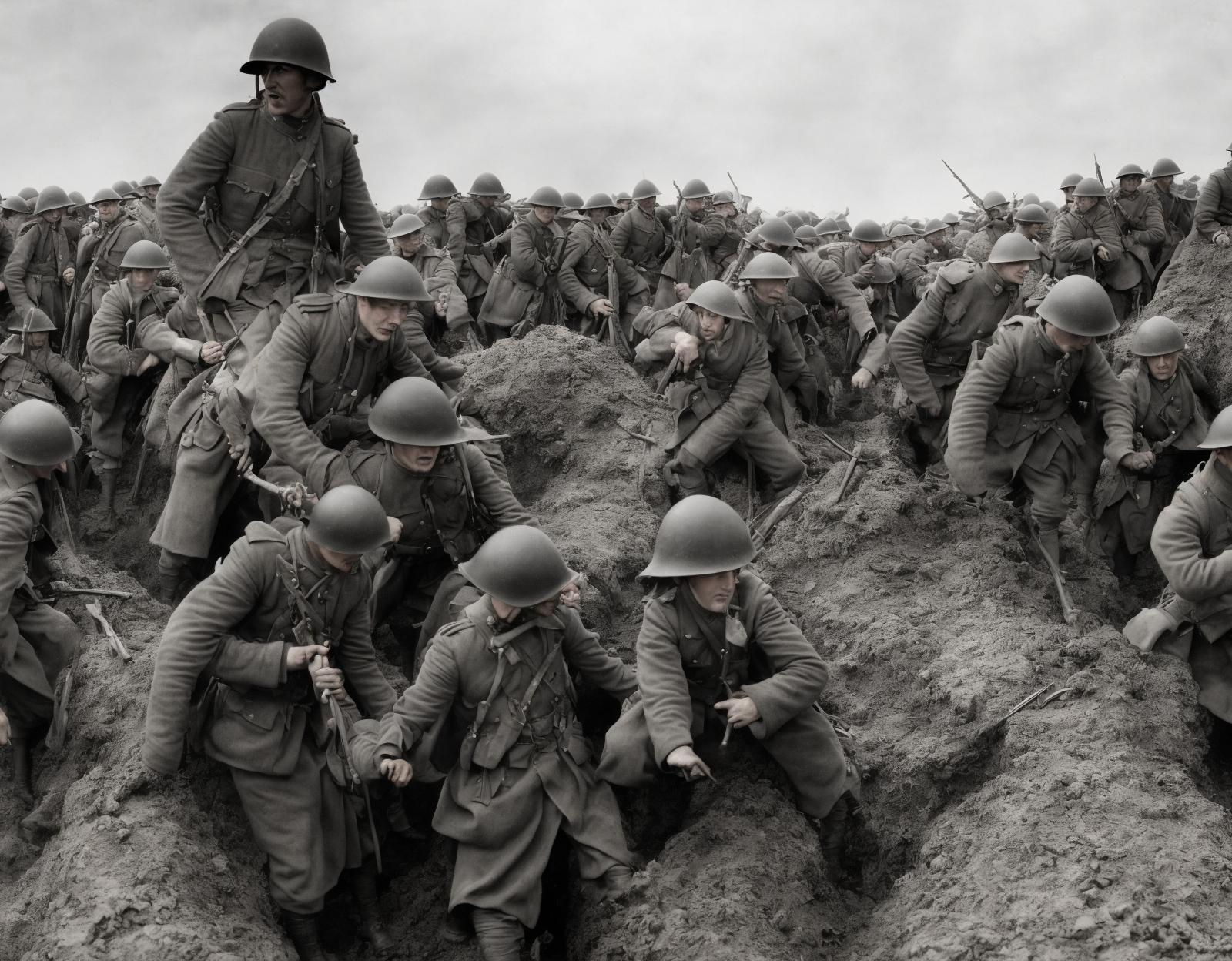
Trench Warfare: Secrets of the Western Front
Intro
The mud seemed endless, sticky as memory. For millions of soldiers on the Western Front, the landscape of the First World War was not a battlefield in the romantic sense but a narrow, carved-in, claustrophobic world of trenches—serpentine scars across northern France and Belgium. From the autumn of 1914, when mobile warfare gave way to a deadly equilibrium, to the final offensives of 1918, trenches shaped the experience, the tactics, and the imagination of the conflict. They were defensive masterpieces and humanitarian nightmares: engineered to save lives from machine-gun fire and artillery, yet they produced attrition on an industrial scale. Understanding trench warfare means understanding a paradox: its intended protection coexisted with an unrelenting threat from above and below, creating an environment where survival required ingenuity, endurance, and a peculiar adaptation to danger.
The Western Front's trenches were not uniform. They varied from simple shallow foxholes to complex systems with deep dugouts, communication and support lines, and layers of barbed wire. They hosted soldiers from dozens of nations, from Kitchener’s volunteers under British flags to French poilus, German landwehr, Belgian defenders, Canadians, Australians, New Zealanders, Indians, and troops from other corners of empires. The trenches were physical manifestations of industrialized warfare—where the firepower of the machine gun and the weight of modern artillery made open-field charges suicidal. This reality produced a stalemate that endured for years: an eerie, grinding contest of attrition that would define the war in Europe.
Did you know? The "Race to the Sea" in late 1914 did not involve a literal race to the coast but was the sequence of reciprocal flanking maneuvers that extended trenches to the North Sea.
But trench warfare was more than tactics and territory. It was a daily negotiation with misery: coping with mud and rats, with lice and the ever-present threat of infection; listening for the telltale sounds of a tunneller's pick or the thunderous, disorienting detonations of mines; deciphering the intelligence gleaned from small patrols and listening posts. It imposed psychological strain that came to be called "shell shock," an early term for what we now recognize as post-traumatic stress disorder. Even as high command sought decisive breakthroughs and engineers experimented with guns and tanks, soldiers lived much of the war not in dramatic charges but in a repetitive, grinding routine—standing watch on the fire-step, repairing wire, burying comrades, writing letters home.
This article follows the trenches’ anatomy and life, the weapons and tactics that made them necessary, the major battles fought across them, the silent human costs that lurked below the noise, and the innovations that eventually undermined trench dominance. We will visit the mud of the Somme and the pulverized slopes of Verdun, listen at listening posts, and trace the arc of military technology that turned stalemate into mobility. Through verified facts, primary accounts, military records, and the voices of soldiers and civilians, the aim is to render an immersive, mystery-tinged portrait of trench warfare—its logic, terror, and the stubborn humanity that persisted in spite of it.
The Rise of Trench Warfare on the Western Front
In 1914 the great powers of Europe expected a quick war. Germany’s Schlieffen Plan envisioned sweeping movement; French and British leaders prepared for rapidly shifting fronts. Yet within months, the early mobility collapsed into an entrenched deadlock. The pivotal transition began during the ‘Race to the Sea’ in September and October 1914, when both sides attempted flanking maneuvers that led to continuous lines of trenches stretching from the North Sea to the Swiss frontier. The combination of modern firepower—especially the machine gun—and the effectiveness of artillery made open advances prohibitively costly. When attackers tried to move across open ground, defenders with well-placed machine guns and rifle fire could inflict devastating casualties, and artillery barrages shattered formations and cratered terrain.
Did you know? Duckboards were first widely used to mitigate the worst effects of trench mud, but they could become icy and lethal in winter, leading to slips and breakages underfoot.
By late 1914, commanders on both sides accepted that defense had the advantage. Trench systems evolved from hastily dug shelters into organized defensive networks. Front-line trenches were supported by communication trenches, which allowed movement of men and supplies under cover. Behind them lay support trenches and reserve lines, intended to absorb counterattacks or to serve as staging areas for offensives. Defensive depth increased as engineers learned lessons from costly assaults; defense-in-depth sought to blunt attacks by trading space for time and attrition rather than relying on a single impregnable line.
Several factors ensured the endurance of trench warfare beyond the first months. Industrial-scale artillery had developed enormously by 1914, with accurate indirect fire that could pound enemy positions from miles away. Artillery became the decisive arm in attritional battles—preparations for offensives often centered on weeks or days of bombardment intended to destroy defenses, cut wire, and demoralize the enemy. Yet bombardments could also fail: many barrages did not neutralize defenders or their machine guns, especially when shallow trenches and deep dugouts offered shelter. Barbed wire, first used in the Boer War but perfected in Europe, created lethal obstacles that slowed infantry assaults and left attackers exposed to fire.
Logistics and rail networks allowed both sides to sustain large armies in close proximity. The Western Front's density—tens of divisions arrayed within a narrow front—meant that localized breakthroughs were difficult to exploit, especially as operational reserves could be rapidly transferred by rail to threatened sectors. Moreover, command-and-control limitations and imperfect reconnaissance hampered coordinated exploitation of gaps when they appeared. Air reconnaissance, balloons, and later aerial photography helped map enemy positions, but the fog of war and damaged roads in shell-torn landscapes still complicated movement.
Did you know? The British Mark I tank, first used at Flers-Courcelette in 1916, was so novel that the crews were sometimes ordered to paint their names and home towns on the hull for propaganda photographs.
Trench warfare on the Western Front thus became a function of technology, geography, and strategic choices. It produced a new kind of soldier’s life—one measured in shifts on the fire-step, watchful silence at listening posts, and the ritual of raiding. The trenches were simultaneously a shield and a cage; they were built to save lives from the bullets above, and in doing so they tied vast armies to a static, grinding contest. The mystery of the trenches is that, for all their bleakness, they also became places where small acts of defiance, ingenuity, and humanity persisted under extraordinary pressure.

Anatomy of a Trench: Design, Life, and Daily Routines
To understand trench warfare, one must imagine not a single pit but an interconnected system—first, second, and third lines woven with communication trenches, flanked by barbed wire, punctuated by dugouts, and interrupted by sapping tunnels and listening posts. The fire-step allowed an infantryman to step up and fire over the parados; the parapet preserved a stony face of sandbags and revetment to absorb bullets and splinters. Deep dugouts, often reinforced with timber and concrete, served as sleeping quarters and command posts and could shelter men during heavy shelling. Communication trenches linked the front line to support and reserve trenches, removing the exposure of men and supplies on the surface. Each component had a clear function, dictated by a brutal calculus: minimize exposure, maintain fields of fire, and ensure the flow of reinforcements.
Living conditions were notoriously awful. Mud is the cliché for a reason—rain, broken drainage, and constant shelling turned clay soil into sucking, ankle-deep mire that made movement slow and equipment liable to clog. Duckboards—wooden slats laid over the most trafficked sections—offered temporary relief but did little to eliminate waterlogged floors in dugouts. Latrines were primitive and often fouled by shelling that destroyed sewage systems; sanitation problems spread disease. Lice were ubiquitous, and delousing was a constant chore; soldiers described the incessant itching and the ritual stripping and steaming to remove vermin. Rats multiplied amid corpses and food stores, becoming an additional daily terror—reports from front-line diaries speak of rats large enough to carry away scraps and gnaw at blindfolded faces in dugouts.
Did you know? On the first day of the Somme (1 July 1916), the British suffered nearly 60,000 casualties; it remains the worst day in British military history.
There were also complex social routines and adaptations. Rota systems organized men into stints in the front line, reserve, and rest billets; periods in the trenches were often followed by time in rear areas for refit and recovery. Commanders tried to balance exposure to danger with the need to keep units cohesive and fresh; prolonged front-line service led to exhaustion and rising breakdown rates. Food was basic but varied; soldiers prized letters from home and small comforts like cigarettes, and these items could shape morale as much as rations. Trench clubs and improvised canteens became cultural loci where singing, storytelling, and small diversions produced temporary respite from the pressure.
The trench also had a tactical life. Listening posts would edge forward into no man’s land to detect enemy movements at night. Patrols probed enemy wire to gather intelligence or to capture prisoners for interrogation. Raids could be small, sudden knife-and-bayonet affairs intended to kill, capture, or mislead. These micro-operations entailed intricate planning: timing with artillery, wire-cutting, and the use of smoke to conceal movement. They were dangerous but proved crucial in maintaining an offensive spirit and acquiring tactical advantages.
Engineering works were constant: sandbags needed restocking, communications cable had to be laid and repaired, new revetments built, and drainage maintained. Corps of engineers and pioneer units became vital for maintaining defensive integrity. Trenches were not static—they were constantly repaired, modified, and deepened in response to enemy methods and weather. As winter approached each year, the struggle to stay dry, fed, and warm became more pressing. The trench required mental and physical adaptation, and the soldiers who survived learned to navigate its maze of physical dangers and social rhythms.
Did you know? "Shell shock" entered military medicine as a recognized condition during WWI, prompting early—but uneven—efforts to treat psychological trauma in soldiers.

Weapons, Technology, and the Changing Art of Attack
Trench warfare existed because of the defensive power of new weapons—but the same war also produced innovations aimed at breaking through. Among the decisive technologies were the machine gun, rapid and devastating; artillery, capable of pulverizing positions from a distance; barbed wire, creating killing grounds in front of trenches; and, later, chemical weapons, tanks, and improved small-arms tactics.
The machine gun reshaped infantry tactics by the early 20th century. A single well-placed Maxim or Vickers gun could sweep a field and decimate advancing troops. Given this, attackers needed either overwhelming fire support or surprise to survive. Artillery grew in both lethality and centrality: techniques such as predicted fire allowed bombardments targeted at enemy rear areas, while counter-battery fire became a specialized discipline aiming to silence enemy guns. By 1916, massive preparatory bombardments had become the hallmark of major offensives, though their effectiveness varied—barbed wire and resilient defensive positions sometimes survived shelling intact.
Chemical warfare introduced a new element of terror. The first large-scale use of poison gas on the Western Front occurred at the Second Battle of Ypres in April 1915 when German forces released chlorine gas, producing panic and burns among units unprepared for such an attack. Over the next years, armies developed both chemical agents (chlorine, phosgene, mustard gas) and countermeasures such as improvised masks, then standardized respirators. Gas did not decisively change the course of the war, but it added a layer of dread and inflicted lingering injuries and deaths. International outrage at gas use later contributed to the 1925 Geneva Protocol banning chemical warfare.
Did you know? The Hundred Days Offensive (August–November 1918) combined tanks, artillery, infantry, and aircraft to push German forces into retreat and helped bring about the Armistice.
Tanks emerged to solve the problem of crossing wire and surviving artillery and machine-gun fire. The British Mark I made its debut at the Battle of Flers-Courcelette on 15 September 1916, in the Somme offensive. Early tanks were mechanically unreliable and slow, but they demonstrated the potential to cross trenches and withstand small-arms fire, offering infantry mobile armored support. By 1918, improved versions and better tactical employment—combined arms with infantry, artillery, and aircraft—proved instrumental in breaking the deadlock.
Tactical evolution included artillery innovations like the rolling barrage, developed to move fire forward in layers just ahead of advancing infantry, providing a moving curtain of protection and suppressing defenders. The technique required precise coordination and timing. On the German side, the development of stormtrooper (Stoßtruppen) tactics in 1917–1918 emphasized small infiltration units that bypassed strongpoints to attack command and logistics, disrupting cohesion and leading to localized breakthroughs. Combined-arms doctrine, refined by 1918, integrated tanks, aircraft for reconnaissance and close air support, artillery planning, and infantry assaults to recover mobility on the battlefield.
Communications also improved. Field telephones, signal flares, pigeons, and runners were complemented by wireless sets and improved artillery liaison methods. Still, communication breakdowns remained a chronic problem, often preventing exploitation of tactical gains. Reconnaissance saw major advances: aerial photography and improved observation balloons enhanced mapping of enemy lines and gun positions, though weather and anti-aircraft defenses sometimes limited effectiveness.
Did you know? Many battlefield cemeteries and preserved trenches in France and Belgium, including those at the Somme and Ypres, are maintained as sites of memory and pilgrimage.
The arms race on the Western Front was constant: defensive inventions forced offensive responses, and each new method spawned countermeasures. The result was an evolving, brutal laboratory of military technology where innovation was both necessity and experiment.

Battles of Attrition: Somme, Verdun, Passchendaele
Some engagements on the Western Front epitomize the attritional logic of trench warfare. The Battle of Verdun (February–December 1916), the Battle of the Somme (July–November 1916), and the Third Battle of Ypres (Passchendaele, July–November 1917) stand out as monumental in scale and suffering. Though they differed in intent and execution, together they illustrate the human and material costs of prolonged trench warfare.
Verdun was, for the French, a test of national endurance. In February 1916, German High Command initiated what they hoped would be a battle of annihilation, aiming to "bleed France white" by forcing French forces to commit to a prolonged defense of the symbolic fortress city of Verdun. The fighting became a grinding, centralized battle of artillery and infantry, marked by rotating French units known as "la noria" to keep men from faltering under the relentless bombardment. The battle exacted a terrible price: the lines were pulverized, artillery emplacements and forts were shelled into ruins, and both sides suffered hundreds of thousands of casualties. Verdun’s legacy in France remained a symbol of sacrifice and national resilience.
The Somme offensive, launched on 1 July 1916 by British and French forces, had multiple aims: to relieve pressure on the French at Verdun, to inflict casualties on the German army, and to achieve a breakthrough. The first day of the Somme is infamous: on the British side alone there were nearly 60,000 casualties, with some 20,000 killed—making it the bloodiest day in British military history. Over the course of several months, the Somme region witnessed massive assaults, creeping barrages, and, importantly, the first use of tanks in September 1916. The eventual territorial gains were measured in miles of cratered earth; the combined casualties on all sides numbered over one million. The Somme demonstrated both the limits of pre-war tactics when faced with modern firepower and the painful lessons that steered future operational changes.
Passchendaele—centered on the Ypres salient—was notable not only for the ferocity of combat but for the almost impassable mud, which swallowed men, horses, guns, and sometimes whole emplacements. Rain and poor drainage turned shell-holes into deep pools; attempts to advance required traversing hectically shelled and flooded terrain. The offensive aimed to secure the Belgian coast and destroy German submarine bases but became controversial because the gain in territory was small relative to the tremendous human cost. Allied and German casualties were enormous—hundreds of thousands combined—leaving a landscape of churned earth, split trees, and ruined villages.
These battles share common features: massive preparatory bombardments, costly infantry assaults over exposed ground, and a war of attrition that measured success in incremental gains and the depletion of the enemy’s reserves. Yet they also produced tactical learning. At Somme and Passchendaele, artillery coordination, creeping barrages, improved aerial spotting, and the nascent use of tanks and combined-arms formations began to coalesce into more sophisticated operational plans. By 1918, these lessons contributed to the more mobile and integrated offensives that would finally break the stalemate.

Silent Killers: Disease, Psychology, and the Human Cost
Beyond bullets and shells, trenches fostered conditions that were lethal in quieter, more insidious ways. Disease—typhus, dysentery, trench fever—and non-combat injuries such as trench foot claimed countless victims. Trench foot, a condition resulting from prolonged exposure to damp and cold, could lead to gangrene and required amputation in severe cases; it prompted armies to emphasize foot care, oiling, and regular changes of socks, and to issue improvements such as hobnailed boots and better drainage. Lice were almost universal; phtiriasis (lice infestation) caused trench fever and constant discomfort, and delousing stations were established behind the lines.
Psychological trauma appeared in many forms. "Shell shock" was the contemporary diagnosis for a range of symptoms—tremors, mutism, paralysis, nightmares, and cognitive breakdown—linked to exposure to explosive shock and the relentlessness of front-line life. Initially poorly understood, shell shock led to controversial medical and disciplinary responses: some sufferers received compassionate care, while others faced accusations of cowardice. Over time, more systematic treatments emerged, and recognition of war-induced psychological injury gradually improved, though the era’s reprisals and misunderstandings left a legacy of suffering.
Hygiene and medical evacuation systems evolved in response to the demands of trench warfare. Regimental aid posts, casualty clearing stations, and base hospitals formed an evacuation chain that tried to remove the wounded quickly from the battlefield. Advances in surgery, antiseptics, and the use of blood transfusions and later reconstructive techniques improved survival rates, but infections and gangrene remained serious threats. Ambulance services—initially horse-drawn, later motorized—played critical roles in getting men to care. The sheer volume of casualties taxed medical facilities, prompting innovations in triage and transport.
Rats and vermin carried disease and accentuated the psychological burden. Corpses that could not be recovered due to shelling drew swarms of scavengers and produced a constant reminder of mortality. Letters from the front reveal how small comforts—a warm meal, a letter, the sight of a familiar face—were as vital to morale as an intact rifle. Religious and secular rituals of commemoration became important both at the front and in rear areas: simple graves, cross markers, or communal ceremonies helped soldiers process loss amidst sustained danger.
The human cost extended beyond immediate casualties. The social consequences—broken communities, lost generations, and shifting gender roles at home—are part of the trench’s legacy. Veterans returned with lasting injuries, both visible and hidden, changing family life and public attitudes toward warfare. The language of trenches entered literature and art, shaping how the war was remembered: stark poetry by Wilfred Owen and Siegfried Sassoon, grim prose, and visual records transformed personal trauma into cultural testimony.
Breaking the Stalemate: Innovations and the End of Trench Dominance
By 1918 the static horror of trench warfare began to give way, not because the trenches vanished overnight but because innovation, attrition, and strategic changes allowed renewed mobility. Several converging factors undermined trench dominance: improved combined-arms tactics, better coordination between artillery and infantry, mass use and refinement of tanks, enhanced airpower for reconnaissance and close support, and the cumulative exhaustion of Germany’s manpower and materiel after years of attrition.
The development of combined-arms doctrine was perhaps the decisive factor. Commanders learned to coordinate artillery barrages with creeping timing, use aircraft to spot for artillery and to harass enemy lines of communication, and support infantry with armored vehicles. The British and later Allied offensives in 1918—the Hundred Days Offensive beginning in August—demonstrated the effectiveness of these integrated operations. Tanks, now more reliable and available in numbers, led advances across former no man’s land while infantry followed protected by rolling barrages. The Germans had introduced infiltration tactics in 1917, but by 1918 they were stretched thin by supply shortages, the blockade’s cumulative effects, and Russian exit from the Eastern Front freeing German troops to move westward too late to regain decisive strategic advantage.
Logistics, intelligence, and training improved on both sides. Better liaison between artillery observers and firing batteries reduced wasted munitions and improved effectiveness. Mobilization of resources in munitions factories and improved rail and road repair bolstered operational tempo. Air reconnaissance, interdiction, and bombardment of supply points hindered the enemy’s ability to respond swiftly. In short, the operational art matured: commanders learned to think in terms of maneuver supported by a mix of technologies and services rather than massed infantry waves against prepared positions.
The cumulative effect of strategic blockade and economic attrition also played a role. German shortages in food and fuel increasingly sapped morale and capability. The entry of fresh American troops from 1917 provided a steadying reinforcement to Allied numbers and material; while their early impact was limited by inexperience, over time the influx of American manpower and industrial support changed the balance.
Tactically, the later war saw a shift from rigid, predetermined plans to more flexible, mission-oriented commands. Artillery fire plans became more sophisticated, incorporating predicted fire, sound ranging to detect enemy guns, and counter-battery strategies. Tanks and mobile groups were used to exploit locally successful penetrations before defenders could reconstitute a coherent defense. These changes culminated in a series of Allied offensives starting in August 1918 that pushed German forces back along multiple axes and culminated in the Armistice of 11 November 1918.
The trenches did not disappear overnight. Many sectors remained fortified and violent to the last days. Yet their dominance as the principal mode of fighting faded as mobility returned. The brutal lesson of trench warfare reverberated through military doctrine in the interwar period: armies sought ways to regain maneuver and avoid the attritional quagmire—lessons that would profoundly shape the next generation of conflict and the interwar arms debates.

Trench warfare on the Western Front stands among the most searing images of the First World War: lines of sandbags, the pocked earth of shell-cratered fields, the dim interiors of dugouts, and the fragile rituals that sustained men through grinding months. It was a system born of technological realities and strategic choices—a grim but practical solution to the lethal combination of machine guns, artillery, and barbed wire. It shaped not only military outcomes but the social and cultural memory of the war, producing literature, art, and commemorative practices that have endured for more than a century.
The story of the trenches is also a story of adaptation and innovation. Defensive power forced offensive invention, and over time the means to overcome static lines—better artillery coordination, tanks, aircraft, and new infantry tactics—matured to return mobility to the battlefield. The human cost was immense, and the war left landscapes scarred with the physical traces of what some survivors called a "hell on earth." Yet within that bleakness there were moments of humanity: soldiers sharing scarce food, informal truces and gestures, humor used as a shield against despair, and individual acts of courage that did not fit neatly into the narratives of strategy.
The legacy of trench warfare persists in physical and memorial terms: cemeteries and preserved battlefields across northern France and Belgium, museums that curate the material culture of the conflict, and the poetry and memoirs that continue to give voice to those who endured it. These sites remind us of the complexity behind every statistic: each casualty was a life with relationships, plans, and stories. Remembering trench warfare means engaging with technology and tactics, yes, but also with suffering, resilience, and the ethical weight of decisions made by leaders and by ordinary soldiers.
Finally, trench warfare taught a lesson about the interplay of technology, doctrine, and human endurance. It showed how defensive advantage and industrial firepower can lock entire nations into long, costly conflicts—and how creativity, combined arms, and sustained material superiority can eventually reopen the battlefield. For historians, veterans, and descendants, the trenches remain an enduring subject of inquiry: not only as military history but as a human story of survival, adaptation, and the search for meaning amid chaos.

How we verify this article
By the History Unlocked editorial team
This text is built on historical facts stored in our database and drafted with AI assistance. No signed human review is recorded for this article. Report any inaccuracy: we correct it and update the modified date.
Updated on
AI-assisted drafting.
Read our editorial standardsEnjoyed this? Discover more articles in the category World War I