The Devil's Breath: How WWI's Chemical Warfare Unleashed Hell on Earth
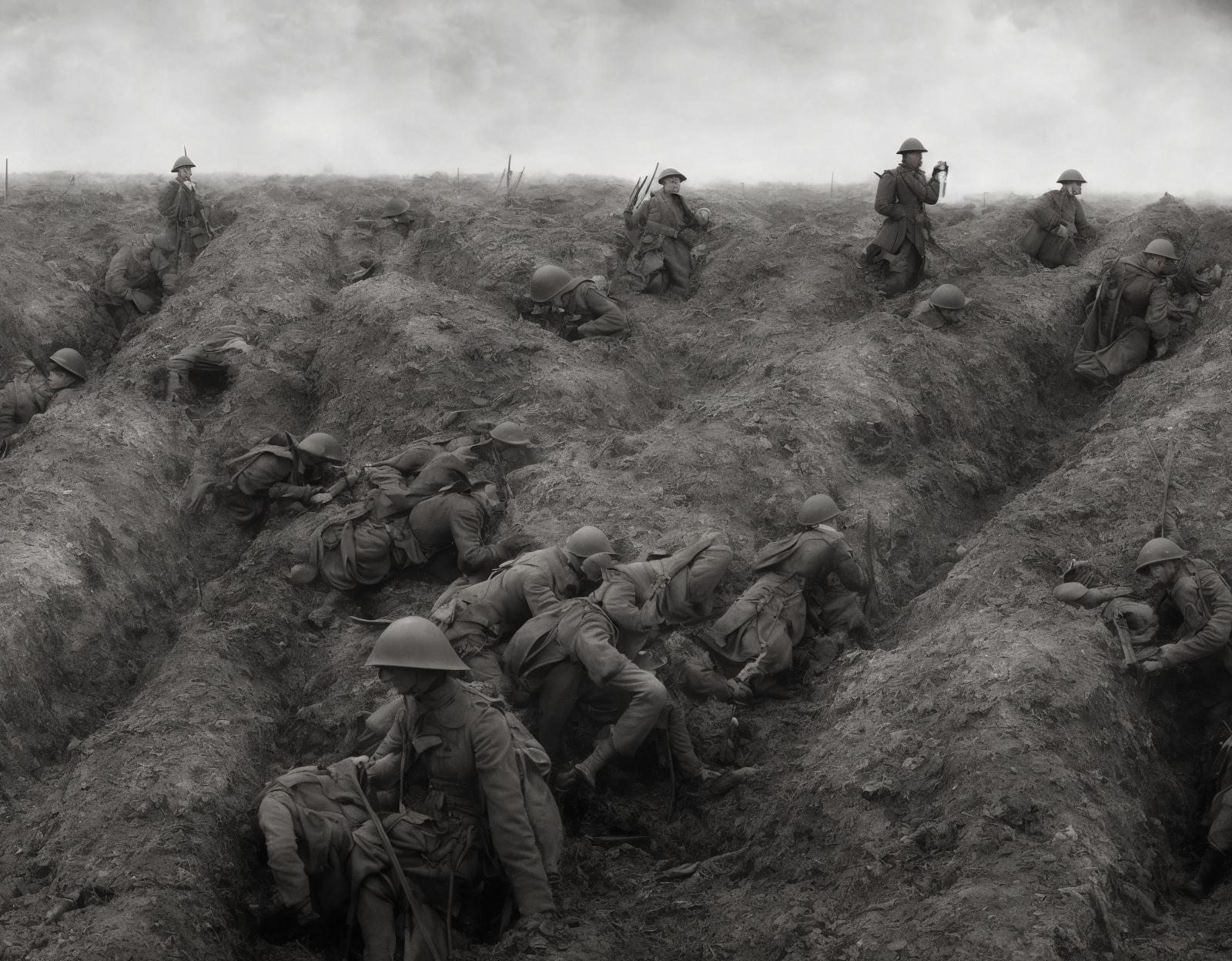
A strange, greenish-yellow cloud rolled across no man's land on the afternoon of April 22, 1915. It was a sight unlike any other in the history of warfare. French and Algerian soldiers of the 45th and 87th divisions, holding the line in the northern sector of the Ypres Salient, watched with a mixture of confusion and morbid curiosity. The German artillery bombardment that had preceded it was not unusual, but this silent, creeping fog was something new, something alien. It moved slowly, hugging the ground, shimmering faintly in the afternoon sun. Some thought it was a smokescreen to cover an impending German infantry assault. Others joked that the "sausages" were up to some new trick. But as the cloud reached their trenches, curiosity turned to sheer, unadulterated terror. A sharp, metallic scent, like a mixture of pineapple and pepper, filled the air, and then the agony began. The gas, a dense cloud of chlorine, reacted with the moisture in the men’s eyes, throats, and lungs, creating hydrochloric acid. It felt like being drowned and burned alive simultaneously. A wave of suffocating panic swept through the trenches as soldiers began choking, their lungs filling with fluid. Their eyes streamed with tears, temporarily blinded by the searing pain. Men clawed at their throats, their faces turning a ghastly shade of blue as they asphyxiated. In a matter of minutes, a five-mile stretch of the Allied line, held just moments before by thousands of troops, simply dissolved in chaos. Soldiers broke rank and fled, desperate to outrun the silent, suffocating cloud. They abandoned their rifles, their machine guns, their posts, their comrades. They ran blindly, their chests heaving, until they collapsed, their lungs irrevocably destroyed. Behind them, they left a scene from a nightmare: trenches filled not with the sound of gunfire, but with the desperate gasps and moans of the dying. This was the dawn of a new age of horror, the moment Pandora's Box was thrown wide open on the Western Front. The Second Battle of Ypres would be remembered not just for its strategic importance, but as the moment humanity weaponized the very air we breathe. The "Devil's Breath," as it would come to be known, had arrived, and the nature of war would never be the same. The age of industrial-scale chemical warfare had begun.
The Genesis of a Silent Killer
The road to Ypres was paved with scientific ambition and military desperation. By late 1914, the Great War had ground to a brutal stalemate. The sweeping advances and grand cavalry charges envisioned by the generals had given way to the static, attritional hell of trench warfare. From the Swiss border to the North Sea, millions of men were dug into a vast, muddy network of fortifications, separated by a bullet-swept "no man's land." The machine gun and the artillery piece reigned supreme, making frontal assaults suicidal and breakthroughs nearly impossible. Both sides were desperate for an innovation, a "wonder weapon" that could break the deadlock and restore a war of movement. It was in this climate that the German High Command began to seriously entertain a terrifyingly novel idea: using poison gas as a weapon of war. The concept was not entirely new; The Hague Conventions of 1899 and 1907 had explicitly forbidden the use of "poison or poisoned weapons." Germany was a signatory, but military necessity, as is often the case, was used to justify casting aside legal and ethical constraints. The chief architect and most fervent advocate of this new form of warfare was a brilliant, fiercely patriotic German chemist named Fritz Haber. A Nobel laureate for his groundbreaking work on synthesizing ammonia from nitrogen and hydrogen—a process that revolutionized agriculture by enabling mass production of fertilizers—Haber was a complex and tragic figure. He saw no moral distinction between killing with conventional explosives and killing with chemicals. To him, science was a tool to be used in service of the state, and in wartime, its ultimate purpose was to ensure victory. He famously argued that "in peace time a scientist belongs to the world, but in war time he belongs to his country." Haber threw himself into the project, leading a team of scientists to weaponize industrial chemicals. They first experimented with tear gas, but it proved ineffective in the cold of the Eastern Front. They needed something more lethal. Their search led them to chlorine, a byproduct of the German dye industry, readily available in massive quantities. Chlorine was a potent respiratory irritant, heavier than air, and devastatingly effective in concentrated form. Haber's plan was simple yet brutal: transport thousands of steel cylinders filled with liquid chlorine to the front lines, wait for a favorable wind, and then unleash the gas cloud upon the unsuspecting enemy. It was a terrifyingly efficient concept, transforming the very atmosphere into a weapon and turning the enemy's trenches—their only source of shelter—into a deathtrap. The generals of the German Fourth Army, including Duke Albrecht of Württemberg, were initially skeptical, but the promise of a decisive breakthrough was too tempting to ignore. They gave Haber the green light. The target chosen was the Ypres Salient, a bulge in the Allied line that was notoriously difficult to defend and was held by a mix of French, Algerian, Canadian, and British troops. The stage was set for an experiment that would horrify the world and forever stain the legacy of its creator.

Ypres 1915: Pandora's Box Unleashed The afternoon of April 22, 1915, was unseasonably warm and sunny in Flanders. A gentle northeasterly breeze—the very condition the Germans had been waiting weeks for—drifted towards the Allied lines. At 5:30 PM, on a four-mile front opposite the French 45th (Algerian) and 87th (Territorial) Divisions, German pioneers received the order. They opened the valves on nearly 6,000 cylinders, releasing 168 tons of chlorine gas. What followed was an apocalypse. The dense, yellowish-green cloud, sometimes reaching 30 feet in height, rolled slowly across the scarred landscape. The Algerian troops, many of whom had never even seen industrial factories, had no frame of reference for what was happening. As the acrid cloud enveloped them, it brought with it a wave of indescribable agony. The chlorine gas immediately began to attack their respiratory systems. It felt like being stabbed in the lungs with thousands of red-hot needles. Violent, uncontrollable coughing fits seized the men as their bodies desperately tried to expel the poison. Fluid began to build up in their lungs, a condition known as pulmonary edema, effectively causing them to drown from the inside out. Their eyes, seared by the acid, streamed with tears, and their faces began to turn a sickly blue-black from asphyxiation. The sheer terror and the novelty of the attack shattered all discipline. Within minutes, the French divisions broke and fled in a state of complete panic, creating a massive, four-mile-wide gap in the Allied defenses. The German infantry, equipped with crude "breathing-aid" pads soaked in sodium thiosulfate, followed cautiously behind the cloud. They were met with a scene of utter horror. The trenches were filled with the dead and dying. Bodies lay contorted on the fire-steps and in the dugouts, their faces discolored, with a yellow, frothy liquid bubbling from their mouths. Others were still gasping for air, their chests heaving in a futile battle for oxygen. The battlefield was eerily silent, devoid of the usual sounds of combat, replaced only by the choking and moaning of the gassed. The Germans, though successful beyond their wildest dreams, were themselves unnerved by the grotesque results of their weapon and were not prepared to fully exploit the massive breach they had created. Their advance was hesitant, allowing the Allies precious time to attempt to plug the gap. That night and in the days that followed, the 1st Canadian Division and other British units were rushed in to seal the breach. They were thrown into a desperate and bloody fight, often without any protection against the gas. It was a Canadian medical officer, Lieutenant Colonel Francis Scrimger, who correctly identified the gas as chlorine and, in a moment of inspired improvisation, ordered his men to urinate onto their handkerchiefs or socks and hold them over their mouths and noses. The ammonia in the urine would react with the chlorine, partially neutralizing it. It was a crude, disgusting, but life-saving measure. The Second Battle of Ypres would rage for another month, but the precedent had been set. The taboo had been broken, and the world had been given a terrifying glimpse into the future of industrial warfare.
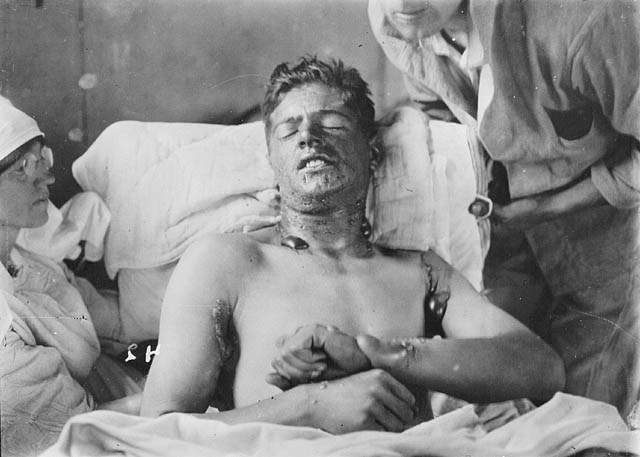
An Arms Race of Poisons: From Chlorine to Mustard Gas The German attack at Ypres didn't win the war, but it did succeed in starting a deadly new arms race. The initial shock and moral outrage from the Allied side was quickly replaced by a grim determination to retaliate in kind. If Germany was going to engage in this "dirty war," then the Allies would have no choice but to respond. The "Chemist's War" had begun. The British, with their advanced chemical industry, were the first to develop their own poison gas capabilities, launching their first chlorine gas attack at the Battle of Loos in September 1915. However, the attack was a tragic failure. Unpredictable winds blew the gas back into the British trenches, causing more casualties among their own troops than among the Germans. It was a harsh lesson in the unreliability of wind-dependent gas cloud attacks. Both sides quickly realized they needed more sophisticated and potent chemicals, as well as more reliable delivery systems. This led to a rapid escalation in both the toxicity of the agents used and the methods of their deployment. Chlorine, while terrifying, was relatively easy to defend against once its nature was understood. Chemists on both sides began developing far more lethal substances. The next major agent to be introduced was phosgene. First used by the French and later perfected by the Germans, phosgene was a truly insidious killer. It was colorless and had a much fainter, more subtle smell compared to chlorine, often described as being like "moldy hay." This made it much harder to detect. More terrifyingly, its effects were often delayed. A soldier could be exposed to a lethal dose of phosgene and show only minor symptoms like coughing and eye irritation for up to 48 hours. He might feel well enough to continue his duties, only to later suffer a sudden and catastrophic collapse as his lungs filled with fluid. This psychological element made phosgene a weapon of immense terror. But the true king of poison gases, the chemical that would come to symbolize the horrors of the Great War, was dichloroethyl sulfide, known colloquially as mustard gas or "Yperite." First used on a massive scale by the Germans against the British at Ypres in July 1917 (hence its name), mustard gas was not primarily a killing agent like phosgene. It was a vesicant, or blistering agent. Delivered by artillery shells which exploded with a dull "plop" rather than a sharp crack, it released an oily, vaporous liquid that smelled faintly of garlic or horseradish. It was heavier than air and would linger in low-lying areas, shell craters, and dugouts for days, sometimes even weeks, contaminating vast swathes of the battlefield. The effects of mustard gas were not immediate, but they were agonizing and horrific. Several hours after exposure, victims would develop large, excruciating yellow blisters on their skin, in their armpits, and on their genitals. It caused severe chemical burns and, if inhaled, would strip the mucous membrane from the bronchial tubes and lungs, leading to a slow, painful death. Worse still, it attacked the eyes, causing temporary or permanent blindness. Because it penetrated clothing and leather, respirators only offered protection for the lungs and eyes. The rest of the body remained vulnerable. The sheer psychological impact of mustard gas cannot be overstated. It was an invisible, persistent threat that could incapacitate entire battalions, overwhelm medical services, and turn the very ground the soldiers stood on into a toxic trap. It was the ultimate weapon of attrition and terror.
A Futile Defense? Gas Masks and Countermeasures The immediate response to the first chlorine attack at Ypres was a frantic, desperate scramble for protection. The image of Canadian soldiers using urine-soaked rags is a testament to the improvisation required in those first terrifying hours. However, a more systematic solution was urgently needed. The first official pieces of anti-gas equipment were primitive and often provided little more than a psychological boost. The British issued "Black Veil Respirators" – essentially a pad of cotton wool soaked in a neutralizing solution and wrapped in black gauze. This was followed by the "Hypo Helmet" or "Smoke Hood," a flimsy flannel bag with a small celluloid window, soaked in sodium hyposulphite. It was hot, uncomfortable, and the chemicals often irritated the wearer’s eyes. Getting one on in a hurry during a gas alarm was a clumsy, panicked affair. Soldiers had to pull the suffocating bag over their head, tucking the bottom into their tunic to form a seal. The eye-piece would quickly fog up, leaving the soldier half-blind and disoriented. These early hoods offered some protection against chlorine but were useless against the more potent phosgene. The Germans, having initiated gas warfare, were naturally ahead in developing defenses. Their first proper gas mask, the Gummimaske, featured a rubberized canvas facepiece, replaceable filters, and screw-on eyepieces. This design became the foundation for all subsequent gas mask development. The Allies rushed to catch up. The French M2 mask was an improvement, but it was the British who finally created the iconic respirator of the Great War: the Small Box Respirator (SBR). Introduced in late 1916, the SBR represented a quantum leap in gas mask technology. It featured a comfortable, close-fitting rubberized facepiece connected by a flexible hose to a canister filter worn in a satchel on the soldier's chest. This canister contained layers of charcoal and chemically impregnated granules (know as "charcoal and pumice") that could absorb and neutralize a wide range of chemical agents, including phosgene. The separation of the filter from the mask made it lighter and far more comfortable to wear and breathe through for extended periods. Life in the trenches became dominated by "gas discipline." The gas alarm—a loud mechanical rattle, a blaring horn, or the frantic banging on a spent shell case—would trigger a well-drilled but always terrifying routine. Soldiers had to stop whatever they were doing, hold their breath, and don their respirators within seconds. A moment's hesitation could mean a slow, agonizing death. Gas officers were appointed to train troops, inspect their respirators, and enforce strict gas alertness protocols. These procedures were practiced relentlessly until they became second nature. But even the best equipment and training could not eliminate the constant fear. The psychological strain of living under the perpetual threat of an invisible killer was immense. The hiss of an incoming shell could trigger a panic, as no one knew if it contained high explosives or a chemical agent until it detonated. The rasping sound of breathing through a respirator, the claustrophobia of the mask, and the muted, isolated world seen through fogged-up eyepieces became a defining experience of the war for millions of soldiers.
Life and Death in the Gas-Soaked Trenches The advent of chemical warfare fundamentally altered the sensory landscape of the Western Front. It added a new layer of psychological dread to the already nightmarish existence of the trench soldier. Beyond the constant threat of bullets, shells, and disease, there was now an invisible enemy that could creep into the safest dugout and kill without a sound. Life became a series of drills and anxieties governed by the wind and the faint, tell-tale smells in the air. Every soldier had to become a connoisseur of strange odors: the metallic tang of chlorine, the musty scent of phosgene, the garlic-like aroma of mustard gas. A sudden shift in the wind could turn a quiet sector into a death trap. The gas alarm became the most feared sound on the front. Whether it was the clatter of a wooden rattle or the clang of a metal pipe, it signaled a moment of pure, adrenaline-fueled panic. Soldiers would have mere seconds to stop breathing, close their eyes, and fumble for their gas masks. The "box respirator drill" was a matter of life and death, practiced endlessly. Fumbling with the satchel, pulling the mask over the face, and ensuring a tight seal was a race against the poison. A tangled strap or a moment of hesitation could be fatal. False alarms were frequent and nerve-shredding, but they were infinitely preferable to the real thing. Once the mask was on, the world transformed. Vision was limited to what could be seen through the two small, easily fogged eyepieces. Hearing was muffled, replaced by the sound of one's own ragged, amplified breathing through the filter—a constant, rhythmic reminder of the poisoned air outside. The sense of isolation was profound. Communication became a matter of shouting through the mask or using hand signals. For hours, sometimes days, men would have to live, fight, and work in this suffocating, claustrophobic state. Eating, drinking, or smoking was impossible. The rubber and chemicals of the mask chafed the skin, and the filter added resistance to every breath, making even simple tasks exhausting. Mustard gas, the "King of Battle Gases," introduced new levels of misery. Its persistence meant that it didn
How we verify this article
By the History Unlocked editorial team
This text is built on historical facts stored in our database and drafted with AI assistance. No signed human review is recorded for this article. Report any inaccuracy: we correct it and update the modified date.
Updated on
AI-assisted drafting.
Read our editorial standardsEnjoyed this? Discover more articles in the category World War I