Operation Barbarossa: Hitler's Fateful Gamble in the East
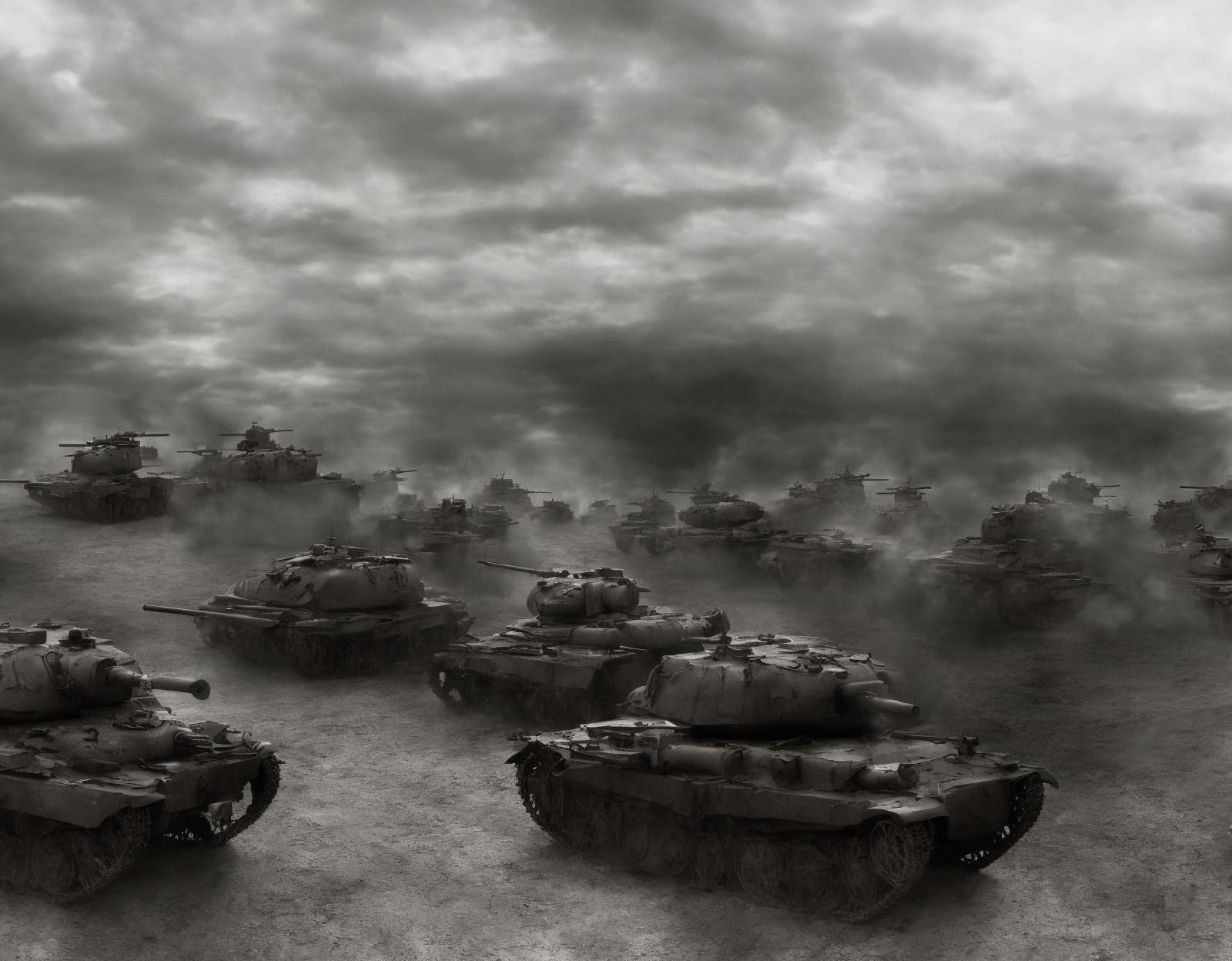
The summer of 1941 was a season of profound change, not just for the weather-beaten fields of Eastern Europe, but for the very fabric of global power. On June 22nd, a date etched into the annals of history with the blood of millions, an invasion of unprecedented scale and ferocity unfolded. Operation Barbarossa, the codename for Nazi Germany's invasion of the Soviet Union, was not merely another military campaign; it was an ideological crusade, a grand, existential gamble fueled by racial hatred and a desperate desire for "Lebensraum" – living space. Hitler, buoyed by his swift victories in Western Europe, believed that the Soviet Union, a vast but seemingly unwieldy colossus, would collapse like a house of cards under the weight of his meticulously honed Wehrmacht. He envisioned a lightning war, a series of swift, decisive blows that would shatter the Red Army, depose the Bolshevik regime, and subjugate the Slavic peoples, transforming the boundless plains of Russia into an agricultural and industrial extension of the Third Reich. Yet, this ambition, so grand and so utterly ruthless, was predicated on a dangerous cocktail of hubris, underestimation, and a fundamental misunderstanding of the Soviet spirit and its boundless resilience. The stage was set for a conflict that would transcend conventional warfare, a brutal clash of ideologies that would define the Eastern Front as the largest, deadliest, and most uncompromising theater of World War II, a meat grinder in which the very concept of humanity was often sacrificed at the altar of total war. The repercussions of this fateful decision would resonate through generations, forever altering the geopolitical landscape and leaving an indelible scar on the collective memory of humanity. This was not just a war; it was an apocalypse, unleashed with chilling precision and devastating consequences.
The Unholy Alliance and Its Rupture
Prior to Barbarossa, a fragile and deeply cynical pact existed between Nazi Germany and the Soviet Union: the Molotov-Ribbentrop Non-Aggression Pact of August 1939. On the surface, it appeared to be a diplomatic triumph, a surprising truce between two irreconcilable ideological foes, seemingly diverting the tide of war in Europe. Yet, beneath the veneer of peaceful coexistence lay a dark secret protocol, meticulously outlining the division of Eastern Europe into spheres of influence. Poland, the Baltic States, Finland, and Bessarabia were carved up with chilling disregard for national sovereignty, a prelude to the horrors that would soon follow. For Hitler, the pact was a temporary convenience, a strategic maneuver to secure his eastern flank while he dealt with France and Great Britain. For Stalin, it bought precious time to prepare for the inevitable confrontation, though he tragically misjudged the timing and scale of Hitler's betrayal. Both dictators viewed the other with profound suspicion and contempt, their shared antipathy temporarily masked by geopolitical pragmatism. When Hitler launched Barbarossa, he shattered this unholy alliance, revealing the true depth of his perfidy and fundamentally altering the strategic calculus of the war. The swiftness and overwhelming force of the German invasion caught the Soviets largely by surprise, despite numerous intelligence warnings often dismissed by Stalin as Western provocations. The sheer audacity of the betrayal, coupled with years of purges that had decimated the Red Army's officer corps, created immediate chaos and disarray within Soviet ranks. The early days of the invasion were a testament to the lightning speed of the German Blitzkrieg, a strategy that had proven so devastatingly effective in Western Europe, now unleashed with even greater ferocity on the vast plains of the Soviet Union.
Blitzkrieg's Brutal Advance and the Red Army's Struggle
The initial phase of Operation Barbarossa was a catastrophic success for the Wehrmacht. Three massive army groups – Army Group North, Army Group Centre, and Army Group South – spearheaded the invasion, each with specific objectives. Army Group North aimed for Leningrad, the cradle of the Bolshevik Revolution. Army Group Centre, the most powerful of the three, targeted Moscow, the heart of the Soviet Union. Army Group South pushed towards Ukraine, the breadbasket of the Soviet empire, crucial for its agricultural and industrial resources. The German forces, utilizing the devastating tactics of Blitzkrieg, advanced rapidly, encircling vast formations of the Red Army and inflicting staggering casualties. Tanks, Stuka dive bombers, and motorized infantry coordinated in a relentless assault, overwhelming Soviet defenses and creating massive pockets of trapped soldiers. The sheer scale of destruction and the speed of the German advance were unprecedented. Millions of Soviet soldiers were captured, many perishing in brutal conditions in German POW camps, a testament to the racial ideology that underpinned the invasion. However, despite the staggering losses and the seemingly unstoppable advance, the Red Army, though initially disorganized, gradually began to stiffen its resistance. Soviet soldiers, fighting for their homeland against an existential threat, often fought to the last man, slowing the German advance and extracting a heavy toll. The vastness of the Soviet Union, its poor infrastructure, and the emerging brutality of the partisan warfare behind German lines, all began to collectively complicate the seemingly smooth advance of the Axis forces. These logistical nightmares, combined with an increasingly desperate but resilient enemy, began to erode the speed and efficiency that was so crucial to the success of the Blitzkrieg strategy, planting the first seeds of doubt in the German high command.
Did you know? Despite clear intelligence warnings from multiple sources, including his own intelligence agencies and even Winston Churchill, Stalin dismissed the impending German invasion as a fabrication, believing Hitler wouldn't risk a two-front war.

The Scorch and The Stand: Leningrad and Moscow
As the German advance continued, two critical cities became focal points of the Eastern Front: Leningrad and Moscow. Army Group North, after swift initial gains, found itself bogged down in the prolonged Siege of Leningrad. What began as an attempt to capture the city quickly devolved into one of the most horrific sieges in human history, lasting for almost 900 days. The city's inhabitants endured starvation, relentless bombing, and extreme cold, yet their spirit of resistance remained unbroken. The "Road of Life" across the frozen Lake Ladoga became the city's only lifeline, a testament to unimaginable human endurance against overwhelming odds. Meanwhile, Army Group Centre, having achieved stunning victories in Belarus and Smolensk, turned its sights on Moscow. The Battle of Moscow, beginning in October 1941, was a desperate struggle for the very heart of the Soviet Union. The approaching winter, the vast distances, and the ferocious Soviet resistance, including newly arrived Siberian divisions, combined to create an insurmountable challenge for the German forces, who were ill-equipped for the brutal Russian winter. Hitler, overconfident after initial successes, had failed to provide his troops with adequate winter clothing, a catastrophic oversight that would cost countless lives. The German offensive faltered just kilometers from the capital, a strategic setback that shattered the myth of the Wehrmacht's invincibility and marked a crucial turning point in the war. The defense of Moscow, meticulously organized by General Georgy Zhukov, showcased the tactical brilliance and unwavering resolve of the Red Army, preventing a rapid collapse and forcing the Germans into a protracted, attritional war that they were ill-prepared to fight. The sheer human cost of these two epic struggles, Leningrad and Moscow, demonstrated the unyielding will of the Soviet people and the ultimate failure of Hitler's initial strategy to quickly crush the Soviet Union.

The Brutal Winter and Hitler's Folly
The onset of the infamous Russian winter of 1941-1942 proved to be a far more formidable adversary than anticipated by the German high command. Temperatures plummeted to extreme lows, sometimes reaching -40 degrees Celsius, paralyzing German logistics and rendering their sophisticated machinery inoperable. Lubricants froze, engines failed to start, and even small arms malfunctioned. German soldiers, dressed in summer uniforms, suffered terribly from frostbite, hypothermia, and widespread disease. Supply lines, already stretched thin over vast distances, became virtually impassable through snow and mud, exacerbating the shortages of food, fuel, and ammunition. Hitler, against the advice of his generals, had underestimated the severity of the Russian winter and the resilience of the Soviet defense. His belief in a swift victory meant no provisions for a protracted winter campaign were made, a monumental strategic error. This folly allowed the battered but unbroken Red Army, now better equipped and acclimatized, to launch a series of counter-offensives. The Soviet counter-attack began in early December 1941, primarily around Moscow, pushing the Wehrmacht back from the gates of the capital and inflicting heavy casualties. This forced the Germans to abandon their offensive posture and dig in, transforming the Blitzkrieg into a grinding war of attrition for which they were poorly prepared. The myth of German invincibility was severely fractured, and the morale of the Wehrmacht took a significant hit. The winter's brutal toll on men and materiel effectively prevented any further major German offensives for several months, buying precious time for the Soviets to regroup, rearm, and prepare for the long, arduous struggle ahead. The catastrophic impact of the Russian winter on the German war machine underscored a critical miscalculation by Hitler, a hubris that would ultimately contribute to the downfall of the Third Reich.
The Tide Turns: Stalingrad and Beyond
While the winter of 1941-42 marked a significant psychological and strategic setback for the Germans, the war was far from over. Hitler, still determined to achieve his objectives, shifted his strategy in 1942 towards the south, aiming to seize the oil-rich Caucasus region and the vital industrial city of Stalingrad on the Volga River. This renewed offensive, known as Operation Blue, initially saw further German successes, pushing deep into Soviet territory. However, the Battle of Stalingrad, which began in August 1942, would prove to be the most pivotal and brutal engagement of the entire war. For months, the city was reduced to rubble in street-to-street fighting, a hellish landscape where every building, every room, became a fortress to be fought over with unimaginable ferocity. The Red Army, under the command of General Vasily Chuikov, defended Stalingrad with a tenacity born of desperation and the knowledge that retreat was not an option. The battle became a symbol of Soviet resistance, a bloody testament to their unwavering determination. In November 1942, the Soviets launched Operation Uranus, a massive pincer movement that encircled the German Sixth Army, led by Field Marshal Friedrich Paulus, within Stalingrad. Hitler, refusing to allow a retreat, condemned his finest army to a slow, agonizing death by starvation, cold, and constant bombardment. The eventual surrender of the German Sixth Army in February 1943, a catastrophic loss of over 250,000 men, represented an irreversible turning point on the Eastern Front. It was the moment when the tide decisively turned against Nazi Germany, marking the beginning of the long, arduous Soviet advance towards Berlin. Stalingrad broke the back of the Wehrmacht and shattered the myth of German military supremacy beyond repair.
Did you know? During the Siege of Leningrad, some residents resorted to eating wallpaper paste and leather to survive the extreme starvation.
The Ultimate Gambit Fails: Legacy of Barbarossa
Operation Barbarossa, conceived as a swift, decisive blow to annihilate the Soviet Union, ultimately became Hitler's greatest strategic blunder and the beginning of the end for the Third Reich. While the initial successes were staggering, the campaign ultimately failed to achieve its primary objectives: the destruction of the Red Army, the capture of Moscow and Leningrad, and the collapse of the Soviet state. Instead, it ignited a total war unprecedented in its scale, brutality, and human cost, drawing Germany into a protracted, attritional conflict on two fronts. The Eastern Front, born of Barbarossa, became the principal theater of World War II, accounting for the vast majority of casualties suffered by both sides. Millions of soldiers and civilians perished, not only from combat but also from starvation, disease, and the systematic genocidal policies of the Nazi regime, particularly against Jews, Roma, and Slavic peoples. The scorched-earth tactics employed by both sides devastated vast swathes of Eastern Europe, leaving a legacy of destruction that would take decades to overcome. The failure of Barbarossa exposed the limitations of Blitzkrieg against a geographically vast and demographically resilient adversary, forcing Germany into a war of endurance it could not win. It fundamentally altered the course of World War II, shifting the balance of power and paving the way for the eventual Allied victory. The Soviet Union, though grievously wounded, emerged as a global superpower, forever changing the geopolitical landscape. The memory of Operation Barbarossa, with its unimaginable suffering and sacrifice, continues to serve as a stark reminder of the devastating consequences of ideological extremism, racial hatred, and military hubris, a dark chapter in human history that must never be forgotten.
How we verify this article
By the History Unlocked editorial team
This text is built on historical facts stored in our database and drafted with AI assistance. No signed human review is recorded for this article. Report any inaccuracy: we correct it and update the modified date.
Updated on
AI-assisted drafting.
Read our editorial standardsEnjoyed this? Discover more articles in the category World War II