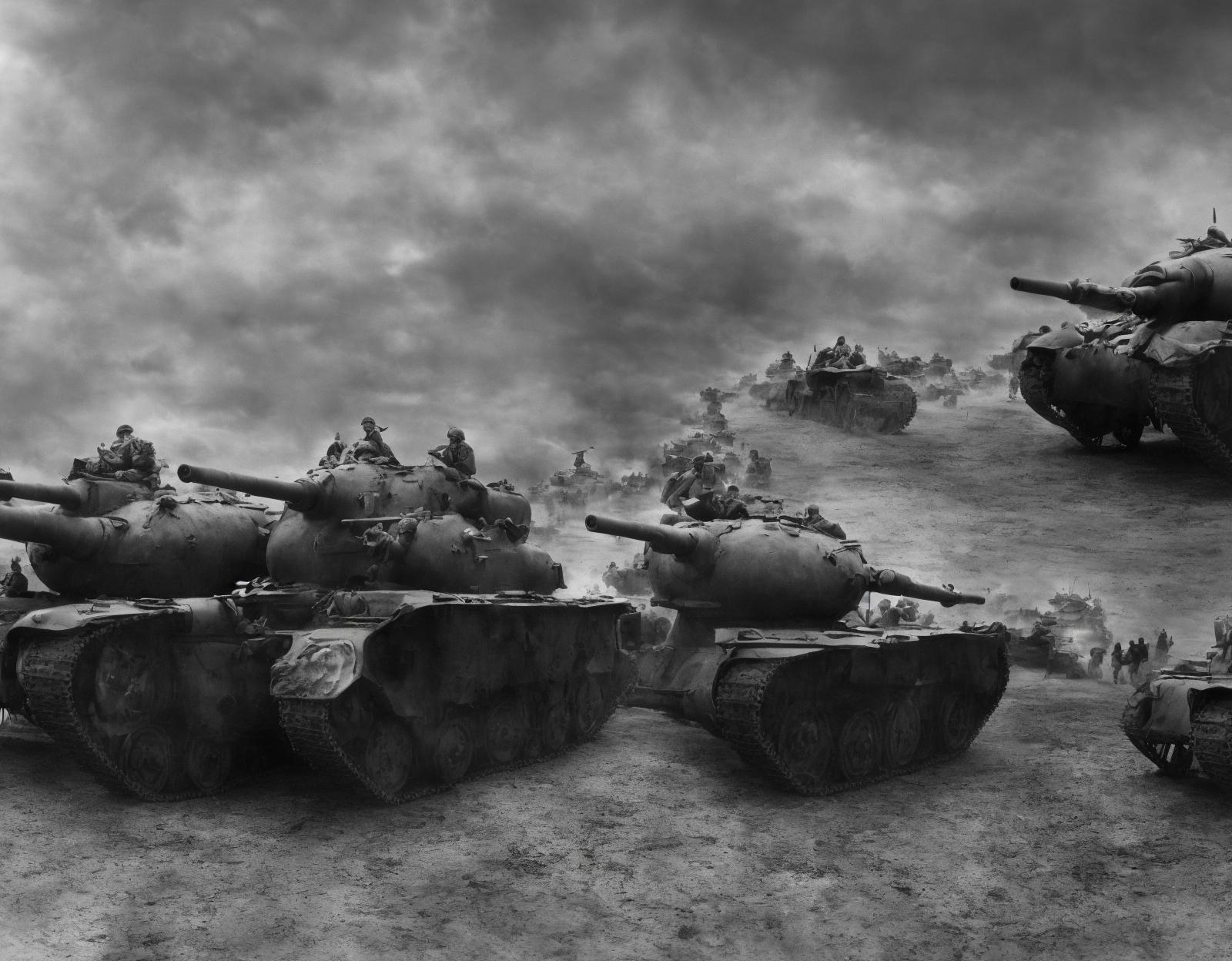
Stalingrad's Nightmare: The Brutal Turning Point of World War II
The chilling winds of the Russian winter whispered a prelude to what would become the bloodiest battle in human history. From the late summer of 1942 through early 1943, the city of Stalingrad, a vital industrial center on the Volga River, became the crucible in which the fate of the Eastern Front, and perhaps the entirety of World War II, would be forged. What began as a strategic advance by the German Wehrmacht, aimed at crippling the Soviet war machine by seizing its oil-rich Caucasus region and severing its supply lines, quickly devolved into an apocalyptic urban struggle. The name "Stalingrad" itself became a symbol – to Hitler, a personal affront and a grand prize to be conquered; to Stalin, a namesake to be defended at any cost, a bastion of Soviet defiance against the Nazi onslaught. This wasn't just a battle for territory; it was a clash of ideologies, a test of wills, and a brutal display of human endurance against unimaginable odds. The world watched, horrified, as two totalitarian titans hurled their armies into a literal meat grinder, with each street, each building, each room becoming a fiercely contested battleground. The stakes were impossibly high, and the toll, both human and material, would be catastrophic, echoing through the annals of military history for generations to come. The desperate fight for Stalingrad would forever be etched into the collective memory as a place where courage met its ultimate challenge, and where the tide of a global conflict irrevocably turned.
The German Advance and the Initial Assault
By the summer of 1942, after the failure of Operation Barbarossa to achieve a swift victory in 1941, Hitler shifted his strategic focus to the southern Soviet Union. The primary objective of "Case Blue" was the oil fields of the Caucasus, essential for fueling the German war machine. To secure the flank of this advance, and driven by a personal obsession with the city bearing his ideological rival's name, Hitler diverted elements of Army Group South towards Stalingrad. The German Sixth Army, under the command of General Friedrich Paulus, spearheaded this push, supported by the Fourth Panzer Army. Their initial advance was swift and devastating, showcasing the prowess of the Wehrmacht's combined arms tactics. The vast, open steppes of southern Russia offered ideal terrain for tank exploitation, and Soviet forces, still reeling from earlier defeats and often poorly equipped and organized, struggled to stem the tide. As the German forces approached Stalingrad in August 1942, their air force, the Luftwaffe, unleashed a devastating bombing campaign. Wave after wave of bombers reduced much of the city to rubble and ash, creating a hellish landscape of twisted metal, shattered concrete, and burning timber. This initial aerial bombardment, intended to soften up Soviet defenses and break morale, inadvertently created a defender's paradise – a labyrinthine urban battlefield of ruins that would negate the German advantage in open-field maneuver and armored warfare. The Soviet 62nd Army, under General Vasily Chuikov, was tasked with defending the city. Their orders were simple and brutally clear: "Not one step back!" Morale was bolstered by the desperate knowledge that retreat meant almost certain death at the hands of NKVD blocking detachments, while fighting meant a slim chance of survival and the pride of defending the Motherland. The stage was set for an unprecedented urban struggle, where conventional military doctrine would give way to savage, close-quarters combat.
The Urban Inferno: Rattenkrieg and Close-Quarters Combat
With Stalingrad reduced to a sea of rubble, the battle transformed into a brutal spectacle known as "Rattenkrieg," or "Rat War." The term, coined by the Germans themselves, aptly described the nature of the fighting: a grim, subterranean struggle fought building by building, floor by floor, and even room by room. German tanks, so effective in the open steppes, found themselves severely hampered by the impassable debris and narrow alleyways. Soviet defenders, often small assault groups of highly motivated infantry, exploited every crack and crevice, every ruined building, every sewer pipe to ambush German patrols and launch counterattacks. Snipers became legendary on both sides, with figures like Vasily Zaytsev achieving mythical status for their deadly accuracy and psychological warfare. The Germans, accustomed to rapid advances and large-scale encirclements, found themselves bogged down in a debilitating struggle for attrition. Street fighting was characterized by extreme close-quarters combat, often hand-to-hand, with bayonets, trench knives, and even improvised weapons filling the deadly void left by spent ammunition. The "grain elevator," the "pavlov's house," and the "red october factory" became iconic symbols of Soviet resistance, each the scene of prolonged and desperate struggles where handfuls of defenders held out against relentless German assaults for weeks on end. The psychological toll was immense; soldiers on both sides endured freezing temperatures, starvation, constant shelling, and the ever-present threat of sudden death. The ruins of Stalingrad became a cemetery for vast numbers of men and machines, a stark monument to the futility and horror of modern warfare. The ingenuity of the defenders, their mastery of urban warfare tactics, and their unyielding determination turned the very destruction of the city into their greatest defense.
Did you know? The Soviet Union established "blocking detachments" behind their front lines, NKVD units tasked with shooting any soldiers attempting to retreat without orders.
Operation Uranus: The Soviet Counter-Offensive
Even as the battle raged within the city, the Soviet high command, under the direction of Marshal Georgy Zhukov and General Aleksandr Vasilevsky, meticulously planned a daring counter-offensive: Operation Uranus. This wasn't just a piecemeal attack; it was a grand strategic design aimed at encircling the entire German Sixth Army. While the Germans were pouring their resources and attention into the grinding urban battle, the Soviets were secretly massing vast new armies, reinforced with fresh troops from Siberia and new batches of T-34 tanks, on the lightly defended flanks of the German salient. These flanks were largely held by poorly equipped Romanian and Italian forces, whose morale was already brittle. On November 19, 1942, Operation Uranus was unleashed. Two powerful Soviet fronts, the Southwestern Front and the Stalingrad Front, launched coordinated attacks from the north and south of the German positions. The sheer scale and speed of the Soviet advance caught the Axis forces completely by surprise. Within days, the Soviet pincers met at Kalach-on-Don, approximately 100 kilometers west of Stalingrad, effectively trapping the entire German Sixth Army, along with elements of the Fourth Panzer Army and various Axis allied units – an estimated 250,000 to 300,000 men – within a vast pocket. Hitler, convinced that the Luftwaffe could supply the encircled army by air, famously refused Paulus's repeated requests to break out. This fateful decision sealed the doom of the Sixth Army. The "air bridge" proved utterly inadequate, capable of delivering only a fraction of the supplies needed to sustain an army of that size. The Soviet encirclement, a masterstroke of operational art, demonstrated a significant maturation of Soviet military planning and execution, marking a profound shift in the balance of power on the Eastern Front. The trap was sprung, and the slow, agonizing process of strangulation began.
The Kessel and the Agony of the Sixth Army
Trapped inside the "Kessel" (cauldron), as the Germans called the pocket, the situation for the Sixth Army rapidly deteriorated into a nightmare of starvation, frostbite, and relentless Soviet bombardment. Hitler's orders were clear: "Hold position!" He promised relief, but various attempts to break through the Soviet lines, such as Field Marshal Erich von Manstein's Operation Winter Storm, ultimately failed to reach the encircled forces. Inside the Kessel, supplies dwindled to critical levels. Ammunition was rationed, food became scarce, and medical supplies were almost non-existent. Soldiers resorted to eating horses, and eventually, rumors of cannibalism began to circulate. The brutal Russian winter, with temperatures plummeting far below freezing, claimed thousands of lives through exposure and hypothermia. Morale plummeted as hope of rescue faded. The Luftwaffe's airlift was a tragic farce, with many transport planes shot down by Soviet anti-aircraft fire or unable to land on improvised airfields due to weather or Soviet shelling. General Paulus, desperately trying to maintain discipline and fight on, found his forces decimated by disease, hunger, and constant Soviet pressure. The encircled German soldiers, once the proud vanguard of the Wehrmacht, were reduced to desperate phantom figures, fighting to the last in a frozen, desolate landscape. The futility of their position became increasingly evident with each passing day. The Soviet forces, meanwhile, systematically tightened their noose, launching successive assaults to reduce the pocket further. The German command structure within the Kessel began to break down, and individual units fought isolated, desperate battles for survival. The suffering endured by the Axis soldiers trapped in Stalingrad remains one of the most harrowing episodes of military history.
The Surrender and its Aftermath
By late January 1943, with the Kessel shrinking rapidly and all hope of relief extinguished, the situation for the German Sixth Army became untenable. On January 31, General Paulus, who had just been promoted to Field Marshal by Hitler in a desperate attempt to compel him to fight to the death (no German Field Marshal had ever surrendered), ignored his Führer's implied order and surrendered the remnants of his southern forces. Two days later, on February 2, the remaining northern pocket also capitulated. The Battle of Stalingrad was officially over. Approximately 91,000 German and Axis soldiers marched into Soviet captivity, a grim testament to the devastating defeat. Of these, only about 5,000 would ever see their homelands again, most dying in brutal Soviet POW camps from starvation, disease, and harsh labor. The human cost of Stalingrad was staggering. Estimates vary, but combined Axis and Soviet casualties (killed, wounded, captured, missing) are believed to have exceeded 2 million, making it perhaps the costliest battle in human history. For the Soviet Union, the victory was monumental, a symbolic and strategic turning point that energized the entire nation. It irrevocably shifted the initiative on the Eastern Front from the Axis to the Soviets. From this point forward, the Wehrmacht would largely be in retreat, fighting a defensive war that would eventually lead to the fall of Berlin. For Germany, Stalingrad was a catastrophe of unprecedented scale, a national trauma that shook the confidence of the military and the civilian population, crushing the myth of German invincibility. The defeat at Stalingrad signaled the beginning of the end for Hitler's ambitions in the East and laid the foundation for the eventual Allied victory in World War II. The echoes of "Rattenkrieg" and the agony of the Kessel would forever serve as a chilling reminder of the utter brutality and immense stakes of the Battle of Stalingrad.
Did you know? During Operation Uranus, Soviet forces successfully employed "maskirovka" (military deception) to conceal the true scale and direction of their counter-offensive from German intelligence.
The Battle of Stalingrad stands as an enduring testament to the raw brutality and unforgiving nature of total war. It was a confrontation of titan ideologies, a clash of wills fought with unimaginable ferocity over every inch of a shattered city. The immense human cost, the unimaginable suffering endured by soldiers and civilians alike, and the sheer scale of the destruction remain almost incomprehensible. Yet, from the ashes of Stalingrad emerged a profound turning point in World War II. The myth of German invincibility was shattered, and the strategic initiative irrevocably shifted to the Soviet Union. The Wehrmacht, having poured its finest divisions into the meat grinder of the urban struggle and then seen its Sixth Army annihilated, would never fully recover its offensive capabilities on the Eastern Front. The victory at Stalingrad, achieved through extraordinary sacrifice and grim determination, galvanized the Soviet people and provided a morale boost that reverberated throughout the Allied world. It was a victory forged in blood and ice, a place where the Soviet soldier, fighting for his homeland, proved capable of holding the line against the most formidable military machine of its time. The ghost of Stalingrad would haunt Hitler's war efforts, a constant reminder of the hubris and strategic errors that led to such a catastrophic defeat. Today, the monumental memorial on Mamayev Kurgan stands as a solemn tribute to the defenders of Stalingrad, a silent witness to the epic struggle that unfolded there, forever etched into the fabric of human history as the battle that broke the back of the Nazi war machine.

Legacy and Memory: The Enduring Impact
The echoes of the Battle of Stalingrad reverberate not only through military history but also through the collective memory of nations, particularly Russia. For the Soviet Union, and subsequently Russia, Stalingrad became the ultimate symbol of national sacrifice and unwavering resolve in the face of existential threat. The victory was enshrined in countless works of art, literature, and cinema, becoming a foundational myth in the national narrative of World War II, known as the Great Patriotic War. The courage and suffering of the defenders of Stalingrad were elevated to almost legendary status, serving as an ideological cornerstone for generations. The iconic "Motherland Calls" statue on Mamayev Kurgan, a colossal monument dominating the skyline of modern Volgograd (the post-Stalin name for Stalingrad), stands as a powerful and visceral reminder of the immense human toll and the final triumph. This memorial complex is not merely a tourist attraction but a sacred site, drawing millions of visitors annually, including war veterans and dignitaries, who come to pay their respects to the fallen. The psychological impact on Germany was equally profound, though diametrically opposite. Stalingrad became synonymous with catastrophic defeat, a blow to national pride and a harsh awakening to the true costs of Hitler's aggressive expansionism. The scale of the loss, particularly the decimation of the Sixth Army, undermined faith in the German high command and foreshadowed the ultimate doom of the Third Reich. The battle also had significant geopolitical repercussions, altering the perceptions of the Soviet Union among its Western Allies. While still wary of Communism, the staggering sacrifices and military prowess displayed by the Soviets at Stalingrad earned them newfound respect and solidified their crucial role in the defeat of Nazi Germany. The alliance, though often strained, was momentarily strengthened by this shared, harrowing victory. The lessons learned from Stalingrad in terms of urban warfare tactics, logistics under extreme conditions, and the profound psychological effects of attrition warfare continue to be studied by military strategists worldwide. It remains a grim but invaluable case study in the annals of conflict, serving as a perpetual warning about the ultimate price of warfare and the indomitable spirit of human endurance. The memory of Stalingrad, therefore, is not a static relic of the past but a dynamic and living force, shaping perceptions of heroism, sacrifice, and the enduring human cost of ambition unchecked. It forces us to confront the darkest aspects of humanity while simultaneously celebrating the extraordinary courage that can emerge in such dire circumstances. This battle didn't just turn the tide of a war; it etched itself onto the soul of a continent.
How we verify this article
By the History Unlocked editorial team
This text is built on historical facts stored in our database and drafted with AI assistance. No signed human review is recorded for this article. Report any inaccuracy: we correct it and update the modified date.
Updated on
AI-assisted drafting.
Read our editorial standardsEnjoyed this? Discover more articles in the category World War II