Shadows of 1917: The Mystery and Mechanics of the Bolshevik Revolution
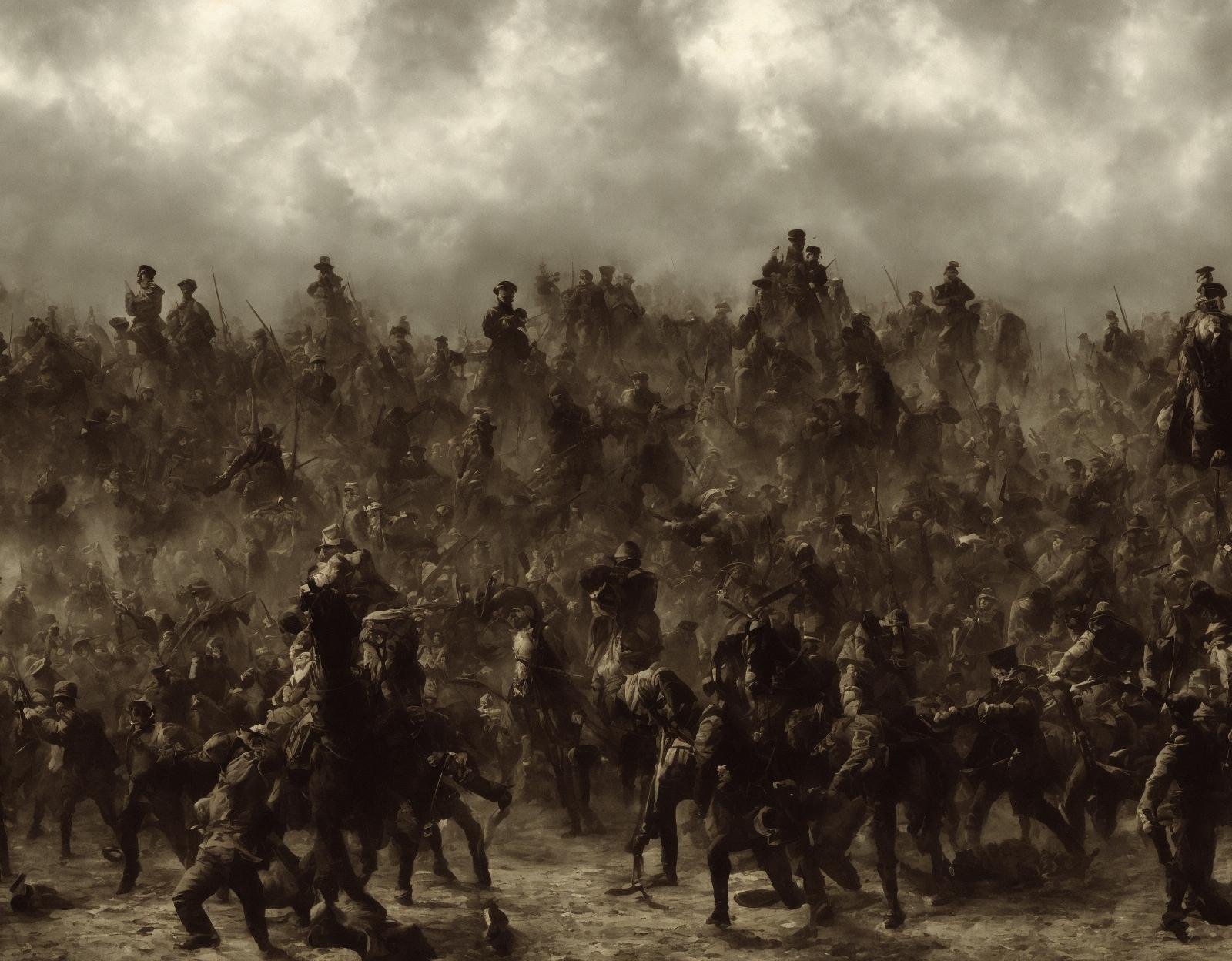
In the dim, smoke-thickened alleys of Petrograd and the whispered rooms of the Duma, 1917 unfolded like a thriller written by fate and fever. The Bolshevik Revolution—often packaged in textbooks as a single explosive event—was in reality the culmination of years of convulsive social shifts, wartime collapse, and a series of choices both deliberate and desperate. This narrative explores not only the visible tides of soldiers, workers, and slogans but the shadow plays beneath: secret networks, hurried telegrams, and the quiet recalibration of political myths that allowed a minority party to seize state power.
Across the narrative, I will trace the threads that led from the tsar's abdication through the uneasy dual power of the Provisional Government and the Soviets, to Lenin’s return and the decisive October insurrection. I will examine the strategic ambiguities and the moral dilemmas: the Bolsheviks' promise of peace and land, the politics of insurrection amid wartime collapse, and the role of individuals whose charisma and ruthlessness bent events to improbable ends. This account will not merely recount dates and decrees; it will seek the contours of motive and the subtler mechanisms of persuasion—how slogans became convictions, how rumors hardened into policy, and how violence assumed an air of inevitability.
Some facts are stark and well-documented: Lenin’s April Theses, the formation of the Military Revolutionary Committee, the seizure of strategic points on the night of 25–26 October (Julian calendar). Other elements have more mystery: the exact balance of popular support, the contingencies that made the insurrection possible, and the international reactions that would reshape the twenty-first century. The aim here is fidelity to verified history combined with a narrative voice that conveys the tension and terror of revolutionary moments, the human uncertainty behind hard decisions, and the iron logic that emerges once events gain momentum.
Did you know? Lenin traveled in a sealed train from Switzerland through Germany in April 1917, a journey arranged with German authorities who hoped to destabilize Russia further.
The reader will encounter both panorama and detail: the collapse of the Russian economy under the strain of World War I, the mutinies in the Imperial Navy, the role of factory committees in urban neighborhoods, and the extraordinary measures taken by the Bolsheviks to consolidate power in the months that followed. I will also draw attention to lesser-known episodes—secret arms caches, delicate negotiations with the German embassy, and the fraught relationship between Bolshevik doctrine and immediate political exigency. The story of 1917 is one of paradoxes: disciplined cadres improvising in chaos, radical ideals deployed in pragmatic calculations, and a revolution that proclaimed liberation even as it narrowed political choice.
This introduction invites you to consider the Bolshevik Revolution not only as a historical turning point but as an act of political theatre—where timing, perception, and the orchestration of symbols mattered as much as guns and votes. As we proceed, keep an eye out for the recurring motif of contingency: moments where a different telegram, a delayed train, or a changed opinion might have produced another Russia entirely.
The preconditions: war, collapse, and political fracture
By the time 1917 opened, Russia had been bleeding from the war since 1914. Casualties measured in the millions had eroded public confidence in the imperial leadership; supply chains for food and fuel had frayed, and transportation networks buckled under military requisitions. The tsarist state's legitimacy—already compromised by the 1905 revolution and the unapologetic repression that followed—wore thin under the twin pressures of military defeat and domestic hardship. Peasants, who made up the vast majority of the population, experienced a complex calculus: they were exhausted by land hunger and the demands of requisition, but often politically distant from urban centers where radical ideas festered.
Did you know? During 1916-1917, Petrograd’s bread ration sometimes lasted only a few hours in shops, leading to daily lines that turned neighborhoods into political theaters.
Industrial workers in Petrograd, Moscow, and other centers were the most immediately volatile force. Wage cuts, inflation, and food shortages produced recurrent strikes during 1916 and early 1917. Factory committees, often self-organized by workers, became embryonic units of power—places where grievances were defined and demands articulated. Military morale deteriorated sharply: the Battle of Tannenberg and the Brusilov Offensive had inflicted catastrophic casualties and highlighted chronic logistical failures. Desertions rose, and by early 1917 whole units were effectively deficient for combat. The armed forces' disintegration was crucial: the state could not simultaneously sustain a modern war effort and maintain domestic order when the instruments of coercion were fracturing.
Politically, the Duma and the liberal elites sought to form a constitutional alternative, but their hesitation and partial complicity with the Tsarist system limited their appeal. The Provisional Government—established after the February Revolution that forced Nicholas II to abdicate—was led by men like Alexander Kerensky, whose commitment to continuing the war undercut his domestic legitimacy. The Soviets—councils of workers' and soldiers' deputies—became the organs through which grassroots energy found expression, often rivaling the authority of the Provisional Government. The dual power structure, with the Provisional Government attempting to administer and the Soviets commanding popular allegiance, created a political vacuum in which decisive actors could impose new realities.
Social cleavages—class, region, nationalities within the empire—complicated any effort to fashion durable consensus. In the countryside, peasants seized land informally, and local authorities struggled to impose order. National movements among Poles, Ukrainians, Finns, and others added centrifugal pressures. The Bolsheviks, while a minority in many soviets in early 1917, benefited from their clarity of program: immediate peace, land redistribution, and transfer of power to the soviets. Their discipline and centralization allowed them to act decisively where liberal and moderate socialist factions remained mired in debate.
Did you know? Order No. 1 effectively required soldiers to elect committees and not obey officers if orders contradicted Soviet decrees—this demoralized the chain of command and empowered grassroots control.
This context—the exhaustion of war, the collapse of coercive institutions, and the proliferation of grassroots power centers—created the preconditions for revolutionary change. It was not an inevitability: still, the structural weaknesses of the old regime and the inability of moderates to address urgent demands made a dramatic reconfiguration of power increasingly probable.

February Revolution and the fragile dual power
February 1917—according to the Julian calendar still used in Russia, but March in the West—began with spontaneous protests and strikes sparked by bread shortages and compounded by inflammatory rhetoric from soldiers and workers. On International Women's Day (23 February Julian), protests swelled as women textile workers marched and were joined by workers from other industries and, crucially, by striking soldiers. The cumulative effect was the collapse of police authority and the refusal of troops to fire on crowds; units mutinied and some sided with demonstrators. The Tsar's abdication on 2 March 1917 marked the end of Romanov autocracy but not the beginning of stable democratic governance.
The Provisional Government, largely composed of Duma elites and moderate socialists, sought to steer Russia toward a parliamentary future. But any government's legitimacy depends on control over coercive force and the consent of the governed—both of which the Provisional Government lacked. The Petrograd Soviet, asserting the authority of workers and soldiers, issued Order No. 1, instructing soldiers and sailors to obey the Provisional Government only when their orders did not contradict the decrees of the Soviet. This ambiguous command structure institutionalized the notion of dual power: two authorities claiming legitimacy, often at cross purposes.
Did you know? Lenin’s April Theses initially shocked many Bolsheviks; some leaders like Kamenev and Zinoviev first opposed immediate insurrection and later signed off on the October seizure.
The Jacobin phrase 'social revolution' circulated in various forms: for radicals, February opened the path to deeper change—land reform, worker control, and peace. For the liberals and moderate socialists, the aim was a constitutional solution and the continuation of Russia in the war—both to honor alliances and to preserve territorial integrity. These conflicting agendas generated repeated crises. The Provisional Government's decision to continue fighting alienated soldiers and workers, while delays on land reform enraged peasants who had already begun informal seizures. Kerensky's charismatic advocacy for the war effort, especially his July offensive, ultimately failed and further weakened moderate authority.
The Bolsheviks in early 1917 were still consolidating their influence. They were stronger in some industrial centers and naval bases than in others, and their position within the Soviets varied. Initially, they insisted on a policy of opposition to the Provisional Government while building capacity among workers and soldiers. They profited from wartime disaffection and the failure of the Provisional Government to deliver peace and bread. The party's emphasis on 'All power to the soviets' resonated increasingly as the months wore on and crises deepened.
Thus, the dual power phase was not merely a prelude; it was an active political arena in which the key decisions and missteps that made October possible were taken. The tug-of-war between moderation and radicalism, the reluctance of middle-class reformers to break decisively from the structures of the old regime, and the Soviets' growing legitimacy set the stage for a later, organized seizure of state apparatus by a faction prepared to use both persuasion and force.
Did you know? The actual storming of the Winter Palace involved relatively few forces and ended quickly; later Soviet propaganda dramatized the event into a massive popular assault.

Lenin, the April Theses, and the Bolshevik strategy
Vladimir Ilyich Lenin’s return to Petrograd in April 1917 was an event of outsized symbolic and strategic significance. Traveling in a sealed train provided by the Germans, Lenin arrived with a clarity of purpose that shocked many contemporaries: his April Theses rejected cooperation with the Provisional Government, called for 'All power to the soviets,' and demanded immediate peace, land redistribution, and the transfer of factories to workers' control. The Theses represented a radicalization of Bolshevik policy and offered a blueprint for seizing power that was at once doctrinal and opportunistic.
Lenin’s politics were not merely rhetorical. The Bolshevik leadership under him prioritized disciplined organization, centralized decision-making, and pragmatic engagement with soviets and soldiers' committees. The party's apparatus had developed in the crucible of the pre-war years and the underground work of the 1905 aftermath; it could mobilize activists, produce propaganda, and coordinate insurrectionary moves when required. This organizational edge distinguished the Bolsheviks from other socialist factions that were larger in membership but less cohesive in action.
The April-to-October period saw concerted Bolshevik efforts to expand influence within key soviets, such as the Petrograd Soviet and the soldiers' committees at the city's garrison. Lenin repeatedly argued that the conditions for socialist revolution existed and that patience would only benefit counterrevolutionary elements. He condemned the Provisional Government’s decision to continue the war and argued that mass alienation could be channeled into decisive action at the appropriate moment. The role of Bolshevik newspapers, notably Pravda, and the effective use of pamphlets and slogans helped craft a narrative of momentum even when the party itself remained a minority in many places.
Did you know? The Cheka’s first leader, Felix Dzerzhinsky, was a Polish nobleman turned revolutionary whose nickname among enemies was 'the Iron Felix.'
Tactical debates within the Bolshevik party were intense. Figures such as Leon Trotsky, who joined the Bolsheviks in May 1917, brought strategic and rhetorical skill that complemented Lenin’s doctrinal clarity. Others emphasized patient work within the soviets and factory committees, building the organizational depth necessary to act swiftly when circumstances demanded. The formation of the Military Revolutionary Committee in Petrograd later in the year illustrated the party's capacity to combine legal soviet activity with clandestine preparations for armed insurrection.
Crucially, Bolshevik strategy was anchored to an understanding of timing. Lenin famously insisted that revolutions were not only structural phenomena but temporal ones: they required a conjunction of political will, social unrest, and a moment of weakness in the ruling institutions. His impatience—and his willingness to convert ideological certainties into practical orders—would determine much of the party’s course. The April Theses thus mark both an ideological and strategic turning point, aligning the Bolshevik program with tactics suited for decisive action.

The October insurrection: planning, execution, and the night of 25–26 October
By October 1917 (Julian calendar; November in the Gregorian calendar), the Bolsheviks had moved from strategy to execution. The Military Revolutionary Committee (MRC), formed within the Petrograd Soviet under the leadership of figures such as Leon Trotsky, functioned as the operational core of the insurrection. The MRC coordinated armed units, Red Guards from factories, sympathetic soldiers, and sailors, while also organizing the seizure of key communications nodes, bridges, railway stations, and government buildings.
Did you know? The Bolshevik Revolution inspired uprisings and communist parties worldwide, including an attempted communist uprising in Germany in 1919 led by Rosa Luxemburg and Karl Liebknecht.
The operation's success owed much to careful planning and the element of surprise. The Bolsheviks focused on disabling the Provisional Government's capacity to respond by cutting telephone and telegraph lines and seizing the telegraph office, railroad stations, and the State Bank. The cruiser Aurora’s firing—later immortalized in Bolshevik myth—served more as a symbolic act than as a decisive military signal, but it contributed to the narrative of a successful, almost cinematic uprising. The arrest of ministers at the Winter Palace, while dramatic, was relatively bloodless; many officials surrendered without prolonged fighting. The Conservative estimate of casualties in Petrograd during the insurrection numbers in the low hundreds, though figures vary.
The night of 25–26 October was not a spontaneous carnival of the street but a sequence of calculated moves. Bolshevik militiamen secured key positions and surrounded the Winter Palace, while separate detachments took the telegraph and post offices to control communication. Naval vessels in Kronstadt and the Baltic fleet, along with the Aurora, provided the revolutionary forces with artillery support and the sense that the rebellion commanded wider military backing. The provisional ministers were arrested, and the Second All-Russian Congress of Soviets convened to declare that power had passed to the soviets and the All-Russian Central Executive Committee assumed authority.
Yet this depiction masks how limited Bolshevik penetration still was in certain regions and how contingent the seizure remained on the vacillations of moderate leaders, the passivity of some military units, and the disarray within the Provisional Government. Alexander Kerensky’s attempt to mount a counterattack—briefly seizing a car to rally loyal troops—failed in part because many commanders and units refused to mobilize on his behalf. The Bolsheviks, once in power in Petrograd, still faced profound challenges to legitimacy and control across the sprawling Russian territory.
Did you know? Lenin’s sealed train passage through Germany is a recurring source of controversy—historians debate how much the Germans calculated about the political outcomes of facilitating his return.
The October seizure was both a military-political operation and an act of storytelling: declaring 'power to the soviets' served as a rhetorical coup, wrapping the takeover in a semblance of popular legitimacy even though the Bolsheviks were yet to establish uncontested control. The revolution’s theatrical aspects—parade, symbolic firings, arrests in palaces—helped naturalize the transfer of power domestically and internationally. This blend of practical seizure and myth-making would become a pattern of Soviet consolidation.

Consolidation: decrees, Brest-Litovsk, and the path to civil war
Seizing power was only the beginning. The Bolsheviks confronted immediate dilemmas: how to legitimize rule, how to satisfy promises of peace and land, and how to manage opposition. The new government (the Council of People's Commissars, with Lenin as its head) moved fast—issuing the Decree on Peace calling for an immediate armistice and negotiations without annexations or indemnities, and the Decree on Land, which effectively nationalized landed property and legitimized peasant seizures.
The challenge of foreign policy was immediate and brutal. German forces were advancing on the Eastern Front, and the Bolshevik government, prioritizing an immediate end to hostilities, negotiated the Treaty of Brest-Litovsk in March 1918. The treaty ceded vast territories—Poland, Ukraine, the Baltic states, and parts of Belarus—to the Central Powers. For many Russians, the treaty was a bitter pill, seen as a humiliation; for the Bolshevik leadership, it was a pragmatic choice to preserve the revolution at the cost of territorial integrity. The treaty split the revolutionary coalition and fueled the perception among opponents that the Bolsheviks had betrayed national honor.
Domestically, the Bolsheviks enacted radical institutional changes: they dissolved the Constituent Assembly in January 1918 when it failed to produce a Bolshevik majority, arguing that soviets represented a higher form of democracy. They also began creating instruments of coercive power: the Cheka (All-Russian Extraordinary Commission for Combating Counter-Revolution and Sabotage) was established in December 1917 to suppress opposition. This nascent secret police would become central to Bolshevik statecraft, initiating arrests, executions, and a network of detention facilities that targeted real and perceived enemies.
The civil war that followed emerged from multiple sources: the political exclusion of rival parties, peasant resistance to requisitions, the intervention of Allied and Central Powers, and the mobilization of White armies under diverse leaders who opposed Bolshevik rule. The war, which ran roughly from 1918 to 1921 though pockets of conflict continued thereafter, devastated the country. It produced famine, economic breakdown, and a level of violence that made earlier revolutionary upheavals seem small by comparison. War communism—state requisitions and centralized control of production—became the economic policy of the Bolsheviks during the civil war, further alienating many peasants and contributing to systemic shortages.
The paradox of consolidation was stark: to survive, the Bolsheviks needed to centralize authority and deploy violence; yet those very measures betrayed the early revolutionary rhetoric of worker and peasant empowerment. By the early 1920s, Bolshevik victory in the civil war enabled the creation of the Soviet Union in 1922, but the political culture established during consolidation—monopoly of power by the Communist Party, suppression of pluralism, and elaborate security apparatus—would define Soviet governance for decades.

Legacy, debate, and historical interpretations
The Bolshevik Revolution has provoked debate ever since its occurrence. For some historians, it represents a modernizing rupture: an attempt to accelerate the trajectory of industrialization, secularization, and state consolidation in a predominantly agrarian society. For others, it is a cautionary tale about ideological absolutism and the dangers of concentrating power in a single party apparatus. Interpretations often reflect the historian's normative lens: Marxist historians emphasized class dynamics and the revolution's emancipatory potential; liberal critics highlighted the suppression of civil liberties and the undermining of democratic institutions.
Key debates center on contingency versus structural inevitability. Structuralists argue that long-term socioeconomic and political forces—the inefficiencies of tsarist agrarianism, the pressures of total war, and the emergence of class-conscious industrial workers—made revolution highly likely. Contingency-focused scholars underscore episodic decisions: Lenin’s return in April, the Provisional Government’s continued war policy, and key military mutinies that made the insurrection feasible. Both perspectives matter; the revolution was neither purely deterministic nor wholly accidental but the product of structure and choice.
Another enduring debate concerns popular support. While Bolsheviks were able to claim that soviets legitimated their power, their actual popular base was complex and volatile. Urban workers and soldiers in key centers supported Bolshevik measures more actively than peasants, many of whom remained politically independent and often hostile to Bolshevik requisitions. National minorities pursued their own agendas, sometimes cooperating with and sometimes resisting Bolshevik rule. These differences shaped policy choices and contributed to the centrifugal forces that made consolidation so violent.
The revolution's global impact cannot be overstated. It inspired revolutionary movements worldwide, frightened established powers, and reconfigured geopolitics throughout the twentieth century. The Soviet state became a model for both anti-colonial movements and authoritarian regimes that sought to mobilize modernization through centralized control. The dialectic of liberation and repression in Soviet practice raises enduring questions about means and ends in revolutionary politics.
Finally, memory and myth have shaped how societies understand 1917. Soviet-era historiography mythologized the revolution, presenting it as a popular uprising led by a heroic vanguard. Post-Soviet scholarship has complicated that narrative, revealing new archival evidence on repression, economic mismanagement, and the internal debates within the Bolshevik party. Yet the drama of 1917—its sudden turns, charismatic leaders, and the sense that a world was being remade in a few feverish months—continues to fascinate.

Conclusion: the echoing consequences of 1917
The Bolshevik Revolution remains a study in contradictions. It promised peace, land, and workers' power, and it accomplished dramatic social and political transformation. At the same time, it inaugurated an era of centralized authoritarian governance that suppressed pluralism and employed coercion to maintain itself. The revolution's immediacy—meshed with the chaos of war and the fragility of institutions—helped explain both its rapid success in seizing state apparatus and its recourse to harsh measures in consolidation.
For students of history, 1917 offers lessons about the limits of moderation in times of crisis and the power of disciplined organization to translate marginal ideas into state policy. It highlights the ethical ambiguities of revolutionary change: when is the use of violence justified in pursuit of liberation, and how do revolutionaries reconcile lofty ideals with the practical demands of governance? The Bolshevik experience suggests that revolutions rarely produce tidy moral outcomes; instead, they generate complex legacies that must be evaluated with nuance.
As a narrative, the October seizure retains something of a mystery: an event where decisions made in a handful of rooms, the collapse of morale in distant garrisons, and the choreography of symbolic acts converged to create a new political reality. As an historical process, it reveals the interplay of structure and contingency, ideology and expedience. The revolution's reverberations shaped the twentieth century and continue to affect political thought and practice today.
Understanding 1917 requires attention to detail and an appreciation for the human choices at its center. The Bolshevik Revolution was neither a monolithic plan fulfilled nor a spontaneous eruption without direction—it was a sequence of tactical moves grounded in ideological conviction and enabled by systemic breakdown. This mixture of the dramatic and the banal—sealed trains, starving queues, pamphlets on street corners, and the hum of telegraph lines—constitutes the texture of a revolution whose shadows are still long.
How we verify this article
By the History Unlocked editorial team
This text is built on historical facts stored in our database and drafted with AI assistance. No signed human review is recorded for this article. Report any inaccuracy: we correct it and update the modified date.
Updated on
AI-assisted drafting.
Read our editorial standardsEnjoyed this? Discover more articles in the category Great Revolutions