Verdun: The Inferno That Changed WWI
The winter sky over Meuse on the morning the guns opened at Verdun felt like a prelude to an apocalypse. For months before February 1916 the town had stood at the edge of a mapline; a place of forts and ruined villages whose quiet was brittle with anticipation. Then, with a precision of malice, the German artillery unleashed a rhythm of shells that would turn the landscape into a new kind of geography: cratered, subterranean, and haunted. The Battle of Verdun was not only a contest of men and materiel. It became a test of endurance, of national will, and of how a modern industrial war could grind decades of military theory into a single, terrible experiment.
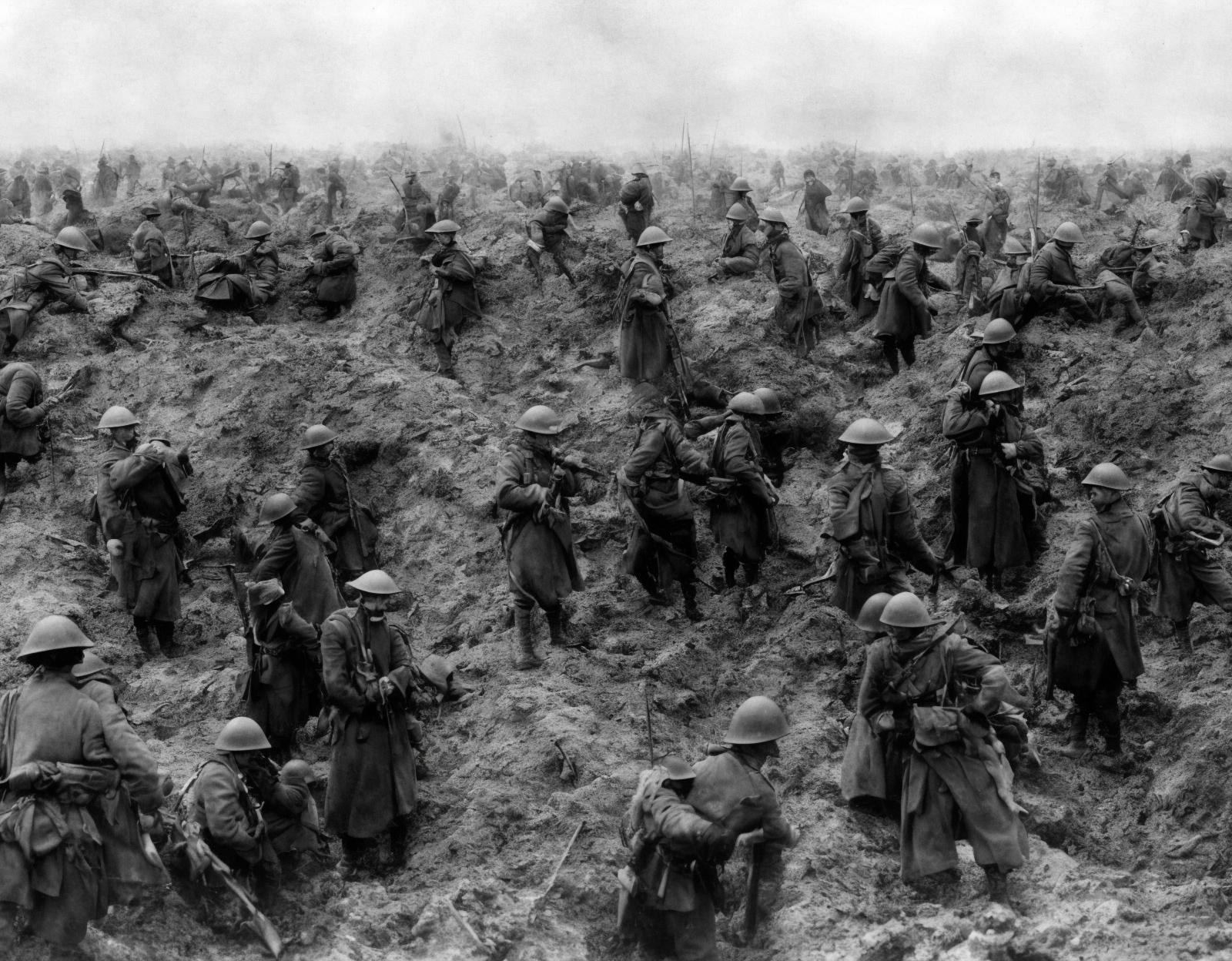
If one were to capture Verdun in a single image it would be of earth removed from its own purpose: forests reduced to stumps, roads carved into gullies by shells, and the forts that once promised security lying half-buried or hollowed like shells themselves. The human narrative is woven through this devastated topography—letters smuggled in the pockets of the fallen, whispered prayers in dugouts, the quiet acts that kept an army alive: a ration parceled, a stretcher shifted, a trench strengthened. Yet Verdun also reveals the cold arithmetic of strategy, where generals measured attrition and sought victory by calculation rather than maneuver.
This article will lead you into Verdun’s labyrinth: the political and strategic background that invited Falkenhayn’s design; the mechanics of an artillery-dominated battlefield; the personal cosmogony of soldiers who lived, fought, and died in the mud; and the layered memory that turned Verdun into a symbol for France and a cautionary chapter in modern warfare. The narrative will balance the dramatic and the factual, honoring verifiable historical detail while preserving the sense of mystery that still clings to the ruins and ossified roads. Along the way, we will pause for curiosities—striking facts and human notes that illuminate the odd textures of a battle that defied simple meaning. We will also let the forts and the names—Douaumont, Vaux, Fleury—speak so that their echoes can be heard across the century.
Did you know? Erich von Falkenhayn explicitly framed Verdun as an attempt to "bleed France white," making the battle a deliberate laboratory for attrition warfare.

Strategic Background: Why Verdun? (Falkenhayn’s Calculus)
To understand Verdun, one must step behind the maps and into the mindset of the German High Command. By late 1915 and early 1916 the Western Front had calcified into a system of parallel trenches. The German Chief of the General Staff, Erich von Falkenhayn, concluded that a war of attrition would decide the conflict; he sought to find a point where French national pride and manpower could be worn down until collapse. Falkenhayn’s design was clinical: choose a position the French could not afford to lose, strike it with weight, and force the French Army to throw in wave after wave of men to stem a localized disaster. The result, in Falkenhayn’s estimation, would be crippling losses for France—losses that Germany, with fewer reserves, might sustain while forcing a political breakdown in French resolve.
Verdun suited this logic for several reasons. It was a salient, easily targeted from German lines, and—most importantly—rich with symbolic and practical value to France. The ring of Séré de Rivières forts built after 1870, the historic town, and the road network that fed into the frontier made Verdun both a military node and a national shrine. For the French, abandoning Verdun was politically unthinkable. For Falkenhayn, that political weight would compel a French commitment that could be exploited.
Erich von Falkenhayn’s plan—Operation Gericht—was also made plausible by the German availability of heavy siege artillery and newly manufactured ammunition. Earlier in the war Germany had perfected the use of large-caliber howitzers to knock out forts and to pulverize defensive systems. Falkenhayn anticipated that massed artillery fire would create a killing ground in front of French lines where the infantry could be bled out with horrific efficiency. This was attrition as strategic doctrine. He famously wrote that the goal was to place the moral and physical weight of French national feeling on the battlefield so that it would snap under pressure; the intent was to entice French counterattacks into prepared killing zones.
Did you know? Fort Douaumont was initially captured by a small German force on 25 February 1916 after the fort was found nearly undefended, creating a major shock for the French.
Yet Falkenhayn underestimated some crucial variables. He assumed that the French command might lose political will or make fatal strategic errors. Instead, French military and civil leadership, galvanized by the existential nature of the attack, organized resilient and innovative defenses. Logistics—especially the continuous supply line known as the Voie Sacrée (the Sacred Way)—and the emergence of commanders such as Philippe Pétain transformed what had threatened to be a localized, crushing blow into a prolonged grinding match in which both sides paid dearly. Falkenhayn’s calculus was brilliant in conception and terrible in practice; Verdun became an experiment in attrition whose costs would ripple across the rest of the war.

German Plan and Execution: Operation Gericht
When Operation Gericht began on February 21, 1916, the German assault combined surprise, concentration of artillery, and a willingness to exploit tactical innovation. The opening barrage was one of the most intense of the war to that date, involving hundreds of heavy guns and howitzers. Shells fell with a relentless cadence that transformed the Verdun landscape into a new topography: roads became quagmires, trees vanished, and the supporting infrastructure of the French front—supply dumps, signal posts, and trench networks—was shredded. The immediate effect was psychological as much as physical. Troops on both sides spoke afterward of a thunder that seemed unending, an elemental roar that erased the normal signals of human life.
The German infantry assaults in late February and early March were not designed to seize every French position at once; rather, they exploited gaps and advanced where artillery had softened defenses. One of the most astonishing early episodes was the capture of Fort Douaumont. On 25 February a small German patrol, finding the fort almost abandoned and only lightly defended by a handful of non-combatants and a few garrison soldiers, managed to enter and secure the massive fortification. The capture was as much an intelligence and opportunity triumph as a feat of arms. The fall of Douaumont had an outsized psychological effect in France—its loss became a symbol of vulnerability and galvanized French political and military leaders.
Did you know? The Voie Sacrée kept Verdun supplied continuously; at peak traffic it carried an almost ceaseless stream of vehicles, a fact that became central to French survival during the battle.
The Germans then used captured forts and the deeply cratered ground to tighten their grip, though they never achieved the decisive breakthrough Falkenhayn had hoped for. German tactics evolved over the months: they rotated in fresh artillery, increased the density of shells, and attempted to create kill zones where French counterattacks would be slaughtered. Yet the attritional war that Falkenhayn envisioned required the French to commit up to the point of collapse; French organization, leadership, and an unyielding logistic effort denied Germany a quick resolution.
The execution of the operation also revealed limitations. The German army, while adept at organization and artillery employment, was stretched by the demands of a long front. Ammunition expenditure at Verdun was prodigious; stockpiles had to be maintained, yet overuse had tactical consequences elsewhere. Additionally, the weather and the terrain—mud, rain, and the ever-present craters—made movement of guns and troops a constant logistical headache. By mid-year, the momentum of the German assault had ebbed, and the battle shifted into a series of localized offensives and counteroffensives. The period between June and October saw fierce small-unit combats, bloody attempts to hold or retake key positions, and a grinding exchange of artillery barrages that consumed men and ammunition in almost equal measure.

French Defense and Command: Pétain, Nivelle, and the Voie Sacrée
In the face of the German onslaught the French response combined improvisation, leadership changes, and the creation of resilient supply lines. Philippe Pétain emerged as the central military figure in the defense of Verdun. Appointed to command the region, Pétain instituted measures that would become legendary: systematic rotation of divisions to prevent exhaustion, relentless improvement of defensive works, and above all the establishment and maintenance of constant supply. The Voie Sacrée—an approximately 60-kilometer road from Bar-le-Duc to Verdun, which became the artery of the defense—was maintained day and night. It delivered men, ammunition, food, and medical care under continuous duress and enemy fire. At peak, convoys traversed the road with a frequency that has entered Verdun lore: often a vehicle every few seconds during the busiest periods.
Did you know? Fort Vaux became synonymous with desperate defense after a six-day siege in June 1916, where its garrison, led by Commander Raynal, held out despite dwindling water and supplies before surrendering.
Pétain’s rotations were crucial: units were cycled out to rest and refit, alleviating the kind of attritional exhaustion Falkenhayn hoped would doom the French. Pétain’s methodical approach contrasted with some of his contemporaries, and it earned him national recognition. His focus on morale—ensuring letters, newspapers, and supplies reached the front—helped sustain the soldiers’ resolve. Yet Pétain was not alone. Robert Nivelle, who later gained fame and controversy for leading offensive doctrines in 1917, played a role in the Verdun defenses and counterattacks; his aggressive tactics would later be deployed on larger scales.
Command suffered from the strains of the battle. French leadership at the highest level had to cope with political pressure in Paris, the need to keep the front elsewhere intact, and the sheer horror communicated by Verdun’s casualty lists. Joseph Joffre, the French Commander-in-Chief until the end of 1916, had to balance reinforcing Verdun with other theater demands; the result was a constant tug-of-war between economy of force and the necessary commitment demanded by Verdun’s symbolic and strategic value. The French government also played its part—public opinion and political leaders understood the stakes. The defense of Verdun became an issue of national destiny; the phrase "They shall not pass" (On ne passera pas) became part of the popular lexicon, though its roots and usages are more complex than a single slogan.
Despite the heroism and structure, the toll was immense. French divisions cycled through Verdun were battered, and the human cost of rotations and counterattacks added to an ever-growing casualty roll. The determination to hold and recover positions like Fort Douaumont, and later Fort Vaux, consumed vast human resources. The reciprocity of attack and defense produced the grinding war of attrition that would mark Verdun for the rest of 1916. Yet the French ability to absorb and respond to such pressure—not least through logistics, command discipline, and persistent local counterattacks—staved off the German intention for decisive collapse.
Did you know? Ammunition expenditure at Verdun was prodigious; both sides fired hundreds of thousands of shells during the peak months, fundamentally reshaping the landscape and supply priorities.
The Trenches, Forts, and Soldier Experience
Verdun is often described in terms of statistics and strategy, but the human experience—what it felt like to live, fight, and die there—provides the truest window into the battle’s meaning. Soldiers on both sides endured conditions that defy ordinary description: claustrophobic dugouts, waterlogged trenches, and nights in which the world was lit only by explosive flashes. The constant noise of artillery warped sleep cycles and perception. The ground itself became treacherous: crater lakes, shattered stone, and invisible threads of barbed wire buried under detritus that snagged boot and limb alike.
Forts like Douaumont and Vaux were built in earlier military centuries to withstand sieges, but modern artillery and changing military technology rendered their designs both an asset and a liability. Some forts provided stubborn shelter and firing platforms; others, when shattered by high explosives, turned into tombs. Fort Douaumont’s capture by a small German force early in the battle revealed how human error, neglect, and miscommunication could render large fortifications surprisingly vulnerable. Fort Vaux’s defense in June—led famously by Commander Raynal and a handful of officers and men—showcased the brutal reality of close-quarters defense. After protracted hand-to-hand fighting and an exhausting deprivation of supplies, the defenders surrendered; the drama of Vaux masked an underlying arithmetic of deprivation.
Life in the trenches was punctuated by moments of absurdity and quiet humanity. Soldiers attempted to preserve rituals: cigarette sharing, writing postcards, and singing. Chaplains moved among the wounded; stretcher-bearers plied routes that were themselves targets. The medical system—field hospitals, makeshift dressing stations, and casualty clearing operations—had to adapt continuously. The rate of wounded to killed was a function of both weapon lethality and medical improvisation; many men survived amputations and infections that would previously have been fatal. Yet the psychological toll was immense. Shell shock—then poorly understood—became a chronic affliction. Men who survived were often haunted by the sensory memory of the bombardment: the smell of cordite, the constant clay-colored dusk that settled after a barrage.
Did you know? The Douaumont Ossuary contains the bones of over 130,000 unidentified soldiers, a grim testament to the scale of destruction that made individual identification impossible in many cases.
The soldier’s perspective also emphasizes the randomness of survival. Where one man might be buried by a shell, another might be spared by inches. Stories from Verdun are full of narrow escapes, serendipitous rescues, and acts of desperate courage. Letters home, when they got through, tried to both console and conceal. Commanders attempted to preserve morale with discipline and reward, but the front-line narrative was mainly one of endurance: building, repairing, holding, advancing a few meters, then retreating to consolidate—an economy of inches that cost thousands of lives.

Artillery, Logistics, and the Machinery of Attrition
If Verdun can be reduced to a single technological truth, it is this: artillery was the definitive weapon of the battle. Guns of multiple calibers—field pieces, heavy howitzers, and siege mortars—dictated the tempo and shape of operations. German batteries pounded lines continuously, and French counters were equally relentless. The magnitude of ammunition consumption was unprecedented for a single sector to that date. Shells not only killed and maimed; they re-engineered the battlefield, breaking fortifications, rupturing supply lines, and creating new obstacles to movement.
The French and the Germans both improvised logistics to sustain their efforts. The French Voie Sacrée was a lifeline: it supplied Verdun with food, ammunition, and reinforcements by truck, horse, and sometimes hand. The constant maintenance of the road—repairing shell holes, shoring up bridges, and policing against congestion—was itself a form of military labor. Railheads supplied the trucks, and the entire system required labor output of extraordinary scope. Ammunition consumption hit staggering figures; artillery shells rained at rates that would have been inconceivable a decade earlier and meant that supply chains were as much a target as front-line trenches.
Did you know? Even today, farmers in the Verdun area occasionally unearth unexploded ordnance—"iron harvest"—reminders that the war continues to give up its dead and dangerous relics.
Technological adaptation was also visible: improved fuses, new shell designs, and tactics that paired creeping barrages with infantry infiltration. Both sides experimented with stormtroop techniques, small-unit infiltration, and tactical artillery concentrations to seize local advantages. Gas weapons were used sporadically and never became the decisive factor at Verdun in the way that artillery did; the lethal chemistry of high explosives produced its own agonizing effects. Medical evacuations, surgical improvisations, and the use of motorized ambulances became important, saving thousands who would formerly have died in the field.
Logistics included more than material supply: the rotation of divisions, the sheltering of hospitals, and the psychological maintenance of troops were logistics of will. The rotating of units, pioneered systematically by Pétain, allowed the French to keep fresh troops flowing into the sector. This system, combined with the Voie Sacrée, prevented the wholesale collapse that Falkenhayn had planned for and converted Verdun into a prolonged war of endurance that ground down both attackers and defenders.
Aftermath and Memory: How Verdun Became a Symbol
When the guns finally subsided and the maplines shifted into winter at the end of 1916, the raw accounting of Verdun was a landscape of loss. Casualty figures vary by historian and archive, but a commonly accepted estimate places French casualties in the range of 350,000–400,000 and German casualties around 300,000–350,000, producing a total—dead, wounded, and missing—of roughly 650,000–720,000 men. The human toll was staggering; villages were annihilated, forests turned into moonscapes, and entire generations of families were affected.
Politically and culturally Verdun took on a life beyond its tactical meaning. For France, Verdun became a locus of national memory and mourning. Monuments, ossuaries, and the ring of preserved battle sites—howitzers stuck in the earth like petrified beacons—were created to anchor memory. The Douaumont Ossuary, which contains the remains of tens of thousands of soldiers, and the cemetery at Beaumont-Hamel became places of pilgrimage. The phrase and the image of Verdun shaped interwar politics, literature, and art; authors and veterans carried Verdun into the cultural imagination as a warning against mechanized slaughter and as a testament to national endurance.
Germany also had its memory of Verdun, though framed differently—often in terms of a costly, inconclusive campaign that failed to force France into collapse. The battle contributed to strategic reassessment within the German command and added to the sense of mutual exhaustion that characterized the later stages of the war. Internationally, Verdun exemplified the industrialization of death and contributed to a postwar reckoning over the ethics of mass attrition.
Memory is not static. The battle’s sites have been preserved and reinterpreted across generations; museums offer reconstructed trenches and artifacts, while local commemorations emphasize both tragedy and reconciliation. In modern France Verdun is invoked in discussions of national identity, sacrifice, and the costs of war. Annual ceremonies—veterans, politicians, and citizens—link the contemporary republic with the broken fields of 1916, making Verdun a living memory. The centenary in 2016 prompted renewed reflection and drew a new generation to the battlefields, reminding the world that memory itself is a labor of preservation against forgetting.

Conclusion: Verdun’s Lessons and Its Unfinished Conversation
Verdun resists a single lesson. It is at once a story of strategic calculation and of human endurance, a demonstration of how technology can both empower and devour, and a caution about the limits of attrition as a route to victory. Falkenhayn’s attempt to "bleed France white" produced an encounter that exhausted both sides and reshaped military thinking. Verdun’s slaughter forced new approaches to logistics, rotation, and morale—lessons that later commanders in 1917 and 1918 would both use and misapply.
But beyond doctrine, Verdun’s enduring presence lies in the repository of human stories it contains. The men who held the line, the soldiers who occupied shattered forts, the stretcher-bearers and doctors who worked amid the rubble—each contributed to an uneven history that cannot be reduced to numbers. The landscape itself is a primary witness. Even now, a century later, munitions still surface from ploughed fields, trees bear scars, and the soil hides metal that once mowed down men. The battle transformed the way modern societies perceive mass violence and created rituals to remember those costs.
Verdun remains a place where history feels present: a place in which the past is not simply archived but persists in earth and stone. It compels reflection not only on the military choices of generals but on the human consequences of those choices. Standing at a preserved trench, reading a rubbing of a carved name, or listening to an old veteran’s recounting—these are the acts that keep Verdun alive in collective memory. They are the means by which societies reconcile with their dead and attempt, however imperfectly, to learn.

How we verify this article
By the History Unlocked editorial team
This text is built on historical facts stored in our database and drafted with AI assistance. No signed human review is recorded for this article. Report any inaccuracy: we correct it and update the modified date.
Updated on
AI-assisted drafting.
Read our editorial standardsEnjoyed this? Discover more articles in the category World War I