Origins of the Knights Templar: Foundation of the Order
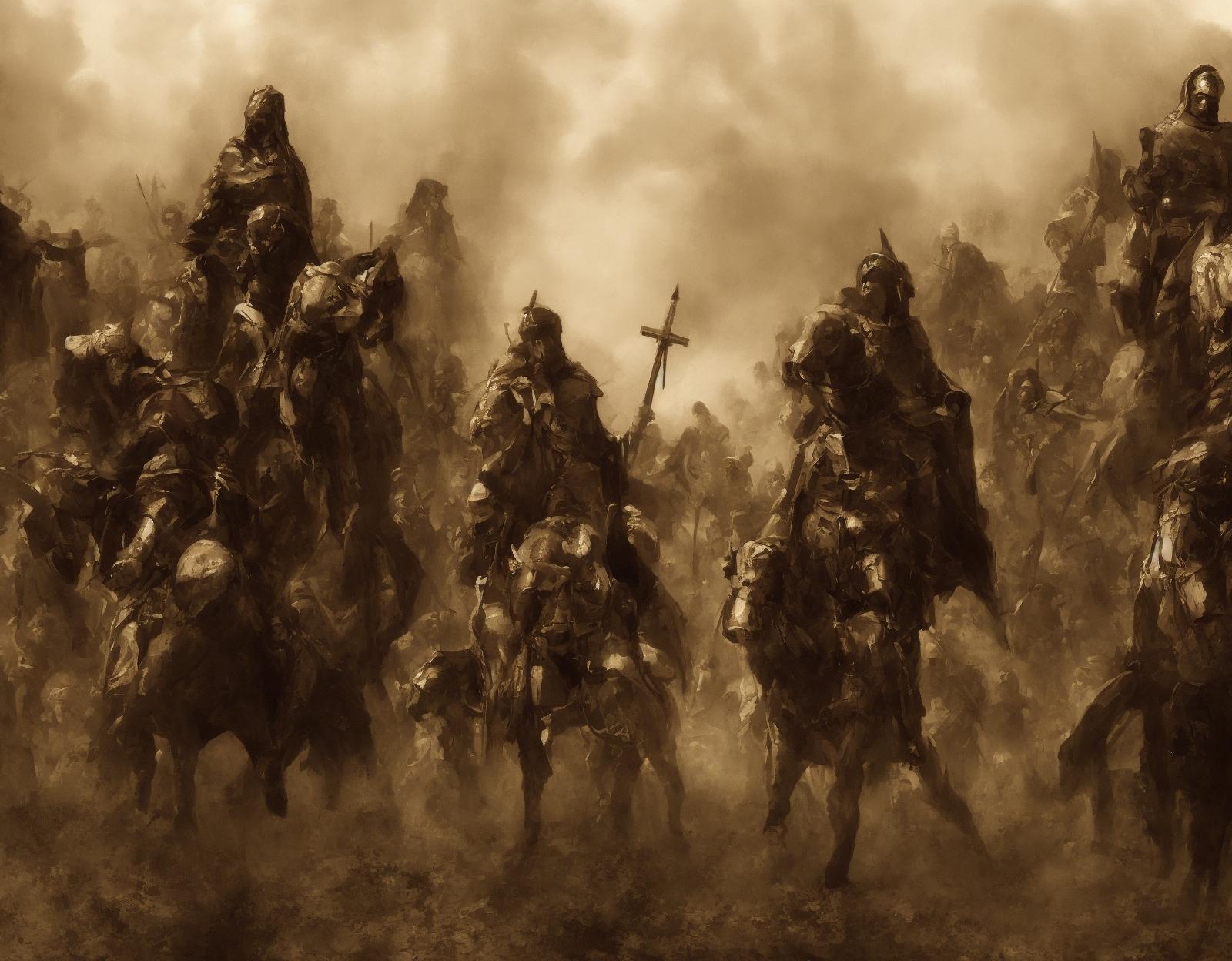
In the cracked light of the twelfth-century eastern Mediterranean, a small band of armored men mounted their horses beneath the ruined arches of a city that had been the prize of kings and the dream of pilgrims. Their names were barely whispered in the marketplaces of Europe at first, but their purpose—guarding the fragile highway between sea and sacred site—would grow into one of medieval Christendom's most influential institutions. The foundation of the Knights Templar belongs both to the concrete world of charters and churches and to the realm of myth. To understand the Order's origins is to travel through the aftermath of the First Crusade, into the cramped guardrooms and palace corridors of the nascent Kingdom of Jerusalem, and into the parlors of abbeys and bishoprics in France where the future Templars sought ecclesiastical legitimacy.
The birth of the Order around 1119–1120 was not a spectacle but a quiet response to a persistent problem: the vulnerability of pilgrims traveling to Jerusalem after the capture of the city in 1099. Jerusalem's capture established a Christian kingdom that was precarious and crowded with new political actors—knights, clerics, merchants, and refugees. Roads that had once been busy with merchants were now affording attackers opportunities to ambush pilgrims who arrived with little more than faith and coin. Into this unstable geography stepped Hugues de Payens and a handful of lesser-known companions, men who fashioned a new synthesis of monastic devotion and armed service.
The Templars began as a small fraternity of knights who took vows reminiscent of monastic life: poverty, chastity, and obedience. Yet they were warriors as well as monks, and that dual identity made their existence exceptional in a Christian Europe where monks prayed and knights fought. Their first proper house was adjacent to the compound known to Christians as the Temple of Solomon—the Al-Aqsa Mosque on the Temple Mount—hence the name 'Knights of the Temple' or 'Templars.' This physical association with the Temple Mount, combined with royal favor from King Baldwin II of Jerusalem, allowed the new order to survive and slowly attract the support that would transform it from a handful of guardians into an international organization.
Did you know? The initial headquarters of the Order were quarters on the Temple Mount, specifically adjacent to the Al-Aqsa Mosque, which medieval Christians associated with Solomon's Temple.
This introduction sketches the material and spiritual conditions that created the Templars: the strategic imperatives of the Crusader states, the piety of pilgrims, and the eagerness of western patrons to found and fund new religious institutions. The story that follows will explore the men who claimed its leadership, the clerical champions who secured papal protection, the rule and rituals that disciplined its members, the practical missions that defined their daily life, and the economic innovations that made the Order not only a military power but a financial network spanning Western Christendom.
The Aftermath of the First Crusade and the Need for Protection
The First Crusade (1096–1099) achieved what had been considered nearly impossible: it captured Jerusalem and established a patchwork of Latin principalities across the Levant. But these victories created new problems. The Latin Kingdom of Jerusalem was a frontier polity dependent upon maritime links with western Europe for manpower, supplies, and patronage. Pilgrimage resumed in earnest after 1099, making Jerusalem and the routes leading to it both spiritually vital and strategically fragile. Bandits, rival Muslim forces, and the rough politics of local lords meant that pilgrims traversing the roads between Acre, Jaffa, and Jerusalem were easy prey. The Christian rulers recognized that conventional arrangements—local militias, occasional armed escorts, and sporadic garrisons—were insufficient to secure safe passage.
The first generation of Templars responded to this concrete problem. Hugues de Payens, a minor Burgundian noble, is traditionally credited with arriving in Jerusalem around 1118 with eight or nine companions. While the precise composition of this founding group is debated among historians, the enduring record indicates that the Order began with a remarkably small nucleus committed to a precise mission: to protect pilgrims and the Holy Places. King Baldwin II offered them lodging on the Temple Mount, a gesture that provided symbolic legitimacy as well as practical space. The choice of the Temple Mount as a headquarters was laden with meaning. Christians of the period associated the site with biblical history and with Solomon's temple—hence the Order's evocative name, the Poor Fellow-Soldiers of Christ and of the Temple of Solomon.
Did you know? Medieval tradition often cited nine founders of the Templars, a number that acquired symbolic resonance in later Templar lore.
The environment they entered was one of constant negotiation. The Crusader states required military manpower to secure borders and to project power inland; religious institutions sought to assert authority while attracting donations; Western patrons sought spiritual benefits and prestige through endowments to orders. The Templars navigated all these pressures by articulating a distinct identity: knights living under a monastic rule, bound by vows and disciplined by ecclesiastical oversight but committed to fighting in defense of Christendom. This hybrid identity addressed a need that neither secular nobility nor existing monastic orders could fully meet. It allowed wealthy donors to channel piety into a tangible defense of the Holy Land, and it offered younger sons of nobility a path to both spiritual merit and martial distinction.
The practical consequences of this arrangement were immediate and tangible. The Templars began to escort pilgrims, garrison key roads, and hold strategic castles. Their presence on the Temple Mount and in various outposts meant that they were visible actors in the complex political theater of the Levant, negotiating with the king, other military orders, feudal lords, and the clergy. Over time, these modest beginnings would expand into a network of commanderies across Europe, fueled by donations, privileges, and a growing reputation for piety and martial effectiveness. Yet the original rationale persisted: they were, at their core, an answer to the vulnerability of pilgrim traffic and the insecurity that defined the Latin East after the First Crusade.

The Founders: Names, Origins, and Early Leadership
Historical accounts of the Templars' foundation often converge on a few central figures, but contemporary documentation is scarce and sometimes ambiguous. Hugues de Payens stands out as the most consistently attested founder and as the Order's first master. A Burgundian nobleman, Hugues personified the social background typical of early Templars: younger sons of minor nobility who sought military opportunity and spiritual purpose in the East. Contemporary and near-contemporary chroniclers, including William of Tyre writing later in the twelfth century, present Hugues as the figure who gathered a small band of knights and persuaded the newly established Latin court of Jerusalem to grant them a house on the Temple Mount.
Did you know? Bernard of Clairvaux's treatise 'De laude novae militiae' was instrumental in framing the Templars' mission as a holy synthesis of monasticism and knighthood.
Another consistent name among the original companions is Godfrey de Saint-Omer, often cited in medieval lists of the nine founders. The number nine itself became symbolic in later Templar lore, mirroring the Christian association of numerology and sacred order. The early brothers also included men from regions such as Champagne, Champagne-Burgundy, and northern France—areas that would remain crucial recruitment grounds for the Order. The network of northern French nobility and clerical patrons provided the essential social infrastructure for the Templars: patronage, recruits, and political champions in the West.
Leadership during the Order's infancy required more than martial skill. The masters had to secure favor at the royal court, negotiate with bishops and abbots, and build a case for the Order's legitimacy in an ecclesiastical environment that was at once supportive and suspicious of armed religious men. The charisma of a few key figures—Hugues above all—combined with practical diplomacy. They cultivated allies such as Bernard of Clairvaux, whose later endorsement would prove decisive. They also received immediate secular support: King Baldwin II's patronage in offering them quarters on the Temple Mount represented royal recognition that lent weight to their cause.
Despite the prestige the founders later accrued in Templar historiography, the Order's early existence was fragile. The small fraternity relied on continual favor and financial support. Many of the early members remained personally obscure, known only through donation records or occasional mentions in charters. That relative anonymity, however, did not prevent the group's ambitions. The founders and early masters envisioned an order that would codify a rule, attract Western support, and balance monastic discipline with military readiness. This tension—between obscurity and ambition, between monastic humility and martial prominence—would shape the Order's trajectory in the coming decades.
Did you know? One of the Order's earliest and most public duties was escorting pilgrim caravans from ports like Jaffa and Acre inland to Jerusalem.
Rule, Ritual, and Ecclesiastical Legitimacy: The Council of Troyes and Bernard of Clairvaux
The Templars' survival and growth depended on ecclesiastical recognition. Without the Church's endorsement, an armed fraternity of monks would have been vulnerable to charges of simony, illegitimacy, or heresy. The turning point came in the late 1120s when the Order journeyed to Europe to solicit formal approval and support. This mission culminated in the Council of Troyes in 1129, a key moment when clerics, nobles, and royal representatives debated and ultimately affirmed the Templars' status.
The Council of Troyes brought intellectual and spiritual authority to the Templars' cause, largely through the involvement of Bernard of Clairvaux. Bernard was a leading Cistercian abbot and one of Christendom's most influential clerical figures. His eloquence and theological stature lent credibility to the Order. He composed the short but ardent treatise 'De laude novae militiae' (In Praise of the New Knighthood), which framed the Templars' vocation as a holy synthesis of monastic self-discipline and armed service. Bernard helped craft the Latin Rule that shaped daily life within the Order, grounding the Templars in an ascetic spirituality that complemented their military role.
The Rule itself drew on monastic precedents and adapted them to the demands of a military fraternity. Templars took the three canonical vows of poverty, chastity, and obedience; they lived communally, observed canonical hours, and were subject to a hierarchical command structure headed by a grand master. Yet the Rule accommodated martial necessities: regulations dealt with the maintenance of arms, the conduct of knights in battle, and the logistics of campaigning. The fusion was novel and required constant negotiation—both practical and theological—to be accepted by a Church wary of laymen bearing arms in sacred causes.
Did you know? The Templars developed early banking practices, issuing documents that allowed pilgrims to deposit funds in one place and withdraw them elsewhere.
Papal confirmation followed the Council of Troyes. While the Council itself was a regional ecclesiastical assembly, it paved the way for papal bulls that would grant the Order privileges crucial to its growth. In the decades that followed, the Templars secured papal exemptions that freed them from local episcopal oversight, allowed them to collect donations, and legitimized their international scope. These privileges—hard-won and doctrinally justified—transformed a small Jerusalem-based fraternity into an order with legal personality across Latin Christendom.
Early Missions: Protecting Pilgrims, Holding Fortifications, and Martial Identity
The practical mission that justified the Templars' existence was straightforward: defend pilgrims and the Christian presence in the Holy Land. Yet the daily realities of that mission were complex. Escorts were organized along the coastal and interior routes; small detachments of knights and sergeants patrolled roads and river crossings; and the Order garrisoned castles and fortified sites that commanded critical approaches. These activities required training, logistics, and an administrative capacity that the Templars developed with remarkable speed.
One of the Order's earliest functions was to escort pilgrimage caravans from ports such as Jaffa and Acre inland to Jerusalem. These journeys involved not only protection from banditry but also negotiation with local lords and occasional skirmishes with hostile forces. The Templars' reputation for discipline and effectiveness grew in these contexts. They were not merely hired escorts; they were a religiously motivated force whose presence symbolized a broader Christian commitment to the security of sacred sites.
Did you know? The papal bull 'Omne Datum Optimum' (1139) granted the Templars exemptions that allowed them to operate across Christendom with significant autonomy.
As the Order matured, it took on more permanent military responsibilities. The Templars obtained and constructed fortifications at strategic locations—some near coastal approaches, others at inland passes. Castles such as Gaza—later lost and rebuilt—became nodes of defense, surveillance, and supply. The Order's military identity developed through experience: sieges, patrols, and the logistics of maintaining garrisons. Their members included both heavy cavalry—knights in the feudal tradition—and lighter troops and sergeants responsible for reconnaissance, maintenance, and day-to-day operations.
The martial life of a Templar was bound to ritual and community. Daily prayers, strict discipline, and communal meals coexisted with armor maintenance, horsemanship, and tactical drills. The pairing of spiritual regimen with martial readiness made the Templars uniquely suited to the peculiar warfare of the Crusader states: prolonged sieges, fast-moving raids, and the constant need to secure lines of communication. Their effectiveness attracted donations, recruits, and the attention of rulers both in the East and West, setting the stage for expansion beyond the immediate problems of pilgrimage security into a broader role within the politics and warfare of the Latin East.
Economic Foundations and European Expansion: Property, Patronage, and Early Banking
The Templars' transformation from a small Jerusalem-based fraternity into a transnational order depended on resources—land, donations, and income streams that would underwrite their military commitments. From the beginning, donors in Western Europe provided the material foundation for the Order's growth. Nobles, ecclesiastical institutions, and monarchs granted estates, revenues, and privileges. Each donation produced a node—often called a preceptory or commandery—through which the Order could recruit, train, and supply men for service in the East.
Did you know? Donations from Western Europe funded the Templars' preceptories, which served as recruitment, training, and financial nodes for the Order.
These European holdings were more than passive endowments; they formed the economic backbone of the Order. Preceptories collected rents, managed agricultural production, and administered local legal rights. The revenues they generated were sent to the Holy Land—or later used to maintain European garrisons and houses. Such an organized system of estates required increasingly sophisticated administration: record keeping, accountability, and an international chain of command that coordinated the movement of money and men.
One of the most studied aspects of Templar economics is their role in early banking-like practices. The Order developed instruments that allowed pilgrims and patrons to deposit funds in one locality and draw them elsewhere—an early form of letters of credit. Clerks in preceptories issued documents recognizing deposits and promising disbursements, facilitating safer travel for pilgrims and more efficient transfers for donors. Additionally, the Templars engaged in lending and acted as custodians for valuables. Their reputation for trustworthiness helped cultivate relationships with monarchs and nobles who entrusted them with funds or valuables.
The Order's privileges—secured by papal bulls—were also central to economic expansion. Exemptions from local tithes, the right to receive bequests, and freedom from episcopal interference meant that the Templars could amass resources across multiple jurisdictions. This accumulation of wealth, combined with an international organizational structure, enabled the Order not only to support military operations in the Levant but also to become an influential actor within European politics and finance. The seeds of these developments lay in the foundation years, as the first preceptories in France, England, and the Iberian Peninsula emerged as nodes of recruitment and revenue.
Did you know? The Templars' fusion of monastic vows with military duties became a template for other orders, such as the Hospitallers and the Teutonic Knights.

Conclusion: The Quiet Origins of a Powerful Order and Their Enduring Legacy
The foundation of the Knights Templar illustrates how a specific set of conditions—geopolitical, spiritual, and institutional—can produce an organization both singular and transformative. Born of the vulnerabilities of pilgrims and the strategic needs of the Latin Kingdom of Jerusalem, the Templars fashioned an identity that bridged monastic piety and military professionalism. With their headquarters on the Temple Mount, a rule shaped by clerical champions like Bernard of Clairvaux, and early privileges granted by ecclesiastical authorities, the Order moved from a small band of guardians to a transnational power.
Their initial missions—escorting pilgrims, garrisoning castles, and policing roads—were concrete answers to immediate challenges. Yet the mechanisms that sustained them were equally important: the cultivation of donations, the establishment of preceptories across Europe, and the implementation of administrative and financial practices that allowed resources to flow where needed. These pragmatic foundations enabled the Templars to project power far beyond the narrow problem that birthed them. Over the course of the twelfth century, they became emblematic of a new form of Christian knighthood, one whose spirituality and martial identity fascinated contemporaries and later generations alike.
The mystery surrounding their origins—compounded by later legends, dramatic downfall in the early fourteenth century, and modern fascination—should not obscure the sober realities of the Order’s early decades. The Templars' story began in a specific historical context and with a specific mission. Their rise depended on alliances with kings and popes, the loyalty of donors, and an organizational capacity to manage men and money across continents. To recover the foundation of the Order is to see how medieval Christianity solved practical problems through institutional invention: by creating a military order that combined the discipline of monastic life with the demands of warfare.
Even today, the tangible traces of the Templars’ foundation survive in architecture, charters, and chronicles. Their model influenced the emergence of other military orders—the Hospitallers and Teutonic Knights among them—each adapting the hybrid formula to different geographies and political contexts. The Templars' early centuries thus remain a crucial chapter in medieval history, illuminating how faith, violence, administration, and economy intertwined in the creation of a powerful, unusual, and ultimately tragic institution. Their origin story is a testament to medieval adaptability: an idea born from necessity that would reconfigure the map of religious and military life across Europe and the Near East.
How we verify this article
By the History Unlocked editorial team
This text is built on historical facts stored in our database and drafted with AI assistance. No signed human review is recorded for this article. Report any inaccuracy: we correct it and update the modified date.
Updated on
AI-assisted drafting.
Read our editorial standardsEnjoyed this? Discover more articles in the category Knights Templar