Lawrence of Arabia: The Man, the Myth, and the Arab Revolt
The desert is a stage where shadows lengthen and history adopts a mirrorlike clarity: the figure of Thomas Edward Lawrence—better known as T. E. Lawrence—has occupied that stage since the Great War. He was an archaeologist turned soldier, an Englishman who adopted Arab dress and customs, a liaison who became a strategist, and a storyteller whose own prose has shaped how the Arab Revolt is remembered. To understand Lawrence is to confront a mesh of documented deeds and later embellishments, to parse military dispatches alongside intimate memoirs, and to appreciate how one man’s narrative helped color an entire episode of modern Middle Eastern history.
Born on 16 August 1888, Lawrence’s early life and academic aptitude steered him toward the study of history and archaeology at Oxford, where classical and Near Eastern studies provided the background for his later travels. The prewar years saw him working at archaeological digs in Syria and Mesopotamia, a formative time that taught him local languages, customs, and the landscape of the Levant. When the First World War reshaped imperial priorities, Lawrence’s linguistic skills and regional expertise made him valuable to British intelligence and to the Arab leaders who sought independence from Ottoman rule.
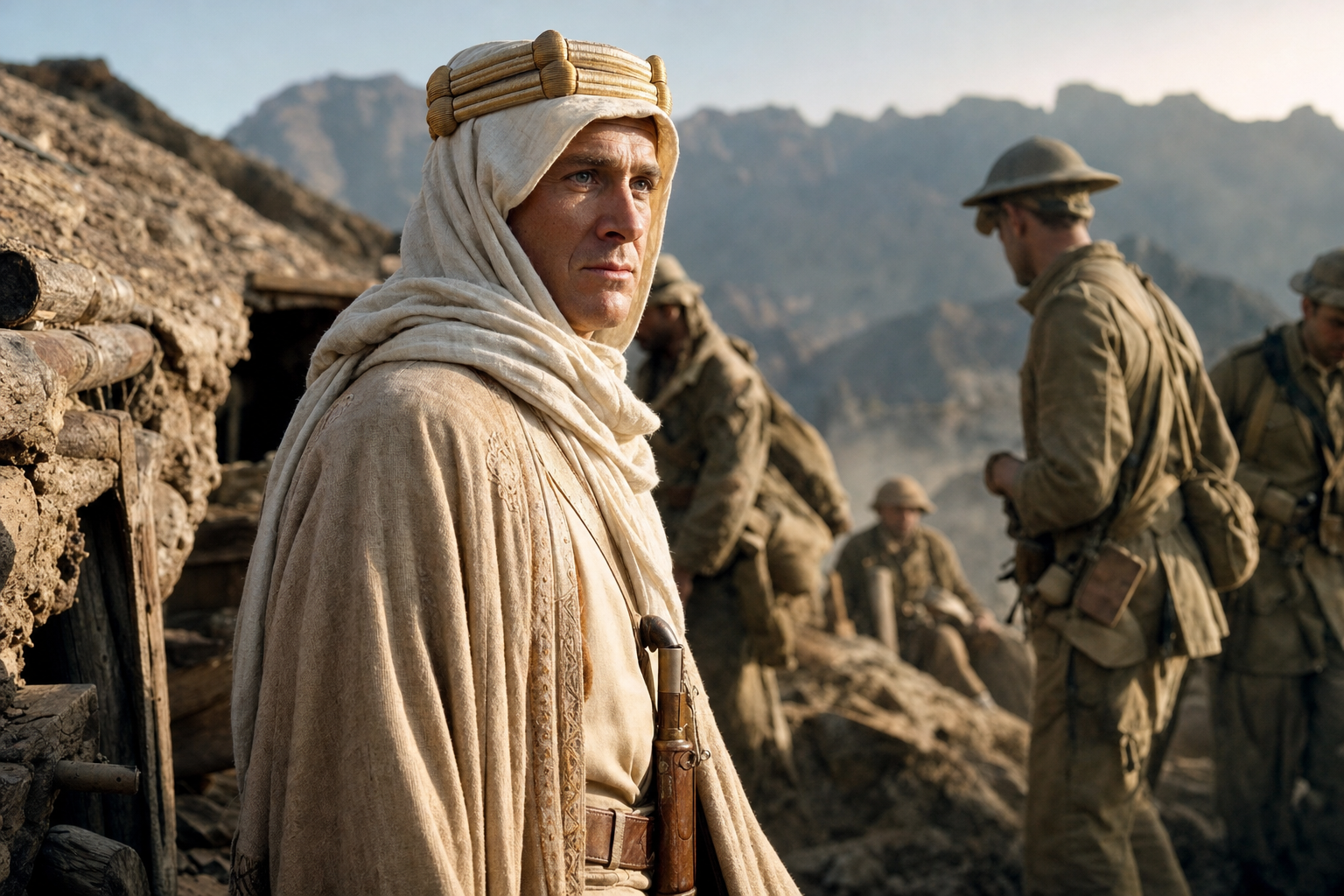
His mythic image—garbed in flowing robes, riding with Bedouin irregulars across dunes—owes much to his own narrative voice in Seven Pillars of Wisdom, and to later cinematic and popular portrayals. But beneath the myth were real, verifiable campaigns: sabotage of the Hejaz Railway, the dramatic march to Aqaba in July 1917, and the eventual triumphal entrance into Damascus in October 1918. These operations took place against a backdrop of competing imperial designs: the secret Sykes-Picot Agreement of 1916 and the Balfour Declaration of 1917 complicated promises made to Arab leaders and shaped Lawrence’s disillusionment during postwar negotiations.
Did you know? Lawrence’s prewar archaeological work at Carchemish acquainted him with local Bedouin, who later became key allies during the Arab Revolt.
This article seeks to tell a careful, richly detailed story of Lawrence’s life during the war: the archaeologist who learned to read deserts, the liaison who brokered tribal alliances, the strategist who adapted guerrilla tactics to a modern campaign, and the writer whose book fixed a particular image of both man and campaign in public memory. Drawing on primary dates and well-documented events, the narrative will avoid sensational fabrication while embracing the mystery that long surrounds Lawrence’s personality and choices.
Origins: Archaeology, Education, and the Making of a Desert Scholar
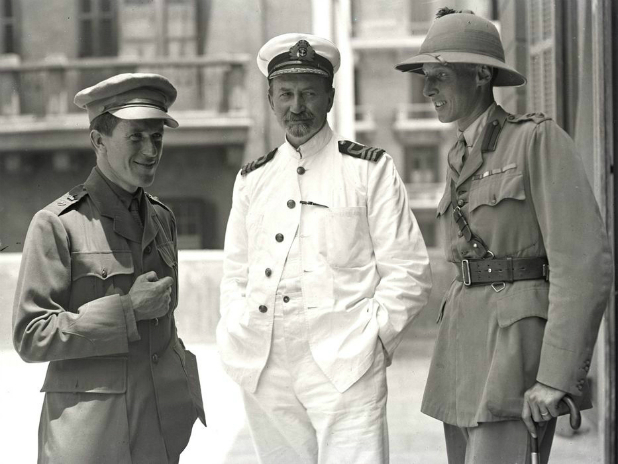
Thomas Edward Lawrence’s intellectual foundation was not forged in military academies but in libraries and excavation trenches. Born in Tremadog, Wales, in 1888 and raised largely by his mother and relatives after a complicated family situation, Lawrence’s early curiosity led him to Oxford, where he studied history at Jesus College. His academic work focused on medieval castles and crusader studies; this medievalist grounding translated into a fascination with the Levant and its layered past. Between 1909 and 1914 he worked on archaeological digs in Syria and Anatolia, including significant seasons at Carchemish and other Hittite sites under the supervision of D. G. Hogarth and colleagues connected with the British Museum and the University of Oxford.
These excavations were more than academic pursuits. They immersed Lawrence in the Arabic language and Bedouin culture, gave him practical skills in travel and survival across harsh terrain, and established contacts among local archaeologists and tribal leaders. His notebooks from these years show careful observations of topography, local customs, and ancient infrastructure—knowledge that would later inform operations against Ottoman supply lines. The experience also gave him credibility among Arab intellectuals and sheikhs; he was not merely a colonial officer but someone who had lived in the region’s villages and deserts and who had studied its history firsthand.
Did you know? Lawrence tailored guerrilla operations to seasonal camel movements; he chose times when local tribes were available to strike and then disperse with the flocks.
Lawrence’s scholarly temperament—meticulous, reflective, and deeply interested in the moral dimensions of conquest and governance—would inflect his wartime writings. He viewed the Arab Revolt not only as a tactical campaign but as a potential national awakening rooted in history and memory. For British officials in Cairo and the War Office, his combined expertise in language, culture, and terrain marked him as an ideal candidate for liaison work. In late 1914 and into 1915 he was recruited to serve in the Arab Bureau in Cairo; his prior archaeological credentials smoothed his transition from the world of digs to the sharper zones of intelligence and diplomacy.
Yet Lawrence’s sensitivity also made him aware of the human costs of war. He observed the variability in tribal loyalties and the personal rivalries that could deepen fractures even among ostensibly allied groups. These early impressions hardened into a wary pragmatism: any successful campaign would require not only military ingenuity but patient negotiation and personal diplomacy. The young archaeologist who had once catalogued pottery sherds would become a man who measured rail timetables, caravan routes, and the loyalties of chiefs.
The Arab Revolt and the Strategy of Sabotage
The Arab Revolt, declared in June 1916 by Sharif Hussein of Mecca, aimed to shake Ottoman control and eventually achieve Arab independence across much of the Arabian Peninsula and the Levant. From the British perspective, supporting the revolt was a means of weakening the Ottoman Empire—an ally of Germany—on its southern flank and diverting Ottoman forces. Lawrence’s role as a liaison combined advisory duties with practical coordination: he worked directly with leaders such as Emir Faisal, son of Sharif Hussein, and with tribal chiefs who could mobilize irregular forces for a war of movement.
Did you know? The capture of Aqaba offered Faisal a supply lifeline and was crucial to sustaining subsequent operations in southern Syria.
The military challenge was considerable. Ottoman forces controlled garrison towns, railways, and fortifications. Conventional frontal assaults would be costly and likely ineffective. Lawrence and his Arab allies instead favored a strategy of sabotage and mobility. The Hejaz Railway, running from Damascus to Medina, was the Ottoman Empire’s lifeline to the Arabian interior and to its garrisons. Targeting that railway became the central tactical focus of the revolt. Lawrence organized small, mobile columns that struck at rails, stations, and bridges, then melted away into desert hideouts or into tribal territories where pursuit was difficult.
These operations were not mere acts of vandalism; they required careful reconnaissance, timing, and local cooperation. Lawrence drew on his knowledge of the terrain to choose ambush points and to coordinate with local camel-bearing units that could move across dunes. His insistence on light, fast forces minimized casualties while maximizing disruption. He also emphasized political considerations: attack sites would be chosen to support Arab control over liberated towns or to signal a meaningful threat to Ottoman supply lines, rather than being random acts of destruction. The goal was to paralyze Ottoman mobility and to create a perception of widening insurrection.
Lawrence’s own presence in the field—dressed in Arab robes and moving with Bedouin fighters—was both symbolic and practical. He cultivated personal relationships with tribal leaders such as Auda abu Tayi of the Howeitat; these alliances were not merely transactional but grounded in mutual respect and ritual hospitality. Coordination with the British, including limited supplies and occasional artillery or intelligence support, allowed these guerrilla bands to sustain prolonged campaigns despite the scarcity of resources.
Did you know? At the Paris Peace Conference, Lawrence supported Faisal’s claim for Arab independence but encountered the entrenched imperial interests of Britain and France.
The strategy of sabotage produced outsized effects relative to the small numbers involved. Railway repair was slow, and constant attacks forced the Ottomans to divert troops for protection and repairs. Moreover, the psychological effect—of a seemingly omnipresent insurgency that could strike behind the lines—had political consequences in Cairo, Constantinople, and London. The insurgency helped fix the Revolt in the wider Allied strategy even if it did not, by itself, topple Ottoman rule.
Aqaba and the Art of the Impossible Maneuver
Few episodes of the Arab Revolt encapsulate Lawrence’s blend of audacity, local politics, and landscape mastery as neatly as the capture of Aqaba. The Red Sea port was an Ottoman bastion and a crucial link for supplies. Conventional British naval thinking assumed that Aqaba could only be taken from the sea, but Lawrence and his allies conceived a desert approach that struck the garrison’s weak rear. On the night of 6 July 1917, following weeks of planning and collaboration with local chiefs including Auda abu Tayi and Sherif Nasir, a mixed force of Arab irregulars and a small British contingent surprised the Ottoman defenders and secured the port.
The march to Aqaba required both endurance and deception. The desert route involved crossing the Nefud’s stony expanses and navigating by scant water sources. Lawrence’s experience in the region’s topography and his ability to procure guides—often from tribes who knew the desert intimately—were decisive. The operation’s success also rested on political negotiation: Lawrence persuaded tribes to commit fighters and to hold lines of communication open, using a mix of promises, shared plunder, and appeals to honor.
Did you know? Lawrence adopted the surname Shaw and sought anonymity in the RAF and Royal Navy after the war, attempting to escape public celebrity.
The psychological consequences of Aqaba were immediate. Its capture provided the Arab forces with a maritime outlet for supplies and a base from which to threaten Ottoman positions across southern Syria and northern Arabia. Strategically, it validated the model of rapid, unpredictable movement sustained by local knowledge rather than by numbers alone. It also boosted Faisal’s standing among Arabs and in British eyes; the port’s seizure became a tangible sign that the Revolt could produce meaningful territorial gains.
Lawrence himself became the figurehead of this narrative—both within Arab circles and back in Britain. Contemporary dispatches and later accounts emphasized his daring leadership and his habit of wearing Arab dress, but those images—though not fabricated—became stylized. The capture of Aqaba was, in truth, the result of coordinated effort among many actors: tribal chiefs, Bedouin fighters, British intelligence officers, and naval support. Yet the image of Lawrence as the architect of the desert march persisted, bolstered by his own memoirs.
Damascus and the Politics of Victory
By the autumn of 1918, the Ottoman position in the Levant had crumbled. British and allied forces under General Edmund Allenby advanced northward, and Arab columns under Faisal—supported by Lawrence’s raids and intelligence—moved toward Damascus. On 1 October 1918, Arab forces entered Damascus, and for a charismatic moment the idea of an independent Arab polity seemed tangible. Lawrence worked to translate military victories into political capital, urging British and Arab leaders to negotiate terms that might allow self-determination.
Did you know? Seven Pillars of Wisdom was circulated in several manuscript and private editions before the well-known 1926 published edition.
But the political landscape was fraught. Long before the war had ended, Britain and France had secretly negotiated the Sykes-Picot Agreement of 1916, which envisioned spheres of influence across former Ottoman domains and ran counter to promises made to Arab leaders. Moreover, the British had endorsed the Balfour Declaration of 1917, committing support for a Jewish national home in Palestine—another source of tension with Arab aspirations. Lawrence, who had developed strong personal ties with Faisal, became an outspoken advocate for Arab independence at diplomatic meetings and at the Paris Peace Conference in 1919. He sought to press the case that Arab self-rule was a necessary and morally defensible outcome after the sacrifices of the wartime campaign.
Faisal’s mission to the Paris conference, accompanied by Lawrence and other advisers, revealed the limits of idealism. While Faisal enjoyed some sympathy—at times he met with President Wilson, whose rhetoric of self-determination inspired many colonized peoples—the realities of great-power bargaining were unyielding. France insisted on claims in Syria and Lebanon; Britain was preoccupied with securing imperial lines to India and other strategic interests. Ultimately, Faisal was installed briefly as King of Syria in 1920 before French forces expelled him; he later became King of Iraq in 1921 with British backing, but not on the terms of full, regional independence many Arabs had hoped for.
Lawrence’s reaction to these outcomes was complex. He felt personal betrayal and political disappointment; his later writings and private letters show a man struggling with moral outrage at the duplicity of imperial diplomacy. This emotional dimension—disillusionment mixed with a fierce loyalty to his Arab friends—colored both his public interventions and his private decisions after 1919. He returned to Britain disenchanted with the way promises had been traded away in the backrooms of Versailles.
Did you know? Lawrence’s mobility and use of light, camel-borne columns influenced later doctrines of irregular warfare and special operations.

Mythmaking, Seven Pillars, and the Afterlife of a Warrior-Writer
If Lawrence was a gifted field commander and diplomat, he was also an exceptional narrator of his own experience. Seven Pillars of Wisdom—his large, sweeping account of the Arab Revolt—remains the principal literary monument to his wartime years. Completed in various forms by 1919 and published in a celebrated subscribers’ edition in 1926, the book blends classical allusion, personal introspection, and military reportage. Its style helped craft the legendary image of Lawrence: the lone Western figure enmeshed in Arab hospitality and desert danger. Yet historians and critics have long debated how much of Lawrence’s account is selective memory, rhetorical artifice, or truthful reportage.
The book’s authority is both enhanced and complicated by Lawrence’s own reticence and contradiction. He was known to be self-conscious about fame; after the war he sometimes sought anonymity and changed his surname to Shaw (often styled T. E. Shaw) and enlisted briefly in the Royal Air Force and later the Royal Navy under assumed identifiers. He sought to distance himself from the celebrity that followed the Revolt and the publication of accounts about it. But his actual influence on events—sustained by documentary evidence and by corroborating accounts from Arab leaders—remains significant.
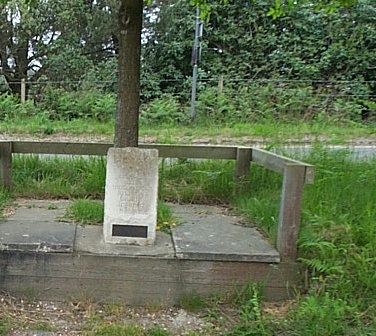
Lawrence’s postwar years were marked by restlessness. He supervised a camel corps in the British administration of Transjordan for a time and engaged in various writing and advisory roles. He continued to struggle with the gulf between the promise of Arab self-determination and the realities established by European powers. Public fascination with his persona only grew, especially after his death in a motorcycle accident on 19 May 1935 near his home in Dorset. He was riding his motorcycle, a Brough Superior, when he swerved to avoid two boys on bicycles and was thrown from the machine; he died of head injuries shortly thereafter and was buried in Moreton, Dorset.
In the decades since, Lawrence’s life has inspired films, biographies, debates, and enduring mysteries. The 1962 David Lean film Lawrence of Arabia transformed him into a cinematic archetype but also introduced distortions—omitting certain political complexities and emphasizing individual heroism. Modern historians have revisited primary documents, letters, and Arab testimony to rebuild a more nuanced picture: Lawrence as a product of his time, a man of intellect and impulse, whose alliance with Arab leaders produced real military effects but whose political aims were ultimately constrained by imperial realities.
Conclusion: The Desert as Mirror — Legacy and Lessons
Thomas Edward Lawrence remains a figure who resists tidy classification: hero, romantic, manipulator, scholar, or scapegoat. The historical record supports many concrete claims—his fieldwork as an archaeologist, his presence in the Arab Revolt, his role in the capture of Aqaba, his lobbying at Versailles, and his literary legacy in Seven Pillars. But beyond these verifiable facts lies a more complicated human drama. Lawrence’s skill was not simply military daring; it was an ability to read people and places, to persuade tribal leaders to act in ways that aligned with broader political aims, and to fuse local grievances and loyalties into a mobile and effective campaign.
The revolt’s ultimate political failure to produce pan-Arab independence as many had hoped is not solely Lawrence’s responsibility. It reflected the realities of global power, the strategic interests of France and Britain, and the entangled promises and counterpromises of wartime diplomacy. Yet Lawrence’s example holds lessons for understanding irregular warfare, the power of local knowledge in shaping outcomes, and the role of narrative in constructing historical memory. His life suggests that even when military tactics succeed, political outcomes may be decided at negotiation tables far from the field of battle.
Historically accurate portraits of Lawrence must balance admiration for his capacities with critical attention to the broader forces at play. In that balance we find a story that is at once a saga of desert campaigns and a cautionary tale about the limits of idealism in the face of imperial bargaining. The desert, with its stark skies and shifting sands, remains an apt metaphor: it reveals footprints but also obscures paths. T. E. Lawrence left both kinds of traces—concrete military actions and an enduring narrative that continues to shape how the First World War’s Middle Eastern theater is recalled.
How we verify this article
By the History Unlocked editorial team
This text is built on historical facts stored in our database and drafted with AI assistance. No signed human review is recorded for this article. Report any inaccuracy: we correct it and update the modified date.
Updated on
AI-assisted drafting.
Read our editorial standardsEnjoyed this? Discover more articles in the category World War I