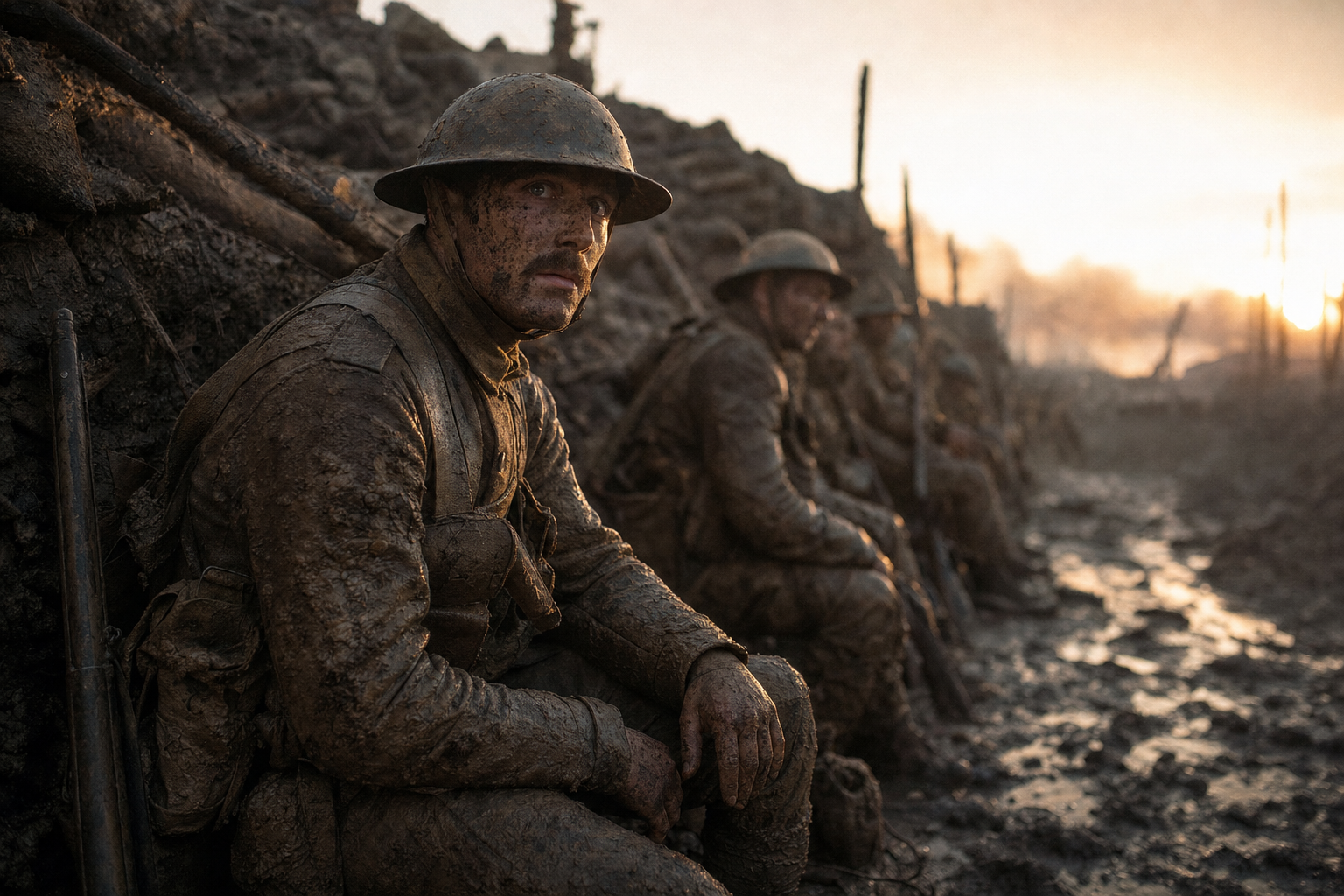
The Somme: A Deluge of Blood and Mud That Defined WWI
The chilling pre-dawn silence of July 1, 1916, was merely a deceptive prelude. Across a 25-kilometer front in Northern France, an expectant stillness hung heavy, broken only by the distant cooing of doves and the nervous coughs of a million men. These men, huddled in trenches, represented the hopeful vanguard of a colossal Allied offensive, the Battle of the Somme, which was intended to be the decisive blow against the formidable German lines. For a week, an unprecedented artillery bombardment, consuming an astonishing 1.7 million shells, had ripped through the pastoral landscape, promising a clear path to victory. British and French commanders, imbued with an unwavering belief in their tactical brilliance, assured their troops that the German barbed wire would be obliterated, their machine-gun nests silenced, and their trenches reduced to rubble. Yet, as the sun began its ascent on that fateful morning, illuminating a landscape scarred beyond recognition, the grim reality began to unfurl. This was not to be the swift, triumphant advance envisioned by the strategists in their distant châteaux. Instead, it was to become an apocalyptic maelstrom, a horrifying crucible of human suffering that would forever etch itself into the collective memory as one of the most brutal and futile engagements in military history. The Somme would not just be a battle; it would be a symbol, a testament to the devastating intersection of antiquated tactics, industrial-scale slaughter, and an unyielding will to endure in the face of insurmountable odds. The initial hours alone would see a catastrophic loss of life, a grim foreshadowing of the four long months to come, where the verdant fields of Picardy would become synonymous with a deluge of blood and mud, a testament to the sheer, unbridled horror of total war. The battle's aftershocks would reverberate for decades, shaping national identities and forever altering the perception of warfare itself. It was an event that stripped away any last vestiges of romanticism surrounding conflict, exposing its raw, mechanical brutality for all to see. The Somme, in its terrifying scale and tragic futility, remains a stark, enduring lesson from the annals of human conflict, a warning whispered through the generations about the true cost of hubris and the devastating power of industrialized warfare. It was a battle fought ostensibly for strategic gains, yet its most profound legacy lies in the immeasurable human suffering it inflicted, forever staining the landscape and the souls of those who witnessed its horrors. The story of the Somme is not merely one of military maneuvers and strategic objectives; it is a profound narrative of human resilience, desperation, and the enduring scars of an unparalleled catastrophe. This article will delve into the multifaceted layers of this epic struggle, exploring its genesis, its devastating prosecution, and its lasting, harrowing legacy.
The Genesis of a Catastrophe: Strategic Imperatives and Doomed Plans
The Battle of the Somme was not an isolated event but rather the desperate culmination of strategic pressures mounting on the Allied powers in early 1916. The Western Front had devolved into a sanguinary stalemate, characterized by intricate trench systems, barbed wire entanglements, and the relentless, attritional grind of warfare. The Germans, under General Erich von Falkenhayn, had launched a massive offensive at Verdun in February 1916, aiming to "bleed France white." This protracted and incredibly brutal engagement drained French resources and manpower, creating an urgent need for a diversionary offensive on the Western Front. Field Marshal Sir Douglas Haig, commander of the British Expeditionary Force (BEF), understood the imperative to relieve the immense pressure on the French and sought a breakthrough that would finally shatter the static trench lines. The Somme region, a relatively quiet sector until then, was chosen as the site for this audacious undertaking, primarily due to its strategic location in Picardy, offering potential access to vital German railway networks. The initial plans, forged in the fires of wartime exigency, envisioned a joint Anglo-French offensive, with the French playing a dominant role. However, the relentless demands of Verdun severely curtailed French participation, transforming what was intended as a co-equal effort into a largely British-led assault, with a reduced French contingent on the southern flank. This shift placed an enormous burden on the BEF, an army still largely composed of volunteer battalions, many of whom had seen little to no combat. These "Pals Battalions," formed from men who enlisted together from the same towns, factories, or clubs, embodied a remarkable spirit of camaraderie and patriotic fervor. Yet, their inexperience in large-scale offensive operations, combined with the often-rigid adherence to outdated tactical doctrines by their commanders, set the stage for a tragic unfolding of events. The strategic objectives were ambitious: to achieve a decisive breakthrough, relieve Verdun, and, ideally, inflict such heavy casualties on the German army that it would collapse. The initial phase of the battle hinged on an unprecedented artillery barrage, designed to obliterate the German front lines, clearing the way for the advancing infantry. General Sir Henry Rawlinson, commander of the British Fourth Army, had meticulously planned this barrage, believing wholeheartedly in its efficacy. The sheer scale of the preparatory bombardment was staggering, involving thousands of artillery pieces firing millions of shells over several days. The confidence among the Allied high command was almost intoxicating, bordering on hubris. They genuinely believed that no living thing could survive such an inferno, and that their infantry would simply walk across No Man's Land to claim the devastated German trenches. This misguided optimism, fueled by an incomplete understanding of German defensive capabilities and the limitations of their own artillery, proved to be a fatal flaw. The German trenches, often dug deep into the chalky soil, were far more resilient than anticipated, featuring concrete bunkers and interconnected dugouts that provided significant protection against even the heaviest shells. Furthermore, a substantial portion of the British artillery shells proved to be duds, failing to explode upon impact due to faulty fuses or manufacturing defects, further diminishing the effectiveness of the barrage. The meticulously planned genesis of the Somme offensive, intended to be a grand strategic triumph, was thus marred by a series of critical miscalculations and optimistic assumptions that would ultimately lead to an unimaginable human catastrophe. The stage was set for an epic, yet tragic, confrontation, born out of strategic necessity but destined for devastating consequences. The seeds of colossal loss were sown in the very planning stages, a testament to the grim realities of warfare where even the most meticulous blueprints can unravel with horrific speed and brutality. The narrative of the Somme, therefore, begins not with the first shot fired, but with the flawed calculations and unwavering convictions that propelled millions towards an unforeseen abyss.
The First Day: A Baptism of Fire and Unprecedented Slaughter
The morning of July 1, 1916, dawned with an almost surreal calm, quickly shattered by the thunderous roar of the final, concentrated artillery barrage. At 7:30 AM, whistles screamed across the battlefront, and hundreds of thousands of British and French soldiers clambered out of their trenches, forming long, ordered lines. They advanced slowly, deliberately, laden with heavy packs, across a churned and pitted No Man's Land. The expectation, heavily propagated by their officers, was that the German defenders would have been utterly annihilated by the preceding week-long bombardment. This proved to be a horrific miscalculation. As the Allied soldiers emerged into the open, they were met by a devastating hail of machine-gun fire and rifle blasts. The German defenders, having largely survived the shelling in their deep dugouts, were now emerging, rapidly setting up their machine guns, and unleashing a torrent of lead into the advancing formations. The sight was apocalyptic: rows of men, marching shoulder-to-shoulder, falling in swathes as if scythed down by an invisible, merciless reaper. The sound of rapid-fire machine guns, often described as a "chorus of tearing canvas," mingled with the screams of the wounded and the concussive blasts of exploding shells. Within minutes, No Man's Land became a charnel house, a landscape littered with fallen bodies, the vibrant greens of summer quickly turning to the crimson of fresh blood and the grey-brown of churned earth. The British sustained the heaviest casualties on this single day, suffering an astonishing 57,470 casualties, including 19,240 killed – making it the bloodiest day in the history of the British Army. Entire battalions were virtually wiped out, their casualty lists reading like a register of doom for entire communities back home. The French, attacking on the southern flank, fared comparatively better, thanks to more flexible tactics, closer artillery support, and a more effective concentration of their bombardment on German strongpoints. However, even their advance was achieved at a significant human cost. The initial objectives, to punch through the German lines and seize key strategic points, largely remained unfulfilled, save for a few isolated gains quickly contested by ferocious German counterattacks. The psychological impact of this day was profound and enduring. The sheer scale of the slaughter, the utter futility of the sacrifice, left an indelible mark on the survivors and on the national consciousness. The unwavering belief in the efficacy of artillery and massed infantry charges was shattered, replaced by a grim realization of the brutal realities of modern warfare. The British commanders, many of whom had observed the initial waves of attack from well behind the lines, struggled to comprehend the catastrophe unfolding before their eyes. Reports from the front were often contradictory or incomplete, leading to a dangerous disconnect between the reality on the ground and the perceptions of the high command. Many generals continued to believe that the breakthrough was imminent, pushing for further assaults even as reports of mounting casualties painted an increasingly bleak picture. The first day of the Somme was not just a military disaster; it was a profound human tragedy, a chilling testament to the devastating consequences of flawed planning, technological misjudgment, and an unwavering, almost blind, adherence to outdated military doctrines. It set a grim precedent for the remainder of the battle and indeed for much of the subsequent attritional warfare on the Western Front, forever casting a shadow over the "Great War" and reminding all of the immense, unimaginable price of conflict. The memory of July 1, 1916, continues to serve as a stark warning, a visceral reminder of the fragility of human life in the face of machine-driven destruction and the terrifying descent into chaos that accompanies the eruption of total war. It was a day that redefined the parameters of military catastrophe, leaving an enduring scar on the collective memory of a generation. The fields of Picardy, once serene agricultural landscapes, were transformed into a vast cemetery, a silent testament to the thousands of lives abruptly extinguished in a single, devastating dawn. The harrowing accounts of survivors paint a picture of utter pandemonium, confusion, and a pervasive sense of despair as the scale of the disaster unfolded before their eyes. The battle, far from achieving a decisive breakthrough, had instead become a gruesome testament to the defensive power of machine guns against exposed infantry, a bitter lesson learned at an unbearable cost. The echoes of "the worst day in British military history" would reverberate for generations, a somber reminder of a generation's sacrifice.
Did you know? Many of the "Pals Battalions" suffered near-total annihilation on the first day of the Somme, leading to devastating social and emotional impacts on their home towns, where entire generations of young men were wiped out.

The Long, Bloody Slog: Attrition and Innovation
Following the catastrophic first day, the Battle of the Somme devolved into a protracted, attritional struggle, a slow, grinding process of advances, retreats, and constant, debilitating casualties. Haig, despite the initial setback, remained committed to the offensive, believing that a continuous application of pressure would eventually wear down the German defenders. The strategic objectives shifted from a rapid breakthrough to a relentless attrition of German manpower and resources. Over the next four months, the fighting became characterized by desperate, localized attacks, often aimed at relatively minor gains of ground, measured in meters rather than kilometers. The landscape itself became a formidable enemy. Heavy rains transformed the battlefield into a treacherous quagmire of mud, making movement agonizingly slow and arduous. Trenches collapsed, equipment bogged down, and the wounded often drowned in craters filled with viscous, foul-smelling sludge. Supply lines became nightmarish, with men and mules struggling to transport ammunition, food, and medical supplies through the impassable terrain. The German defenses, though battered, remained resilient. They continually reinforced their positions, constructed new dugouts, and adapted their tactics, making every Allied advance a costly affair. The introduction of the "Elastic Defence" doctrine by the Germans, involving a series of defensive lines rather than a single formidable one, further complicated Allied efforts to achieve a sustained breakthrough. This period, however, also witnessed the hesitant emergence of new tactical innovations, born out of the sheer necessity to break the deadlock. The creeping barrage, where artillery fire moved forward in precise coordination with advancing infantry, became more refined, offering some measure of protection. Small unit tactics, emphasizing infiltration and the bypassing of strongpoints rather than frontal assaults, began to gain traction, albeit slowly. The most significant technological innovation introduced during the Somme was the tank. On September 15, 1916, at the Battle of Flers-Courcelette, the British deployed their new "Mark I" tanks for the first time in combat. These lumbering, rhomboid-shaped machines, designed to crush barbed wire, cross trenches, and provide mobile fire support, initially created panic among the German troops. While mechanically unreliable and prone to breakdown, their psychological impact was undeniable, offering a glimpse into the future of armored warfare. Their limited numbers and technical immaturity prevented them from achieving a decisive victory, but their potential was clear. The aerial dimension of the battle also intensified considerably. Both sides vied for air superiority, initially for reconnaissance and artillery spotting, but increasingly for direct ground attack and aerial combat. "Dogfights" became a common sight above the blood-soaked fields, with legendary aces emerging from both sides. The constant drone of aircraft added another layer to the overwhelming sensory assault of the battlefield. The long, bloody slog of the Somme was a testament to the brutal efficacy of attrition warfare. While Allied forces made incremental gains, pushing the German lines back by several kilometers in some sectors, these advances came at an almost unbearable cost. The hope of a quick breakthrough had long evaporated, replaced by the grim determination to inflict maximum casualties on the enemy, even if it meant sustaining equally horrific losses. The battle transformed the concept of warfare, showcasing the devastating power of industrial-scale conflict and the profound adaptability required to survive and fight in such an unforgiving environment. It was a period of grim lessons learned, often written in blood, laying the groundwork for future tactical doctrines while simultaneously demonstrating the raw, unyielding brutality of modern combat. The continuous clashes, the relentless barrage, and the ever-present threat of death imprinted themselves deeply on the psyche of every soldier, cultivating a profound sense of fatalism and stoic endurance. The battlefield itself became a ravenous entity, consuming men, matériel, and morale with an insatiable hunger.

The Human Cost: A Generation Scarred
The Battle of the Somme, finally grinding to a halt in mid-November 1916 due to the onset of winter and the exhaustion of both sides, left behind a legacy of unparalleled human suffering. The statistics alone are staggering: over 1.1 million casualties on all sides, including approximately 420,000 British, 200,000 French, and 450,000-500,000 German soldiers killed, wounded, or missing. These figures represent not just abstract numbers, but countless individual lives irrevocably altered or extinguished, families shattered, and communities forever scarred. For the soldiers who endured the Somme, the experience was profoundly traumatic. The constant shelling, the relentless machine-gun fire, the pervasive smell of death and decay, and the ever-present threat of immediate annihilation etched deep psychological wounds. Many suffered from "shell shock" (now known as PTSD), manifesting as tremors, paralysis, speech impediments, and profound psychological distress. The medical facilities, overwhelmed by the sheer volume of casualties, often struggled to cope. The conditions in the field hospitals were rudimentary, and many wounded soldiers succumbed to infections or untreated injuries. The horrific injuries caused by modern weaponry – shrapnel wounds, amputations, disfigurement – were widespread, creating an immense burden on military and civilian medical services for decades to come. The experience of the Somme also fundamentally altered the relationship between soldiers and their officers, and between the front lines and the home front. The vast disconnect between the optimistic pronouncements of the high command and the horrific realities faced by the troops bred a deep sense of cynicism and disillusionment. The phrase "lions led by donkeys" became a bitter indictment of perceived incompetence and callous disregard for human life by the generals. Back home, beyond the official communiqués, the sheer scale of the losses began to filter through via casualty lists and letters from the front. The initial wave of patriotic fervor gradually gave way to a pervasive sense of grief and questioning. The sacrifice of a generation of young men, particularly the "Pals Battalions," left gaping holes in the social fabric of Britain and France. Villages lost all their eligible young men, leading to profound demographic and social consequences. The economic impact was also immense. The war effort, particularly such prolonged and costly offensives, consumed vast national resources, draining treasuries and diverting industrial capacity away from civilian production. The sheer quantity of ammunition, food, and equipment required to sustain millions of men in the field placed an enormous strain on national economies, leading to shortages, inflation, and social unrest in later years. The environmental devastation of the Somme battlefield was also profound. The continuous shelling obliterated forests, churned agricultural land into an impassable wasteland, and left a permanent scar on the landscape. Unexploded ordnance, known as "iron harvest," continues to be found and cleared even today, a silent, deadly legacy of the conflict. The Somme became more than a battle; it became a symbol of the futility of war, of the horrifying costs of industrial-scale conflict, and of the enduring trauma inflicted upon individuals and societies. It was a crucible that forged a generation, imbuing them with a hardened stoicism but also with a deep-seated pacifism and an unwavering skepticism towards authority. The human cost extended far beyond the immediate casualties, reaching into the fabric of society, shaping cultural narratives, and influencing political thought for decades after the guns fell silent. Its profound and devastating impact remains one of the most poignant and somber lessons from the First World War. The haunting echoes of the Somme continue to resonate, a perpetual reminder of the fragility of peace and the immeasurable suffering brought by the relentless machinery of war.

The Strategic Legacy and Enduring Memory
When the guns finally fell silent on the Somme in November 1916, winter weather and mutual exhaustion brought an end to one of the costliest battles in human history. Strategically, the immediate objectives of the battle – a decisive breakthrough and the collapse of the German lines – were not achieved. The German front had been pushed back a mere 10-12 kilometers at its deepest point, gained at an almost unfathomable cost in lives. However, from an Allied perspective, particularly the British, the battle was retrospectively viewed as a necessary evil, an essential part of the attritional process that ultimately wore down the German army. It had relieved pressure on Verdun, forcing the Germans to divert significant resources and manpower away from their grinding attack on the French fortress city. More importantly, the Somme inflicted immense casualties on the German army, bleeding it white over an extended period. While Allied losses were horrific, the Germans, often fighting defensively from fixed positions, also suffered grievously, losing many experienced, pre-war professional soldiers who were difficult to replace. The battle forced the Germans to abandon their relatively static defensive posture and adopt new, more flexible doctrines, recognizing the futility of holding every inch of ground at all costs. This strategic shift would have significant implications for subsequent campaigns. The Somme also served as a harsh, albeit invaluable, learning experience for the British Army. It highlighted critical deficiencies in their tactical doctrines, artillery coordination, and staff planning. The horrific lessons learned – about the importance of deep artillery penetration, effective counter-battery fire, small unit tactics, and sustained logistical support – would gradually lead to significant improvements in military effectiveness by 1917 and 1918. The introduction and limited deployment of tanks, despite their initial imperfections, offered a tantalizing glimpse into the future of warfare, accelerating the development of combined arms tactics. The enduring memory of the Somme, however, extends far beyond military strategy. It became, particularly in Britain, a powerful symbol of national sacrifice, courage, and immense loss. The image of the "lost generation," marching stoically to their deaths on the fields of Picardy, became deeply ingrained in the national consciousness. War memorials across the UK and Commonwealth countries bear the names of thousands who fell at the Somme, serving as poignant reminders of the battle
Did you know? The tanks deployed at the Somme were often referred to as "landships" by their crews and were initially fraught with mechanical issues, including overheating engines and breakdowns in the treacherous terrain.
How we verify this article
By the History Unlocked editorial team
This text is built on historical facts stored in our database and drafted with AI assistance. No signed human review is recorded for this article. Report any inaccuracy: we correct it and update the modified date.
Updated on
AI-assisted drafting.
Read our editorial standardsEnjoyed this? Discover more articles in the category World War I