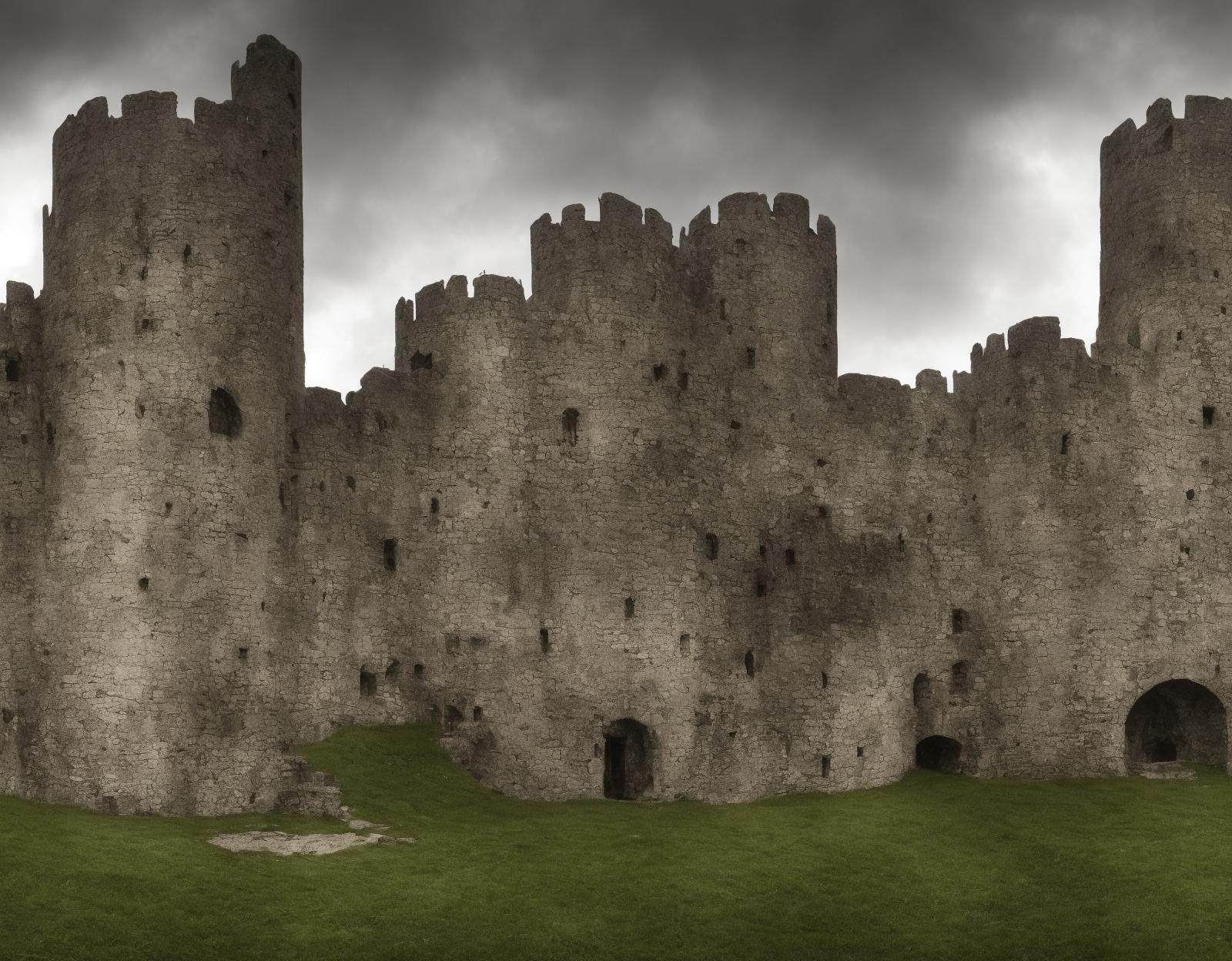
Secrets of Stone: Europe's Mystical Medieval Castles and Fortresses
Europe's landscape is dotted with silent sentinels of stone, monumental reminders of a bygone era when power was carved from rock and dominion was forged in steel. These are the castles and fortresses of the Middle Ages, structures that stand not merely as relics of the past, but as living testaments to human ingenuity, ambition, and the relentless pursuit of security. From the rugged cliffs of Scotland to the sun-drenched plains of Spain, each castle tells a unique saga of kings and commoners, of epic battles and quiet domesticity, of grand feasts and desperate sieges. They were the heart of medieval society, symbols of authority, centers of economy, and the ultimate refuge in times of war. Their very stones resonate with tales of romance, intrigue, and brutality, inviting us to delve into a world where honor was paramount and survival was a daily struggle. This article will embark on a journey through time, exploring the strategic brilliance, the architectural marvels, and the profound historical significance of these enduring bastions, unveiling the secrets etched into their ancient walls and the captivating stories held within their formidable shadows.
The Dawn of Stone: Early Fortifications and Their Evolution
The origins of European castles are rooted in simpler, often wooden structures, evolving from the motte-and-bailey designs prevalent in the 10th and 11th centuries. These early fortifications consisted of an earthen mound (motte) topped by a wooden tower or keep, surrounded by a palisaded enclosure (bailey). While effective against minor raids, their vulnerability to fire and decay soon prompted a shift towards more durable materials: stone. The transition was gradual, beginning with the foundations and lower levels of keeps, eventually encompassing entire curtain walls and towers. This shift marked a significant technological leap, requiring sophisticated engineering knowledge, immense labor, and vast resources. The Normans, in particular, were masters of castle building, exporting their expertise across England and beyond after the Norman Conquest of 1066. Their early stone keeps, such as the White Tower in London, were formidable structures, designed not only for defense but also as overt symbols of conquest and control. These early stone castles were characterized by thick walls, limited fenestration, and often a concentric design, with multiple layers of defense. The shift from wood to stone was not merely an upgrade in materials; it was a fundamental redefinition of defensive architecture, laying the groundwork for the majestic castles that would dominate the European landscape for centuries to come. The design considerations were manifold, taking into account terrain, water sources, and lines of sight, with every arrow slit and every battlements meticulously planned for maximum strategic advantage. The construction process itself was an arduous undertaking, spanning years, sometimes decades, and involving thousands of laborers, skilled stonemasons, carpenters, and blacksmiths, all working in unison under the watchful eye of a master builder. The early stone castles were often built on high ground, commanding views of the surrounding countryside, serving as strategic choke points and control centers for vast territories, projecting power far beyond their immediate vicinity. The transition to stone was, therefore, a testament to the increasing sophistication of medieval warfare and the growing need for permanent, resilient strongholds capable of withstanding prolonged sieges and projecting enduring authority. The sheer scale and enduring presence of these early stone structures continue to awe and inspire, reminding us of the immense human effort and vision that brought them into being.
Imperial Echoes: Citadel Life and Feudal Power
The castle was far more than just a defensive structure; it was the vibrant heart of the feudal system, a microcosm of medieval society. Within its imposing walls lived the lord and his family, surrounded by a retinue of knights, soldiers, servants, artisans, and clerks. Daily life in a castle was a complex tapestry of duty, hierarchy, and survival. The lord, as the ultimate authority, presided over his domain, dispensing justice, collecting taxes, and leading his men in battle. The great hall served as the primary gathering place, hosting feasts, legal proceedings, and religious ceremonies. Life was governed by strict routines, dictated by the seasons and the demands of warfare. Women, particularly noblewomen, played crucial roles in managing the household, overseeing servants, and often administering the estate in their husband's absence. Children were educated in the arts of chivalry, warfare, and courtly etiquette, preparing them for their future roles within the feudal hierarchy. The castle's economy was largely self-sufficient, with its own workshops for blacksmiths, carpenters, and weavers, and storehouses for food, weapons, and supplies. This self-reliance was critical during sieges, when external aid was impossible. The castle's permanent garrison maintained vigilance, patrolling the walls, manning the gatehouse, and training for combat. The constant threat of attack meant that every inhabitant played a part in the overall defense, from the humblest scullery maid to the highest-ranking knight. While romanticized in literature, daily life in a medieval castle could be harsh, with limited hygiene, communal living, and the ever-present shadow of conflict. Yet, it was also a place of community, loyalty, and tradition, where the bonds between lord and vassal, and between family members, were forged in the crucible of shared experience. The castle truly was an imperial echo chamber, reverberating with the pronouncements of power, the clang of swords, the laughter of feasts, and the quiet dignity of a society structured around unwavering authority and unwavering loyalty, a tangible representation of the intricate social and political relationships that defined the medieval era. Understanding daily life within these mighty walls is paramount to grasping the full scope of their historical significance.
Did you know? The construction of a single medium-sized medieval castle could require up to 100,000 tons of stone and take over 20 years to complete, representing an enormous investment of labor and resources.
Strategic Brilliance: The Art of Siege and Defense
Medieval siege warfare was a brutal and highly specialized art, demanding immense patience, ingenuity, and resources from both attackers and defenders. Castles were designed to be virtually impregnable, incorporating a range of defensive features intended to repel even the most determined assault. Thick, solid walls, often many meters thick, were the primary defense, capable of withstanding sustained bombardment from trebuchets and catapults. Loopholes and arrow slits allowed archers to rain down arrows on besieging forces with relative safety. Machicolations, projecting battlements with openings through which defenders could drop stones, boiling oil, or other projectiles, were a terrifying deterrent. Moats, drawbridges, and formidable gatehouses with पोर्टcullises added further layers of protection, creating deadly killing zones for attackers. The strategic placement of towers, often flanking curtain walls, allowed for enfilading fire, catching attackers in a crossfire. Defenders also employed active measures during a siege, launching sorties to disrupt enemy operations, sabotaging siege engines, and attempting to cut off supply lines. Tunnels, both offensive and defensive, played a crucial role, with sappers attempting to undermine walls and counter-sappers engaging in subterranean battles. The ability to endure a prolonged siege depended heavily on ample provisions of food, water, and weaponry, as well as the morale and discipline of the garrison. Starvation and disease were often more effective weapons than any siege engine. The attackers, for their part, employed a variety of tactics, from direct assault with scaling ladders and siege towers to more subtle methods like blockade and attrition. The construction of massive siege engines, capable of hurling large projectiles, was an engineering feat in itself. Ultimately, a siege was a test of wills, a grueling ordeal that could last for months, even years, often ending not with a decisive battle, but with the slow agonizing erosion of resources and morale. The strategic brilliance embedded in the design of medieval castles is a testament to the advanced understanding of defensive principles possessed by medieval engineers and military leaders. These structures were not simply walls; they were complex, integrated defensive systems, each element meticulously designed to contribute to the overall impenetrability. Every curve, every angle, every height difference was calculated to create an insurmountable obstacle, turning the castle into a strategic masterpiece, a silent guardian of its inhabitants. Understanding the intricate dance of attack and defense provides invaluable insight into the military mind of the Middle Ages and the crucial role that these formidable structures played in shaping the geopolitical landscape. The stories of legendary sieges, from Château Gaillard to Harlech Castle, underscore the high stakes and brutal realities of medieval warfare.
Masters of Innovation: Architectural Marvels and Engineering Feats
The construction of medieval castles represents one of the most impressive feats of engineering and architectural innovation in history. Far from being crude, these structures showcase sophisticated understanding of statics, dynamics, and material science. Early castles, with their simple keeps, gradually gave way to more complex, concentric designs, optimizing defensive capabilities. The development of the concentric castle, with its multiple rings of walls and towers, presented a formidable challenge to attackers, creating layers of defense that had to be overcome sequentially. Master builders, often anonymous, employed advanced techniques for quarrying, transporting, and dressing massive quantities of stone. Scaffolding, hoisting mechanisms, and innovative mortar recipes were essential for raising towering walls and intricate battlements. Architectural features such as vaulted ceilings, pointed arches, and buttresses, initially developed in ecclesiastical architecture, were adapted for defensive purposes, adding strength and aesthetic appeal. The integration of domestic and defensive functions within a single structure was also a hallmark of castle design. Great halls, chapels, private chambers, and service areas were expertly woven into the defensive fabric, ensuring both comfort and security for the inhabitants. Water management systems, including wells and cisterns, were crucial for survival during sieges, and ingenious drainage systems were implemented to maintain sanitation. The evolution of castle design was not linear but rather a constant process of adaptation and innovation, driven by changes in warfare technology and societal needs. The introduction of gunpowder and increasingly powerful artillery in the late medieval period eventually rendered many traditional castle designs obsolete, leading to a shift towards star forts and other more curvilinear fortifications. However, the legacy of medieval castle architecture endures, influencing subsequent military engineering and continuing to inspire awe with its sheer scale, enduring strength, and artistic beauty. The ingenuity displayed in their design, from the subtle angles of a hidden postern gate to the grand sweep of a towering keep, reflects a profound mastery of their craft. Each element, though seemingly disparate, contributed to a cohesive and remarkably effective whole, demonstrating a holistic approach to design that seamlessly blended form and function. These architectural marvels stand as testaments to the human capacity for problem-solving under extreme pressure and provide a tangible link to the intellectual and technical prowess of the medieval world.

Echoes of Eternity: Legends, Decline, and Legacy
The decline of medieval castles as primary defensive structures began roughly in the 15th century with the advent of gunpowder artillery. Cannons, capable of breaching even the thickest walls, rendered many traditional castle designs vulnerable. The focus shifted from vertical defense to horizontal, with new fortifications like star forts built with lower, thicker walls angled to deflect cannon fire. However, castles did not vanish overnight. Many continued to serve as administrative centers, noble residences, or even prisons for centuries, adapting to new roles. Some were remodeled into grand country houses, their defensive features softened or repurposed for aesthetic enjoyment. Others fell into ruin, their stones scavenged for new constructions, or simply succumbed to the ravages of time and neglect. Yet, their legacy far outlived their functional military purpose. Castles became imbued with a rich tapestry of legends, myths, and folklore, capturing the imagination of generations. Tales of valiant knights, enchanted princesses, ghostly inhabitants, and hidden treasures became inextricably linked to these ancient stones. They inspired countless works of literature, art, and music, from the romantic novels of Walter Scott to the epic operas of Richard Wagner. In the modern era, castles have been rediscovered as symbols of national heritage, economic drivers through tourism, and invaluable historical archives. Preservation efforts across Europe aim to protect these magnificent structures, ensuring that future generations can marvel at their grandeur and learn from their storied pasts. From the iconic silhouette of Neuschwanstein, a romanticized 19th-century vision of a medieval castle, to the grim, battle-scarred walls of the Krak des Chevaliers, a true Crusader fortress, each castle stands as a unique monument to human history. They are tangible links to a world of feudalism, chivalry, and intense conflict, offering profound insights into the political, social, and military dynamics of the Middle Ages. Their enduring presence reminds us that even as empires rise and fall, the monumental achievements of human endeavor can defy the passage of time, continuing to whisper their stories across the centuries. The legacy of castles is not just in their physical remains, but in the indelible mark they have left on our collective historical consciousness, shaping our understanding of power, defense, and the very fabric of human civilization. Their stories continue to fascinate, bridging the gap between a distant past and our present, offering windows into lives and struggles long past, yet still resonating with timeless themes of ambition, survival, and the human spirit's enduring will.
Did you know? The largest trebuchets could hurl projectiles weighing up to 350 pounds over distances of 200 yards, making them incredibly destructive siege engines.
Beyond the Walls: Regional Variations and Iconic Examples
While the general principles of castle design shared common threads across Europe, distinct regional variations emerged, shaped by local available materials, specific geopolitical threats, and evolving architectural styles. In England and Wales, the Norman influence led to sturdy motte-and-bailey fortifications transitioning into massive stone keeps exemplified by the Tower of London or Rochester Castle. Later, Edward I's
How we verify this article
By the History Unlocked editorial team
This text is built on historical facts stored in our database and drafted with AI assistance. No signed human review is recorded for this article. Report any inaccuracy: we correct it and update the modified date.
Updated on
AI-assisted drafting.
Read our editorial standardsEnjoyed this? Discover more articles in the category Middle Ages