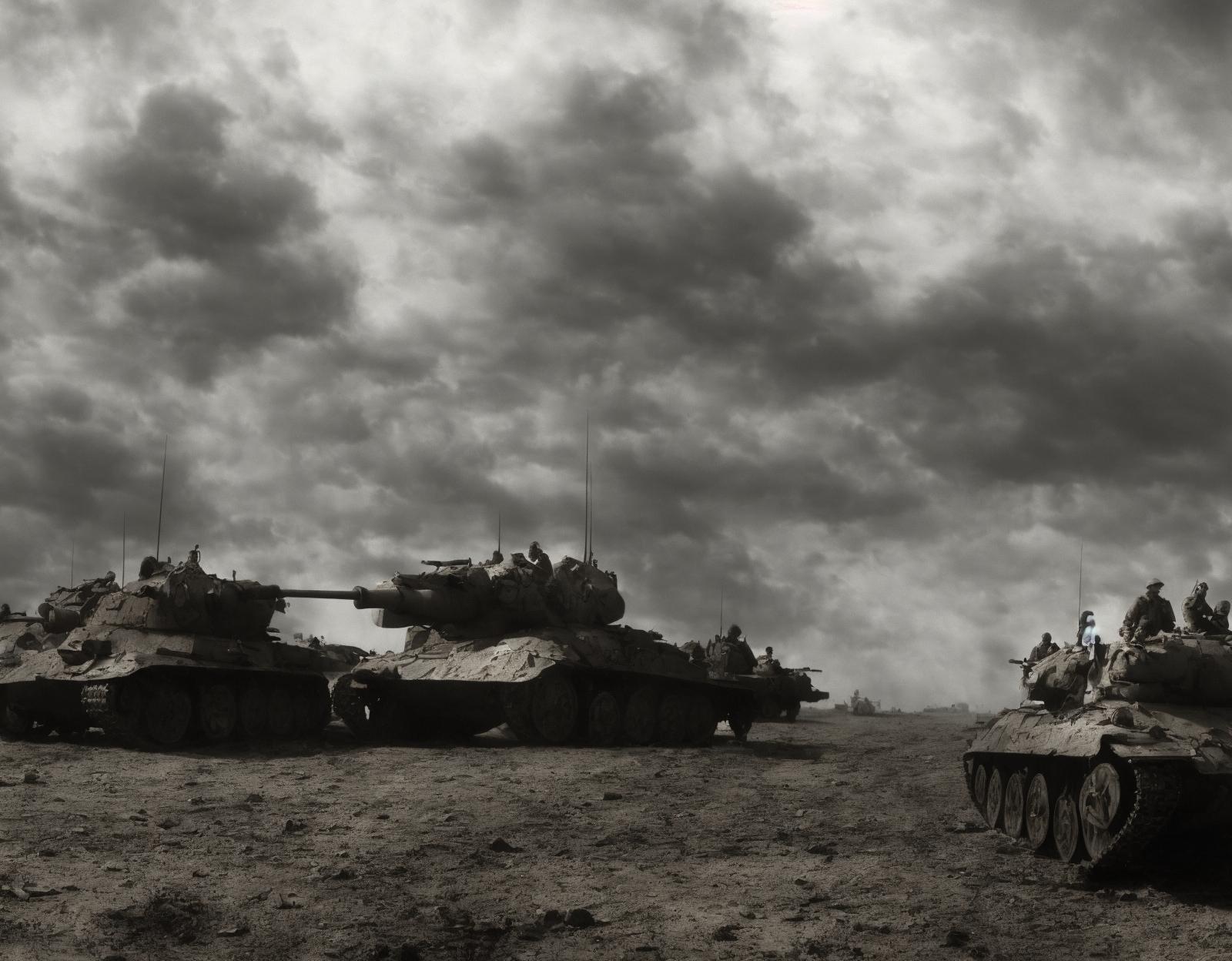
Rommel: The Desert Fox — Tactics, Myths, and the Fall
In the parched glare of North African suns and the thunder of mechanized war, Erwin Rommel emerged as one of the most enigmatic and mythologized commanders of the Second World War. He was a man whose personal charisma, tactical daring and publicized successes crafted an image that traveled far beyond the front lines: a solitary hunter of opportunity, an energetic and adaptive leader who could make the desert itself an ally. Yet beneath the legend there are questions — about his limitations, the political compromises he made, his relationship with the Nazi leadership and the reality behind the nickname that followed him. This article invites the reader into a layered narrative that moves between battlefield analyses, archival moments and the shadowy decisions that defined Rommel’s final years.
Rommel’s life resists simple labels. He wrote one of the most influential books on small-unit leadership and infantry tactics, yet he would later become a symbol of mechanized warfare as commander of the 7th Panzer Division in 1940. Sent to North Africa in 1941 to shore up faltering Italian forces, he transformed a modest contingent into the Afrika Korps and in a few months altered the strategic calculations of both Allies and Axis. When British newspapers christened him the “Desert Fox,” they captured part of the reality — his ability to strike swiftly and vanish into the shifting sands — but also a propagandistic appeal that obscured the deeper strategic constraints he faced.
This opening sets the scene for a journey through seven substantive chapters: Rommel’s formative years and World War I experiences; his meteoric rise in 1940 and the legacy of the 7th Panzer; his campaigns in North Africa and signature tactics; the logistics and political limitations that ultimately constrained his operational freedom; the climactic confrontation at El Alamein and the retreat into Tunisia; his role in the defense of Western Europe and the events surrounding D-Day; and finally the collapse of his position in 1944, the murky connection to the July 20 plot, his coerced death and the contested legacy that followed. Each chapter blends military description with human detail, aiming to show Rommel as both a consummate field commander and a figure caught between personal honor and the brutal politics of the Third Reich.
Did you know? Rommel’s book "Infantry Attacks" (Infanterie greift an) was published in 1937 and became influential among military thinkers on both sides of the coming conflict.
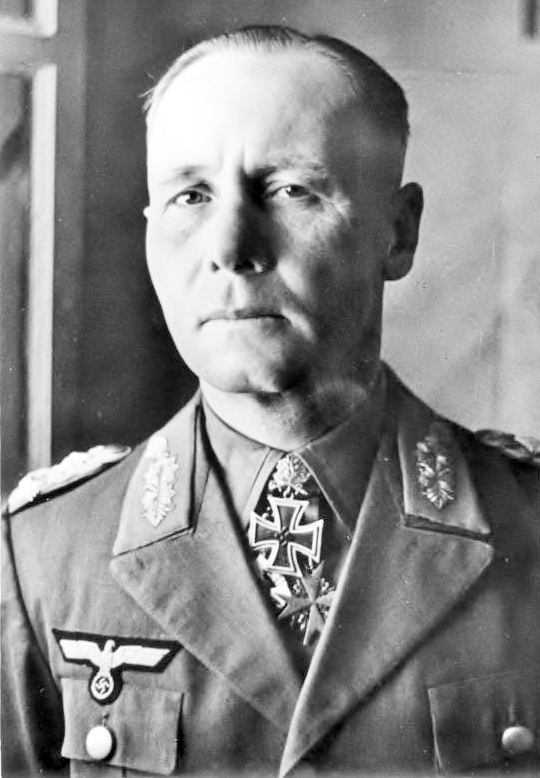
Early life and the making of an officer
Erwin Johannes Eugen Rommel was born on 15 November 1891 in Heidenheim an der Brenz, in the Kingdom of Württemberg. The son of a schoolteacher, he displayed early athleticism and a confident temperament that found a natural outlet in the Prussian-dominated officer corps of the German Empire. He entered the military in 1910 and served with distinction during the First World War on the Western Front. Rommel’s experiences in the trenches and on mobile operations would become the raw material for his later writing and tactical experimentation.
During the Great War, Rommel earned a reputation for boldness and initiative. He served as a platoon leader, company commander and later chief of staff roles. His wartime actions, recorded in the diaries that later informed his seminal 1937 book Infantry Attacks (Infanterie greift an), showed a mind that thrived on decentralized command and on the empowerment of junior leaders. Those ideas, rooted in his frontline exposure to small-unit action, placed him somewhat at odds with the rigid, centralized doctrines still favored by many senior officers of his era.
Infantry Attacks reconstructed Rommel’s experiences during shoulder-to-shoulder warfare in World War I. It combined tactical observations with a clear advocacy for leadership that emphasized flexibility, rapid action and the moral dimension of command. The book enjoyed wide circulation and would be read not only within German circles but by foreign militaries as well. It is worth noting that these early experiences produced a leader who prized operational freedom and simple, clear orders — traits that would later assist him in the fluid, sun-blinded campaigns of North Africa.
Did you know? The 7th Panzer Division was nicknamed the "Ghost Division" by Allied forces due to its rapid, hard-to-track advances during the 1940 campaign in France.
Yet Rommel’s prewar professional path also reflected continuity with traditional military values. He was a product of the German officer class: nationalistic, disciplined and committed to military excellence. He did not, however, become a devoted ideologue of National Socialism. While he accepted promotions and honors given by the Nazi regime and cooperated as a senior officer within its armed forces, his private correspondence and actions in the mid-1940s show tensions with Nazi political goals. These tensions would only deepen as the war turned against Germany and as the moral specters of the regime’s crimes grew harder to ignore.

From the Ghost Division to the spotlight: 7th Panzer and the 1940 campaign
By the outbreak of the Second World War Rommel had established himself as an energetic and innovative officer. In 1940, as commander of the 7th Panzer Division, he earned international attention for his audacious maneuvering during the French campaign. The division, nicknamed the "Ghost Division" by Allied troops for its rapid and unexpected movements, became an instrument of what German high command wanted most: swift breakthroughs and deep penetrations that could paralyze an enemy’s ability to respond.
Rommel’s leadership in the 1940 campaign displayed an appetite for initiative. Unlike many commanders who awaited detailed orders from above, Rommel frequently assessed the local situation and acted on the opportunities he saw. This approach meshed with the blitzkrieg methods that emphasized combined arms, speed and concentration of force at decisive points. Rommel’s men were known for aggressive reconnaissance, flexible use of tanks and artillery, and a refusal to become bogged down in prolonged stalemate.
Did you know? Rommel’s capture of Tobruk on 21 June 1942 was one of the most celebrated Axis victories in North Africa, briefly shifting the momentum in favor of the Afrika Korps.
The success of the 7th Panzer in 1940, however, also fed a public narrative that often neglected the network of organizational and operational factors enabling German victories: superior coordination, compromised Allied planning, and air superiority in key sectors. Rommel’s battlefield courage and tactical imagination made him an attractive symbol to a German public hungry for heroes, and the regime’s propaganda apparatus seized on his victories to bolster morale.
Despite the glare of popularity, Rommel’s time in France also taught him the limits of tactical daring when strategic support faltered. The collaboration with other arms and the need for robust supply and maintenance systems would later be critical as mechanized formations moved across long desert distances. His experiences in 1940 hardened a conviction that decisive victory required not merely brave officers but logistical and strategic coherence — an understanding that would prove painfully insufficient in North Africa.

The North African crucible: Rommel and the Afrika Korps
Rommel’s transfer to North Africa in early 1941 marked a turning point in his career and in the Mediterranean theater. Sent to support ill-equipped and demoralized Italian forces, he arrived with a small contingent of German troops and vehicles and quickly began to shape a force that could operate with maximum mobility. In February 1941 Hitler approved the formation of the Afrika Korps (Deutsches Afrikakorps), and Rommel became the charismatic field commander associated with it. From the outset, his tasks were immense: to restore Italian fortunes, to seize the initiative from the Eighth Army and to secure the vital oil and Suez avenues that made the region strategically critical.
Did you know? One chronic problem for the Afrika Korps was the scarcity of petrol; desert operations consumed fuel at rates that quickly outpaced the Axis ability to ship replacements from Europe.
Rommel’s tactics in the desert emphasized surprise, aggressive reconnaissance, and the concentrated use of mobile armor supported by motorized infantry. He developed an approach that adapted German combined-arms doctrine to the peculiar demands of sand, heat and extended supply lines. The desert, with its openness and few defensible positions, favored bold maneuvers and quick decision-making. Rommel’s style — preferring to move rapidly, strike where he discovered weakness and then vanish before a coherent reaction could be mustered — earned him both military success and public acclaim.
One of Rommel’s most famous achievements came in 1942 when his forces captured the port of Tobruk on June 21. Tobruk’s fall sent shockwaves through Allied planning, as the port had been expected to provide a springboard for British operations and a symbol of resistance against Axis advances. Rommel’s victory there was attributable to surprise, effective planning at the operational level and the demoralization of opposing units. Yet Tobruk also exposed the limits of Rommel’s position: he lacked sufficient logistical depth to exploit the victory fully. The Axis supply chain across the Mediterranean was vulnerable to Allied naval and air interdiction, and German industry simply could not provide a steady flow of replacement vehicles and fuel at the tempo his strategy demanded.
Rommel’s relationship with his Italian allies further complicated operations. While he publicly praised Italian soldiers and commanders, the practical reality was that Italian equipment, doctrine and supply systems often lagged behind German standards. Coordination problems, differing operational priorities and the strain of combined operations created recurring friction. Rommel frequently had to compensate for Italian weaknesses by assuming greater burdens or by improvising ad hoc solutions on the battlefield.
Did you know? The Second Battle of El Alamein began on 23 October 1942 and marked the decisive shift that ultimately led to Axis defeat in North Africa.

The tyranny of logistics: supply, sea lanes and limits of desert warfare
No military historian can consider Rommel’s campaigns without confronting the persistent and decisive role of logistics. The North African theater was not merely a contest of maneuver; it was a struggle over the maritime supply lines that sustained armies across an unforgiving expanse. Axis supplies had to cross the Mediterranean from Europe to Libya and Tunisia, a route increasingly threatened by Allied air power, submarines and Malta-based operations. The Royal Navy and RAF made interdiction a strategic priority, while the German and Italian navies grappled with insufficient escort resources and the ever-growing effectiveness of Allied intelligence.
Rommel’s operational genius often collided with a hard arithmetic: fuel consumption for tanks over sandy terrain was prodigious; spare parts vanished at a rate that factories could not match; and personnel attrition through desert conditions and casualties further drained the force. Repeatedly, he advanced faster than his supply trains could follow. His practice of live-for-the-day offensives produced spectacular gains but sometimes left him with tenuous positions that could not be consolidated. Senior German leaders in Berlin were often focused on other theaters or were unwilling to allocate the reinforcements necessary to maintain a long-term campaign in North Africa.
The Allies’ ability to intercept convoys, together with the capture of Malta as an attacking base, helped reduce the flow of supplies to Tripolitania and Cyrenaica. The degree to which Rommel’s setbacks were caused by his tactical choices versus the strategic environment is a central debate. He made causal errors — sometimes overextending his lines, occasionally underestimating enemy reserves — but even more decisive was the structural disadvantage the Axis faced: Germany’s Mediterranean supply strategy was chronically under-resourced. Without secure, ample supply, the mechanized formations that Rommel relied upon were vulnerable to delays, immobilization and attrition.
Did you know? Rommel was severely injured in a car accident on 17 July 1944, an event that took him out of active command during the decisive months after D-Day.
This logistical fragility defined the rhythm of the North African war. It influenced decisions at every level: the pace of advance, where to fight and where to entrench. It also shaped Rommel’s command relationships, as he sought reinforcements and argued for priority shipments while competing with other German demands on scarce materiel. As the Allies increased their dominance at sea and in the air, Rommel’s strategic options narrowed.
El Alamein, retreat and the end of the North African dream
The summer and autumn of 1942 brought the high-water mark of Rommel’s North African campaign and then its decisive reversal. After a period of spectacular mobility and local successes, the British Eighth Army under new leadership prepared a more concentrated and better-supplied response. The First Battle of El Alamein in July 1942 halted Rommel’s advance toward Alexandria and the Suez Canal; it was a signal that Axis logistical limits could translate into strategic failure. Rommel tried again in October with the offensive that culminated in the Second Battle of El Alamein on 23 October 1942, where Field Marshal Bernard Montgomery’s forces delivered a well-planned, heavily supported blow that the Afrika Korps could not withstand.
El Alamein is often described as the turning point in the North African theater. The battle exposed the cumulative effects of material shortages and Allied air superiority. Rommel’s forces, exhausted and increasingly denied essential supplies, faced a foe that could bring to bear superior logistics and reinforcements. Despite his tactical acumen, Rommel simply had fewer resources to apply at the critical moment. The resulting retreat was a long, hard withdrawal across Libya and ultimately into Tunisia, fought with courage but under conditions of mounting scarcity.
Did you know? Rommel was offered a choice on 14 October 1944: suicide with a state funeral or a public trial; he chose suicide and was given a state burial in Herrlingen.
During the closing phases of the Tunisia campaign, Rommel’s name became a symbol of both persistence and impending defeat. In early 1943 he returned to Germany on leave and did not resume command in Africa; by May 1943 Axis forces in North Africa surrendered, closing that chapter and freeing Allied resources for subsequent campaigns in Italy. North Africa’s conclusion illustrated a larger pattern: tactical brilliance can win battles, but strategic victory requires sustainable logistics and industrial depth. Rommel’s North African successes were therefore real and remarkable for their improvisation and leadership; yet they were also ephemeral in the face of a broader strategic imbalance.

From the Atlantic Wall to D-Day: Rommel in Western Europe
After North Africa, Rommel’s reputation only grew. In 1943 he was assigned to the Western Front, charged with improving Germany’s defenses against an anticipated Allied invasion. Appointed commander of Army Group B, he spent months inspecting the French coastline and pushing for stronger fortifications, many of which contributed to the network known as the Atlantic Wall. Rommel’s priorities were clear: he believed that the Allies would seek to land on the coasts of Normandy and that rapid, concentrated counterattacks using armored formations were necessary to defeat any invasion while it was still localized.
Rommel’s inspection tours and directives emphasized close-in defense: beach obstacles, minefields, anti-tank ditches and mobile reserves placed near likely landing sites. He famously advocated that the decisive counterattack had to be local and immediate: the enemy had to be repulsed seaward, before overwhelming forces could be brought to bear. This view clashed with other German commanders who preferred to hold armored divisions as deeper, centrally controlled reserves. The result was a strategic fault line between the urgency of local coastal defense and the cautious deployment policy favored by leaders including Hitler and OKW (German High Command).
Did you know? Rommel was never a member of the Nazi Party; his relationship with the regime was complex and increasingly strained as the war progressed.
When the Allies launched Operation Overlord on 6 June 1944, Rommel’s influence and planning bore both fruit and frustration. Some coastal defenses slowed Allied beachheads; in other sectors, poor coordination, communication breakdowns and the sheer scale of the Allied assault overwhelmed German responses. Crucially, the release of Panzer divisions for counterattacks required Hitler’s assent — assent that often arrived too late or not at all. Rommel’s dissatisfaction with the political interference of Hitler and the central command grew as he observed how the chain of command sapped battlefield responsiveness.
On 17 July 1944 Rommel was severely injured in a car crash near Sainte-Foy-de-Montgommery while returning from a visit to the front. The accident removed him from active command at a critical moment shortly after D-Day. Some historians have speculated about the circumstances of the crash, but widely documented evidence treats it as an unfortunate collision that left him incapacitated. His absence during the decisive weeks that followed the opening of the Western front deprived the German defenses of one of their most experienced and assertive field leaders.
Conspiracy, forced suicide and the making of a myth: legacy and final reckoning
The final months of Rommel’s life unfolded amid the crumbling fortunes of Nazi Germany and the rising tide of conspiratorial resistance within segments of the German military. The July 20, 1944 plot to assassinate Adolf Hitler — the Stauffenberg attempt — reverberated through the Wehrmacht. Rommel was implicated indirectly: he had expressed disillusionment with Hitler’s leadership and maintained contacts with officers who favored a change. Whether Rommel was an active conspirator remains debated among historians; archival records suggest he may have been more of a sympathizer than an outright conspirator. Nevertheless, his name surfaced during the Gestapo’s post-plot roundups.
Did you know? Manfred Rommel, Erwin’s son, became a prominent post-war politician and served as mayor of Stuttgart from 1974 to 1996.
Hitler’s regime offered Rommel an ultimatum on 14 October 1944. He could face a public trial that would endanger his family and tarnish his reputation, or he could accept death by suicide with the assurance of a state funeral and protection for his family. Choosing to avoid a spectacle and to shield those he loved, Rommel took the poison offered to him and died the same day. The Nazi state publicly reported his death as resulting from the car crash of July; a state funeral followed in Herrlingen. The manner of his death — coerced, painful and politically instrumental — became part of the complex tapestry of his legacy.
After the war, Rommel’s memory was transformed in different directions. For the Allies and the emerging West German state, he could be presented as the archetype of an apolitical, honorable officer — a narrative convenient for rebuilding the Bundeswehr and for distinguishing the Wehrmacht from the crimes of the SS and the Nazi political apparatus. Yet more critical scholarship and survivor testimony in later decades complicated that image, addressing the extent of Rommel’s political sympathies, his complicity in a system that committed atrocities and the moral responsibilities of senior officers.
Rommel’s legacy continues to ignite debate. He remains a subject of admiration for his tactical innovation and personal courage, but equally a case study in the moral ambiguities of professional soldiers operating within criminal regimes. His conduct raises fundamental questions about obedience, professional duty and the limits of individual responsibility amid systemic barbarity. The narrative of the Desert Fox is thus not a closed biography but an ongoing conversation — a mirror in which modern readers confront the intertwined shapes of valor, compromise and political culpability.
Did you know? Allied commanders, including Bernard Montgomery, respected Rommel’s tactical skill, and Allied accounts helped cement his reputation as a capable adversary.
Conclusion: an unsettled figure in the sands of history
Erwin Rommel’s life and career resist tidy moral summaries. He was an officer of rare tactical energy and personal daring whose successes in mobile warfare earned him widespread fame. Yet his career also exposes the structural frailties of the Axis war effort — shortages of materiel, vulnerable sea lines of communication and political interference that stifled operational flexibility. His relationship with Hitler and the Nazi apparatus was ambiguous: not a card-carrying ideologue, but neither a vocal opponent who could have mobilized an early, organized resistance. Instead, he occupies an uncomfortable middle ground between professional soldier and moral agent.
The myth of the Desert Fox endures because it satisfies narrative appetites: it is easier to imagine a clean, honorable warrior fighting bravely under a bad regime than to confront the more complicated truth of silent complicity, selective opposition and the compromises demanded by service. Contemporary historians continue to peel back the layers of memory, propaganda and political necessity to present a more textured portrait. Rommel’s tactical brilliance is not in dispute; what remains contested is the meaning of that brilliance in the larger moral and political context of Nazi Germany.
If history is a conversation between past and present, Rommel’s story is a challenging interlocutor. It asks whether wartime excellence in command absolves ethical lapses or political passivity; whether the charisma of a leader can, in effect, sanitize broader crimes; and whether a soldier’s duty can be separated from the ends served by the state he defends. Those questions keep Rommel alive in historical debate: not as an icon frozen in heroic light, but as a figure whose achievements and failings continue to provoke reflection. The Desert Fox remains at once a compelling subject for military study and a cautionary emblem of the moral tensions inherent in command under tyranny.
How we verify this article
By the History Unlocked editorial team
This text is built on historical facts stored in our database and drafted with AI assistance. No signed human review is recorded for this article. Report any inaccuracy: we correct it and update the modified date.
Updated on
AI-assisted drafting.
Read our editorial standardsEnjoyed this? Discover more articles in the category World War II