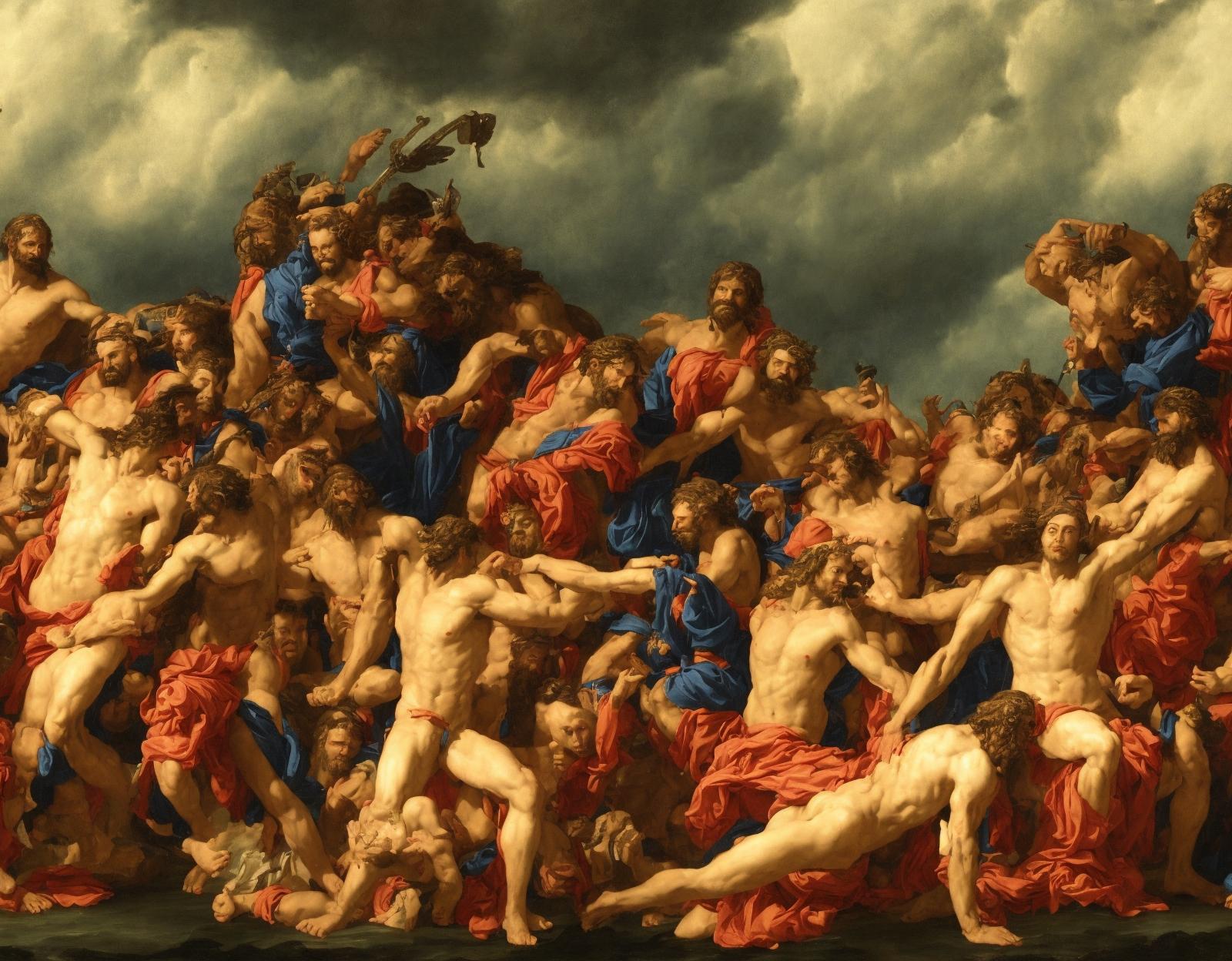
Zeus and Mount Olympus: Unveiling the Throne of the Gods
From the mist-shrouded peaks of ancient Greece emerges a realm of unparalleled power and divine intrigue: Mount Olympus. It is here, amidst the ethereal clouds and rugged grandeur, that the mighty Zeus, the father of gods and men, established his undisputed dominion. The very name "Olympus" evokes an image of celestial majesty, a vibrant tapestry woven with the threads of cosmic battles, passionate affairs, and the eternal clash between order and chaos. For the ancient Greeks, Olympus was not merely a mountain; it was the sacred epicenter of their spiritual universe, a place where the divine will was forged and the destinies of mortals were inextricably bound to the whims of powerful deities. To understand Zeus is to understand the very heart of this ancient pantheon, a complex figure whose thunderous wrath could shake the heavens and whose benevolent gaze could nurture the nascent seeds of civilization. His story is a testament to the enduring power of myth, a narrative that has transcended millennia, continuing to captivate and inspire audiences with its timeless themes of power, family, justice, and the eternal quest for order. This journey into the Olympian realm will delve deep into the origins of Zeus, exploring his dramatic ascent to power, his complex relationships with his divine brethren and mortal lovers, and the enduring legacy of his rule from the highest throne of the gods. Prepare to be transported to a world where mountains touch the sky, and the echoes of divine decrees still resonate through the ages, revealing the awe-inspiring majesty of Zeus and the awe-inspiring sanctity of his Olympian abode.
The Titanomachy and Zeus's Rise to Power
The genesis of Zeus's rule is intertwined with one of the most cataclysmic conflicts in all of Greek mythology: the Titanomachy. Before the Olympians, the cosmos was dominated by the Titans, primordial deities of immense power, born from the union of Uranus (Heaven) and Gaia (Earth). Their ruler, Kronos, a cunning and ruthless Titan, had overthrown his own father, Uranus, by castrating him, thus fulfilling a prophecy of patricide. Yet, Kronos himself was haunted by a similar prophecy: that one of his own children would overthrow him. To avert this fate, he devised a horrifying plan: each time his wife, Rhea, gave birth, he would swallow the newborn whole. Hestia, Demeter, Hera, Hades, Poseidon – all met this terrible fate, disappearing into their father's cavernous gullet. However, Rhea, overcome with grief and desperation, sought the counsel of her parents, Uranus and Gaia. They advised her to trick Kronos, and so, when her sixth child, Zeus, was born, she secretly spirited him away to a cave on Mount Ida in Crete. In his place, she presented Kronos with a stone wrapped in swaddling clothes, which he promptly swallowed, believing it to be his infant son. Zeus, safe from his father's monstrous appetite, was raised in secret, nurtured by nymphs and protected by the Kouretes, armored dancers whose clashing shields drowned out his infant cries. As Zeus grew to adulthood, he was filled with a burning desire to liberate his siblings and avenge his mother's suffering. With the aid of Gaia and the clever Titaness Metis, he devised a plan. Metis gave Kronos a potent emetic, causing him to vomit up his swallowed children, who emerged fully grown and eager for revenge. This act sparked the Titanomachy, a brutal, decade-long war that shook the very foundations of the universe. The conflict pitted the younger, spirited Olympian gods against the elder, more formidable Titans. Zeus, with his unwavering resolve and strategic brilliance, rallied his siblings and their allies, including the Hecatoncheires (hundred-handed giants) and the Cyclopes (one-eyed giants), who forged his mighty thunderbolts. The Titans, led by Kronos, fought with ferocious strength, unleashing primordial forces. The war was a maelstrom of divine power, with mountains hurled like pebbles and oceans boiling. Ultimately, Zeus's leadership and the Olympians' superior strategy, combined with the devastating power of the thunderbolts, turned the tide. The Titans were defeated, their power shattered, and many were imprisoned in Tartarus, the deepest abyss of the underworld. Zeus, having led the Olympians to victory, established himself as the undisputed sovereign of the cosmos, ushering in a new era of divine rule from the majestic heights of Mount Olympus.

The Olympian Pantheon and Zeus's Domain
With the Titans vanquished and the cosmos secured, Zeus and his siblings faced the monumental task of establishing order and defining their respective domains. A grand council was held on Mount Olympus, where the victorious Olympians divided the universe among themselves through a drawing of lots. Zeus, through cunning and perhaps a touch of divine manipulation, secured the most coveted prize: the heavens and the earth, becoming the king of the gods. Poseidon, his formidable brother, drew the sea, becoming the ruler of the oceans and all marine life. Hades, the eldest brother, drew the underworld, becoming the enigmatic lord of the dead and keeper of its shadowy realms. This division of power, though seemingly arbitrary, established a fundamental hierarchy within the Olympian pantheon, with Zeus at its apex. As king of the gods, Zeus's responsibilities were vast and multifaceted. He was the ultimate dispenser of justice, overseeing the laws of both gods and mortals. His judgments were final, his decrees absolute. He was the protector of oaths, swift to punish those who broke their sacred vows. Hospitality, a cornerstone of ancient Greek society, was also under his purview, with guests and hosts alike falling under his divine protection. Beyond these overarching responsibilities, Zeus was also associated with a myriad of natural phenomena, embodying the raw power and unpredictable majesty of the natural world. He was the god of thunder and lightning, his formidable thunderbolts serving as both a weapon and a symbol of his supreme authority. He controlled the weather, bringing forth life-giving rains or devastating storms. His presence permeated every aspect of existence, from the highest heavens to the deepest earth. The other Olympian gods, each with their own unique spheres of influence, formed a powerful and dynamic council beneath Zeus's leadership. Hera, his sister and constantly aggrieved wife, ruled over marriage and childbirth. Demeter, the goddess of agriculture, ensured the fertility of the earth. Athena, born fully armed from Zeus's head, was the goddess of wisdom, war, and strategic battle. Apollo, the god of music, poetry, light, and healing, brought cultural enlightenment. Artemis, his twin sister, was the fierce goddess of the hunt, wild animals, and the moon. Ares, the brutal god of war, embodied the aggressive and destructive side of combat. Aphrodite, the goddess of love, beauty, and desire, reigned over passion and allure. Hephaestus, the divine smith, crafted magnificent weapons and artifacts. Hermes, the swift messenger god, facilitated communication between the divine and mortal realms. And Dionysus, the god of wine, revelry, and ecstasy, brought joy and liberation. This diverse and powerful assembly, presided over by Zeus, represented the various forces that shaped the ancient Greek world, both natural and societal. Their interactions, alliances, and conflicts formed the rich tapestry of Greek mythology, with Zeus always at the heart of their intricate relationships.
Did you know? The prophecy of Kronos being overthrown was particularly ironic, given that he himself had overthrown his father Uranus. This cyclical nature of power struggles and patricide is a recurring theme in early Greek mythology.
Zeus's Numerous Affairs and Divine Progeny
While Zeus was renowned for his supreme authority and commitment to justice, he was equally infamous for his amorous escapades and a prodigious number of divine and mortal offspring. His marriage to Hera, Queen of the Gods, was a tempestuous affair, marked by her fierce jealousy and his seemingly insatiable desire for other paramours. Indeed, Zeus's infidelities are a central and often humorous, albeit sometimes tragic, theme in Greek mythology, highlighting the complexities and contradictions of divine nature. His list of lovers, both goddesses and mortal women, is extensive and diverse, and each encounter often resulted in the birth of a significant figure in the mythological landscape. Among his divine conquests, Metis, the Titaness of wisdom, was his first wife. Fearing a prophecy that she would bear a son destined to overthrow him, Zeus swallowed her whole. However, Metis was already pregnant, and from Zeus's head, the fully grown and armored Athena emerged, a testament to wisdom and strategic prowess. Another notable goddess to capture his attention was Themis, a Titaness embodying divine law and order, with whom he fathered the Horae (Seasons) and the Moirai (Fates), deities who governed the cyclical order of nature and the predetermined destinies of mortals. Leto, a gentle Titaness, bore him the radiant twins Apollo and Artemis, two of the most revered and powerful Olympian deities. Demeter, his sister, yielded Persephone, who would later become the queen of the underworld. Perhaps his most famous mortal liaisons include Danaë, whom he visited in a shower of gold, resulting in the birth of Perseus, the legendary hero who slew Medusa. Leda, transformed into a swan, bore him Helen of Troy, Clytemnestra, Castor, and Pollux. Europa, a Phoenician princess, was abducted by Zeus in the form of a white bull, leading to the birth of Minos, the fabled king of Crete. Alcmene, the mother of the greatest Greek hero, Heracles, was another mortal woman who succumbed to Zeus's charm. Callisto, a nymph of Artemis, suffered a tragic fate when Hera, in her vengeful fury, transformed her into a bear, only for Zeus to elevate her and her son Arcas to the constellations Ursa Major and Ursa Minor. These countless affairs, often involving elaborate disguises and cunning strategies to evade Hera's wrath, reveal a Zeus who was not only a formidable ruler but also a passionate and sometimes reckless lover. His progeny, both divine and mortal, populated the ancient world with heroes, demi-gods, and cultural figures who played pivotal roles in countless myths and legends, further solidifying Zeus's central position in the rich tapestry of Greek mythology.

The Power of the Thunderer: Zeus's Attributes and Cult
Zeus, as the ultimate embodiment of divine power, was associated with a formidable array of attributes and symbols that underscored his supreme authority and majestic presence. His most iconic and fearsome weapon was the thunderbolt, a searing projectile of pure energy forged by the Cyclopes during the Titanomachy. With a single hurl, Zeus could unleash a devastating storm, shatter mountains, and strike down his enemies, both mortal and divine. The sound of his thunder was said to shake the heavens, a clear testament to his immense power. The eagle, a majestic and powerful bird of prey, was his sacred animal, often depicted carrying his thunderbolts or perched upon his scepter. The eagle symbolized his kingship, his dominion over the skies, and his penetrating insight. The oak tree, with its strength and longevity, was also sacred to Zeus, particularly at his revered oracle at Dodona. Priests at Dodona would interpret the rustling of the oak leaves and the murmuring of the springs to divine Zeus's will, offering guidance and prophecies to those who sought his wisdom. The aegis, a shield or goatskin cloak, adorned with the head of Medusa (given to him by Athena, who received it from Perseus), completed his formidable panoply. The aegis was so terrifying that merely shaking it could inspire panic and fear in both mortals and gods, demonstrating Zeus's ability to command an aura of invincibility. The cult of Zeus was widespread and deeply ingrained in ancient Greek society. He was worshipped across the Hellenic world, from grand temples in Olympia and Athens to humble altars in remote villages. The most prominent center of his worship was Olympia, where the famous Olympic Games were held every four years in his honor. These games, a celebration of athletic prowess and artistic achievement, brought together Hellenes from across the Greek world, fostering a sense of shared identity and reverence for the preeminent god. The Temple of Zeus at Olympia housed a colossal chryselephantine (gold and ivory) statue of the god, one of the Seven Wonders of the Ancient World, depicting him enthroned, holding a scepter and a statue of Nike (Victory). This awe-inspiring masterpiece, crafted by the sculptor Phidias, served as a powerful testament to Zeus's majesty and the devotion of his worshippers. Sacrifices, prayers, and festivals were regularly offered to Zeus, seeking his favor, protection, and justice. He was invoked in oaths, treaties, and legal proceedings, reflecting his role as the guardian of law and order. The numerous epithets attributed to him, such as "Zeus Horkios" (Guardian of Oaths), "Zeus Xenios" (Protector of Guests), and "Zeus Polieus" (Guardian of the City), further illustrate the diverse aspects of his divine authority and his pervasive influence over all aspects of ancient Greek life.
Mount Olympus: The Sacred Abode of the Gods
Mount Olympus, a majestic massif towering over northern Greece, was more than just a geographical landmark; it was the ethereal and impenetrable sanctuary of the Olympian gods. Believed to be the highest mountain in Greece, its perpetually snow-capped peaks and often cloud-shrouded summit lent it an air of mystery and divine remoteness. For the ancient Greeks, Olympus was a tangible link between the mortal and immortal realms, a point of convergence where the divine will was shaped and enacted. It was a place of unparalleled beauty and splendor, far removed from the mundane concerns of humankind, yet intimately connected to their destinies. The myths describe Olympus not as a desolate peak but as a vibrant, bustling city in the sky, a realm of perpetual spring and never-ending feasts. The gods resided in magnificent palaces crafted from gleaming gold, silver, and bronze, each deity possessing a dwelling befitting their status and domain. Zeus's palace, naturally, was the grandest and most imposing, situated at the very pinnacle of the mountain, commanding a panoramic view of the heavens and the earth below. The Olympian diet consisted of ambrosia, a miraculous food that conferred immortality and divine strength, and nectar, a sweet, intoxicating drink. These divine consumables further set the gods apart from mortals, emphasizing their eternal and supernatural nature. Hephaestus, the divine smith, maintained his forge on Olympus, crafting exquisite armor, weapons, and magnificent technological marvels for the gods. The Muses, goddesses of inspiration, often graced the Olympian halls with their melodious songs and enchanting dances, providing entertainment and cultural enrichment. Communication between Olympus and the mortal world was often facilitated by Hermes, the swift-footed messenger god, who glided between the two realms on his winged sandals. Other gods would often descend to earth, sometimes to intervene in human affairs, sometimes to pursue their own desires, always returning to the comfort and sanctity of their Olympian home. The very atmosphere of Olympus was imbued with divine energy, radiating a sense of power and serenity. Mortals could not easily ascend its slopes, for it was protected by a thick veil of clouds, guarded by the Horae, goddesses of the seasons, who could open and close the gates of the heavens. Attempts by mortals to trespass or glimpse the divine realm were often met with severe consequences, reinforcing the sacred and exclusive nature of the gods' abode. Olympus served as the central hub for all divine decisions, councils, and celebrations. It was where the gods debated the fates of nations, intervened in wars, and orchestrated the grand cosmic drama that played out across the ancient world. The imagery of Olympus, with its sublime beauty and formidable divine inhabitants, firmly established it as the ultimate symbol of divine power, order, and majesty in the Greek consciousness.
Did you know? Zeus's children were often instrumental in the events of Greek mythology, with heroes like Heracles undertaking incredible labors and gods like Apollo and Athena shaping human culture and civilization.
Zeus's Impact on Greek Culture and Mythology
The ripple effects of Zeus's reign and the myths surrounding Mount Olympus are deeply embedded in the very fabric of ancient Greek culture, shaping their beliefs, values, and artistic expressions. As the king of the gods and the ultimate enforcer of cosmic order, Zeus served as the archetypal patriarchal figure, reflecting and reinforcing the hierarchical structures of Greek society. His role as the dispenser of justice informed their legal systems and ethical frameworks. The concept of dike (justice) and themis (divine law) were intrinsically linked to his authority, providing a divine foundation for moral conduct and social order. Oaths sworn in Zeus's name were considered inviolable, and their violation was believed to incur his terrifying wrath, thus underscoring the importance of truthfulness and integrity. The Olympic Games, held in his honor, transcend mere athletic competition; they were a profound expression of Greek identity, celebrating physical excellence, intellectual prowess, and religious devotion. The truce observed during the games, the ekecheiria, showcased Zeus's power to unite disparate city-states under a common, sacred purpose. Beyond religious and social structures, Zeus and the Olympian myths profoundly influenced Greek art, literature, and philosophy. Sculptors crafted awe-inspiring statues of Zeus, depicting his majestic form and commanding presence, such as the aforementioned Statue of Zeus at Olympia, which became a benchmark for artistic excellence. Painters adorned temples and pottery with scenes from his legendary life, capturing his various transformations and encounters. Poets, most notably Homer and Hesiod, immortalized Zeus's exploits in their epic poems, providing the foundational texts for Greek mythology. The Iliad and the Odyssey are replete with instances of Zeus's interventions, his judgments, and his impact on the destinies of heroes and mortals alike. Hesiod's Theogony systematically chronicles the birth of the gods and Zeus's rise to power, establishing a definitive genealogy of the Olympian pantheon. Philosophers, even as they moved towards more rational explanations of the universe, often grappled with the implications of Zeus's power and the moral dilemmas presented by divine actions, either reinterpreting the myths allegorically or using them as springboards for ethical debate. The stories of Zeus's affairs, though often scandalous, served as rich material for dramatic retellings, explored in the tragedies of Aeschylus, Sophocles, and Euripides, examining themes of divine retribution, human suffering, and the limits of mortal agency. Even in the Christian era, the imagery and narrative archetypes associated with Zeus and the other Olympians continued to resonate, often reinterpreted or allegorized, demonstrating their enduring cultural power. In essence, Zeus was not merely a god; he was a cultural cornerstone, his myths providing a mirror through which the ancient Greeks understood their world, their place within it, and the complex interplay between divine will and human destiny.
The Enduring Legacy of Zeus and Mount Olympus
The echoes of Zeus's thunderbolts and the whispers from Mount Olympus continue to reverberate through the corridors of time, leaving an indelible mark on Western civilization. The narratives of Zeus, his fellow Olympians, and their sacred mountain have transcended the boundaries of ancient Greece, becoming foundational elements of global culture, language, and thought. The very concept of a pantheon of powerful, anthropomorphic deities, each with distinct personalities and domains, has been a recurring archetype in storytelling across countless cultures, often drawing indirect inspiration from the Greek model. Zeus's name itself has become synonymous with supreme power and authority. We find references to his thunder, his eagle, and his judgments woven into literature, art, and even popular culture to this very day. Expressions like
How we verify this article
By the History Unlocked editorial team
This text is built on historical facts stored in our database and drafted with AI assistance. No signed human review is recorded for this article. Report any inaccuracy: we correct it and update the modified date.
Updated on
AI-assisted drafting.
Read our editorial standardsEnjoyed this? Discover more articles in the category Mythology & Ancient Gods