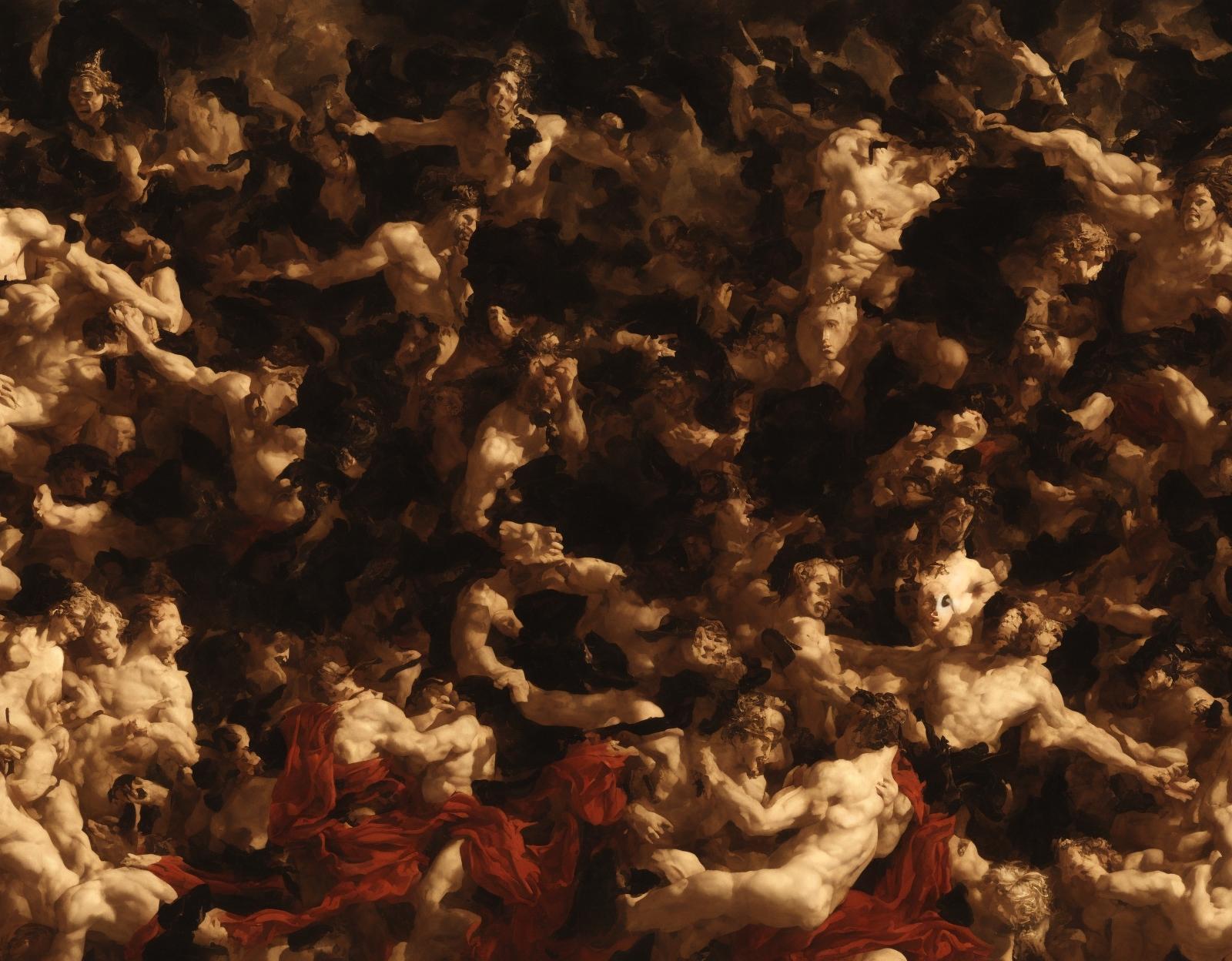
Hades and the Underworld: Realm of Shades
The gates of the Underworld, in Greek imagination, are simultaneously intimate and utterly foreign: close at hand in the landscapes of living memory, and yet forever sealed by mystery. In the stories that survived from archaic Greece, Hades is both a figure of grim authority and an ineffable presence who governs a realm as real as any polis. This introduction will take you into that liminal world—not as a catalog of monsters but as a careful mapping of belief, practice, and literature. We will trace Hades from the genealogies of Hesiod and Homer through the ritual landscapes of grave goods and funerary stelae, into the cults and sanctuaries where Greeks negotiated death itself. Along the way, we will meet Persephone, the Orphic tablets, necromantic oracles, and the villages that kept the rites alive.
Unlike many later European portraits, the Greek conception of Hades is not solely an ethical judgment. The Underworld is not a mirror of moral reward and punishment in archaic thought—though over time such elements do accrete—but more fundamentally a cosmic place where life’s conditions change: water is slower, light is altered, names and civic status lose their urgency. Hades (Latin Pluto, Dis) is brother to Zeus and Poseidon, an elder of the cosmos, and yet his presence is paradoxically remote. He is invoked with euphemisms, appeased in ritual, and rarely pictured with heroic attributes. Instead, literary and material sources hint at a layered afterlife, populated by judges, lamented by living ritual, and haunted by local cave shrines and oracles. This narrative will weave together the textual testimony of Homer, Hesiod, the Homeric Hymns, and later classical authors with archaeological practices and remains: vase-paintings, grave offerings, Orphic gold lamellae, and the ruins of sites associated with Plouton.
To enter properly, imagine a family in classical Athens preparing a burial: the body is laid out in prothesis, mourners chant, and small lekythoi of oil are placed at the grave. A coin may be placed with the dead—an obol destined for Charon. The dead’s passage is not guaranteed by virtue alone; it is mediated by ritual, by memory, and by stories that soften the unknown. Greek poets, dramatists, and philosophers thereafter debated the moral contours of the Underworld; Plato, for instance, uses the mythic geography philosophically in the Phaedo and the Republic. But before philosophy appropriated Hades into ethical allegory, the landscape itself mattered: rivers that trap memory, judges who distribute place, and fields or islands reserved for the blessed. The rest of this long-form essay will explore those geographies, the civic and personal rites that opened them, the gods and spirits who dwell within, the stories that traveled back and forth across the boundary, and the living cults that kept Hades present in sanctuaries and in stone.
Did you know? In Hesiod's Theogony Hades is simply one of six children of Rhea and Cronus, but he receives no elaborate origin myth of his own, reflecting his function as a primordial yet aloof power.
Origins and Genealogy of Hades
Hades' origins are anchored in the earliest strata of Greek mythic imagination. In Hesiod's Theogony, Hades is born of Cronus and Rhea, brother to Zeus, Poseidon, Hera, Demeter, and Hestia. Hesiod names the three brothers as rulers of discrete cosmic domains: Zeus over heaven, Poseidon over the sea, and Hades over the subterranean and the dead. This tripartite division is not merely territorial; it encodes ancient Greek perceptions of power and order. The name "Hades" itself likely derives from a root meaning "the unseen"—a designation fitting for a sovereign of what men do not normally perceive.
Homeric epics also reflect this early conception. In the Iliad and the Odyssey, Hades is present as the final fate of mortals but appears sparingly as an active deity. The Homeric Hymn to Demeter (5th century BCE composition) gives perhaps the most influential account of Hades' domestic myth: he abducts Persephone, daughter of Demeter, taking her to the Underworld to be his queen. There she becomes Persephone (or Kore), the goddess who mediates the cycles of vegetation and the rhythms of life and death. This narrative explains the seasonal cycle but also establishes Hades' relationship to the living: he is not only a cosmic sovereign but an actor within familial and agricultural concerns.
Yet Hades is elusive in material depiction. Vase painting and sculptures rarely present him directly; when they do, it is more commonly under the name Plouton—"wealth-giver"—an epithet that underlines his ambivalent association with fertility and the subterranean riches of the earth. The epithet Plouton (from ploutos, wealth) connects Hades to the subterranean sources of agricultural abundance and mineral riches. In cult practice, such euphemisms had practical uses: direct naming of dangerous or powerful chthonic forces was often avoided in ritual settings. People instead invoked Plouton or used other occupational titles to mollify wrath and to emphasize beneficence.
Did you know? The Ploutonion at Hierapolis produced lethal gases from a fissure in the earth; Roman-era accounts describe priests harnessing these gases for ritual displays.
Classical sources also highlight other aspects of Hades' genealogy. Hesiod’s brief account situates him among primordial and titan ancestors, but deeper layers of prehistoric ritual likely fused local chthonic deities with this pan-Hellenic figure. The syncretic absorption of local underworld beings—heroes, river gods, and local spirits—into an ever more unified Hades reflects the political unification of Greek culture itself, as pan-Hellenic myths folded regional traditions into a shared narrative. Later authors, such as Pausanias, preserve fragments of local mythic variations: in some locales the ruler of the dead might be more actively involved with living cults; in others, a local hero demanded primary devotion. Hades, then, stands both as an archetypal deity and as a receptacle for local identities.
Religious texts and oracular traditions complicate the picture further. Orphic and mystery traditions, preserved in fragments and in archaeological finds such as gold lamellae, recast the Underworld narrative with new emphases. Orphic texts often present a more ethical and eschatological view: release and purification of the soul, rebirth cycles, and a soteriological promise. Hades in Orphic thought can thus be both judge and gatekeeper, his realm the theater for moral purification. Yet even these currents did not wholly replace older civic rites; many Greeks participated in multiple overlapping traditions without resolving their contradictions. The genealogy of Hades is thus both familial and conceptual: a brother in a divine household, a sovereign of a different order, and a figure reshaped by cult, poetry, and local tradition.

The Domain: Geography and Landscape of the Underworld
The Greek Underworld is not a flat, monolithic void but a stratified and richly imagined landscape. Ancient poets and dramatists built maps of the unseen world with a mixture of local tradition and symbolic geography: rivers, courts of judgment, liminal islands, and punitive regions like Tartarus. Homeric and Hesiodic accounts provide some of the earliest templates: rivers such as the Styx, Lethe, Acheron, Cocytus, and Phlegethon wind through the dark domain; Charon ferries souls across, and judges such as Minos, Rhadamanthus, and Aeacus allocate places to the dead. These elements were widely known in the Greek world and appear in funerary art and literature alike.
Did you know? Vase paintings rarely depict Hades; Cerberus and Persephone appear more often, reflecting the visual culture's preference for narrative and symbolic elements.
Rivers have both literal and metaphorical roles. The Styx, for instance, functions as an oath-ritual boundary; gods swear by the Styx in Homer without penalty. Lethe's waters cause forgetfulness—an apt symbol for the loss of mortal memory and the passage from civic life. Acheron and Cocytus, often associated with lamentation and wailing, contribute to the emotional topography of the place. The ancient imagination situates these waterways not only as barriers but as agents that transform identity: to cross them is to leave civic status and earthly concerns behind.
Tartarus constitutes a deep pit, sometimes conceived as a place where the most heinous offenders—Tantalus, Sisyphus, the Titans—suffer punishment. Hesiod emphasizes Tartarus as a primordial element, almost a coequal of the cosmic powers, and later poets populate it with mythic offenders who embody hubris and cosmic transgression. Yet Tartarus is distinct from the ordinary realm of the dead; it is punitive rather than merely final.
By contrast, Elysium (or the Elysian Fields) and the Isles of the Blessed offer a vision of blessedness reserved for heroes or those favored by the gods. Hesiod and Homer differ on who qualifies, while later poets—Pindar and poets influenced by Orphic thought—expand the promise of Elysium into a moral reward. Even so, Elysium remains a contested space: in some traditions linked to heroic status, in others reinterpreted by mystery cults as a reward for purified souls.
Did you know? Archaeologists have recovered Orphic gold lamellae with instructions like "I am a child of Earth and Starry Heaven," meant to guide the deceased in the afterlife.
Physical sites in the Mediterranean were associated with entrances to the Underworld. Shrines and caves that emitted strange gases or fed rivers were often called Ploutonions or linked by local tradition to the god of the dead. The Ploutonion at Hierapolis (modern Pamukkale, Turkey) is a well-known Roman-era example: priests conducted rituals above fissures that released toxic vapors—an uncanny, tangible proximity to death that visitors associated with the divine threshold. Similarly, the Necromanteion at Ephyra in Epirus was historically described as an "oracle of the dead," a place where ritual specialists communicated with shades or enacted necromantic rites. Such sites reveal how ancient people sought to materialize and manage the boundary between life and death.
Geography in the Underworld also has social implications. The placement of graves and grave goods, the orientation of funerary stelae, and the inscriptions on tombs all reinforced civic memory and family continuity. The dead remained within a cultural geography that the living could visit, commemorate, and ritually feed. Memory, therefore, acts as a bridge: while rivers like Lethe threaten to obliterate personal recall, civic ritual or grave inscriptions reinscribe identity, ensuring that the dead remain legible to the living.
Inhabitants and Figures of the Underworld
The Underworld is populated by a panoply of beings—divine, heroic, liminal, and monstrous. Hades himself presides as sovereign, but the broader ensemble includes Persephone as queen, judges like Minos and Rhadamanthus, and psychopomps such as Hermes in his role as guide of souls. The realm also hosts lesser divinities related to death—Thanatos (personification of death), Hypnos (sleep), and a host of daimones or shades who embody specific aspects of the afterlife.
Did you know? The Homeric Nekyia (Odyssey Book 11) includes one of the earliest extended literary accounts of a descent to the Underworld, where Odysseus speaks with shades and seeks prophetic knowledge.
Cerberus, the multi-headed dog, is among the most vivid of these inhabitants. Tasked with guarding the gate, Cerberus prevents the dead from leaving and the living from entering at will. Heracles’ twelfth labor—fetching Cerberus from the Underworld—becomes one of the best-known myths linking the living with the domain of the dead. But the presence of monsters like Cerberus does not mean the Underworld is chaotic; rather, it is policed and organized, with rules and hierarchies.
The judges of the dead—Minos, Aeacus, and Rhadamanthus—appear across sources as arbiters of posthumous destiny. Their roles differ by author: in some accounts they simply assign places according to deeds, while in other traditions their judgments are more ritualized and tied to local cultic practices. The presence of judges suggests an early moral calculus in Greek thought, even if it was not the only lens through which the afterlife was viewed.
Heroic figures and the shades of the famous also populate the stories of the Underworld. Odyssey’s Nekyia (Book 11) famously depicts Odysseus summoning the shades of heroes, giving readers glimpses of the lost and of the living’s attempts to interrogate fate and memory. Orpheus’ descent to retrieve Eurydice is another narrative that humanizes the landscape: it is less about Hades’ malevolence and more an emotional negotiation—music, persuasion, and the fragile conditions of grace. These narratives often emphasize the permeability of the border: under certain conditions priests, poets, or heroes may cross to seek knowledge or to retrieve loved ones.
Did you know? In many chthonic rites priests poured libations into the ground (choē) rather than raising them skyward; the downward motion acknowledged the subterranean recipient.
Lesser-known figures—local chthonic deities, household daimones, and the spirits of the dead who became cult figures—make the Underworld a mosaic of personal and civic remembrance. Certain local heroes, when worshipped, served as mediators between the living community and the dead; their tombs were loci for offerings and social cohesion. Such hero cults blurred the line between death’s finality and ongoing presence: the dead were never entirely absent if a community continued to honor them.
The spirits of the dead themselves are not monolithic; classical texts differentiate between shades that are pitiable and insubstantial and beings who retain honor and agency. Plato’s Phaedo, for instance, uses the image of the soul escaping the body to argue for philosophical purification. In the poetic tradition, shades often retain memories and voices recognizable to living visitors—an important motif for families who depended on memory and ritual to sustain their ancestors’ identities.
Rituals, Funerary Practices and the Dead
Ritual practice defined the relationship between the living and the Underworld in ancient Greece. The stages of funerary procedure—prothesis (laying out the body), ekphora (the funeral procession), and interment or cremation—structured social responses to death. Early sources such as Homer describe elaborate mourning rituals, and archaeological evidence supports varied practices across time and region: cremation was common in some periods and places, while inhumation predominated in others. Grave goods—pottery, weapons, jewelry, and coins—provided sustenance or status markers for the deceased.
Did you know? Coins placed in graves for Charon appear in archaeological contexts across the Greek world, but the custom varied by region and era—sometimes the coin is absent, indicating regional funerary diversity.
A striking and well-attested practice was the inclusion of a coin (often called an obol) to pay Charon, the ferryman, for passage. Archaeological finds include graves with coins placed in mouths or on the eyes of the dead, though the practice was not universal in all periods. The obol’s presence ties a tangible economic metaphor to cosmology: the crossing of rivers into the realm of Hades required a toll, symbolic of the transition from civic life to an ordered otherworld.
Chthonic sacrifice rituals also distinguished cults to underworld deities from Olympian worship. Chthonic rites typically occurred at night, involved black animals (such as black sheep or goats), and directed offerings downward onto the earth rather than upward toward the sky. Votive objects, particularly small lekythoi (oil flasks) decorated with funerary imagery, often appear in grave contexts. The language of epitaphs and the iconography of grave stele also contributed to a cultural grammar of mourning and memory. Inscriptions might include the deceased’s name, family connection, and short formulae that articulated a civic or familial identity meant to endure in stone.
Mystery cults—most famously the Eleusinian Mysteries—introduced alternative ways of conceptualizing death and afterlife benefits. The Eleusinian rites revolved around Demeter and Persephone, and while their exact contents remain secret, literary testimony suggests promises of hope and a favorable destiny after death for initiates. Similarly, Orphic traditions promoted ideas of purification, soul-knowing, and escape from certain cyclical fates through ritual knowledge and ethical life. Gold lamellae—small thin sheets with inscriptions found in graves—provide compelling evidence of such practices: they contain instructions and passwords for the dead seeking safe passage, indicating an eschatological literacy among some groups.
Did you know? The epithet Plouton emphasized Hades' role as giver of subterranean wealth, linking him economically to agriculture and mining in the Greek imagination.
Public mourning and civic commemoration further shaped the social landscape of death. Public funerary monuments, annual sacrifices to heroes, and collective remembrance at gravesites reinforced shared values. City-states honored war dead with prominent stelae and ritual feasts; heroic tombs could function as focal points for civic identity. Such commemorations underscore that the Underworld was not merely an individual fate but a social institution managed by the living.
Hades in Mythic Narratives and Popular Stories
The myths that involve Hades illuminate his character and the cultural anxieties surrounding death. The most famous, of course, is the abduction of Persephone as told in the Homeric Hymn to Demeter. In that hymn, Persephone is taken by Hades with Zeus’ consent, and Demeter’s grief causes a catastrophic failure of agriculture until a compromise is reached: Persephone spends part of the year with Hades and part with her mother. The seasonal symbolism—Persephone’s descent and partial return—became a powerful theological metaphor linking fertility and the inevitability of death.
Orpheus and Eurydice present another intimate portrait: Orpheus’ music charms the rulers of the Underworld to such an extent that they grant his request to retrieve Eurydice on condition of a test of trust. That Orpheus fails, by looking back, registers the precariousness of human agency in the face of cosmic law. Heracles’ descent to seize Cerberus, and Theseus’ and Pirithous’ ill-fated attempts to abduct Persephone, show differing human engagements with the realm. Heracles’ success—by the permission of Hades and through heroic strength—stands in contrast to the hubristic overreach negative examples represent.
Did you know? Some Orphic and mystery rites promised initiates a kinder fate after death, transforming traditional civic expectations about the afterlife.
These stories were not static; they evolved with Greek literature. Tragedians such as Aeschylus, Sophocles, and Euripides refracted Underworld themes through moral and civic lenses. Aeschylus’ plays, for instance, explore justice and fate; Sophocles uses the Underworld to comment on human agency and recognition; Euripides often treats myth with psychological subtlety. Later authors—including Plato—reconfigure these myths for philosophical purposes, treating the Underworld as a site of moral testing and the soul’s destiny.
Roman engagement with Greek Underworld myth further adapted the landscape. Virgil’s Aeneid (Book 6) offers a Roman reinterpretation of the katabasis (descent to the dead), in which Aeneas meets shades and learns Rome’s destined future. Roman poets often emphasize moral order and civic destiny in their portrayals, folding Hades into Roman concepts of afterlife and ancestry. Yet the Greek contours remain discernible, especially in the persistent motifs of rivers, judges, and islands of the blessed.
The persistence of these stories in visual arts—vase painting, funerary reliefs, and later mosaics—demonstrates how myth functioned as communal memory. Iconography could compress complex narratives into single scenes: the abduction of Persephone, Orpheus enthralling the dead with his lyre, or Heracles' triumphant exit with Cerberus. Such images accompanied graves and public spaces, shaping how ancient audiences imagined encounters with the divine boundary.
Cult, Temples, and Worship of Hades
Hades’ worship differed markedly from that of Olympian gods like Zeus or Athena. Chthonic cults emphasized secrecy, downward-facing libations, and ritual gestures designed to placate subterranean powers. Temples dedicated explicitly to Hades are comparatively rare; more often, the god was worshipped alongside Persephone or under euphemisms like Plouton. The Eleusinian Mysteries remain the most famous ritual complex linked to Persephone and, implicitly, to Hades. Located at Eleusis, this set of initiatory rites centered on Demeter and Persephone and promised initiates a better fate in death, though the exact practices remain secret.
Other sanctuaries associated with underworld worship include local Ploutonions and caves considered gateways to the dead. The Ploutonion at Hierapolis, for example, combined natural phenomena with ritual performance: priests could demonstrate the god’s power by entering spaces dangerous to visitors. In addition, hero-cult places—tombs and hero-shrines—often functioned as intermediaries between household cults and broader civic remembrance. Pausanias and other geographers preserve descriptions of such sites, recording local rites and the names of priests who maintained them.
The language of worship often reveals the anxiety and respect surrounding Hades. Euphemisms and epithets—Plouton, Eubouleus ("good counseled"), and others—expressed a desire to attract favor instead of wrath. Sacrifices to chthonic gods were sometimes conducted with the blood drawn into pits, the smoke aimed downward, and the offerings presented at night. Such gestures underscore how cosmology and ritual orientation were intimately connected: the direction of ritual—down rather than up—mirrored the god’s domain.
Pausanias, in his Description of Greece, records local rites and sanctuary practices that survive into the Roman period, revealing a continuity of chthonic worship. In some cases, local rulers manipulated the memory of the dead to assert territorial claims or dynastic legitimacy; tombs and hero shrines could become sacral centers for civic identity. The Roman adaptation of Hades into Pluto and Dis Pater integrated the god into imperial religious frameworks, but core features—euphemism, chthonic sacrifice, and mystery cult promise—persisted.
Epigraphic and archaeological evidence further illuminates cult practices. Inscriptions dedicated to Plouton and Persephone, votive offerings found in caves, and artifacts like lekythoi contribute to a fuller understanding of ritual life. The archaeological record also shows regional variation: some communities emphasized hero-cults and ancestor veneration, while others developed elaborate mysteries promising eschatological rewards. These differences reflect the pluralistic nature of ancient Greek religion, where local custom, pan-Hellenic myth, and philosophical reinterpretation coexisted and cross-pollinated.
The figure of Hades and the landscape of the Greek Underworld refuse simple categorization. They are literary constructs, ritual spaces, archaeological realities, and moral symbols all at once. In literature, Hades frames narratives of loss, hope, and cosmic order; in ritual, he shapes practices designed to manage the transition from life to death; in sanctuary and tomb, he manifests in stone and sacrifice. The multiplicity of sources—Homeric epics, Hesiod’s Theogony, Orphic fragments, Pausanias’ descriptions, vase paintings, tomb finds, and the testimonio of Roman poets—teaches a crucial lesson: ancient beliefs about death were both intimate and public, personalized through family rites and codified in communal ceremonies.
One of the most enduring aspects of Hades’ presence is ambivalence. He is feared but not malevolent, a ruler whose domain is necessary for cosmic balance. He is the final destination but also a figure whose queen, Persephone, brings seasonal hope. He is named indirectly in cult and more directly in narrative, and his realm contains both punishment and reward. Orphic and mystery traditions add ethical hues to older civic images, offering ideas of purification and soul-escaping that would later influence philosophical accounts.
Archaeology keeps adding texture: grave goods and lekythoi tell of household concern; gold lamellae reveal itineraries for the soul; cave-shrines and ploutonia anchor myth to landscape. Such evidence reminds us that the boundary between the living and the dead was not a mere metaphor but a locus of social action, political meaning, and personal grief. The recurrent motifs—the ferryman, the rivers, Cerberus, the judges, the queen who returns—resonate because they helped communities name the inevitable and manage its consequences.
Finally, Hades remains shockingly modern in his paradox. He is distant yet intimate, terrible yet necessary. He asks not only how ancient Greeks dealt with death but also how any society organizes memory, constructs ritual, and reassures itself in the face of the unknown. For the modern reader, the Greek Underworld offers both a window into ancient ritual life and a mirror for contemporary reflections on dying, remembering, and the stories we tell to contain the abyss.
How we verify this article
By the History Unlocked editorial team
This text is built on historical facts stored in our database and drafted with AI assistance. No signed human review is recorded for this article. Report any inaccuracy: we correct it and update the modified date.
Updated on
AI-assisted drafting.
Read our editorial standardsEnjoyed this? Discover more articles in the category Mythology & Ancient Gods