Minoan Civilization: Secrets of a Bronze Age Sea Power
The island of Crete rises from the blue of the Mediterranean as if it were a stage set for one of history's earliest and most enigmatic dramas. Between roughly 3000 and 1100 BCE, the island hosted a civilization whose sophistication dazzles archaeologists, historians, and imagining travelers alike: the Minoans. Known primarily through their palaces, striking frescoes, and undeciphered script, the Minoans created a maritime network, artistic language, and religious imagery that still resonate in classical myth—Minos, the labyrinth, and the bull that leaps between myth and ritual. The story of the Minoans is both tangible and tantalizing: sun-faded frescoes that once brightened ceremonial halls, clay tablets scratched with signs that whisper administrative detail but refuse translation, and a sudden, dramatic disruption in the late Bronze Age that left scholars debating earthquake, volcano, invasion, or all of the above.
From the moment Arthur Evans began excavating Knossos in the early 20th century, the Minoans were reintroduced to the modern world amid controversy and wonder. Evans reconstructed parts of the palace with vivid color and imaginative restoration, shaping popular images of Minoan life as much as the shards and stones he uncovered. Since then, successive generations of archaeologists have added nuance: revised chronologies, clarified trade connections with Egypt and the Near East, and refined ideas about social organization. This article takes a close look at that long arc—origins and timeline, palatial architecture, daily life and economy, religious practices, scripts and administration, and the final chapters of collapse and legacy—while letting the mystery remain central. It follows the evidence where it leads, acknowledges genuine scholarly debate where it persists, and highlights the curiosities of a civilization that continues to speak to us across three millennia.
Origins and Chronology
Tracing the origins of the Minoan civilization requires a careful journey into prehistoric Aegean archaeology. Crete was inhabited in the Neolithic period, with permanent settlements established as early as the seventh millennium BCE, but the distinctive cultural florescence we call Minoan emerges in the Early Bronze Age. Scholars typically divide Minoan prehistory into chronological phases—Early Minoan (EM, roughly 3500–2100 BCE), Middle Minoan (MM, roughly 2100–1600 BCE), and Late Minoan (LM, roughly 1600–1100 BCE)—though precise boundaries shift with new radiocarbon dates and stratigraphic reassessments. These labels reflect tangible changes in material culture: pottery styles (from regional wares to the sophisticated Kamares pottery that appears in the MM period), the development of complex settlements, and the eventual rise of large palatial centers.
Did you know? The pottery style called "Kamares ware," notable for its polychrome decoration on dark backgrounds, first appears in the Middle Minoan period and is considered a hallmark of early Minoan sophistication.
The transformation from village communities to palace-centered polities did not happen overnight. After the seismic social and environmental changes around the end of the 3rd millennium BCE, the island saw consolidation of craft production, long-distance exchange, and centralized storage—features visible in storerooms and administrative deposits. By the Middle Minoan period, monumental architecture emerges in concentrated sites: sizable administrative complexes with interconnected rooms, light wells, and elaborate drainage—functions that suggest coordinated economic and ritual activities. These palatial centers, most famously Knossos, also reflect extensive craft specialization: metallurgy, pottery production, fresco painting, and textile manufacture.
Dating remains a major challenge in Minoan studies. The eruption of Thera (Santorini), which produced a massive volcanic deposit visible across the eastern Mediterranean, was long seen as a chronological marker and appears to have had cultural repercussions on Crete. Radiocarbon dating of material from Thera’s settlements (notably Akrotiri) and Cretan contexts has produced a cluster of dates in the mid-second millennium BCE, approximately around 1600 BCE, though some disagreement persists and scholars caution against a single, simplistic synchronism. Still, the Thera eruption stands as a striking environmental event within the broader Minoan narrative.
The eventual Late Minoan phase marks transformations accentuated by destruction layers at some palaces and the appearance of Mycenaean material in Cretan contexts. Archaeological evidence points to significant changes around the 15th century BCE—at Knossos in particular—after which elements of Mycenaean administration and script (Linear B) appear. Yet the island’s earlier achievements—artistic, architectural, and economic—were foundational and sustained for many centuries. The careful stratigraphy of Crete, combined with cross-cultural comparisons with Egypt and the Near East, helps to situate Minoan developments in a larger Bronze Age world.
Did you know? Knossos's "Throne Room" contains a stone seat and gypsum bench; Evans interpreted it as a royal or ritual throne, though the precise function remains debated among scholars.
Palatial Centers and Architecture
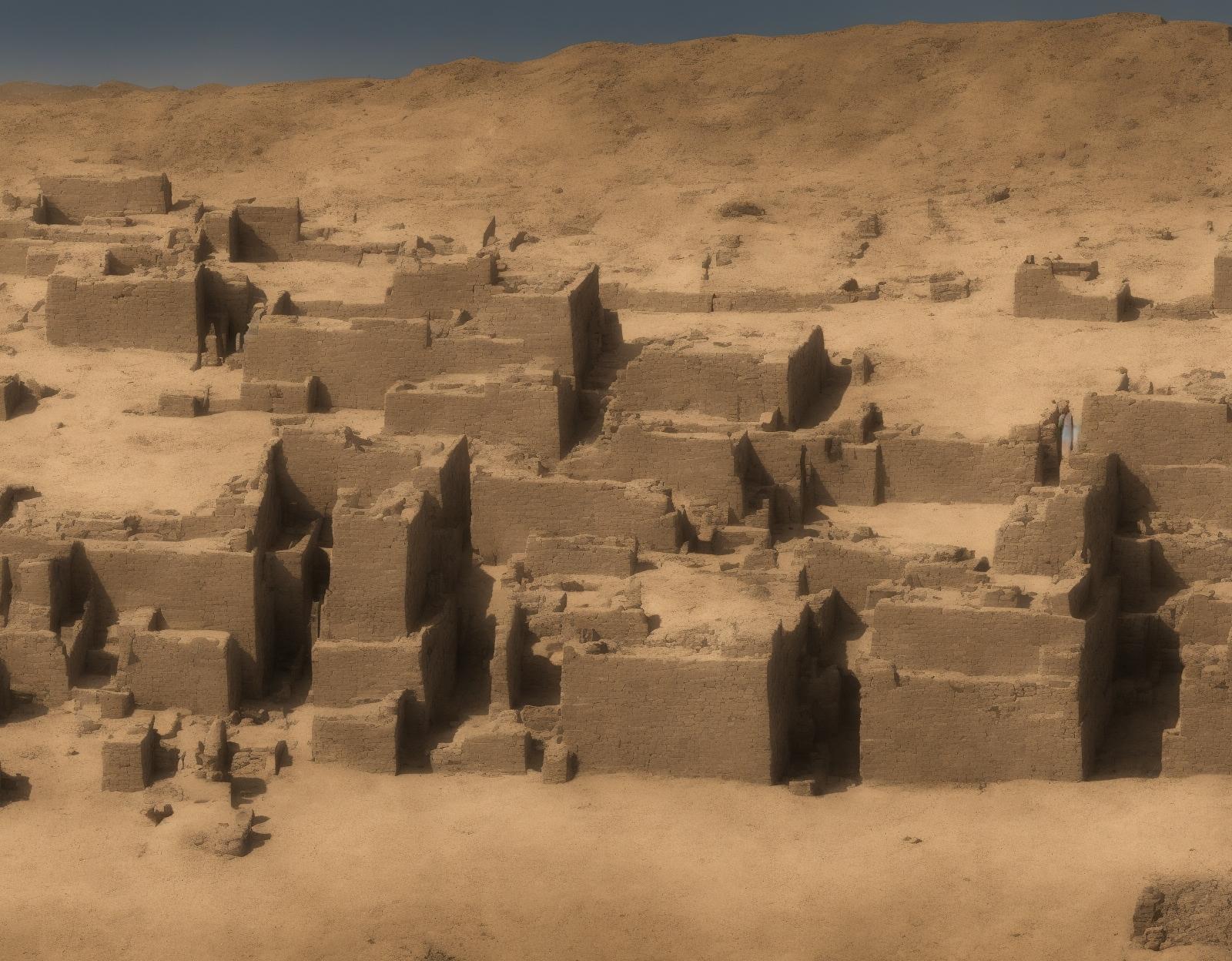
The image most people associate with the Minoans is that of the palace at Knossos—an architectural complex of interlocking courts, paved basements, storage magazines, light wells, and painted rooms that suggest both administrative capacity and theatrical ceremonial life. Arthur Evans, who began excavations at Knossos in 1900, used the word "palace" to describe these sites, and although debates continue about their exact functions, the term remains useful to convey a concentration of political, economic, and ritual activity. Knossos was the largest and most complex of these complexes, but it was not the only one. Phaistos, Malia, Zakros, and smaller centres such as Gournia each display the characteristic plan elements that archaeologists recognize: a central court, storerooms that held oil and grain in pithoi, and workshops that reveal production of luxury and everyday goods.
Architectural innovations are striking. Minoan builders used ashlar masonry and cut stone with precise joints, employed timber-supported roofs in larger rooms, and designed drainage systems sophisticated for their time—an indication of refined urban planning and concern with public hygiene. Multi-story areas with staircases and light wells speak to an aesthetic investment in interior space. Frescoed walls and polychrome decoration transformed interiors into performative environments; the visual language found on these walls—dolphins, flying fish, graceful processions, and acrobats—was both civic and ceremonial, a means of expressing identity and power.
The palaces also reveal the economic logic of storage and redistribution. The presence of large pithoi and magazines implies centralized control of staple goods. Some scholars interpret this as a palace-based redistributive economy: surplus agricultural production and craft goods were collected, recorded, and redistributed by a central authority that managed trade and resources. Others emphasize a more networked economy in which palace elites mediated, but did not monopolize, economic exchange. Either way, the physical layout of storerooms, sealings, and administrative areas indicates that record-keeping and commodity management were institutionalized.
Did you know? Minoan fresco painters often applied pigments onto wet plaster, a true fresco technique that produced long-lasting color, seen vividly at Akrotiri and Knossos.
In addition to palaces, Minoan settlements show variability: villa-like structures in the countryside, coastal towns oriented toward seafaring, and fortified sites in later phases—perhaps responses to changing geopolitical realities. Architecture thus maps social organization: the palaces as hubs of administration and ritual; peripheral sites as nodes in a wider economic and maritime network. The careful reconstruction of these patterns has been a central pursuit of twentieth- and twenty-first-century Aegean archaeology.

Art, Daily Life, and Economy
Minoan art provides one of the clearest windows into daily life and elite self-fashioning. Frescoes preserved at palatial sites and at the buried town of Akrotiri on Thera depict a world animated by nature and ritual: dolphins cavorting across blue fields, processions of robed figures, and sporting scenes such as the famous bull-leaping motif. The palette is bright—saturated blues, reds, and ochres—applied in a fluid, confident style that captures movement and vitality. Pottery, too, ranges from utilitarian wares to highly decorated ceremonial forms: the Kamares ware of the Middle Bronze Age gives way to naturalistic marine motifs in the Late Bronze Age. Crafts were specialized and often luxurious: goldsmithing, stoneworking, and textile production are widely attested in the archaeological record.
Daily life for many Minoans seems to have been shaped by agriculture and seafaring. Crete's natural resources—timber, olives, grapes, and access to metals through trade networks—sustained both local consumption and export. Olive oil and wine were probable staples, stored in large pithoi at palace magazines. Crete’s position in the Eastern Mediterranean allowed it to act as an intermediary in long-distance trade routes linking the Aegean with Anatolia, Egypt, and the Levant. Evidence of Minoan objects in Egypt (and Egyptian artifacts in Crete) demonstrates reciprocal influence: Minoan-style pottery appears in Middle Bronze Age Egyptian contexts, while Cretan palatial imports included metals and ornate objects from the Near East.
Did you know? The double axe or "labrys" found in Minoan contexts was later adopted symbolically by some modern movements, but originally appeared as a religious and possibly ceremonial emblem in Bronze Age Crete.
Craft production was organized and specialized. Workshops and evidence of standardized manufacture—multiple spindle whorls for textile production, mold-made pottery, and controlled kiln use—point to an economy with both household production and larger-scale output, perhaps coordinated by palace institutions. The presence of administrative tools—seal stones, seal impressions, and clay tablets etched with Linear A signs—indicates bureaucratic oversight of goods. Yet material culture suggests that displays of wealth and ritual consumption were not simply conspicuous; they partook in a system of religious expression where feasting, ritual deposits, and votive objects reinforced social bonds.
Social hierarchies remain a subject of careful study. Elite burials and imported goods reveal wealth concentration in certain locales, but the distribution of high-quality artifacts across different settlement types suggests that elite consumption was more widely dispersed. Women appear prominently in Minoan iconography—as priestesses, participants in processions, and possibly as central figures in cult. Figurines of female deities dominate votive assemblages, an observation that has fueled numerous hypotheses about gender and power in Minoan society.

Religion, Rituals, and Bull-Leaping
Religion on Bronze Age Crete is visible primarily through material traces: sanctuaries, votive deposits, fresco imagery, and the iconography of figurines and seals. Minoan religion appears to emphasize nature, fertility, and cyclical renewal. Recurrent symbols—trees, horns of consecration, double axes (labrys), and female figurines—suggest a ritual language rooted in local landscape and agricultural cycles. The "horns of consecration," stylized representations found on rooftops and in shrines, remain one of the most recognizable Minoan symbols; scholars interpret them variously as sacred architectural markers that evoke mountain peaks or as representations of consecrated animal horns.
Did you know? Linear B tablets discovered at Knossos were largely administrative records baked accidentally by palace fires, preserving administrative details that would otherwise have vanished.
Bull imagery pervades Minoan art, culminating in the famous scenes of bull-leaping. These painted depictions show acrobats grasping the horns of a bull and vaulting over its back in a dangerous, athletic ritual. Whether bull-leaping was a ceremonial sport, a rite of passage, or a symbolic performance, it clearly held significant ritual weight. The centrality of the bull in Minoan iconography connects to broader Mediterranean bull cults and to later Greek myth—the Minotaur and the labyrinth at Knossos—but direct continuity between myth and Bronze Age ritual should be traced carefully. Archaeologists also point to figurines and evidence of animal sacrifice in some contexts, though the scale and exact nature of sacrificial practices are debated.
Sacrificial altars, peak sanctuaries (open-air highland ritual sites), and cave sanctuaries provide diverse settings for worship. The variety of ritual spaces implies a polycentric religious landscape: public rites in palaces, private household votive practice, and regional pilgrimage to mountain shrines. Temple-like structures are less obvious than in later Greek religion, but the repeated layout of ritual furniture—ranging from benches to basins—indicates formalized ceremonial acts. The predominance of female figurines as votive offerings suggests a prominent mother-goddess figure or network of goddesses, but the evidence resists neat classifications. Scholars emphasize that Minoan religion was not static: iconography and ritual practices evolved across centuries in response to social and environmental change.
Beyond iconography, the architectural context reveals ritual choreography. Processional routes, painted friezes, and the orientation of courts and stairways created theatrical spaces for ritual performance. The sensory experience—bright colors, music, scented oils—would have produced an immersive religious environment. Minoan ritual thus appears both communal and performative, binding elites and communities through shared ceremonial frameworks.
Did you know? The famous myth of the Minotaur and the labyrinth likely reflects a memory of palatial complexity at Knossos rather than literal labyrinthine cages; the palace’s maze-like layout may have inspired later storytellers.
Scripts, Administration, and Contacts
One of the most compelling puzzles of Minoan Crete is its writing system. Two main scripts appear in the archaeological record: Linear A and Linear B. Linear A, used primarily in the palatial and administrative contexts of Middle and Late Minoan Crete, remains undeciphered. Its signs and logograms suggest an administrative script for economic record-keeping. Linear B, by contrast, is an adapted Mycenaean script found in later contexts on Crete and the Greek mainland; it was deciphered in the 1950s by Michael Ventris and John Chadwick and proved to represent an early form of Greek used for palace records. The presence of Linear B tablets at Knossos and Pylos indicates a Mycenaean administrative overlay on a previously Minoan bureaucratic system.
Administrative practices are tangible in the sealings, tablets, and storeroom inventories recovered from palace archives. Clay sealings—impressions made by stamped seal stones or ring seals—secured containers and doors and provide a trace of administrative actors. These seal impressions often bear iconography and emblems associated with particular places, individuals, or institutions, pointing to complex control over goods. Combined with Linear A inscriptions, the sealings sketch a world of managed commodities: agricultural produce, raw materials, craft products, and perhaps tribute exchange.
Minoan contacts extended far beyond Crete. Excavations have revealed Minoan-style pottery in Egypt, the Levant, and the Aegean islands, while Cretan sites yield imports from Syria, Anatolia, and Cyprus. Such exchange was not purely commercial but part of a cultural dialogue: Egyptian wall-painting and iconography influenced Aegean artists, and Minoan goods appear in rituals and palatial contexts in other lands. Maritime prowess allowed Cretan ships to connect a network of exchange that disseminated ideas as well as commodities. The Minoans thus occupied a mediating position in Bronze Age trade, facilitating movement across the eastern Mediterranean.
Did you know? Sir Arthur Evans’s early 20th-century restorations at Knossos used reinforced concrete and painted reconstructions that influenced public perceptions but remain contentious among modern conservationists.
Despite these connections, internal mechanisms of power remain debated. Were Minoan polities centralized kingdoms ruled by a single monarch, or were they more distributed, with palace elites forming a network of interdependent centers? The archaeological record provides contradictory inferences: palaces centralize resources and record-keeping, but the varied material across rural settlements suggests a degree of local autonomy. Minoan administration appears adaptable rather than rigidly centralized, a point that complicates simple political analogies with later monarchies.

Decline, Destruction, and Legacy
The end of the Minoan palatial world is one of the most debated episodes in Aegean prehistory. Archaeological evidence shows destruction layers at several palaces in the Late Bronze Age; however, the pattern is complex. Some sites exhibit catastrophic collapse around the mid-second millennium BCE—often associated with seismic activity and the fallout from the Thera eruption—while other sites continue in a different cultural mode. The cataclysm at Akrotiri on Thera (Santorini) buried that settlement under volcanic ash, preserving frescoes and architecture in exceptional detail. Although Akrotiri was a Minoan cultural outpost, volcanic destruction did not uniformly translate into a simultaneous collapse across Crete.
Thera’s eruption must be handled with caution in narratives of Minoan decline. It produced tsunamis, ash fall, and climatic disruptions that could have severely affected coastal settlements and agriculture on Crete. But a singular cause is unlikely to explain the complex sequence of decline. Earthquakes, internal social change, shifts in trade networks, and rising Mycenaean influence each played roles. Evidence from pottery styles, weapon assemblages, and changes in burial practices indicates an increasing presence of Mycenaean cultural markers on Crete by the 15th century BCE. At Knossos, a destruction horizon around 1450 BCE is followed by material consistent with Mycenaean administration and Linear B use, suggesting a takeover or elite replacement rather than sudden annihilation.
The legacy of the Minoans entered memory both directly and indirectly. Classical Greek mythology incorporated Minoan motifs—King Minos, the labyrinth, and the Minotaur—into stories that preserved distorted echoes of Bronze Age realities. In archaeology, the rediscovery of Minoan Crete transformed modern understandings of Bronze Age complexity, challenging earlier assumptions that civilizations in the eastern Mediterranean were exclusively continental. Minoan art influenced Aegean styles and contributed motifs that persisted into Mycenaean and later Greek art. Furthermore, modern heritage debates—about the restoration approach used by Arthur Evans at Knossos, about archaeological conservation, and about the politics of cultural identity—trace their roots to Minoan archaeology.
Contemporary scholarship seeks nuance: acknowledging Minoan creativity and organizational sophistication while resisting romanticized reconstructions. Ongoing excavations, improved dating methods, and interdisciplinary approaches in archaeobotany, geoarchaeology, and ancient DNA continue to refine our picture. These methods are changing how we assess migration, diet, and resilience in the face of environmental stress. The Minoan world, thus, remains an open archive: its preserved frescoes and fragments of clay still prompt questions that new techniques are beginning to answer.

To approach the Minoans is to confront both abundance and absence: breathtaking material remains and silences where texts do not surrender their full meaning. The Minoan palaces speak eloquently through their stones and pigment about a civilization that prioritized aesthetic expression, maritime connectivity, and ritual performance. Their scripts reveal administrative sophistication even when undeciphered, and their art continues to fascinate as much for what it shows as for what it withholds. The last two centuries of study—sparked by daring excavations and restrained by increasingly rigorous methods—have turned a once-fragmentary picture into a richer tableau, but crucial puzzles remain unresolved.
The mystery of the Minoans is not merely romantic; it is methodological and epistemological. How do we weigh artistic continuity against shifts in material culture? How do we interpret religious symbols outside written confession? What series of stresses—natural, economic, military—modalized the island’s late Bronze Age transitions? These questions animate contemporary research and ensure that the Minoan story will continue to develop.
For the curious traveler, scholar, or reader, Crete’s archaeological landscapes remain potent. Standing in a light-filled court at Knossos, surrounded by painted marine life and the echo of footsteps, one senses a civilization both proximate and remote—familiar in its human gestures yet alien in the vocabulary of its signs and rituals. That clash of intimacy and distance is the essence of Minoan allure: an invitation to explore a world where color, craft, and the sea shaped lives centuries before the Greeks recast them into legend.

How we verify this article
By the History Unlocked editorial team
This text is built on historical facts stored in our database and drafted with AI assistance. No signed human review is recorded for this article. Report any inaccuracy: we correct it and update the modified date.
Updated on
AI-assisted drafting.
Read our editorial standardsEnjoyed this? Discover more articles in the category Egypt & Lost Civilizations