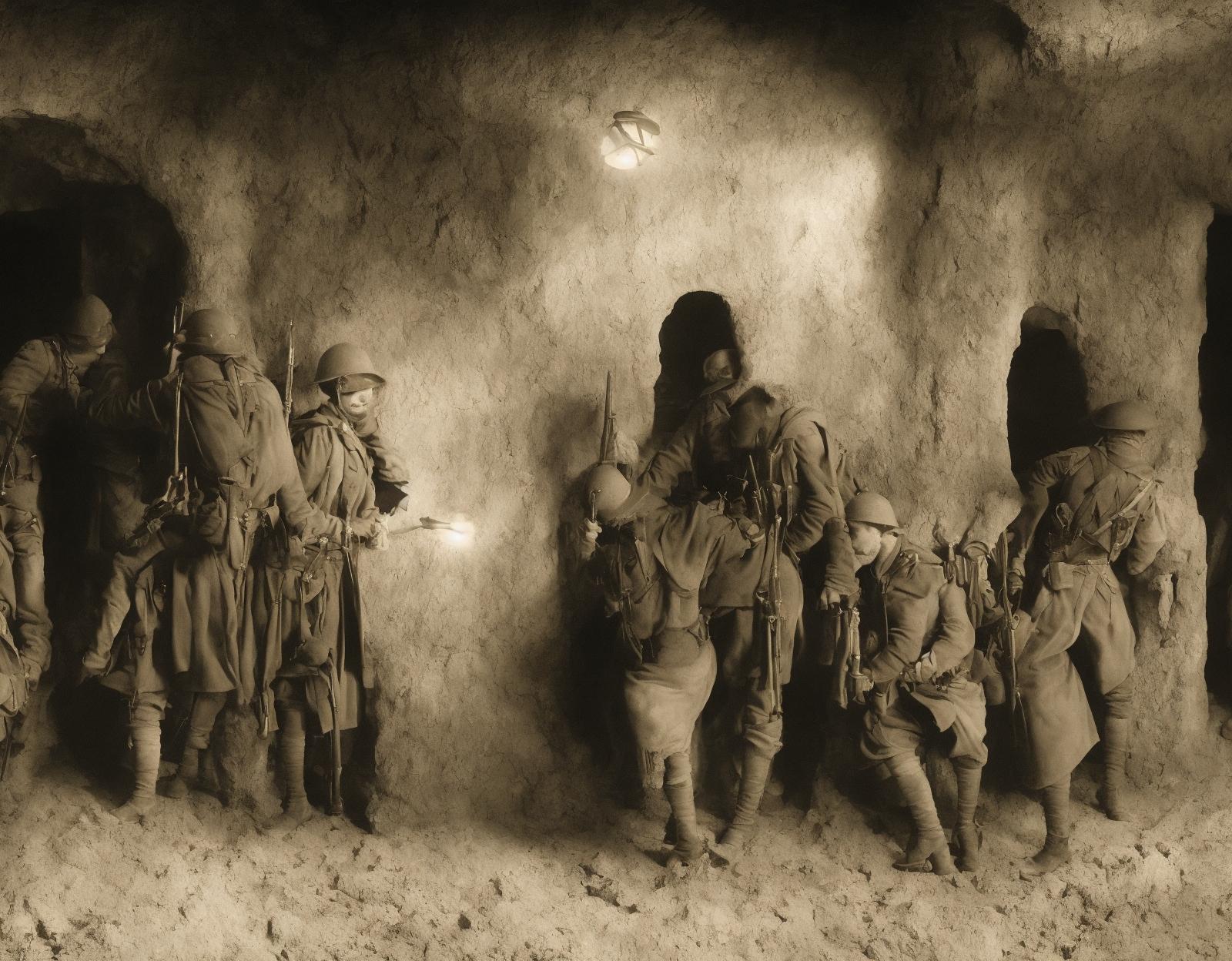
Beneath the Hall of Mirrors: The Treaty of Versailles Unveiled
The morning the Treaty of Versailles was signed, June 28, 1919, the atmosphere in the Hall of Mirrors was an uneasy mixture of triumph and foreboding. Delegates posed for photographs beneath glittering chandeliers, banners of victorious nations hung in a palace that itself had once been a symbol of absolute monarchy. Yet beneath the pomp lay a series of choices and compromises that would echo across decades. This article traces the treaty's negotiation and content like a mystery—layer by layer—showing not only the clauses and signatures but the human motives, the quiet bargains, and the unintended consequences.
The story of Versailles is not simply a legal document placed on a table; it is a tableau of vanities and grievances, of exhausted politicians and idealistic leaders. It is the aftermath of unprecedented slaughter and a nascent attempt to reorder a world that had been binary—alliances and empires—into something resembling a new international order. The narrative tone here leans into the dramatic: diplomatic rooms that smelled of cigar smoke and ink, corridors where decisions were biased by public sentiment and private enmity, and the shadows of a war-weary Europe that made peace as much about punishment as it was about prevention.
To understand the treaty fully, one must know the personalities who shaped it. Woodrow Wilson arrived with his Fourteen Points and a moralistic vision of a League of Nations; Georges Clemenceau, scarred by German invasions of France, sought security and revenge; David Lloyd George balanced electoral politics with the desire to prevent future German militarism while preserving Britain’s empire and maritime predominance. These leaders acted not only as statesmen but as representatives of populations that demanded answers. The result was a negotiation that combined principled aims and stark realpolitik.
Did you know? The Paris Peace Conference included over 30 nations and 800 official delegates, but the decisions were largely made by the so-called "Big Four."
This introduction sets the stage for the sections that follow: the diplomatic prelude to the conference, the characters in the rooms, the treaty’s concrete provisions—territorial changes, reparations, military restrictions—and the immediate and long-term consequences. Along the way, I will interrupt the narrative with curious asides and visual anchors: details that often get lost in legal summaries but illuminate the human texture of the process. Expect archival vignettes, surprising facts, and a steady focus on how choices taken in 1919 reverberated through the twentieth century.
Origins: From Armistice to Paris—A Diplomatic Maze
The armistice of November 11, 1918, ended fighting but did not produce peace terms. The Allies understood that the map of Europe, Asia, and the colonial world had to be redrawn. The Paris Peace Conference began in January 1919 and quickly became an arena where more than twenty allied nations competed to shape the postwar order. The major decisions, however, were carved out by the so-called "Big Four": the United States, Britain, France, and Italy. The smaller nations, along with newly formed states such as Czechoslovakia and Yugoslavia, exerted influence but often found themselves maneuvering within the frameworks set by the dominant powers.
The diplomatic maze the delegates confronted was crowded with competing claims. National self-determination—one of Wilson’s guiding lights—often collided with strategic considerations. For instance, the desire to create a Polish state along ethnic lines clashed with both German economic interests in territories like Upper Silesia and with the local ethnic patchwork that made clean borders impossible. Colonial issues were especially contentious: Britain, France, Japan, and Italy all sought rewards for their war efforts, while colonial representatives and anti-colonial activists found their aspirations sidelined. Japan, for example, pushed for a racial equality clause in the League of Nations covenant but faced resistance, notably from Australia and other dominions.
Did you know? At Versailles, Woodrow Wilson personally intervened to protect the principle of self-determination for several small nations, including the birth of Czechoslovakia, often overriding British and French strategic plans.
An underappreciated element was the domestic political pressure on leaders. Clemenceau faced a France traumatized by invasion; his priority was security guarantees and territories like Alsace-Lorraine must not slip back to German control. Lloyd George needed to keep his government and public opinion satisfied—many in Britain wanted to see Germany punished but also repair trade links. Wilson, while morally driven, had to contend with isolationist sentiment at home and the narrowness of his political capital. Thus the geopolitical and the personal mixed in ways that shaped outcomes as much as any legal drafting session.
The complexity of the conference was compounded by secrecy and leaks. Newspapers in Paris and London reported on negotiations, sometimes accurately, sometimes sensationally, pressuring participants to take tougher stances. Behind closed doors, deals were stitched together—territorial adjustments, mandates for former Ottoman territories, and economic arrangements. The Ottoman Empire’s fate was addressed separately in the Treaty of Sèvres (1920), but the Paris Conference’s size meant that threads from different theaters intertwined—especially when colonial possessions or strategic waterways were at stake. The diplomatic maze that began in late 1918 thus became a protracted exercise in reconciling an array of national, ethnic, and imperial interests.

Personalities and Power: The Human Players in the Hall
History remembers treaties as dry instruments, but the Treaty of Versailles bore the fingerprints of individual temperaments. Woodrow Wilson, tall and ascetic, was both the moral compass and, paradoxically, one of the more flexible negotiators when it came to practical compromises. His Fourteen Points—announced in January 1918—offered a blueprint for an international order based on open diplomacy, free trade, and self-determination, capped by the League of Nations. Yet Wilson’s idealism struggled against the realities of French security demands and British strategic interests. He persisted, however, using the moral high ground to push for a covenant that would bind the great powers to collective security.
Did you know? Article 231 did not itself demand reparations; rather, it provided the moral and legal basis upon which the reparations commission would calculate specific amounts.
Georges Clemenceau, known as "Le Tigre," brought an entirely different energy. His principal aim was to ensure French security by weakening Germany militarily and territorially. Having seen much of northern France devastated by the German advance in 1914–18, Clemenceau viewed punitive measures and severe limitations on German military capability as non-negotiable. His skepticism about Wilson’s idealism often led to tense confrontations. David Lloyd George occupied a middle ground: politically astute and attuned to British public opinion, he oscillated between Clemenceau’s demands for punitive measures and Wilson’s push for a new international order.
Italy’s prime minister, Vittorio Orlando, arrived expecting territorial gains promised at secret wartime agreements (notably at the Treaty of London, 1915). When Italy’s claims were limited—particularly regarding parts of Dalmatia—Orlando’s influence waned, and Italy left Paris feeling shortchanged. Japan’s delegation, led by Baron Makino, achieved some colonial recognition but failed to secure the racial equality clause it sought in the League covenant. Germany, excluded from talks long before signing, experienced the treaty as an imposition. The German delegation, led by Chancellor Hermann Müller and Foreign Minister Ulrich von Brockdorff-Rantzau, was presented with a draft they had little power to alter.
The individuals in Paris were also influenced by their advisors, intelligence assessments, and the press. Private conversations, late-night bargaining, and theatrical displays of moral indignation all mattered. Clemenceau, for instance, deliberately read graphic casualty reports to justify his demands; Wilson sought to present himself as the moral arbitrator of Europe; Lloyd George used his rhetorical skills to keep British public opinion in check. These human elements—vanity, fear, grief, and fury—threaded through the legalistic language of the treaty, producing a document as much about emotion as law.
Did you know? The mandate system created by the League of Nations assigned former German and Ottoman colonies to Allied powers; some mandates, like Iraq and Palestine, would become flashpoints for future conflicts.

The Core Provisions: What the Treaty Actually Said
The Treaty of Versailles contained multiple parts: territorial clauses, military restrictions, economic reparations, and legal responsibilities. One of its most infamous articles was Article 231, commonly known as the "War Guilt Clause," which assigned responsibility for the war to Germany and its allies. Critics later argued that this clause was used to justify heavy reparations; defenders claimed it was a legal foundation for restitution. The reparations commission would later set amounts that many economists and politicians judged debilitating for Germany’s economy.
Territorial adjustments were sweeping. Alsace-Lorraine, lost to Germany after 1871, was returned to France. The Saar Basin went under League of Nations administration with coal revenues ceded to France for 15 years. The provinces of West Prussia and Posen were awarded largely to the reconstituted Poland, cutting off East Prussia from the rest of Germany and creating the Polish Corridor. Danzig (Gdańsk) became a Free City under the League. Germany lost all of its overseas colonies, which were turned into League of Nations mandates administered by Britain, France, Japan, Belgium, South Africa, Australia, and New Zealand.
Military restrictions were substantial: the German army was limited to 100,000 men; conscription was abolished; the general staff was dissolved; tanks, military aircraft, and heavy artillery were forbidden; and the navy was severely capped. The Rhineland was to be demilitarized, with Allied occupation forces stationed on the left bank and in the bridgeheads on the right bank. These measures aimed to provide France with a buffer and to prevent rapid German rearmament, but they created a permanent grievance in German politics.
Did you know? The initial reparations figure of 132 billion gold marks was later reduced and restructured under the Dawes and Young Plans; the figure itself became a symbol more than a fixed payment schedule.
Economic provisions included reparations intended to compensate the victors for wartime damages. The reparations debate was fraught: Britain and France sought substantial sums, while American economists and some British officials worried about the economic repercussions for Europe. Ultimately, reparations were set at a level that many contemporaries and later historians considered unsustainable. The treaty also placed certain portions of Germany’s industry under international control and demanded the return of artworks and cultural property taken from occupied territories.

Borders, Mandates, and the Redrawing of Empires
One of the most visible consequences of Versailles was the dramatic redrawing of maps. Empires that had dominated Europe—Austro-Hungarian, Ottoman, German, and Russian (the latter through revolution and treaty)—were broken into smaller states or placed under new forms of control. The principle of national self-determination guided many decisions but was applied unevenly. The dissolution of Austria-Hungary led to the creation of new states such as Czechoslovakia and the Kingdom of Serbs, Croats and Slovenes (later Yugoslavia), but ethnic minorities were often left on the "wrong" side of new borders.
The League of Nations introduced the mandate system to administer former colonies and Ottoman provinces. France received mandates over Syria and Lebanon, Britain over Iraq and Palestine. The mandates were framed as a form of tutelage designed to prepare territories for self-rule, but in practice they often extended imperial control under a new name. The Balfour Declaration’s implications were codified in the British mandate for Palestine, setting the stage for further conflict in the Middle East. Japan’s acquisition of former German possessions in the Pacific and Germany’s African colonies being divided among the victors also raised questions about the moral premises of the new order.
Did you know? The United States Senate rejected the Treaty of Versailles twice (1919 and 1920), which meant the U.S. never joined the League of Nations, undermining Wilson’s central vision.
The eastern frontiers of Europe became particularly fraught. Borders in the Balkans and Eastern Europe were often drawn to balance strategic and ethnic considerations, leading to contested plebiscites and local violence. The plebiscite in Upper Silesia, for example, eventually resulted in a partition because ethnic majorities and economic assets did not coincide. In other regions, such as the Vilna region and parts of the Baltic states, competing claims led to military skirmishes and long-term political tensions. Thus the territorial settlement at Versailles and subsequent treaties left a patchwork of grievances.

Reparations, Economy, and the Seeds of Resentment
Economic terms in the Treaty of Versailles fueled much of the later controversy. Early in 1921 the Inter-Allied Reparations Commission set the initial reparations sum at 132 billion gold marks (later adjusted), a level that German economists and politicians argued was impossible to meet without causing severe social and political disruption. Payment methods included deliveries of coal, industrial equipment, and financial transfers. The allied occupation of the Ruhr in 1923 after Germany defaulted on deliveries further inflamed tensions.
The economic consequences of reparations were complex. Critics held that punitive reparations crippled Germany, creating fertile ground for radical politics. Supporters countered that reparations were aimed at compensating devastated regions and forcing Germany to internalize the human costs of aggression. International economic linkages—reconstruction loans from the United States, the Dawes Plan of 1924 and later the Young Plan of 1929—attempted to stabilize Germany’s economy and reframe reparations into manageable schedules. Nevertheless, the Great Depression of 1929–1933 demonstrated how vulnerable the interwar financial system was, and Germany’s plight became a potent political issue exploited by extremists.
Did you know? The date of the treaty’s signing, June 28, 1919, coincided with the fifth anniversary of the assassination of Archduke Franz Ferdinand in 1914—the act that set the war in motion.
Importantly, reparations and disarmament demands also had symbolic effects. German humiliation—real or perceived—became a cornerstone of narrative by nationalist movements. The treaty’s authors had aimed to create security for France and to reshape Germany’s role in Europe, but economic constraints and political indignation contributed to a sense that the settlement was not final. The combination of economic hardship, hyperinflation in the early 1920s, and perceived inequities in the treaty’s clauses fed into revisionist politics.

Immediate Reactions, Ratifications, and the League's Fragility
The treaty’s immediate reception varied greatly. In the victorious countries, there was a mixture of satisfaction and unease. France largely welcomed the territorial returns and security measures; Britain had mixed feelings among politicians and the public about whether the treaty struck the right balance; the United States Senate, however, failed to ratify the treaty largely because of opposition to the League of Nations' mutual defense commitments. Woodrow Wilson’s political defeat at home was consequential: the U.S. never joined the League of Nations, weakening the institution’s authority from its inception.
Germany reacted with outrage and disbelief. The Weimar Republic, forced to sign, faced a populace that regarded the treaty as a "Diktat"—an imposed settlement without negotiation. Political instability and uprisings in Germany followed, while moderates struggled to keep democratic institutions functioning. In other regions, such as the Middle East, mandates and the disintegration of Ottoman authority created local power vacuums that colonial administrators and nationalist movements sought to fill.
Did you know? Germany was officially excluded from negotiations and was presented the treaty for signature; many Germans called it a "Diktat" because they had no real say in its contents.
The League of Nations embodied Wilson’s vision but lacked the universal buy-in that might have given it real power. Without the United States, and with major powers like Japan and later Italy pursuing nationalist agendas, the League’s capacity to enforce its decisions was limited. Disputes over mandates, border skirmishes, and the lack of a credible enforcement mechanism exposed the League’s fragility early on. The sequencing of events in the 1920s—economic turmoil, localized conflicts, and the rise of authoritarian regimes—highlighted how the postwar settlement contained both stabilizing frameworks and latent instabilities.
Conclusion: Legacy, Lessons, and the Long Shadow of 1919
The Treaty of Versailles is often invoked as a cautionary tale: a peace that sowed the seeds of another war. Yet such a view risks oversimplification. Versailles did reshape Europe and the world, dismantling old empires, creating new states, and inaugurating international institutions like the League of Nations. It established legal and diplomatic precedents—war guilt, reparations, and mandates—that influenced international relations for decades. At the same time, its failures were real: punitive elements, inconsistent application of self-determination, and the absence of crucial powers from the League created openings for revisionist politics.
Historians today emphasize nuance. Versaille’s faults were not the only cause of World War II; economic crises, domestic politics, ideology, and later decisions by the Nazi regime played decisive roles. Yet the treaty’s symbolic power—especially Article 231—provided rhetorical fuel for those who argued Germany’s humiliation demanded redress. The 1920s and 1930s show how a mixture of economic hardship, national resentments, and political opportunism can transform diplomatic compromises into historical grievances.
Did you know? Several territorial plebiscites mandated by the treaty (e.g., in Upper Silesia and Schleswig) reflected the attempt to apply self-determination, but often produced mixed results and partitions.
For students of diplomacy, the Paris Conference is instructive. It demonstrates the tension between moral aims and geopolitical realities, the limits of idealism when not backed by enforcement mechanisms, and the centrality of domestic politics in shaping international agreements. For readers drawn to the human drama, Versailles is a chronicle of personalities who wore their scars and short-term priorities on their sleeves. It reminds us that treaties are not only legal texts but living negotiations shaped by trust, fear, and ambition.
Ultimately, the Hall of Mirrors remains an evocative symbol because it captured a world in transition. The chandeliers and gilded frames witnessed a moment when Europe tried to write a future after carnage—sometimes with clarity, sometimes with blind spots. The Treaty of Versailles, therefore, should be read as both a product of its tragic time and a catalyst for future events: an attempt at order that reveals, by its imperfections, the perils of peace built on incomplete reconciliation.

The Treaty of Versailles endures in history not as a single story but as a complex narrative with multiple actors and outcomes. Its passages are a mirror in which the ambitions and failures of the postwar world can be read; its margins contain footnotes of human suffering and political calculation. Understanding Versailles means recognizing both the ideals that sought to restrain war and the harsh compromises that produced resentments—lessons that remain painfully relevant for contemporary diplomacy and conflict resolution.
Did you know? The League of Nations’ mandate over former German colonies transformed imperial control into an international trusteeship, a concept that would influence later UN trusteeship arrangements.
How we verify this article
By the History Unlocked editorial team
This text is built on historical facts stored in our database and drafted with AI assistance. No signed human review is recorded for this article. Report any inaccuracy: we correct it and update the modified date.
Updated on
AI-assisted drafting.
Read our editorial standardsEnjoyed this? Discover more articles in the category World War I