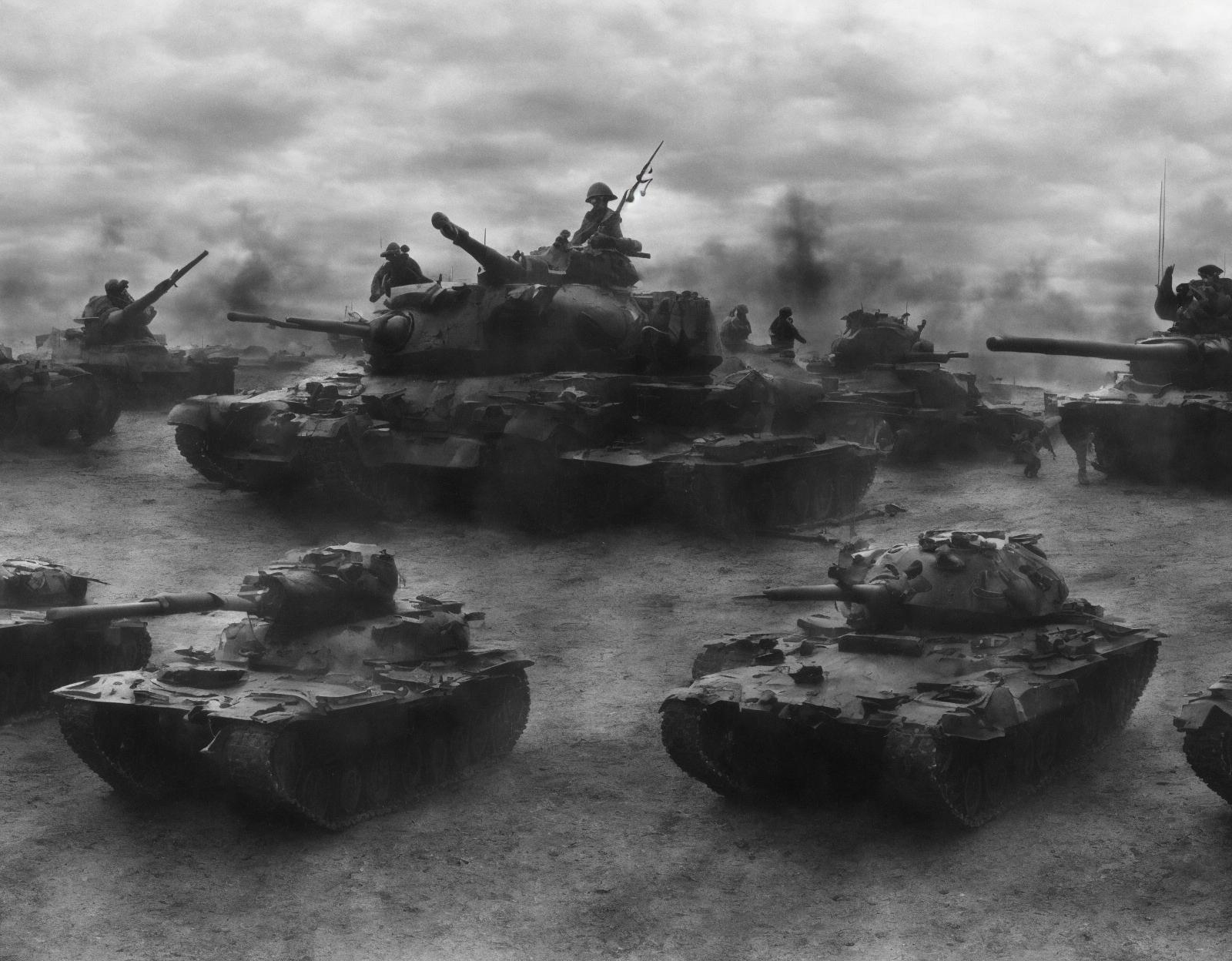
Molotov-Ribbentrop Pact: The Shadow Agreement That Shaped 1939
The Molotov-Ribbentrop Pact is one of those diplomatic documents that reads like a key to a locked room. On its surface it was a non-aggression pact: two avowed ideological enemies, Nazi Germany and the Soviet Union, agreeing to keep their hands off each other. But under that placid exterior, in secret protocols kept hidden for half a century, lay a map of Europe carved into spheres of influence and lines that would determine which states would survive and which would be erased from the political map. The pact, signed on 23 August 1939, stands as a grim pivot of the late 1930s: it gave Nazi Germany the freedom to invade Poland, plunged Eastern Europe into catastrophe, and allowed the Soviet Union space to expand and to buy time. The story of this agreement is equal parts diplomatic calculation, bluff, opportunism, and brutality.
To understand the pact is to understand the febrile atmosphere of 1939 Europe: the collapse of collective security, the failure of appeasement, the desperation in Moscow to avoid a two-front war, and the ruthless calculation in Berlin that sought immediate territorial gains. For contemporaries and later generations alike, the pact raised moral questions about complicity and realism in statecraft. Was it a cynical bargain between two predatory powers, or an isolated strategic move by the Soviet leadership faced with limited options? As archival material was gradually opened in the late 20th century, those shadows took on sharper contours, and the pact's secret protocols—once dismissed as rumor—emerged as clear evidence of territorial partition plans that anticipated Nazi and Soviet invasions.
This article traces the pact from its diplomatic background through its negotiation and signing, explores the content and immediate consequences of the secret protocols, examines the political and economic cooperation that followed, and surveys the long historiographical struggle over meaning and responsibility. Along the way, we will pause for a number of curious details that illuminate how ordinary documents and photographs became charged symbols. The narrative aims to be evocative while strictly grounded in verifiable historical facts: dates, treaties, military movements, and later revelations from the Soviet archives. Read on for a close, suspenseful look at how an agreement inked in Moscow rearranged the map of Europe and left a legacy whose echoes continue to this day.
Did you know? The Soviet military leadership still believed in 1939 that they needed time to recover from the 1937–38 purges, which removed many experienced commanders and weakened the Red Army's capacity.
Background: Europe at the Edge of War
By the summer of 1939 Europe had been drifting toward crisis for years. Germany under Adolf Hitler had remilitarized the Rhineland in 1936, swallowed Austria in the Anschluss of March 1938, and then in September 1938 seized the Sudetenland after the Munich Agreement, in what was presented at the time as the last territorial demand. Each of these moves had undermined the credibility of collective security and the willingness of Western democracies to confront aggression. Britain and France, wary of another devastating continental war and keen to buy time for rearmament, pursued policies of appeasement. Appeasement had its limits, however; by 1939 Hitler's ambition had shifted from limited revisionism to a broader program of expansion and racial reordering in Eastern Europe.
The Soviet Union, under Joseph Stalin, had watched these developments with growing alarm. Soviet leaders feared encirclement by hostile powers and sought security guarantees from Britain and France. From early 1939, the Soviet government engaged in negotiations with London and Paris aimed at a military alliance or at least coordinated guarantees against German aggression. These talks repeatedly foundered on mutual distrust, protocol, and the question of transit—Soviet demands that Western forces be allowed to move through Polish and Romanian territory to confront German forces collided with strong Polish resistance. Poland, suspicious of Soviet intentions after the memory of the Polish-Soviet War of 1919–1921, proved unwilling to permit Soviet troops on its soil even as part of an anti-German coalition.
Meanwhile, Germany sought to remove the risk of a two-front war. Hitler’s strategic calculus in 1939 was brutal but clear: neutralize the Soviet Union, or at least postpone conflict with it, and secure the eastern flank before moving against the West. Diplomatic contacts between Berlin and Moscow, which had existed intermittently since the early 1920s, acquired new urgency. The German foreign minister Joachim von Ribbentrop, entrusted by Hitler to secure a pact, and the Soviet foreign minister Vyacheslav Molotov led their respective delegations. Hitler's outreach had multiple goals: to prevent a British-French-Soviet coalition, to grant diplomatic legitimacy to German expansion, and to secure raw materials through trade arrangements.
Did you know? The hope in Stalin’s circle was to gain a buffer zone of territory to defend Moscow and the western approaches, which influenced the decision to agree to secret border divisions.
Economic factors also mattered. Germany lacked sufficient supplies of oil, grain, and certain strategic raw materials—resources the Soviet Union could, in theory, supply. Conversely, the Soviets could use a non-aggression guarantee to buy time to rebuild forces after the purges of the Red Army officer corps in 1937–38. These converging interests, though precarious, made a pact feasible. Yet the partnership was inherently unstable: Nazi and Soviet ideologies were visceral opponents, and few in Europe believed such an agreement could last. What was negotiated in the spring and summer of 1939, therefore, must be read as a momentary alignment of convenience between two regimes that expected, sooner or later, to clash again.

The Negotiation and Signing: August 1939 in Moscow
The final diplomatic sprint toward the pact unfolded in the heat of August 1939. After months of secret and public interaction, Germany and the Soviet Union presented negotiators who displayed both theatrical cordiality and ruthless pragmatism. Joachim von Ribbentrop arrived in Moscow and was received with formal honors. The idea of a non-aggression treaty between the two powers stunned many observers in the West, and the initial public German and Soviet declarations framed the agreement as a straightforward cessation of hostilities and a commitment to peaceful relations.
On 23 August 1939, Molotov and Ribbentrop signed the German-Soviet Non-Aggression Pact (commonly called the Molotov-Ribbentrop Pact). The published text was a typical diplomatic non-aggression agreement: Article 1 committed the contracting parties to refrain from aggression, Article 2 provided for denunciation in case of attack by a third party, and Article 3 addressed the duration and terms of renewal. Yet buried in the arrangement were separate, secret protocols, attached as addenda and known only to a small circle of foreign office officials and political leaders in Moscow and Berlin. These secret clauses delineated spheres of influence in Eastern Europe and included specific provisions regarding Poland and the Baltic states, specifying the line along which territories would be divided.
Did you know? The secret protocols, though denied for decades, were published officially by the Soviet government in 1989 after archival research and political pressure during glasnost.
The public signing ceremony was a carefully staged moment. Photographs captured diplomats smiling, the outward calm that masked an agreement designed to reshape borders by force. The German leadership, especially Hitler, saw the treaty as the diplomatic equivalent of removing a weight from one shoulder: with the Soviet threat temporarily neutralized, Germany could invade Poland without fear of immediate Soviet intervention, and Britain and France would be forced to react to German aggression without the added complexity of Soviet involvement.
From Moscow’s perspective, the pact offered an opportunity to secure territory that the Soviet leadership considered strategically vital, and to extract concessions that would buffer the USSR against German expansion. Stalin and his inner circle saw a chance to postpone a conflict with Germany while acquiring time and territory to strengthen the Soviet position. The secrecy of the additional protocols allowed both sides to proffer a plausible public narrative—non-aggression—while privately consenting to partition. For the smaller states of Eastern Europe, however, the implications were catastrophic: a diplomatic thread pulled in Moscow and Berlin risked unraveling sovereign existence.

The Secret Protocols: Maps Between the Lines
The heart of the controversy was not the pact's public words but the secret protocols appended to it. These protocols laid down spheres of influence and outlined how Poland, Lithuania, Latvia, Estonia, Finland, and parts of Romania (notably Bessarabia) would be divided or influenced. They were not vague spheres of prestige; in concrete terms they demarcated lines: Poland was to be partitioned roughly along the Narew, Vistula, and San rivers, placing eastern Poland in the Soviet sphere and western Poland in the German sphere.
Did you know? The Soviet invasion on 17 September 1939 used radio broadcasts and propaganda to claim it was protecting Ukrainians and Belarusians after the Polish state collapsed, a public justification inconsistent with the secret protocol’s provisions.
For decades the Soviet government denied the existence of secret protocols. Only with the gradual loosening of the Soviet system under Mikhail Gorbachev did the truth emerge: in 1989 the Soviet authorities publicly acknowledged and published the text of the protocols. The revelation confirmed what historians had long suspected and condemned: the pact was a collusive division of Eastern Europe by two totalitarian powers. In revealing the secret protocols, the Soviet Union was also acknowledging responsibility for the invasions and annexations of 1939–40 that had been justified at the time in terms of defensive necessity.
The precise content of the protocols is chillingly pragmatic. The Baltic states were carved into a Soviet sphere—Estonia, Latvia, and in part Lithuania—allowing the USSR to demand base rights and eventually to occupy and incorporate these republics in 1940. Finland and Bessarabia were zones of Soviet interest, and the arrangement gave the USSR a free hand to press its demands. The partition of Poland, executed by Germany and the USSR in September 1939, created immediate humanitarian crises: expulsions, arrests of political elites, and systematic repression followed as both occupying powers sought to eliminate potential resistance and reshape the ethnic map.
The legal and moral fallout of those secret pages continued to reverberate. After the war, Western governments formally regarded the Soviet annexations as illegal, though geopolitical realities—especially the alliance against Nazi Germany and later the onset of the Cold War—limited political action. The secret protocols remained a powerful symbol of cynical realpolitik. Their eventual publication underlined how official narratives can be built on intentional falsehoods and how state secrecy can obscure culpability for decades.
Did you know? German industry relied on Soviet oil and raw materials during 1940–41; without these imports, some historians argue German capacity for early campaigns would have been significantly reduced.

Immediate Military and Political Consequences: Invasions, War, and Occupation
The pact's immediate, catastrophic consequence was the coordinated collapse of Polish sovereignty. On 1 September 1939, Germany invaded Poland from the west, initiating the military campaign that would soon be called World War II. Britain and France, having guaranteed Polish independence, declared war on Germany on 3 September, but were unable to provide effective military assistance to Poland. Two and a half weeks later, on 17 September 1939, the Soviet Union invaded Poland from the east. The Soviet invasion was framed in Moscow as a protective act aimed at securing the lives of Belarusians and Ukrainians in interwar Poland after the Polish state had allegedly ceased to exist. In reality, the Soviet move was coordinated with German plans and carried out in accord with the division agreed in the secret protocols.
The occupation of Poland was brutal. Both German and Soviet authorities acted to suppress political opposition, and both carried out arrests and massacres. The most notorious Soviet atrocity following the partition was the Katyn massacre of spring 1940, in which thousands of Polish military officers and intelligentsia were executed by the NKVD — a crime the Soviet Union denied for decades until 1990 when it acknowledged responsibility. On the German side, policy toward the Polish population was horrendous and escalated into measures that prefigured the Nazis’ genocidal policies in occupied territories.
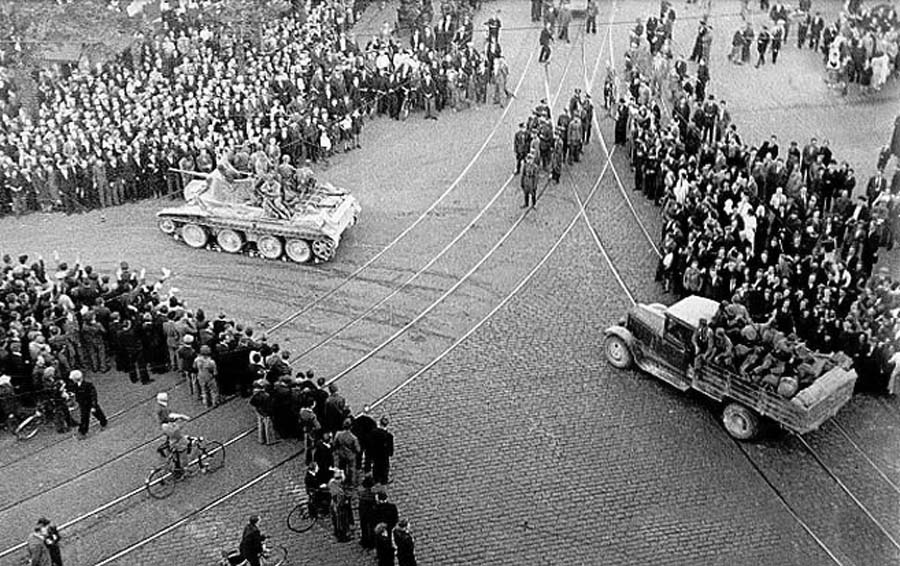
Elsewhere, the pact facilitated Soviet pressure on the Baltic states. In the autumn of 1939 the USSR forced Estonia, Latvia, and Lithuania to sign mutual assistance treaties that permitted the establishment of Soviet military bases on their soil. The following year, in June 1940, the Soviet Union occupied and then annexed the Baltic states, installing pro-Soviet regimes and incorporating them into the Soviet Union. Finland resisted Soviet pressure and was invaded on 30 November 1939, initiating the Winter War. Although the Finns fought bravely and inflicted severe losses on the Red Army, the conflict ended with the Moscow Peace Treaty on 13 March 1940, which ceded territory to the USSR. The Soviet incursions into Bessarabia, previously part of Romania, in June 1940 led to the annexation of that region as well.
Did you know? The Katyn massacre, which was denied by Moscow for decades, was officially acknowledged by the Soviet government in 1990 after archival research confirmed NKVD responsibility.
These events dramatically altered the political geography of Eastern Europe and created deep resentments. The Soviet Union’s expansionist moves were justified in Moscow as defensive measures, but for many observers they were unmistakable acts of aggression. The West’s muted response—constrained by the greater immediate need to defeat Nazi Germany and shaped by realpolitik—meant the territories ceded to Soviet control in 1939–40 remained part of the USSR until 1991. The human cost was immense: mass deportations, imprisonment, executions, and the dislocation of whole populations.

Economic and Strategic Cooperation: Between Trade and Distrust
Although ideological enemies, Nazi Germany and the Soviet Union found practical common ground in trade and logistics. Economic cooperation after the pact became an important, if uneasy, pillar of the relationship. The two states negotiated a series of trade agreements in 1939 and 1940 under which the Soviet Union exported raw materials—grain, oil, manganese, chrome, and various metals—to Germany. In return, Germany delivered machinery, military equipment, and industrial goods. This trade helped sustain the German war machine in its early years, supplying resources Germany lacked domestically.
The economic relationships were not merely commercial; they also had strategic implications. The Soviets used trade concessions to obtain industrial equipment and to secure diplomatic advantages. For Germany, the imports of Soviet raw materials extended the Reich’s capacity for prolonged military action. German planners understood that access to Soviet oil and cereals reduced Germany's vulnerability to blockades and shortages. At the same time, Berlin remained acutely aware that any extension of Soviet power was ultimately threatening to its long-term goals.
Did you know? Many high-level decisions in 1939 were influenced by the memory of World War I—European leaders feared another total war and often preferred short-term bargains that ultimately failed to prevent conflict.
Beyond contracts, there were practical arrangements: transit rights, shipping agreements through the Baltic, and certain military co-operations short of joint operations. Yet the relationship remained marked by mistrust. Hitler’s ideological aim of Lebensraum in the East remained on the table, and the German General Staff continued to develop contingency plans for an eventual invasion of the Soviet Union. The German leadership understood the pact as a temporary instrument, a way to buy time and clear the immediate path for aggression in the West and Central Europe.
The fragile nature of the arrangement became evident in 1940–41. While trade continued, both sides maneuvered for advantage. The Soviet annexations in the Baltics and Bessarabia increased the USSR’s territorial depth but also brought Soviet forces and infrastructure closer to German interests. German preparations for an attack—Operation Barbarossa—accelerated through 1940 and into 1941. Despite continuing commercial exchanges, the political and military calculus had shifted: for Hitler, the ideological confrontation with Bolshevism would be postponed no longer than necessary.

Historiography and Memory: Shifting Interpretations Over Time
The Molotov-Ribbentrop Pact has been the subject of intense historiographical debate since 1939. Initially, contemporaries and early historians saw it primarily as a tactical alliance that allowed Germany to start the war in the West without fear of Soviet interference. After World War II, the pact became a focal point for moral and political critiques: Western critics condemned Soviet collusion; Soviet-era historians defended the pact as a necessary Soviet security measure or ignored the secret protocols altogether.
Did you know? The secret protocols were not a public part of the agreement; knowledge of them was initially limited to a small circle in Berlin and Moscow, which contributed to confusion and misinterpretation abroad.
The Cold War further polarized narratives. In the West, the pact was often cited as evidence of Communist perfidy or as a cautionary tale about totalitarian regimes making pragmatic bargains. In the Soviet Union and Eastern Bloc, official histories reframed the story: they either denied the secret protocols or presented the Soviet actions as defensive and forced by the aggressive intentions of Nazi Germany. This bifurcation in memory was destabilized in the late 1980s. With glasnost and the opening of archives, Soviet scholars and the government released documents that confirmed the secret arrangements and offered new, sometimes damning, insights into the calculations of Stalin’s inner circle.
The disclosure of archival material altered academic debates. Historians could now trace more precisely who knew what and when, and how decisions were made in Moscow and Berlin. Questions about agency, motive, and culpability became more nuanced. Some scholars emphasize the geopolitical vulnerability that drove Soviet choices: isolated after the Spanish Civil War and the purges, Moscow sought security guarantees and time. Others emphasize the moral responsibility of a regime that willingly colluded in the division of sovereign states. Both perspectives are supported by archival evidence: Soviet leaders feared immediate war and wanted strategic buffers, yet they also actively implemented policies that consolidated Soviet control over annexed territories and suppressed local populations.
Memory politics continues to shape how the pact is discussed in contemporary societies. In Poland and the Baltic states, the 1939–40 events are remembered as criminal aggressions and as the beginning of decades of Soviet domination. In Russia, public narratives oscillate: some official statements emphasize strategic necessity, while critics and victim communities stress the moral and human costs. The publication of the secret protocols in 1989 was a watershed moment: it affirmed that official denials had been constructed and that transparency—even belated—could change collective understanding of historical events.
Did you know? The pact remained in force until 22 June 1941, when Nazi Germany launched Operation Barbarossa, invading the Soviet Union and shattering the non-aggression arrangement.
Conclusion: The Long Shadow of a Short Agreement
The Molotov-Ribbentrop Pact was short in time but long in consequence. Signed in August 1939, it helped precipitate the outbreak of World War II and determined the fate of millions in Eastern Europe. The agreement illustrates how diplomacy among great powers can have devastating consequences for smaller nations, and how state secrecy can shelter acts that in time will need to be accounted for. Its secret protocols were the mechanism by which the pact moved from a public promise of non-aggression to an instrument of territorial conquest.
The moral questions the pact raises are uncomfortable and persistent. Was the Soviet leadership acting out of existential fear, or did it willingly participate in imperialist practices similar to those it publicly condemned? The answer is both: Stalin's regime was driven by a mix of defensive anxiety and expansionist opportunism. The pact allowed the USSR to buy time and territory, but it also implicated the Soviet state in policies that led to repression, deportations, and the suppression of national sovereignty across Eastern Europe.
The historical record—opened more widely after 1989—has clarified many of the factual details but has not produced universal agreement about interpretation. Memory politics ensures the Molotov-Ribbentrop Pact remains a live issue: in Poland and the Baltic states it is a symbol of betrayal and loss; in some Russian narratives it is cast as a pragmatic necessity; for historians, it remains a subject for careful analysis grounded in archival evidence. The pact also offers a cautionary lesson about the fragile ethics of realpolitik: diplomatic convenience can have terrible human consequences, and the line between strategic calculation and moral compromise is often thin.
Did you know? The public acknowledgment of the secret protocols in 1989 significantly changed international historical consensus and allowed victim states to pursue truth and recognition.
Finally, the pact teaches a broader lesson about how history is reconstructed. Secrecy, denial, and later confession shaped the story of 1939 for decades. Only through persistent research, archival openness, and public reckoning did the full contours of the agreement and its aftermath emerge. The Molotov-Ribbentrop Pact is, therefore, not merely a document from the past; it is a case study in how states make decisions in moments of peril and how those choices are remembered, contested, and ultimately judged by posterity. The shadows that agreement cast across Europe continue to shape politics and memory, reminding us that even the most technical diplomatic acts can yield catastrophic human consequences.
How we verify this article
By the History Unlocked editorial team
This text is built on historical facts stored in our database and drafted with AI assistance. No signed human review is recorded for this article. Report any inaccuracy: we correct it and update the modified date.
Updated on
AI-assisted drafting.
Read our editorial standardsEnjoyed this? Discover more articles in the category World War II