Caporetto 1917: The Collapse, Mystery, and Rebirth
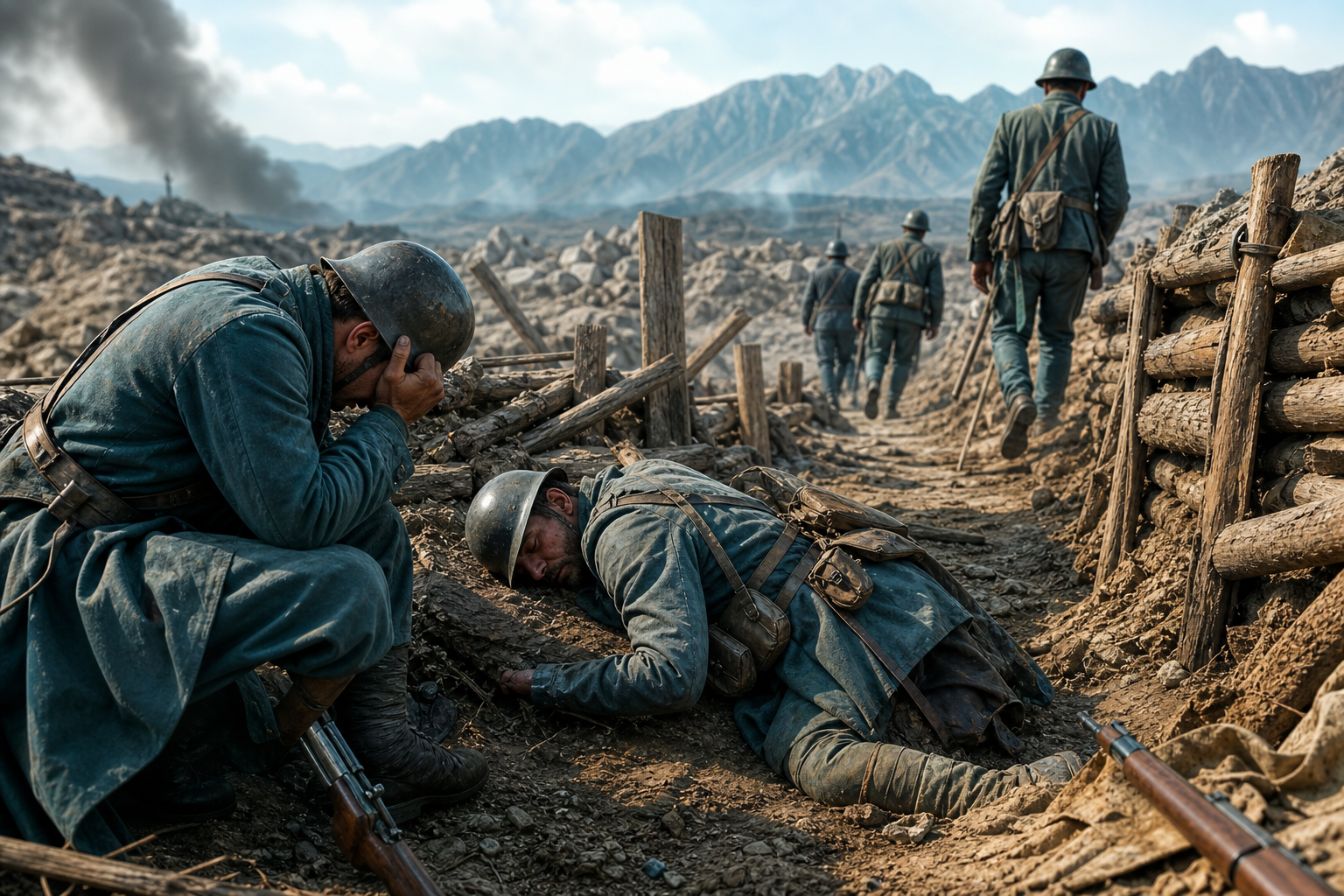
The morning that dawned over the Julian Alps in late October 1917 felt ordinary to many: fog clung to the valleys, mountain peaks hid behind smoke and thin cloud, and soldiers on both sides of the Isonzo line performed the familiar rituals of trench life. Yet beneath that fog lay a plan of such lethal precision and merciless intent that it would not only break a front but also break a nation's confidence. The Battle of Caporetto—known to Austrians and Germans by different names and to Italians by the town of Caporetto itself (today Kobarid in Slovenia)—was not merely another engagement of the Great War. It was a demonstration of a new form of warfare, an implosion of morale, and the beginning of a painful but formative rebirth for Italy.
In this account I aim to weave together verified facts, eyewitness fragments, and the kind of narrative tension that reveals why Caporetto has stubbornly remained a symbol of military catastrophe and national resilience. The offensive, launched on 24 October 1917 and often dated through November as the front shifted, was the climax of years of fighting along the Isonzo River: twelve named battles between Italy and Austro-Hungary that ground away at soldiers and landscapes alike. What made this final battle different was not just the superiority in men or artillery; it was the application of new tactics—stormtrooper infiltration, focused artillery hurricanes, and a command discipline that exploited the seams in Italian defense. It was also the exposure of an army worn thin by politics, poor logistics, and the harsh leadership of Chief of Staff Luigi Cadorna.
This introduction sketches the contours of a story that will be unrolled in six broad chapters: the state of the front and the fragile calm before the offensive; the tactical innovations and German-Austro-Hungarian cooperation that made the breakthrough possible; the crucial days of the advance and the geography that shaped them; the human cost and logistical collapse that followed; the political decisions, international responses, and the reconstitution of the Italian army under Armando Diaz; and finally the long memory—how Caporetto entered Italy’s cultural imagination and what military lessons it left to the twentieth century.
Did you know? One of the practical logistical problems Italy faced was the chronic shortage of winter clothing—many troops lacked adequate greatcoats before October 1917, worsening morale and combat endurance.
Read as a tale of military technique, national trauma, and eventual recovery, Caporetto is less a single event than a mirror—showing how modern industrial warfare could annihilate lines on a map and fracture the will of nations. It is also a story of choice: how commanders chose to fight, how soldiers chose to flee or stand, and how political leaders chose to remake an army in the ashes. The fog that morning lifted, but the questions it revealed endured.
The Calm Before the Storm
On the eve of the offensive the Italian front along the Isonzo had already endured a mechanized attrition unmatched in the rocky theater of the Alps. From 1915 to 1917 the Kingdom of Italy had launched eleven major offensives against Austro-Hungarian positions along the Isonzo River. These assaults produced limited gains at terrible cost, and by the autumn of 1917 Italian units showed the wear of repeated attacks: exhausted battalions, thin supply lines, and a command structure that relied heavily on punitive discipline rather than adaptive tactics. Luigi Cadorna, Italy’s Chief of Staff, had become notorious for his strict enforcement of order—summary executions and harsh punishments were part of a regime intended to enforce obedience but which also eroded morale. In many sectors the Italian trench system was stretched thin, forward positions were difficult to relieve, and replenishment of rifles, ammunition, and food lagged behind the demands of mountain warfare.
Logistics were a particular liability. The Isonzo front ran through narrow valleys and steep ridges, where roads were scarce and rail access limited. Italian supply lines relied on long mule trains and precarious mountain routes that could be disrupted by weather or bombardment. Rain and early winter snow could turn the narrow tracks into quagmires, slowing reinforcements and complicating artillery resupply. Meanwhile, the Austro-Hungarian defense had its own problems—diminishing manpower and strained coffers—but it benefited in this theater from interior lines and positions on higher ground that made a frontal assault costly. What the Italians did not fully anticipate was a coordinated and concentrated enemy effort that would combine local Austro-Hungarian knowledge of the terrain with German tactical innovation.
Did you know? German stormtrooper units trained to bypass strongpoints often carried specialized weaponry—light machine guns, trench grenades, and entrenching tools—to fight in close quarters and destroy communication nodes.
Politically, Italy was under strain. The war had deepened social tensions, and public confidence in the military leadership was fragile. While propaganda and newspapers still tried to sustain morale, the reality in many garrison towns was one of fatigue and skepticism. Soldiers often complained of inadequate rest rotations and shortages of winter clothing. Cadorna’s penchant for rigid, centralized control and a punishment-focused culture made delegation difficult and initiative rare. The Italian line, therefore, had vast stretches where local commanders were hesitant to act without express orders, a fatal trait when confronted with swift infiltration tactics.
Across the Isonzo the Austro-Hungarian high command, led by Chief of Staff Conrad von Hötzendorf, was intent on capitalizing on these weaknesses. They sought German assistance both in planning and in manpower. German General Staff officers brought lessons learned on the Western Front and the Eastern Front; most importantly, they brought new assault doctrines—stormtrooper tactics and small-unit infiltration techniques designed to bypass strongpoints rather than smash them head-on. The combination of Austro-Hungarian familiarity with the ground and German tactical doctrine would prove deadly. Neither side could foresee, however, the scale of collapse that would ripple behind the Italian lines once a seam was opened.
Tactics and Innovation: Stormtroopers and Infiltration
The warfare of trenches had galvanized a search for breakthroughs. Traditional massed infantry assaults against fortified lines had proven costly and often futile. In response, German and Austro-Hungarian planners experimented with more nuanced methods: short, fierce artillery barrages called hurricane or rolling barrages that targeted enemy wire and observation posts; small assault teams—later called stormtroopers or Stoßtruppen—trained to move in dispersed formations, locate weak points, and penetrate rear areas to disrupt command, logistics, and artillery observation. At Caporetto these principles were applied with careful reconnaissance, concentrated force, and surprise.
Did you know? The initial days of the offensive saw the capture of large numbers of Italian rifles and supplies; some captured weaponry was later photographed being used by Austro-Hungarian troops in the advance.
German stormtrooper doctrine emphasized speed, flexibility, and the use of infantry trained in close combat, scouting, and rapid decision-making on the ground. These units did not try to hold extensive captured terrain; instead, they advanced past fortifications, identified enemy batteries, and cut communications. Behind them followed conventional infantry who consolidated gains. At Caporetto the Germans and Austro-Hungarians used stormtroopers to exploit narrow sectors where the Italian line thinned or where the ground funneled movement. Where artillery had softened barbed wire and trenches, stormtroopers slipped through gaps and into the rear. This kind of assault undermined Cadorna’s expectation of rigid defensive layers and predictable zones of resistance.
Another innovation was the coordinated use of brief but violent artillery barrages timed to support small-unit infiltration. Rather than the long pre-bombardments that telegraphed an assault, the attackers chose sudden, precise barrages aimed to neutralize observation posts, cut telephone lines, and create temporary blind spots. Chemical agents had been employed earlier in the war on various fronts; in some sectors at Caporetto gas shells and smoke were used to confuse and disorient defenders, though their employment was not uniform across the battlefield. The net effect was to disrupt the Italian command-and-control, leaving regimental and battalion commanders unable to coordinate effective countermeasures.
Intelligence and reconnaissance also played a role. German planners made use of aerial observation, captured documents, and careful interrogation to find seams in Italian dispositions. Where the Italians had deployed thinly or where their sectors had been granted to less experienced units, the assault concentrated its force. The attackers also employed infiltration to force Italians into untenable dilemmas: strongpoints that resisted were bypassed and surrounded, making resupply and reinforcement nearly impossible. German units frequently bypassed Italian strongpoints in favor of capturing junctions, bridges, and command centers; once these were neutralized, isolated pockets of defenders were easier to reduce or induce to surrender.
Did you know? A commonly cited figure is that around 265,000 Italian soldiers were captured or listed missing during and after Caporetto—a staggering number for a single offensive and a heavy blow to Italian manpower.
These tactical elements—speed, surprise, precision artillery, and small-unit initiative—did not automatically guarantee success. They required disciplined troops, flexible leadership, and the logistical means to exploit breakthroughs. In 1917 the German Army had developed these capacities from hard lessons on other fronts. At Caporetto, the result was a concentrated demonstration of combined arms and operational art that the Italians had not anticipated and could not quickly adapt to.
The Breakthrough: October 24–27, 1917
The offensive opened in the early hours of 24 October 1917. A concentrated artillery preparation struck Italian forward positions along a broad front; where it had been most effective, wire was shredded and observation posts blinded. In several sectors Austro-Hungarian assaults supported by German stormtroopers achieved immediate penetrations. In other sectors Italian troops held their ground but found themselves increasingly isolated. The picture that emerged over the next three days was not one of a uniform collapse but of a series of breaches that compounded into strategic disaster.
Particularly decisive was the breach near the town of Caporetto itself, where German-led forces pushed through gaps and advanced rapidly toward the rear. Italian units, often lacking reserves and suffering from poor communications, could not mount effective counterattacks. In many instances telephone lines had been cut and runners intercepted; orders from division headquarters arrived too late, if at all. Soldiers on the front line reported confusion in supply and command, and as columns of retreating troops streamed back through small mountain roads, the possibility of encirclement loomed. The Austro-German advance exploited local high ground and river crossings to prevent orderly Italian withdrawal.
Did you know? Luigi Cadorna was dismissed as Chief of Staff on 9 November 1917 and replaced by Armando Diaz, whose reforms emphasized logistics, troop rotation, and morale over punitive discipline.
The pace of the advance stunned Italian commanders. In the first week Italian Second Army lost cohesion under the assault; entire units were surrounded or compelled to surrender en masse. Prisoner counts increased dramatically as units that had stayed in forward positions were overrun or cut off. The mountainous terrain, usually an ally to defenders, became a trap when roads were clogged and bridges destroyed. Retreat in the face of a coordinated breakthrough is often chaotic; in Caporetto it was catastrophic because the logistics and command structures necessary to regulate withdrawal were paralyzed.
International reaction was immediate. France and Britain, alarmed that Italy might be knocked out of the war, rushed reinforcements to shore up the front. French and British divisions arrived in November to stabilize positions and provide training and organizational assistance to reconstitute defensive lines. The Allies recognized that the Italian front's collapse had implications beyond Italy’s borders; it threatened to free Austro-Hungarian forces for other theaters or to inspire political crises in Rome. Thus the Battle of Caporetto catalyzed a coordinated Allied response aimed at preventing a wider strategic unravelling.

Collapse, Retreat, and Human Cost
To speak of the Battle of Caporetto is inevitably to speak of loss. The numerical toll on the Italian army was severe and remains one of the grim metrics by which the battle is measured. Contemporary estimates place Italian casualties at roughly 10,000 killed, around 30,000 wounded, and approximately 265,000 taken prisoner or missing—figures that together approach the staggering total of roughly 300,000 men out of action in a matter of weeks. These numbers include not only enlisted men but also officers and professional soldiers whose capture or death represented an immediate depletion of frontline competence.
Did you know? The town of Kobarid (Caporetto) today hosts a museum dedicated to the Isonzo front, preserving artifacts and testimony from the 1917 battles and their aftermath.
Beyond the raw numbers lay the human scenes: towns and villages emptied as civilians fled the path of retreating columns; hospitals overwhelmed by the wounded; cantonments turned into holding centers for prisoners; and families receiving telegrams of loss. The Italian army's institutional response—punishments, inquiries, reorganizations—did little to mitigate immediate suffering. Harsh disciplinary measures that had been in place under Cadorna only fueled resentment; some officers took scorched-earth approaches in their retreat, destroying supplies or infrastructure to deny them to the enemy, further aggravating the humanitarian consequences.
The psychological dimension of the collapse was equally profound. Soldiers who had endured years of attrition and months of ration shortages found their faith in leadership shaken. Mutinies and desertions occurred in isolated instances; individual acts of cowardice were often publicized and punished, while acts of bravery were sometimes overlooked in the general confusion. The scale of prisoners taken by the Central Powers was unprecedented on the Italian front. Many of those captured suffered harsh treatment in prisoner-of-war camps; families at home often lacked timely information about the fate of missing relatives.
The effect on Italy as a society cannot be overstated. The military catastrophe intensified debates in Rome over war aims, the conduct of commanders, and the sustainability of continued struggle. Cadorna’s position became politically untenable. On 9 November 1917 he was relieved and replaced by General Armando Diaz, a decision that would alter the trajectory of the Italian war effort. Diaz, who had a reputation for a more humane leadership style and for administrative competence, set about reorganizing the army, improving supply lines, rotating troops more effectively, and rebuilding morale. While these reforms would not erase Caporetto's human cost, they provided a framework for recovery.
Did you know? After Caporetto, French and British divisions were sent to Italy in late 1917 to bolster the defense, an intervention that helped stabilize the front and signal Allied solidarity.
Political and Military Aftermath
Caporetto's ripple effects went well beyond military reconfigurations. Internationally, the battle forced the Allies to confront the possibility of a collapsing southern front. France and Britain quickly dispatched divisions to assist Italy—French and British soldiers arrived in late 1917 to bolster defenses and train Italian units. Their presence was as much political as military: it signaled Allied solidarity and preserved Italian participation in the war. The British and French contributions were not decisive in terms of numbers, but their operational and moral support was crucial in the months following the breakthrough.
Domestically, the replacement of Cadorna by Armando Diaz was a turning point. Diaz took office with instructions to stabilize the army and restore confidence. He reorganized the command structure, placed emphasis on defensive lines that could be held with fewer resources, improved the rotation of troops to avoid excessive exhaustion, and paid attention to logistics and medical services. Diaz also sought to rebuild trust between ranks by tempering punitive practices and encouraging small-unit initiative. Under his leadership the Italian army dug in along the Piave River and on Monte Grappa, establishing defensive positions that would prove resilient through 1918.
Politically, Caporetto intensified debate in Rome about the aims of the war and the allocation of resources. It accelerated initiatives to improve industrial production for war materiel, to reorganize rail and road priorities, and to increase Allied coordination. The Italian government faced pressure to maintain the home front: food rationing, social services for veterans and families, and propaganda efforts to sustain public morale. Caporetto also had a diplomatic dimension: it led to greater Allied oversight of Italian strategic planning and greater influence of Allied liaison officers within Italian commands.
Historically, Caporetto demonstrated that tactical innovation could produce operational success but also that political and logistical resilience mattered as much as battlefield technique. The Central Powers achieved a stunning victory but were unable to exploit it to force Italy out of the war. The Austro-Hungarian Empire itself faced internal strains and exhausted manpower reserves, and although it had inflicted a serious defeat, it could not deliver a decisive strategic knockout. Over time, Italy’s recuperation and the Allied support it received helped stabilize the front and ensured that Italian forces would later play a role in the final 1918 offensives that contributed to the collapse of Austria-Hungary.
Memory, Myth, and Lessons
Caporetto entered Italian memory with a potency that went beyond military history. The name itself became shorthand for catastrophe: to speak of a “Caporetto” in Italian public discourse is to evoke a sudden, humiliating defeat. Writers, journalists, and cultural producers after the war used Caporetto as a touchstone for national trauma, and the collective memory shaped interwar politics and literature. Veterans’ associations and war memorials kept the events in public view, while debates about responsibility—whether to blame Cadorna’s leadership, deficient industrial preparation, or the broader failures of alliance diplomacy—continued for decades.
Yet memory is not mere repetition of facts. It is also a process of selection. Early narratives often simplified complex operational realities into stories of treachery or incompetence. Later historical work has been more nuanced, emphasizing the combination of tactical innovations by the attackers, Italy’s exhausted resources, and the difficult geography of the front. Scholars have highlighted how Caporetto was both a military and an organizational failure for Italy—an event in which doctrinal rigidity met operational surprise. The historiography has also explored how Caporetto influenced later Italian military doctrine and civil-military relations, including the strengthening of centralized civil authority during crises and the emphasis on better coordination with allies.
From a military-technical perspective the lessons of Caporetto found their way into broader debates about combined arms, flexibility, and the need for decentralized decision-making in the face of fast-moving assaults. The employment of infiltration tactics presaged later developments in maneuver warfare. The defenders’ inability to adapt quickly underlined the importance of resilient communications and mobile reserves. Politically, the event emphasized the need for effective civilian oversight of military strategy and for strategies that included not just battlefield victory but also social and logistical endurance.
Culturally, Caporetto is remembered in monuments, museums, and annual commemorations in Italy and Slovenia. The town of Kobarid hosts a museum that documents the frontline battles and displays artifacts, photographs, and personal testimonies—an effort to contextualize the tragedy without reducing it to mere symbolism. The memory of the battle has also been used at times for political rhetoric, a reminder of how national myth and military history intertwine.
Conclusion: From Catastrophe to Continuity
The Battle of Caporetto is one of those historical events that acts like a pivot: before and after its occurrence the shape of Italy’s war effort and national mood shifted in decisive ways. It illustrated the lethal effectiveness of new combined-arms tactics when executed with surprise, discipline, and precise planning. It also exposed the vulnerabilities of armies that rely on rigid discipline, poor logistics, and centralized command without resilient local initiative. The immediate human cost—tens of thousands dead and wounded, and some 265,000 captured or missing—was immense and left scars on families and communities for generations.
Yet the story does not end in defeat. The Allied response, the political decision to replace Cadorna with Diaz, and the Italian army’s subsequent reorganization allowed Italy to endure and eventually contribute to the larger collapse of the Central Powers in 1918. Caporetto became, for Italy, both a warning and a turning point: an instance of how modern warfare could devastate, and also how determined reconstruction—military, political, and social—could restore continuity. In the fog of the Julian Alps that lifted on the morning after 24 October 1917, the landscape of Europe had been altered. The lessons—operational, ethical, and social—remained and were not lost on later generations of soldiers, commanders, and civilians.
To read Caporetto today is to read a moment where tactics, terrain, and human frailty combined to produce an outcome that was as much about choices as it was about chance. It remains a rich field for historians because it forces us to consider the fragile seams of modern nations: how they hold together, how they tear, and how they are sewn back. Above all, Caporetto compels a difficult empathy for the ordinary men who, caught in a new century’s industrial violence, found themselves fleeing through mountain passes, witnessing the collapse of the familiar, and living on to tell the tale.

How we verify this article
By the History Unlocked editorial team
This text is built on historical facts stored in our database and drafted with AI assistance. No signed human review is recorded for this article. Report any inaccuracy: we correct it and update the modified date.
Updated on
AI-assisted drafting.
Read our editorial standardsEnjoyed this? Discover more articles in the category World War I