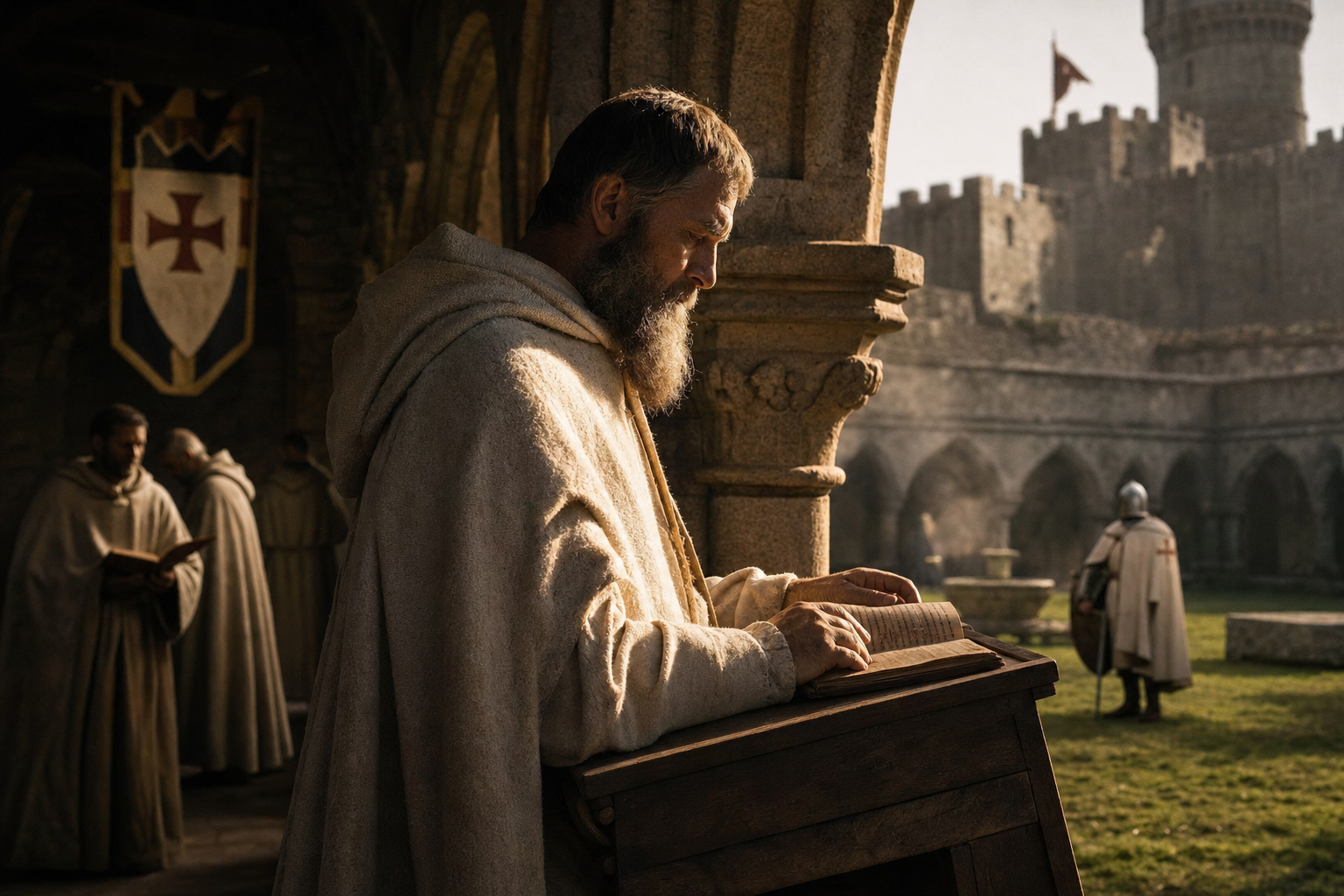
Secrets of the Cloister: A Monk's Daily Life in the Middle Ages
The tolling of the bell, often before dawn, was the immutable orchestrator of life within a medieval monastery. Far removed from the clamor and unpredictable rhythms of the outside world, the monastic community lived by an entirely different clock – one dictated by prayer, labor, and study, all meticulously structured to foster spiritual growth and devotion. To imagine the daily life of a monk in the Middle Ages is to step into a rigorously disciplined existence, a world where personal desires were sublimated to communal purpose, and every hour of the day was consecrated to God. It was a life of profound contrasts: deep solitude amidst a throng of brothers, harsh physical conditions met with unwavering spiritual resolve, and a constant tension between earthly needs and heavenly aspirations. This wasn't a mere retreat; it was an active pursuit of sanctity, a forge where human imperfections were hammered into spiritual virtues. The monastery, in its imposing stone walls and austere interiors, was not merely a building but a microcosm of an ideal society, a sanctuary where the chaos of the temporal world gave way to a divinely ordered existence. Understanding the minutiae of their daily routines, from the earliest matins to the final compline, offers a unique window into the spiritual bedrock of medieval society and the extraordinary commitment demanded by such a sacred calling. It illuminates how these men, through self-denial and unwavering faith, sought to build a bridge between heaven and earth, leaving an indelible mark on the cultural and intellectual landscape of their era.
The Unyielding Rhythm of the Horarium
The most defining characteristic of monastic life was the horarium, the fixed schedule of daily activities that governed every minute of a monk's existence. This wasn't an arbitrary timetable, but a meticulously crafted framework designed to embody the Rule of St. Benedict, which emphasized a balanced life of prayer, work, and study. The day typically began long before sunrise, often around 2 or 3 AM, with the chanting of Matins (also known as Vigils), the longest and most solemn of the daily offices. Monks would rise from their hard beds, often in unheated dormitories, to gather in the cold, dark abbey church. The chanting of psalms, hymns, and readings would fill the vast space, a sacred sound resonating through the pre-dawn stillness. This early hour was considered particularly conducive to spiritual contemplation and communal prayer. Following Matins, there might be a short break for personal prayer or rest, though often the next office, Lauds, would commence around sunrise. Lauds, or Morning Prayer, celebrated the coming of light and provided praise for the new day. This sequence of services, known as the Divine Office or Liturgy of the Hours, continued throughout the day, punctually marking significant periods.
Prime, the first hour, typically around 6 AM, marked the true beginning of the workday. After Prime, the monks would usually attend a chapter meeting, where the abbot or prior would deliver a spiritual reading, discuss monastic business, or even administer correction for infractions of the Rule. This was a crucial time for reinforcing communal unity and spiritual discipline. Terce, Sext, and None followed, spaced at intervals of roughly three hours, often coinciding with specific parts of the day and providing natural breaks for prayer amidst manual labor or study. Each office, though shorter than Matins, maintained a structure of psalms, hymns, and scripture readings, ensuring a continuous spiritual thread throughout the day. The rhythmic recitation of the Divine Office was not merely a duty but a deeply ingrained spiritual practice, shaping the monks' inner lives and their perception of time itself. It was a constant reminder of their vows and their dedication to God, transforming secular time into sacred time. The unwavering adherence to this schedule required immense discipline and dedication, forming the very backbone of monastic identity and ensuring a consistent spiritual foundation for the entire community. The sound of the bells, echoing through the monastery precinct, served as a constant auditory reminder of this ordered existence, calling the monks from their various tasks back to the unifying rhythm of communal worship, reinforcing their shared purpose and unwavering commitment to their vows.
Did you know? In some stricter monastic orders, monks would sleep fully clothed, even wearing their shoes, to be ready to rise immediately for the early morning offices, demonstrating their profound commitment to punctuality and spiritual readiness.
Labora: The Dignity of Manual Work
While prayer formed the spiritual core of monastic life, the injunction "Ora et Labora" (Pray and Work) underscored the equally vital role of manual labor. Monks were not simply cloistered scholars or perpetual supplicants; they were active contributors to the sustenance and maintenance of their communities. This emphasis on work was deeply rooted in the Benedictine Rule, which discouraged idleness as "the enemy of the soul." Manual labor served multiple purposes: it provided for the material needs of the monastery, preventing dependence on external charity; it fostered humility and discouraged pride; and it offered a practical outlet for energy, ensuring physical well-being alongside spiritual development. The types of labor undertaken by monks were incredibly diverse, depending on the monastery's location, size, and resources. Agricultural work was paramount for most rural monasteries. Monks would cultivate fields, tend vineyards and orchards, raise livestock, and manage fisheries. This involved arduous physical labor, from plowing and sowing to harvesting and threshing, requiring significant skill and endurance. The monastic lands were often at the forefront of agricultural innovation, introducing new techniques and crops to regions.
Beyond farming, monks engaged in a plethora of crafts. They might be skilled masons, responsible for constructing and maintaining the very buildings they inhabited, from the grand abbey church to living quarters and outbuildings. Carpentry, blacksmithing, and tanning were also common trades, providing essential tools, furniture, and materials. Brewing beer and making wine were not merely recreational pursuits but often vital for both monastic consumption and as profitable sources of income, given the lack of safe drinking water in many areas and the importance of wine in sacramental rites. Inside the monastery, daily chores were shared by all. Cleaning, cooking, laundry, and the basic maintenance of the communal spaces were undertaken with the same diligence as more specialized tasks. Even the highest-ranking monks, including the abbot, were expected to participate in some form of manual labor, reinforcing the principle of shared responsibility and discouraging any sense of hierarchy among brothers when it came to basic sustenance. This constant engagement with physical work grounded the monks in the material world while simultaneously allowing them to transcend it through their spiritual focus. It was a form of active meditation, transforming mundane tasks into acts of devotion and contributing directly to the well-being of the entire monastic family. The labor was hard, often performed in challenging conditions, but it was imbued with a profound sense of purpose and spiritual dignity, making it an indispensable part of their path to salvation.

Lectio Divina and the Pursuit of Knowledge
While manual labor sustained the body and prayer nourished the soul, lectio divina (divine reading) was the cornerstone of intellectual and spiritual development within the monastery. The Benedictine Rule allocated significant time each day for this practice, emphasizing the importance of engaging deeply with sacred texts. Lectio divina was not merely reading for information but a meditative, contemplative approach to scripture, designed to foster a personal encounter with God's word. It involved four steps: lectio (reading), meditatio (meditation), oratio (prayer), and contemplatio (contemplation). Monks would carefully read a passage of scripture, often aloud, savoring each word. Then, they would meditate on its meaning, reflecting on how it applied to their own lives and spiritual journey. This would lead naturally to prayer, a dialogue with God inspired by the text, culminating in contemplatio, a silent, receptive dwelling in God's presence. This process was deeply personal yet fundamentally communal, as the shared pursuit of understanding scripture enriched the spiritual life of the entire monastery.
Did you know? To prevent theft and ensure books remained within the monastic library, many volumes were chained to the desks, a common practice designed to safeguard these precious and laboriously produced intellectual treasures.
Beyond lectio divina, monasteries were the principal centers of learning and literacy in medieval Europe. The monastic scriptoria were vital workshops where scribes tirelessly copied, illuminated, and preserved ancient texts, both sacred and secular. Without the dedication of these monastic scholars, much of classical literature, philosophy, and early Christian writings would have been lost to history. Monks trained in calligraphy and Latin grammar spent countless hours meticulously transcribing manuscripts, often working in cold, poorly lit conditions. This was a slow, arduous process, each book representing months or even years of painstaking labor. The scriptoria were not just copying houses but also centers of intellectual production, where commentaries were written, chronicles composed, and new theological insights developed. Many monasteries maintained extensive libraries, which were repositories of knowledge and learning. These libraries contained not only theological works but also treatises on medicine, astronomy, history, and law, reflecting the broad intellectual interests of monastic scholars. The education provided within monasteries was often superior to that available elsewhere, attracting young nobles and intellectuals seeking both spiritual development and academic rigor. Monks played a crucial role in the development of medieval universities, often providing early faculty and intellectual frameworks. Their commitment to the preservation and dissemination of knowledge ensured that the flame of learning continued to burn brightly through centuries of societal upheaval, making monasteries indispensable bastions of intellectual endeavor in a fragmented world. This intellectual pursuit was considered an act of devotion, a way of understanding God's creation and revealing His truth, integrating seamlessly with their spiritual discipline.

Silence, Solitude, and Community: A Delicate Balance
The monastic life was a paradox: a communal existence profoundly dedicated to individual spiritual development, often achieved through silence and solitude. The Rule of St. Benedict placed a high value on silence, not as an absence of noise, but as a presence of God. Silence was seen as essential for contemplation, inner peace, and for guarding against idle talk, which could lead to gossip and division. Specific areas within the monastery, such as the cloister, dormitory, and refectory (during meals), were designated as places of strict silence. Monks communicated primarily through gestures or, when necessary, soft whispers, always mindful of not disturbing the contemplative atmosphere. This enforced silence, far from being oppressive, was intended to cultivate an acute awareness of God's presence and to create an environment conducive to deep prayer and introspection. It fostered a sense of interiority, allowing monks to confront their thoughts and passions, and to listen more attentively to the "still, small voice" of God.
Yet, this commitment to silence and individual spiritual growth was balanced by a strong sense of community, known as fraternitas. Monks lived, worked, prayed, and ate together. Their lives were interwoven, and the well-being of the individual was intricately linked to the well-being of the whole. The abbot, as the spiritual father of the community, held a position of considerable authority, guiding and nurturing his monks with both firmness and compassion. He was responsible for the spiritual and temporal welfare of the monastery, acting as an intermediary between God and his flock. The chapter meetings, mentioned earlier, were a crucial forum for communal decision-making and for addressing issues that affected the brothers. Meals in the refectory, though often taken in silence while a monk read aloud from scripture or a spiritual text, were communal events that fostered a sense of shared life. Recreation, though limited, might involve communal walks within the monastery grounds or structured discussions, always supervised and purposeful. The monastery was a spiritual family, and while individual monks might grapple with their own spiritual challenges, they did so within the supportive framework of their brothers. Illness, old age, and spiritual crises were met with communal care and compassion, reinforcing the bonds of fraternitas. This delicate balance between the rigor of silence and solitude, on one hand, and the warmth of communal support, on the other, was essential for the psychological and spiritual health of the monastic community, creating an environment where individual growth could flourish within a supportive and disciplined brotherhood.
Did you know? During the Middle Ages, many monastic refectories featured a special elevated pulpit from which a monk would read aloud during meals, ensuring that even mealtimes were utilized for spiritual instruction and reflection.
Ascetic Practices and a Life of Renunciation
Central to the monastic ideal was the practice of ascetism, a deliberate renunciation of worldly pleasures and comforts in pursuit of spiritual purity and union with God. This was not a punitive exercise but a chosen path to discipline the body and mind, freeing them from distractions and sensuality. Monks embraced poverty, chastity, and obedience – the three fundamental vows that defined their commitment. Poverty meant foregoing personal possessions and living collectively, sharing all resources. Chastity demanded celibacy, a complete abstinence from sexual relations, seen as a way to dedicate one's entire being to God. Obedience required absolute submission to the abbot or prior, and to the Rule of St. Benedict, embodying humility and a yielding of personal will to the communal good and divine authority. These vows were not taken lightly; they represented a profound commitment to a radically different way of life.
Beyond these core vows, monks often engaged in various forms of self-denial. Their diets were typically simple and austere, often vegetarian, eschewing meat and rich foods. Fasting was a regular practice, particularly during observed liturgical seasons like Lent and Advent, involving reduced food intake or abstention from certain types of food. Sleep was often minimal and of poor quality, with monks sleeping on straw mattresses or hard boards, sometimes even on the floor, in unheated dormitories. Clothing was plain and functional, typically a habit made of coarse wool, designed for practicality rather than comfort or display. Physical discomfort was often embraced as a means of mortification of the flesh, aligning the monk with the suffering of Christ and purifying the soul. However, it's important to note that the Benedictine Rule, while strict, also emphasized moderation and balance, guarding against excessive or harmful forms of asceticism. The goal was spiritual growth, not self-inflicted harm. The renunciation of the world extended to the avoidance of gossip, idle chatter, and unnecessary interaction with outsiders, further reinforcing the monastery's self-contained spiritual universe. These ascetic practices, while challenging, were seen as transformative, enabling monks to shed earthly attachments and cultivate virtues such as patience, humility, and unwavering faith. They were a continuous process of self-improvement, a daily effort to conform their lives ever more closely to the example of Christ, demonstrating an extraordinary dedication to their spiritual calling and a profound belief in the redemptive power of disciplined living. The willingness to embrace such a demanding existence underscored the depth of their religious conviction and their unwavering pursuit of sanctity.

The Monastery as a Beacon of Civilization
In an age often characterized by political instability, economic hardship, and widespread illiteracy, the medieval monastery stood as a robust and enduring beacon of civilization. Beyond their primary spiritual function, monasteries played an indispensable practical role in society. They were centers of hospitality, offering shelter, food, and medical care to travelers, pilgrims, and the poor. The monastic infirmary, staffed by monks often possessing considerable medical knowledge, served as a rudimentary hospital for both the community and outsiders. Many monasteries maintained guesthouses, providing a safe haven for weary wayfarers in a world where travel was arduous and dangerous. This charitable work was a direct manifestation of Christian compassion and the monastic vow of service.
Did you know? Some stricter orders, such as the Cistercians, even prohibited monks from speaking during meals altogether, relying solely on a complex system of hand signals to communicate basic needs, emphasizing the extreme commitment to silence.
Furthermore, monasteries were economic powerhouses. Their vast landholdings, managed through disciplined agricultural practices, often made them significant producers of food, wine, and other goods. They contributed to local economies through trade and employment, offering stability in often turbulent regions. As landlords, they frequently served as administrative centers for the surrounding populace, administering justice and collecting rents. Architecturally, the monasteries were often the most impressive structures in their regions, monumental testaments to faith and engineering prowess. The construction of grand abbey churches, cloisters, and other buildings required immense resources and skilled labor, often spanning centuries. These complexes were not only places of worship but also symbols of cultural achievement and models of organized community. Moreover, monasteries played a critical role in social welfare. They cared for orphans, provided rudimentary education for local children, and often dispensed charity to the needy in their local parishes. In times of famine or epidemic, the resources of the monastery often provided a vital lifeline for the surrounding population. The continuous liturgical cycle and the moral authority of the monastic order provided a consistent spiritual anchor for an often-superstitious and uncertain populace. They were custodians of knowledge, culture, and social order, preserving the Latin language, Roman law, and classical learning. Their libraries and scriptoria, as discussed, functioned as vital conduits for the transmission of ancient knowledge. Thus, the daily life of monks, with its rigorous demands and unwavering discipline, extended far beyond the cloister walls, profoundly influencing the spiritual, intellectual, economic, and social fabric of medieval Europe. The monk, in his seemingly isolated existence, was in fact deeply interconnected with and indispensable to the wider world, a silent guardian of learning, prayer, and charity that shaped the trajectory of Western civilization for centuries.
The daily life of a medieval monk was a profound testament to human devotion, discipline, and communal purpose. It was a life lived by the bell, structured by prayer, invigorated by labor, and deepened by study, all within the sacred confines of the monastery walls. Far from being a retreat from the world, it was an active engagement with the divine, a deliberate choice to live a life consecrated entirely to God. From the pre-dawn chants of Matins to the quiet introspection of Compline, every hour was imbued with spiritual significance, transforming the mundane into the sacred. The monastic values of poverty, chastity, and obedience, coupled with the rigorous adherence to the horarium and the diligent pursuit of lectio divina and manual labor, forged individuals of immense spiritual fortitude and intellectual prowess. These men, through their silent dedication and unwavering faith, not only sought personal salvation but also became the unrecognized architects of medieval European civilization. They preserved ancient knowledge, developed new technologies, provided essential social services, and offered a spiritual anchor in a turbulent age. The monastery, therefore, was more than just a place of worship; it was a self-sufficient community, a library, a school, a hospital, and an agricultural powerhouse, all rolled into one. The monk, in his simple habit, was a scholar, a farmer, a craftsman, and above all, a devout servant of God. Their legacy, etched in stone and parchment, continues to resonate today, reminding us of the enduring power of faith, discipline, and the pursuit of a higher calling. The echoes of their chants and the rustle of their parchments still seem to whisper from the ancient cloisters, inviting us to contemplate a life where every breath was a prayer, and every action a step closer to the divine. Their story is a powerful reminder of how a deeply structured and spiritually focused existence could shape not only individual souls but also the very course of history. Their commitment laid foundations that continue to influence spiritual practices and intellectual traditions across the globe, years after the last bell of their daily horarium faded into silence.
Word Count: 3000
Did you know? Some monasteries, particularly those situated along major pilgrimage routes, became famous for their hospitality and even offered specialized guesthouse services, reflecting their crucial role in supporting medieval travel and communication.
How we verify this article
By the History Unlocked editorial team
This text is built on historical facts stored in our database and drafted with AI assistance. No signed human review is recorded for this article. Report any inaccuracy: we correct it and update the modified date.
Updated on
AI-assisted drafting.
Read our editorial standardsEnjoyed this? Discover more articles in the category Middle Ages