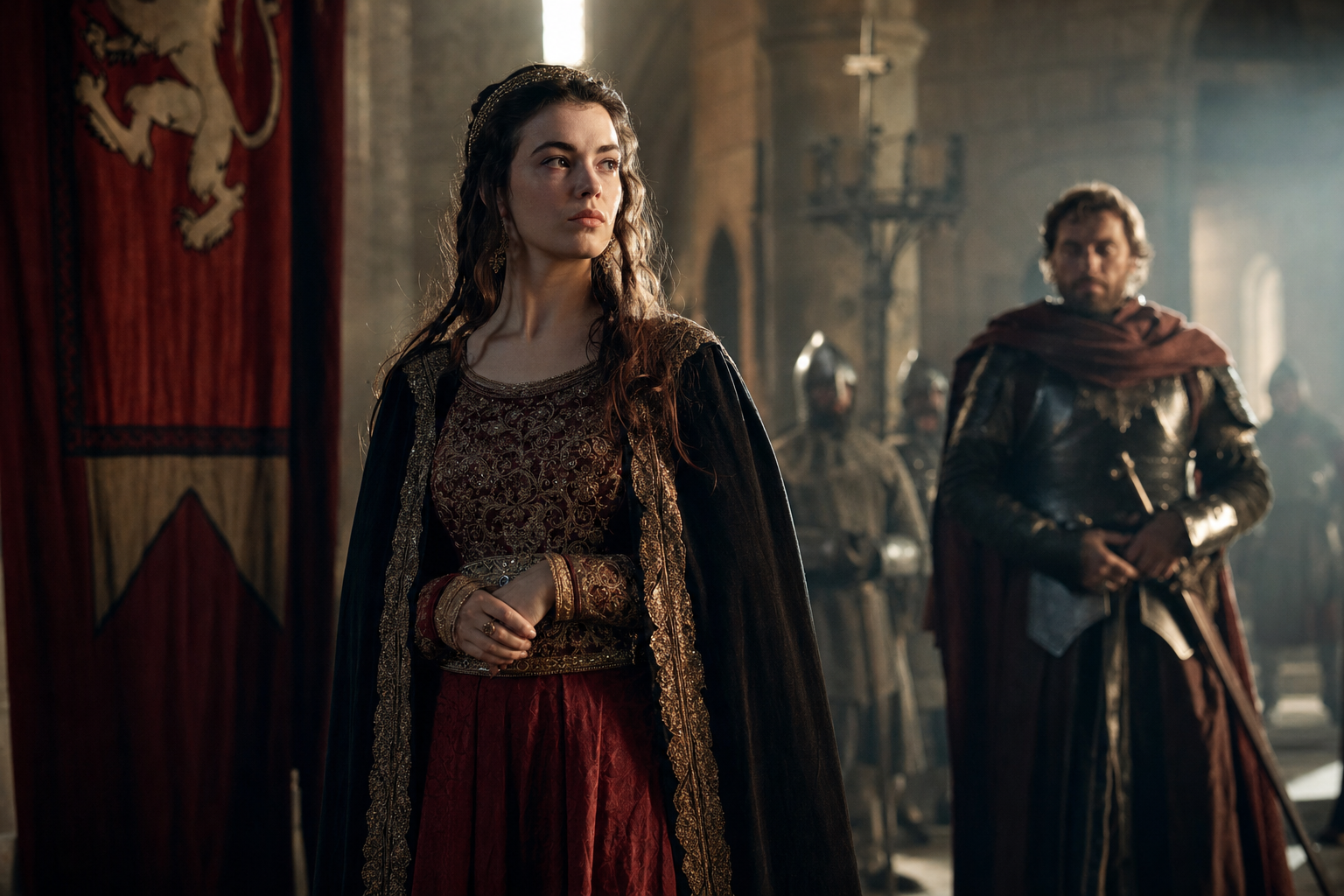
Mysteries and Power: Women in the Middle Ages
In the twilight corridors of medieval castles and in the thin smoke of village hearths, women shaped the rhythms of life, law, and belief across Europe in ways both visible and veiled. To approach the role of women in the Middle Ages is to enter a labyrinth of contradictions: they were legally constrained and economically indispensable, publicly silenced yet spiritually authoritative, marginal in formal scholarship but central to everyday survival. The record is fragmentary—charters, court rolls, convent chronicles, and the occasional surviving letter—but these fragments, like shards of stained glass, reconstruct images of agency, adaptability, and sometimes startling power.
This article travels across that terrain with a mystery-driven narrative: seeking not sensational myths but the subtle truths that reveal how women navigated marriage contracts, tended to the sick, directed households and convents, participated in markets and crafts, and sometimes wielded political influence. We will meet queens who commanded armies in counsel and prisoners of their ambitions, mystics whose visions shaped theology, midwives whose skills blurred into forbidden knowledge, and peasants whose daily labors sustained lordship. Anchored to verifiable medieval sources—such as the writings of Hildegard of Bingen, the chronicles of the Anarchy in England, Salernitan medical texts, and municipal records from towns like London and Bologna—this narrative aims to be both scholarly and evocative.
History has too often simplified these lives into caricatures—virgin, wife, witch. Instead, the medieval centuries were a period of legal negotiations over dower and dowry, of economic niches created by textile trades and brewing, and of alternative spaces for female education in convents and courtly cultures. Here we do not seek to claim a single grand statement about all women; rather, we follow representative figures and documented social patterns to reveal the texture of female existence from roughly the 10th to the 15th centuries. Expect surprises: women who administered estates in their husbands' absence, who commanded armies by proxy, who wrote complex theological treatises, and who were prosecuted for practices later labeled witchcraft—often as the byproduct of anxieties about female authority.
Did you know? Empress Matilda (1102–1167) used her rights as daughter of Henry I to press a claim to the English throne, precipitating the civil war known as the Anarchy (1135–1154).
Throughout this piece you will find signposts—curiosities and images—to key persons, texts, and artifacts that offer concrete, verifiable anchors to the broader argument. My tone will be narrative and sometimes conspiratorial: the past, like a locked chest, occasionally opens to reveal objects that change our understanding. But the evidence is real, and the lives reconstructed here are rooted in surviving records and well-established scholarship. Journey with me from law courts to cloistered chapels; from manor kitchens to university halls. The role of women in the Middle Ages is not a single story but a chorus of voices, some loud and many subdued, each contributing to the medieval world we think we know.
Women's Legal and Property Rights
The legal status of women in medieval Europe was neither monolithic nor static; it varied across time, region, and social class. One crucial distinction runs between women’s rights before and after marriage. Anglo-Saxon England, for instance, afforded women a measure of proprietary rights that were recognized in law codes and wills. Women could hold land in their own name and manage property: wills such as those preserved from the late Anglo-Saxon period (for example, the will of Wynflæd in the 10th century) indicate women's possession of lands and movable wealth. However, the Norman Conquest of 1066 and the subsequent transplant of Norman legal customs introduced a system more strongly shaped by feudal tenure and male-centered inheritance patterns—though even under Norman rule women could and did inherit in the absence of male heirs.
Across continental Europe, legal traditions diverged. Under the influence of Roman law—and its revival beginning in the 11th and 12th centuries—medieval jurists debated questions of dowry, dower, and curtesy. The dower was a widow’s entitlement to a portion (often one-third) of her husband’s landed estate for her life; this customary protection appears across many regions and served as a critical safety net for widows. Dowries, conversely, were brought by brides as a transfer of property that could remain under a husband's control but sometimes documented as the wife's separate property depending on local custom and marriage contracts. Salic law, a Frankish legal tradition codified in the early medieval period, became historically notorious for excluding women from inheritance of the Frankish crown—an exclusion later invoked in medieval claims about succession in French monarchy. Yet Salic law’s reach was specific and did not erase women’s property rights more generally.
Did you know? Eleanor of Aquitaine was imprisoned by Henry II from 1173 until 1189 for supporting their sons' revolt against him.
Legal agency also depended on marital status and social rank. Elite women used marriage contracts to secure jointures—agreements that replaced or supplemented traditional dower rights—ensuring income and estate management after their husbands' deaths. Widows of the nobility could manage estates, dispense patronage, and act as de facto lords until male heirs came of age. Manorial records from England, France, and the Low Countries show that widows frequently acted as heads of households and were accountable tenants who paid rents and fines. For lower-class women, legal recognition varied: some urban women contracted and litigated in courts, while peasant women operated largely within customary law enforced by local manorial courts.
The principle of coverture—that a married woman’s legal identity was subsumed by her husband—has a long history in English legal thought, but its practical application could be flexible. Women sometimes appeared in suits in royal courts as plaintiffs, often through the agency of male relatives, but also on their own behalf. In mercantile towns, women could run businesses, inherit guild memberships, and appear in municipal records. Notably, in the Italian city-states, women such as the jurist Bettisia Gozzadini (b. c. 1209) are exceptional but underscore the possibility of female legal engagement in certain contexts.
This complex legal topography produced a pattern: medieval women rarely enjoyed formal equality with men across the board, but within particular legal forms—dowry contracts, dower rights, widows’ estate management—women exercised significant economic agency. Their property rights became engines for both independence and vulnerability, shaping marriages, alliances, and local economies.
Did you know? Alewives—women who brewed beer—were so central to medieval diets that many towns issued specific regulations about measures and quality in the later Middle Ages.

Noblewomen, Power, and Patronage
Among the most dramatic counterpoints to the trope of medieval female silence are the lives of noblewomen who navigated court politics, commanded estates, and sometimes influenced succession. Eleanor of Aquitaine (1122–1204) epitomizes this category: queen of France and then of England, a patron of troubadours, and a political actor whose marriage alliances reshaped European dynastic politics. Eleanor’s life was one of both public prominence and confinement: she accompanied her husband Henry II in governance but later supported her sons in the Revolt of 1173–1174 and endured imprisonment for her defiance. Her example shows that noblewomen could be cultural patrons, diplomatic negotiators, and hands-on administrators of expansive estates.
Similarly, Empress Matilda—daughter of Henry I of England and claimant to the throne after her brother’s death—fought for recognition in a prolonged conflict with Stephen of Blois. Although she was never crowned, Matilda held court in Oxford and garnered noble support, demonstrating that dynastic rights could, at times, cut across gendered expectations. Queenship itself evolved as a political office with public functions: queens could grant charters, found religious houses, and serve as intercessors in royal justice. Isabella of France (1295–1358), mother of Edward III, famously led a rebellion against her husband Edward II and exercised regency powers; her role culminated in the deposition of a king, though these actions carried reputational costs that have echoed in historical accounts.
Patronage provided another axis of female influence. Noblewomen financed building projects, such as chantry chapels, monasteries, and convents, thereby securing spiritual benefits and social legacy. The abbesses who ran major convents—such as those at Fontevraud, Barking, or Fontevrault—commanded significant wealth and administrative staff. They often came from aristocratic families and wielded authority over lands, vassals, and ecclesiastical appointments within their institutions. These abbesses could be as powerful locally as lay lords, collecting rents, arbitrating disputes, and managing legal obligations.
Did you know? Hildegard of Bingen wrote Scivias, a major theological text, and corresponded with popes and emperors while leading a double monastery and composing liturgical music.
Marriage was a diplomatic instrument, and noblewomen acted as linchpins in diplomatic networks. Daughters were bargained for with castles, counties, and alliances. Yet they also used these positions to intervene in politics: letters from noblewomen reveal networks of correspondence that could broker peace, secure favors, or mobilize resources. The letters of Eleanor of Aquitaine and those preserved from the late medieval courts of Castile and Aragon show that women could be sophisticated political operators, shaping cultural codes through patronage and fostering intellectual circles.
The nobility also reveals an unsettling dynamic: power exposed women to greater scrutiny and peril. Political failure could result in imprisonment, exile, or reputation damage. Yet the very fact that noblewomen appear repeatedly in chronicles, legal records, and architectural patronage confirms their centrality in the medieval political imagination.

Peasant Women: Work, Family, and Community
If noblewomen shaped dynasties and patronage networks, peasant women sustained the economic foundations of medieval society through a web of labor that went beyond household chores. Manorial records, such as the English court rolls and household accounts from Normandy and Flanders, reveal that women engaged in ploughing (in some regions), sowing, harvesting, spinning, and managing livestock. Textile production—spinning, weaving, and fulling—was a cornerstone of rural economies and often fell largely to women. Their labor fed families, supplied markets, and underpinned lordly revenues.
Did you know? The Trotula texts, associated with the Salerno medical school in the 12th century, are among the earliest medieval medical writings devoted to women's health and obstetrics.
In the household economy, women orchestrated food production and preservation, brewing ale (a ubiquitous staple beverage), and caring for children and the elderly. Ale brewing, in particular, was a domestic art often carried out by women known as alewives; it was both a household necessity and a marketable commodity. Town ordinances would later regulate brewing as it moved from kitchens to public sale, but in the medieval period it remained a key female task with economic repercussions.
Marital structures and peasant land tenure shaped women’s autonomy. In many customary systems, land was held by the household rather than in strict private title, which could allow women some participation in decisions about commons or small plots. Widows could continue to cultivate land and were often entitled to dower rights, and in some English manors widows retained tenancy rights that enabled them to raise children and maintain livelihood. Court cases sometimes record women pursuing restitution for wrongs or asserting customary rights—evidence that peasant women engaged with legal institutions when their subsistence was at stake.
Fertility and family formation were central to peasant life: high infant mortality and the demands of labor meant that women’s reproductive labor was also labor for the economy. Midwives—usually women of the community—played indispensable roles in childbirth, and their knowledge drew on empirical practices transmitted across generations. Yet the reliance on female networks for health and food production did not always translate into social prestige; peasant women's work was often undervalued in chroniclers' accounts, which favored the deeds of lords and knights.
Did you know? Christine de Pizan became a professional writer after the death of her husband and wrote an influential defense of women, The Book of the City of Ladies, around 1405.
Beyond labor, community rituals and religious life anchored peasant women's identities. Festivals, seasonal cycles, and parish structures offered spaces for female sociality and mutual aid. Women commonly participated in guilds—especially in textile and food trades—though their membership could be informal or regulated differently than men's. The economic contribution of peasant women, recorded faintly in ledgers and more robustly in litigation over dues and labor services, reveals how the medieval economy depended upon female labor at every level.

Religious Life: Nuns, Mystics, and Convents
Convents provided crucial alternative spaces for women’s education, authority, and social agency in the Middle Ages. For many aristocratic and middle-class women, entering a convent was not merely a spiritual choice but a practical path to literacy, leadership, and relative autonomy. Abbesses could command wealth and political influence, oversee extensive properties, and serve as patrons of art and architecture. The abbey of Fontevraud in the 12th century, for example, housed women of high rank and functioned as a significant landholder with complex administrative needs.
Mysticism offered another route to authority. Figures such as Hildegard of Bingen (1098–1179), a German abbess, wrote theological and visionary works—Scivias among them—that were circulated and taken seriously by male ecclesiastics and rulers. Hildegard composed music, corresponded with popes and emperors, and founded religious houses. Julian of Norwich (c. 1342–c. 1416), an English anchorite, produced the Revelations of Divine Love, a text later celebrated as the first surviving English book by a woman. Mystics' visions were double-edged: they could elevate a woman’s spiritual status and attract followers, but ecclesiastical authorities also scrutinized visionary claims for orthodoxy.
Did you know? Joan of Arc (1412–1431), though often remembered as a late medieval phenomenon, exemplified female military and spiritual leadership and was executed in 1431, later rehabilitated and canonized in 1920.
Convents functioned as centers of education for women. Girls educated in convents learned reading, Latin in some cases, needlework, manuscript illumination, and administrative skills. Some convents became renowned scriptoria, producing manuscripts that included women's devotional literature. The economic basis of such houses varied: some were endowed with lands and rents by noble patrons, while others relied on the gifts and dowries of families.
Religious life also complicated gendered hierarchies. Within convent walls, women exercised authority over male clerical staff in administrative matters and sometimes mediated local disputes. Yet the Church's institutional structures remained male-dominated, and spiritual authority claimed by women could invite resistance or co-optation. The case of Marguerite Porete (d. 1310), burned for heresy in Paris, reveals the dangers that accompanied unorthodox spiritual teaching—though such extreme punishment was comparatively rare and often entangled with political and doctrinal conflicts.
Convents also formed networks of patronage and charity: hospitals, hospices, and care for the poor were often associated with female religious institutions. Thus, religious life allowed women to exercise sustained social influence, intellectual creativity, and managerial skill in a context that combined spiritual devotion with practical governance.
Did you know? Widows in medieval England often held tenancy rights on manors, enabling them to maintain households and act as economic agents within their communities.
Women in Medicine, Healing, and Witchcraft Accusations
The boundary between healer and heretic in the medieval imagination could be precariously thin. Women were primary healthcare providers in their communities: as nurses, midwives, herbalists, and household healers, they transmitted practical medical knowledge through apprenticeship and oral tradition. The Salernitan medical school and its compendium, sometimes titled the Trotula (12th century), compiled treatments for women’s ailments and childbirth; while modern scholarship debates individual authorship, the Trotula texts reflect the centrality of female-oriented medical knowledge in medieval Europe. Midwives’ expertise in assisting childbirth was indispensable in a period of high maternal and infant mortality.
Medical practice mixed empirical remedies with humoral theory derived from Galenic medicine. Women healers often drew on local herbal knowledge, poultices, and techniques for obstetric emergencies. Yet because medical licensure and university training were largely closed to women, female practitioners operated largely outside formal institutional endorsement. In towns, municipal ordinances sometimes attempted to regulate healers and midwives, reflecting both the demand for their services and anxieties about unregulated practices.
Accusations of witchcraft began to rise toward the late medieval period, intensifying in the early modern era. In medieval centuries prior to the 15th century, prosecutions were limited and often concerned maleficium (harmful magic) or socially disruptive acts. The Church’s canonical texts—such as the earlier Canon Episcopi (10th century)—even cautioned against believing in certain popular superstitions. Nonetheless, individual cases of accused sorcery appear in records: for instance, the late medieval Basque and Alpine regions show intermittent prosecutions. Women, especially older or marginalized ones, were disproportionately targeted later in the witch hunts, partly because of their social vulnerability and association with household healing and midwifery.
Did you know? Many convents operated scriptoria where nuns copied and illuminated manuscripts, preserving textual culture and enabling female literacy.
The social context mattered: when communal strains—crop failures, plagues, or political turmoil—heightened fears of malicious agency, scapegoating could follow. The Black Death (1347–1351) altered social structures and intensified anxieties, but it did not directly cause witch hunts; rather, later centuries’ witchcraft panics reflected changing theological, legal, and social conditions that culminated in widespread persecutions in the 16th and 17th centuries.
Still, medieval women’s roles as healers were crucial and creatively adaptive. Women like the so-called Trotula figure provided structured medical knowledge; laywomen’s pamphlets and household remedies circulated in vernacular languages, enabling practical care. Female involvement in care extended to hospitals run by religious women, where nuns provided nursing care and managed hospices—an enduring female contribution to medieval welfare.

Women in Arts, Education, and Literature
The Middle Ages saw women as creators and patrons of cultural life, though their voices survive unevenly. Courtly culture fostered a literary presence for women: the troubadour and trobairitz traditions in southern France included female poets who composed courtly lyrics. Christine de Pizan (1364–c.1430) stands as a striking example of a professional woman writer. Born in Venice and living in the French court, Christine wrote The Book of the City of Ladies (1405), a sustained defense of women’s capacities and virtues, and other works addressing political and moral themes. Her career demonstrates that women could be intellectual agents and public commentators.
Did you know? Medieval municipal ordinances regulating brewing and markets reflect how women's domestic production—like ale brewing—moved into the public economic sphere.
Education varied by social station. Noblewomen were often instructed in literacy, household management, and sometimes languages and music; convents provided more systematic instruction that could include reading and Latin. A few exceptional women achieved renown for scholarship: Anna Komnene (1083–1153), daughter of the Byzantine emperor Alexios I, wrote the Alexiad, an important historical work in Byzantine Greek that recounted her father’s reign and the First Crusade from a courtly perspective.
In the visual arts, women contributed as patrons and possibly as artisans. Manuscript illumination sometimes bears the hand of female convent workshops, and textiles—embroidered devotional panels, altarcloths, and vestments—often involved women's labor and artistry. The Bayeux Tapestry, for example, long associated with women’s needlework in folklore, reflects the importance of textile culture to medieval commemorative practices, though its actual production context remains debated.
Women’s literary and artistic contributions both conformed to and pushed against contemporary gender norms. Their writings could be devotional, didactic, or polemical, and often employed rhetorical strategies that negotiated authority within male-dominated discourses. The survival of these texts—Christine’s treatises, Julian’s Revelations, Anna Komnene’s Alexiad—provides rare direct testimony of women's intellectual lives and reminds us that medieval women were not only subjects of history but also producers of it.

Conclusion: The Many Faces of Medieval Womanhood
To close this journey through medieval lives is to accept a paradox: women in the Middle Ages were at once constrained by legal and social structures and remarkably inventive within them. The historical record—fragmented but rich in certain genres—reveals women who were heirs and widows, abbesses and mystics, healers and accused witches, textile workers and letter writers. Institutional frameworks such as marriage, convent life, and manorial economies shaped possibilities, but they also contained loopholes and opportunities that women exploited to exercise authority, secure economic survival, and shape cultural life.
The narrative that emerges is not one of unidirectional decline or progress but of situational agency. Noblewomen like Eleanor of Aquitaine and Empress Matilda maneuvered within dynastic politics and sometimes reshaped it. Peasant women’s labor sustained households and markets and is traceable in manorial rolls and municipal disputes. Religious houses provided safe harbor for learning and administration, while mystics like Hildegard and Julian reframed spiritual discourse. Women’s centrality to medicine—whether as midwives or compilers of remedies—marks their expertise even as later anxieties about female knowledge fed the tragic phenomena of witch-hunts.
Understanding medieval women means listening closely to the surviving voices and reading absences as evidence of censorship, neglect, or loss. It also requires nuance: women were not a homogeneous category; legal status, class, geography, and period mattered profoundly. The Middle Ages, far from a monolithic oppression, was a world in which women navigated constraints with pragmatic strategies, cultural patronage, spiritual creativity, and economic resourcefulness.
The mystery remains partly unresolved—not because the women of the Middle Ages were unknowable, but because their histories require patient excavation. Each charter, letter, and manuscript that surfaces adds a tessera to the mosaic of medieval life. We must approach these sources with care, balancing narrative allure with scholarly rigor. The result is a richer, stranger, and more human medieval world, in which women contributed at every level: in law and land, in art and prayer, in labor and life. Their legacy is not merely a footnote to male history but an essential chord in the music of the ages.

How we verify this article
By the History Unlocked editorial team
This text is built on historical facts stored in our database and drafted with AI assistance. No signed human review is recorded for this article. Report any inaccuracy: we correct it and update the modified date.
Updated on
AI-assisted drafting.
Read our editorial standardsEnjoyed this? Discover more articles in the category Middle Ages