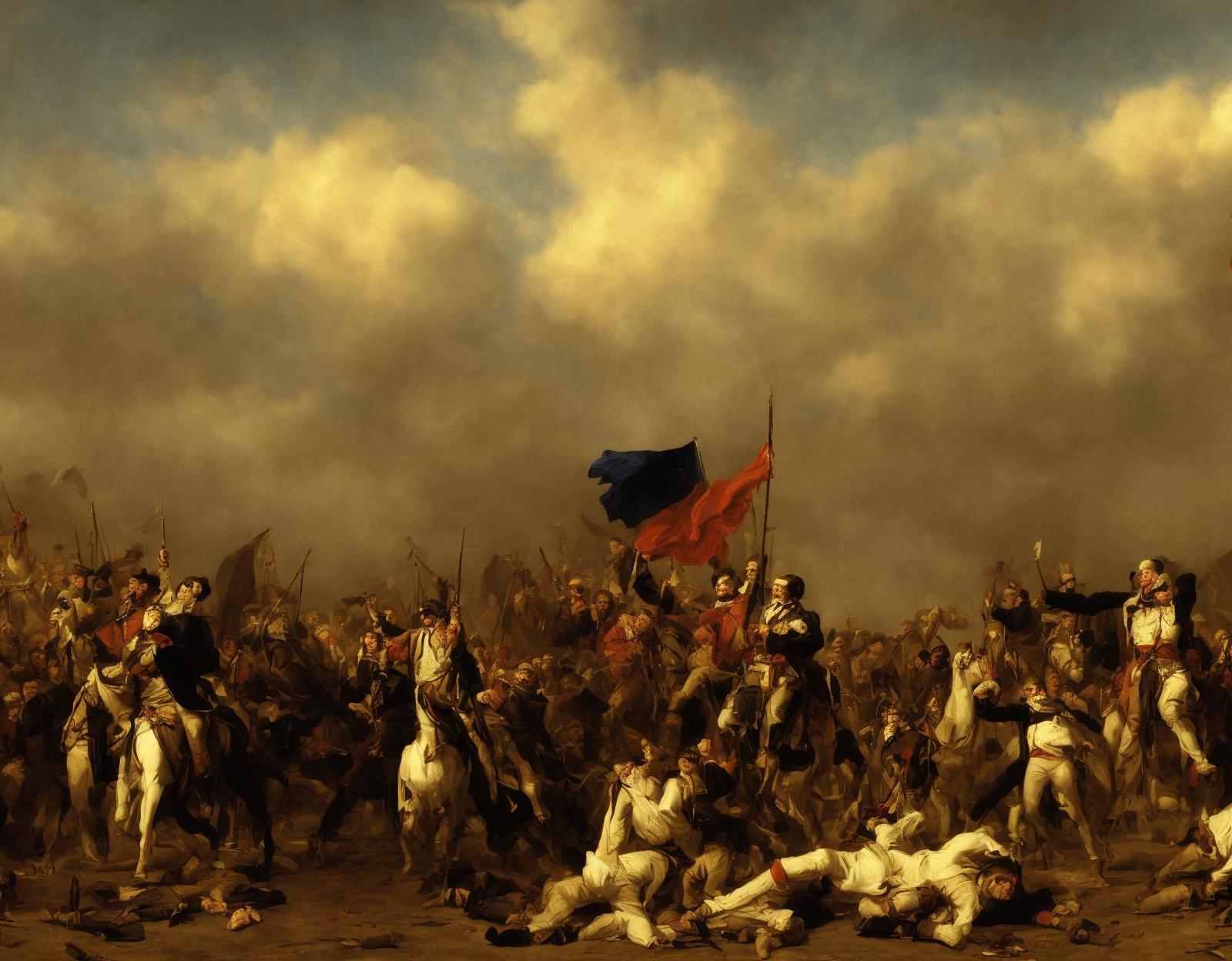
Robespierre: Architect of Terror or Revolutionary Idealist?
In the shadowed streets of late eighteenth-century Paris, the figure of Maximilien Robespierre cut a paradoxical silhouette: austere, passionate, and merciless in reputation, yet devoted to an almost ascetic vision of civic virtue and republican morality. His name has become shorthand for revolutionary zeal and judicial bloodletting, but to reduce Robespierre to a mere executioner of the guillotine is to misread a man shaped by theology, Enlightenment philosophy, and the volcanic turmoil of his era. This introduction invites the reader into a close, narrative-driven examination of a life at the fulcrum of one of history's great upheavals—a life that fused ideals and instruments in a way that still unsettles historians and readers alike.
Born in Arras in 1758, Robespierre rose from provincial obscurity to the pinnacle of revolutionary power. He was a brilliant lawyer, a persuasive orator in the National Convention, and a leading voice among the Jacobins. Yet his ascent was not merely political; it was intellectual and moral. He believed, with an almost theological fervor, that the Revolution was a purifying fire that had to be conserved from both internal corruption and external enemies. In his mind, the integrity of the republic depended on a vigilant and sometimes ruthless defense against counter-revolution.
This article will trace Robespierre’s journey through the Revolution: his early influences, the architecture of his political strategies, his role in the Committee of Public Safety, the logic and mechanics of the Reign of Terror, the complex sequence of events that led to his arrest and execution in Thermidor, and the long, contested legacy that followed. We will read primary actions and speeches against the grain of rumor and propaganda, separating contemporaneous mythmaking from verifiable acts. The tone will be narrative and slightly mysterious, seeking not to exonerate nor to demonize but to present Robespierre as a human actor whose virtues and faults were inseparable.
Did you know? Robespierre reportedly kept a small, plain desk and refused expensive clothing, living a notably modest lifestyle even while wielding immense power.
Throughout, I will intersperse precise curiosities—small, verifiable facts that illuminate lesser-known corners of Robespierre’s life—and carefully selected image descriptors to orient the modern reader with visual anchors. The aim is to render a portrait of Robespierre that is both richly detailed and analytical: a portrait that helps us understand why, after two centuries, debates over his intentions and consequences remain unsettled.
Early Life and Intellectual Formation
Maximilien François Marie Isidore de Robespierre’s origins were modest when compared to the aristocracy that still dominated French political life. Born in May 1758, he was the oldest surviving child of Louis Robespierre, a magistrate, and Jacqueline Marguerite Carraut, who brought a pious and cultured household to his upbringing. The early deaths of family members, including the loss of his mother when he was young, left Robespierre with an intensity of purpose and a tendency toward introspection. He excelled academically and won a scholarship to the Lycée Louis-le-Grand in Paris, an honor that set him on a path to the legal profession.
Robespierre’s intellectual formation cannot be understood without acknowledging the twin spiritual and philosophical influences that shaped him. He was deeply influenced by Jansenism, a conservative Catholic movement emphasizing predestination, moral rigor, and an austere piety. Jansenist communities prized virtue as the soul’s primary concern and viewed worldly pleasures with suspicion. This religious backdrop explained much of Robespierre’s ascetic public persona and his belief that moral reform was essential to political stability.
Did you know? Robespierre abstained from drinking alcohol and earned the nickname “The Incorruptible” due to his austere habits and strict personal morality.
At the same time, Robespierre imbibed the Enlightenment, particularly the writings of Jean-Jacques Rousseau. Rousseau’s emphasis on the general will, civic equality, and the social contract resonated with Robespierre’s developing republicanism. He read Rousseau not as a secular humanist rejecting God, but as an author whose moral-political prescriptions could be aligned with a devout conception of virtue. In Robespierre’s synthesis, the general will required moral citizens; politics was not merely the negotiation of interests but the cultivation of a virtuous republic.
As a young lawyer in Arras, Robespierre earned a reputation for defending the poor and taking on cases with an eye to justice rather than profit. He entered politics initially through provincial assemblies and then secured election to the Estates-General of 1789. Once in the National Assembly and later the National Convention, his eloquence and insistence on principle distinguished him. He opposed death sentences in some trials and championed universal male suffrage, yet he also framed political opposition as a moral threat. That apparent contradiction—liberty for the worthy, coercion for the corrupt—would prove central to his political logic.
Robespierre’s early speeches reveal an uncompromising view of politics as moral struggle. While contemporaries often painted him as cold or fanatical, his friends and allies saw in him a consistency of purpose. To understand his rise, one must appreciate how moral conviction could translate into political absolutism: when the republic’s survival seemed at stake, so too did the toleration for dissent. That dynamic explains much of the traction he gained among those fearful of counter-revolutionary plots, especially as war and famine compounded domestic crises.
Did you know? The levée en masse of 1793, endorsed by the Committee, mobilized hundreds of thousands of men and is seen as a key factor in the survival of the French Republic.

The Path to Power: Political Strategy and Jacobin Leadership
Robespierre’s rise within the revolutionary hierarchy was neither inevitable nor purely the result of rhetorical skill; it depended on strategic positioning, alliances, and an instinct for leveraging crises. By 1792, as France found itself at war with Austria and Prussia and as internal disturbances mounted, Robespierre had become a prominent voice for a vigorous republic. He was an influential member of the Cordeliers and then the Jacobin Club, the latter of which became the central instrument for revolutionary politics. The Jacobins offered a network of committed activists, newspapers, and local sections that amplified national speeches into street-level pressure.
Robespierre’s strategy combined moral denunciation with institutional tactics. He advocated for law and central authority but insisted that the head of any republican government must be guided by virtue. This rhetorical fusion appealed to a wide range of revolutionaries: radicals eager for profound social change and moderates who feared the return of monarchy. He used the Jacobin club as a platform to mobilize opinion, supporting the purge of moderates and the marginalization of Girondins who were perceived as too timid or conciliatory toward the monarchy.
During the insurrection of August 10, 1792, which led to the fall of the monarchy, Robespierre’s cautious reputation contrasted with more violently outspoken figures. He criticized conspiracies and factionalism but insisted on the prosecution of traitors. His speeches in the National Convention often emphasized moral clarity—justice for enemies of the republic—but he also argued for legal measures that concentrated executive power in times of emergency. This tension culminated in the creation of powerful revolutionary institutions, notably the Committee of Public Safety and the Committee of General Security, which were intended to coordinate defense and policing.
Did you know? The Law of 22 Prairial, passed in June 1794, limited defendants’ rights and increased the speed of executions, contributing directly to the Terror’s deadliest months.
Robespierre became increasingly identified with the Montagnards—the mountain-seated deputies who advocated for radical measures and direct democracy. He articulated a vision in which the Revolution needed guardians: not tyrants, but vigilant administrators capable of defending the general will. His direct attacks on the Girondins, combined with his insistence on the revolutionary tribunal and extraordinary measures, widened the gulf between him and moderate republicans. But he was not simply power-hungry; his political calculus was rooted in a conviction that the Republic’s enemies would exploit any leniency to restore aristocratic privilege.
This period shows Robespierre as a shrewd operator who balanced moral rhetoric with organizational control. He recognized the centrality of public opinion, the press, and club networks in maintaining revolutionary momentum. The Jacobins under his influence became both a political incubator and a mobilizing force, channeling popular resentments into legislative initiatives. In short, Robespierre’s path to power involved a symbiosis of principle and practice: a moral compass guiding tactical, often ruthless, action.

The Committee of Public Safety: Governance Amid War and Crisis
The Committee of Public Safety (Comité de salut public), created in April 1793, became the fulcrum of revolutionary governance at a time when France faced multi-front wars, famine, and internal rebellion. Initially intended as a temporary executive body to coordinate defense, it evolved into the executive authority charged with emergency powers. Robespierre joined the Committee in July 1793 and quickly became one of its dominant figures by articulating policies that fused military necessity, ideological clarity, and administrative reform.
Did you know? Robespierre was guillotined on July 28, 1794 (10 Thermidor Year II) and, according to some witnesses, suffered a shattered jaw from a gunshot—possibly self-inflicted—before his execution.
Under Robespierre's influence, the Committee pursued policies that centralized authority while claiming to defend the revolution’s egalitarian principles. It organized the levée en masse, a mass conscription that provided manpower for the revolutionary armies and proved crucial to repelling foreign invasion. The Committee also sought to mobilize economic resources, combat hoarding and profiteering, and institute price controls to cap bread prices—measures aimed at stabilizing the home front and ensuring popular support.
The Committee’s governance style reflected the logic of emergency. Revolutionary tribunals were empowered to try and swiftly punish alleged counter-revolutionaries, and policies increasingly privileged collective security over individual liberties. For Robespierre, these were regrettable necessities: the Revolution was under existential threat, and extraordinary measures were the price of survival. He argued that terror—by which he meant the use of force to crush enemies—was an instrument of justice when wielded by a moral government intent on preserving liberty. This argument was famously articulated in his speech to the National Convention, where he differentiated between the virtue of the revolution and the terror of its enemies.
Administratively, the Committee oversaw a sprawling apparatus: representative-on-mission deployments to enforce central directives in the provinces, financial reforms, and coordination with the Revolutionary Army. The speed and decisiveness of the Committee’s actions helped to stabilize France during an extraordinarily perilous year. Yet the centralization also bred resentment and fear among provincial notables and within the Convention. Accusations of tyranny grew louder as trials, executions, and purges multiplied.
Did you know? Napoleon Bonaparte, whose rise followed the Revolution’s turmoil, reportedly referred to Robespierre as a dangerous precedent, warning about the perils of combining virtue with absolute power.
Deconstructing Robespierre’s role in the Committee requires nuance. He was not solely responsible for all excesses; other members, including Saint-Just, Carnot, and Couthon, shared power and shaped policy. But Robespierre’s moral adamance and rhetorical skill made him a public symbol of the Committee’s stance. He denied being the author of indiscriminate bloodletting while insisting on uncompromising action against perceived traitors. The Committee’s record is therefore a composite of ideological fervor, military necessity, administrative reform, and the tragic excesses that followed.

The Reign of Terror: Logic, Mechanics, and Moral Paradox
The period known as the Reign of Terror (La Terreur), roughly from mid-1793 to mid-1794, is the most controversial chapter of Robespierre’s political life. It was a time when revolutionary zeal and institutional machinery converged to produce rapid, frequent, and often irreversible sentences against alleged enemies. To understand why it unfolded as it did, one must examine both its ideological foundations and practical mechanisms.
Ideologically, the Terror emerged from a conviction shared by many revolutionaries: that liberty required virtue and that enemies of the Revolution sought not mere policy differences but the destruction of the Republic itself. Robespierre framed the Terror as a temporary instrument of justice, necessary to purge corruption and secure the gains of 1789. He insisted that the government had a duty to be severe toward traitors while remaining scrupulous about preserving republican institutions. In his discourse, terror was not an end but a means—the enforcement arm of a virtuous polity.
Did you know? Some of Robespierre’s speeches were posthumously collected and used by later political movements as exemplars of revolutionary rhetoric.
Practically, the Terror relied on institutions: the Revolutionary Tribunal, the Committee of Public Safety, representatives-on-mission, and the network of local surveillance committees. These bodies enabled rapid arrests, expedited trials, and public executions. The legal standard shifted: suspicion could suffice for detention; affiliation or accusation could lead to prosecution. The law of 22 Prairial (June 1794) further accelerated procedures by narrowing permissible defenses and broadening the definition of enemies, contributing to a spike in executions. The guillotine became not just an instrument of death but a symbol of revolutionary sovereignty; public spectacles of execution were meant to affirm the new order and deter conspiracies.
Yet the moral paradox remains. Robespierre and his allies often sought to justify mass repression on grounds of higher moral aims—equity, virtue, the general will. But the instruments they deployed often functioned without the safeguards that would prevent miscarriages of justice. The impersonal machinery of denunciation, local rivalries, and political opportunism turned many revolutionary tribunals into instruments of personal vendetta. Moreover, while Robespierre criticized factionalism, his own actions contributed to a narrowing of permissible political speech and maneuver.
Historians continue to debate responsibility for the Terror’s excesses. Some argue that systemic pressures—war, economic collapse, and revolutionary paranoia—made violence near-inevitable. Others stress the agency of leaders like Robespierre, whose intellectual commitments and tactical choices shaped the trajectory. It is important to remember notable specifics: the execution of Marie Antoinette and other high-profile figures, the violent suppression of the Vendée and federalist revolts, and the widespread climate of fear that stifled dissent. Through it all, Robespierre remained convinced that his actions, however severe, preserved the Republic from a worse fate.
The Fall: Thermidor, Arrest, and Execution
The Revolution consumes its own, and by July 1794 that axiom took on grim clarity. Thermidor, Year II (July 27, 1794), witnessed the downfall of Robespierre and many of his closest allies. The immediate context of his arrest and execution combined political miscalculations, fractured alliances, and a growing fear among other revolutionary leaders that Robespierre’s moral absolutism no longer served the Republic but endangered individual survival and collective governance.
Several factors precipitated Thermidor. The Terror’s internal contradictions had eroded broad-based support: policies that had seemed necessary two years earlier now appeared arbitrary and destabilizing. Economic pressures remained unresolved, and war exhaustion wore on the populace. Political rivals, both moderate and radical, coalesced against Robespierre, fearing they could be the next targets of purges. In addition, Robespierre’s speeches in early 1794, which hinted at purging unnamed conspirators within the Convention, provoked anxiety and suspicion; many deputies feared they were being directly threatened.
On 8 Thermidor, Robespierre delivered a speech that denounced traitors but notably failed to name names—a rhetorical choice that generated panic. The Convention responded with a coalition determined to arrest him. After a chaotic series of events—including failed attempts by Robespierre’s allies to rally support and a dramatic standoff at the Hôtel de Ville—Robespierre and several followers were captured. The next day, without a formal trial, they were guillotined in the Place de la Révolution. The speed and decisiveness of Thermidor signaled a clear repudiation of the Terror’s most uncompromising phase.
Thermidor had immediate and long-term consequences. The dismantling of the Committee’s extraordinary powers proceeded quickly; the Revolutionary Tribunal’s operations were curtailed, and repressive laws were repealed. Many of Robespierre’s other adherents were also executed or exiled. Politically, Thermidor marked a swing toward moderation—though the Republic remained fragile and contested. The execution of Robespierre sealed the Revolution’s capacity for self-correction, but it also raised questions about justice, revenge, and the limits of revolutionary authority.
Legacy and Memory: Robespierre in Historical Imagination
Robespierre’s life did not end with his execution; rather, his death inaugurated a long and contentious process of historical interpretation. For contemporaries and subsequent generations, Robespierre became a cipher—cast alternately as a martyr for republican virtue or as a symbol of revolutionary tyranny. That polarized memory reflects the complexity of both his actions and their consequences.
In the immediate aftermath, Thermidorian reactionaries sought to expunge the memory of the Terror and rehabilitate many figures purged under Robespierre’s influence. Yet for radicals and later revolutionaries, Robespierre’s commitment to equality and his rhetoric about virtue retained a powerful resonance. By the nineteenth century, various political movements invoked Robespierre selectively: socialists lauded his egalitarian language; conservatives demonized the disorder he represented. The historiography of Robespierre has thus oscillated between condemnation and cautious rehabilitation.
Historians in the twentieth century complicated the picture further. Some scholars emphasized structural factors—warfare, economic crisis, political instability—that made the Terror more likely. Others focused on Robespierre’s personal beliefs, rhetorical strategies, and alliances to assign him greater responsibility. Revisionist accounts have attempted to temper the most extreme judgments, arguing that Robespierre’s philosophy was not wholly incompatible with republican ideals and that his actions were shaped by the extraordinary pressures of the time.
Robespierre’s textual legacy endures. His speeches and writings reveal a thinker intent on reconciling revolutionary egalitarianism with a moral order. The paradoxes—his advocacy for civil liberties alongside support for draconian measures—force modern readers to grapple with the tensions between ends and means in political life. Did Robespierre believe that political virtue justified coercion? Or did he see coercion as an unfortunate but necessary temporary measure until virtue could take root? The answer matters less as an abstract judgment than as an insight into how revolutionary movements can devour their own rhetoric.
In museums, literature, and political discourse, Robespierre’s image remains potent. Artistic depictions vary from the ascetic lawgiver to the feverish tyrant; historians continue to parse documents, trial records, and correspondence to better understand intentions and consequences. Above all, the endurance of debate about Robespierre underscores a broader human problem: how societies reconcile ideals of justice and equality with the messy, often violent realities of political transformation.
Conclusion: The Enduring Enigma of Robespierre
Maximilien Robespierre remains one of history’s most enigmatic figures because he embodies an uncomfortable paradox: an uncompromising advocate for liberty who helped administer a regime of extraordinary coercion. His life and death illuminate the perils and possibilities of revolutionary politics—how moral certitude can motivate profound reforms and how the instruments used to defend those reforms can produce devastating excess.
Robespierre’s significance lies not only in the tangible policies he helped enact—price controls, conscription, and wartime mobilization—but also in the moral vocabulary he offered to political actors. He insisted on a language of virtue, citizenship, and the general will, but he also insisted that those values sometimes demanded severe measures. The moral logic that justified the Terror reveals how revolutionary ideals can be interpreted in ways that prioritize collective survival over individual protections, producing outcomes that shock later generations.
To read Robespierre’s life is to confront enduring questions about political ethics: When does the defense of a polity become tyranny? How can societies pursue justice without sacrificing liberty? Can revolutionary violence ever be morally contained? These questions, posed in the crucible of the French Revolution, remain relevant today as states and movements grapple with security, legitimacy, and moral authority.
Robespierre did not foresee his own end, but he understood, with chilling clarity, the stakes of the time. Whether history judges him as an idealist who tragically erred or as a practitioner of calculated coercion, his story warns of the costs when high moral aims and concentrated power combine. The guillotine may have silenced him, but the debate about his intentions and consequences endures—an instructive, troubling lesson about the human capacity to remake the world and, in the process, to be remade by it.
How we verify this article
By the History Unlocked editorial team
This text is built on historical facts stored in our database and drafted with AI assistance. No signed human review is recorded for this article. Report any inaccuracy: we correct it and update the modified date.
Updated on
AI-assisted drafting.
Read our editorial standardsEnjoyed this? Discover more articles in the category Great Revolutions