The Silent Weapons: How World War I Crafted Modern Propaganda
Intro
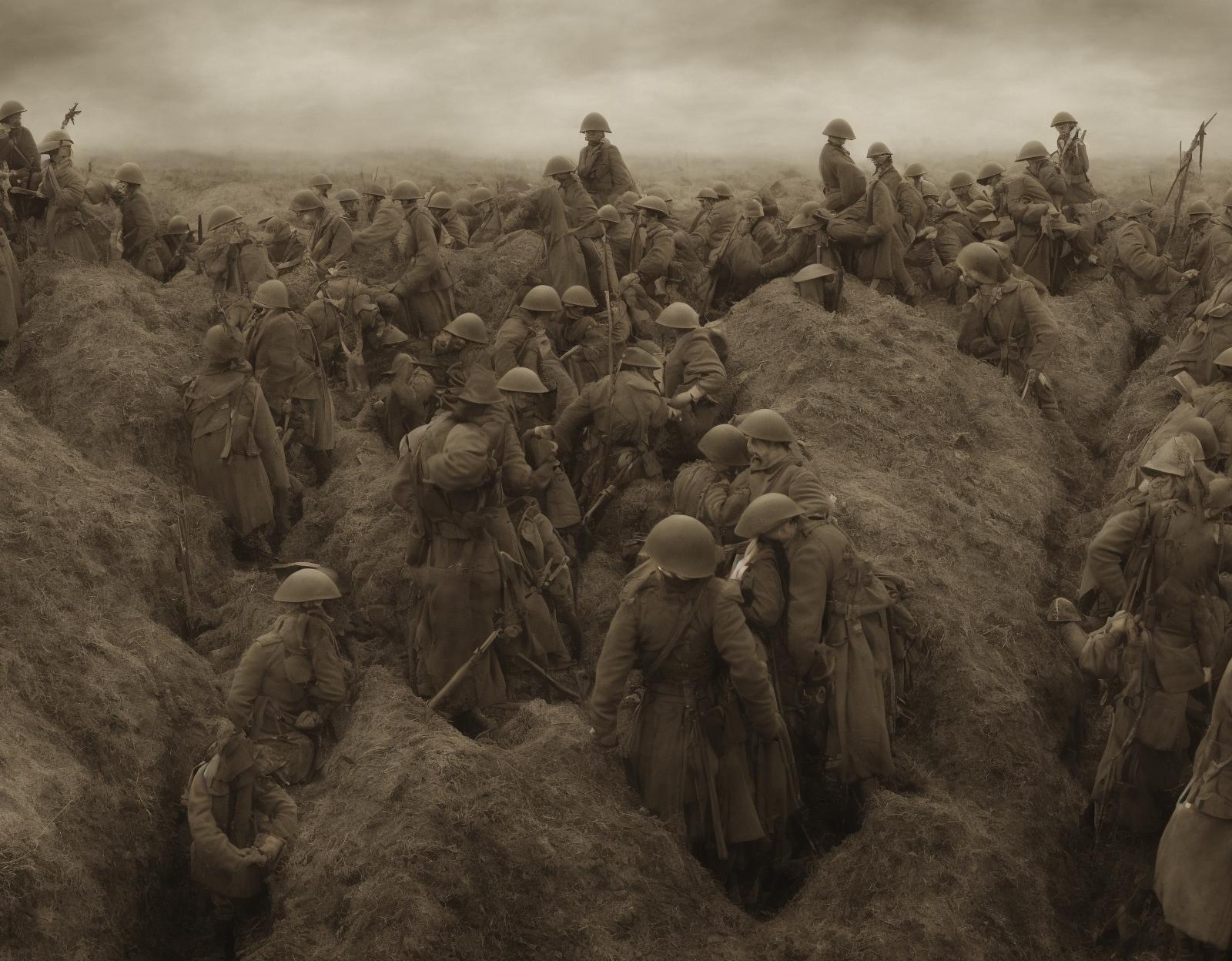
In the shadowed alleyways of memory where uniforms hang like ghosts and telegrams whisper secrets of lost lives, World War I reveals one of its quietest but most pernicious inventions: modern propaganda. It is a tale of images and innuendos, of committees that calculated sentiment as carefully as armies calculated logistics, of words that marched ahead of battalions to shape what soldiers and civilians would later remember as truth. By 1918 the tools and techniques forged in the furnace of the Great War had changed not only how nations fought but how they persuaded entire populations to consent — to enlist, to sacrifice, to mourn and to rage. The story begins not on the trenches but in offices, printing houses, and film studios where politicians, diplomats, artists, and bureaucrats conspired — sometimes explicitly and sometimes by accident — to turn emotion into policy.
Propaganda in the First World War did not appear overnight. It was born of anxiety: the fear that industrial slaughter would shatter societies unless the home front was bound together by a common narrative. Governments discovered that victory was not only a matter of shells and bayonets but of approval and belief. They learned to use visual shorthand — posters, cartoons, photographs — and narrative shorthand — atrocity tales, testimonials, and patriotic verse — to codify moral binaries: civilization versus barbarism, order versus anarchy. The resulting messages were unequal parts art and arithmetic: a dramatic image multiplied by a simple caption could recruit thousands to a volunteer center or sell millions of pounds of war bonds.
Did you know? The British Wellington House not only produced propaganda but also funded translations and distribution of pamphlets in neutral countries such as the United States, Italy, and Spain to sway elite and public opinion.
This long essay traces the institutions, techniques, and ethical ruptures that made WWI propaganda so effective and enduring. We will follow the labyrinthine routes of influence from Wellington House in London to the Committee on Public Information in Washington, from Austrian and German press bureaus to the film reels shown in neutral capitals. We will map how atrocity stories crystallized into accepted fact, how gendered appeals pulled millions of men into uniform, and how colonial empires used propaganda to maintain control even as their subjects were conscripted to die. Along the way we will pause on curious details and unsettling ironies — the men who became ministers of persuasion, the posters that became icons, the legal instruments that legalized silence.
Most importantly, this essay will argue that the Great War professionalized propaganda: it invented organizations, standardized tactics, and built networks that survived long after the armistice. That legacy is not merely historical; it is present in every political campaign, every state-run media office, and every viral image that seeks to steer hearts and minds. The Great War taught modern states a dangerous lesson: that truth can be shaped, and sometimes broken, in the service of victory.
Origins and Institutions of WWI Propaganda
The First World War’s propaganda infrastructure formed quickly from a mix of panic and bureaucratic opportunity. In Britain, the Foreign Office established Wellington House in September 1914, ostensibly to influence neutral opinion abroad. Operated under the direction of Charles Masterman, Wellington House recruited novelists, journalists and academics to craft pamphlets, books, and articles promoting the British cause. It worked quietly but ambitiously, funneling material to neutral newspapers and publishing striking pamphlets for distribution overseas. Among the writers and intellectuals associated with Wellington House were established literary figures who lent cultural prestige to otherwise political content. The British government also enacted the Defence of the Realm Act (DORA) in August 1914 which, alongside propaganda efforts, enabled sweeping censorship powers and penalties for spreading dissenting information. DORA, in short, legalized the shaping of the conversation at home.
Did you know? The CPI’s Four Minute Men delivered over 750,000 speeches in cinemas and town halls between 1917 and 1918, each lasting roughly four minutes and tailored to sell bonds or boost morale.
Across the Atlantic, America’s response to the information war was institutionalized in 1917 when President Woodrow Wilson created the Committee on Public Information (CPI), directed by journalist George Creel. The CPI was remarkable in its scale and inventiveness: it organized pamphlet campaigns, produced posters, arranged speeches by the so-called Four Minute Men (volunteer speakers who delivered short pro-war or pro-bond messages in cinemas and theaters), and coordinated with newspapers. Creel’s team understood the power of popular culture and harnessed film and celebrity to create a ubiquitous pro-war narrative. The CPI also collaborated with private industry to design striking visual motifs such as James Montgomery Flagg’s famous “I Want You” image, which turned recruitment into a near-religious duty.
On the other side, German and Austro-Hungarian governments developed their own bureaucracies. The Austro-Hungarian Empire created the Kriegspressequartier (KPQ) in 1914 in Vienna — a press bureau that would coordinate military censorship and produce visual and textual material supporting the Central Powers. The Germans organized military press offices that sought to control battlefield reporting, while civilian and diplomatic channels worked to shape opinion abroad. Both Central and Entente powers found that centralizing information distribution increased coherence of message and allowed for rapid, coordinated campaigns.
These offices did not simply issue orders; they embedded themselves in cultural production. Governments commissioned artists for posters, hired photographers to document the front (and sometimes stage photographs), and placed sympathetic journalists in key foreign newspapers. The wartime state in many countries effectively absorbed private cultural capital, transforming writers, artists, and filmmakers into instruments of national policy. That marriage of culture and state is perhaps the most significant institutional innovation of WWI propaganda: it normalized delegating the shaping of public belief to specialized government bodies, a template followed and refined in later conflicts.
Did you know? The Bryce Report (1915) was an Allied compilation intended for international readers. Though it relied on eyewitness testimonies that were powerful, some later historians debated aspects of its sourcing and the extent of verification possible during wartime.
Techniques and Media: Posters, Film, and Print
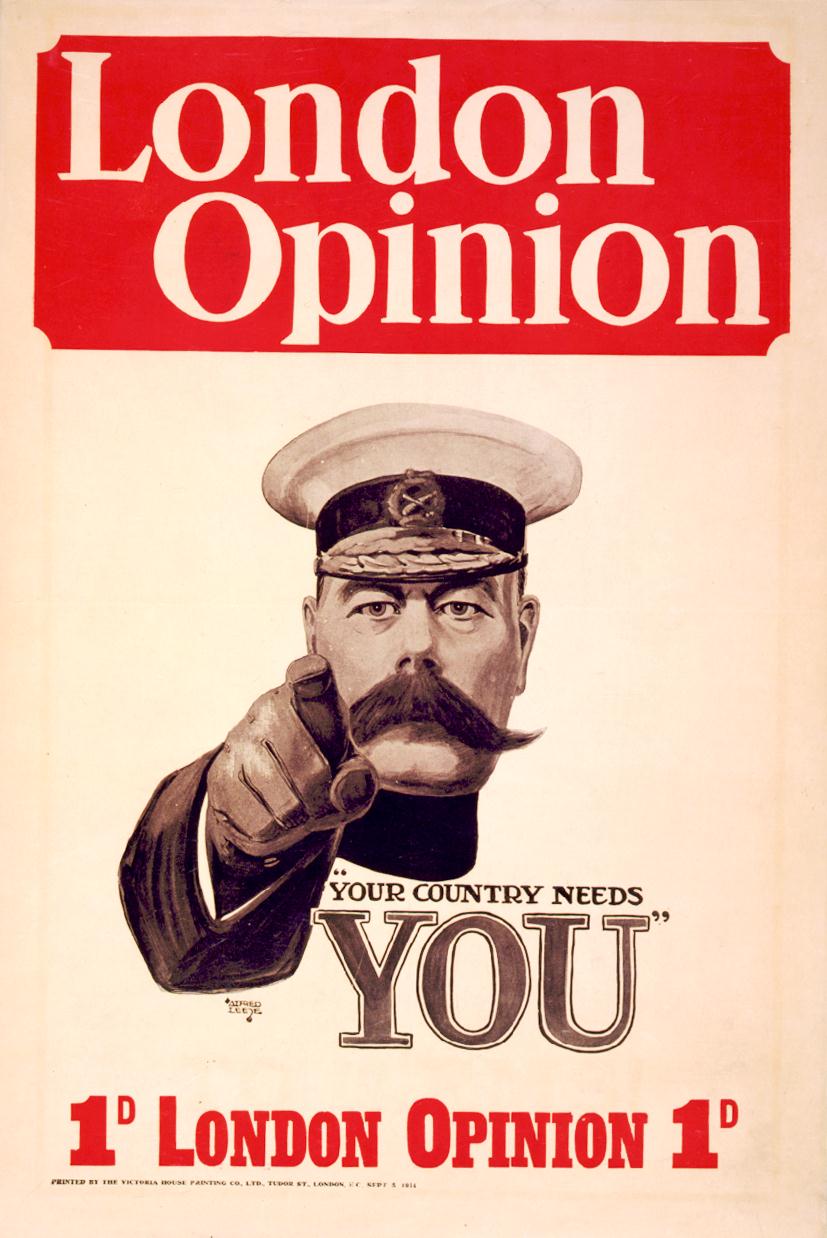
WWI propaganda’s success relied heavily on the clever exploitation of available media. Posters were the most visible and enduring form, showing that a single powerful image could become a cultural icon. In Britain, posters such as Lord Kitchener pointing directly at the viewer embodied a rhetorical technique of direct address: the state spoke to the subject as if addressing a single conscience. The poster’s immediacy turned abstraction — “the nation” — into a personal moral imperative. In America, James Montgomery Flagg’s “I Want You” (1917) achieved a similar intimacy; by reimagining Uncle Sam as an accusing father, it mobilized men to enlist and citizens to buy Liberty Bonds. Propaganda artists learned composition techniques that leveraged eye contact, stark color contrasts, and textual brevity to maximize impact. Simplicity became a virtue: a single dominant figure, a short command, and memorable typography.
Beyond posters, the war saw an unprecedented use of motion pictures. Film emerged as a mass medium during the 1910s, and governments were quick to recognize its potential. Both Britain and France produced wartime newsreels and documentary-style films to show heroes and horrors from the front. The British government, for example, supported films that emphasized sacrifice and bravery, carefully curating what audiences could see and when. In the United States, the CPI’s film division produced shorts and distributed them in cinemas nationwide; the moving image offered a persuasive sense of immediacy unmatched by print. Film also enabled the staging of scenes and the dramatic editing of reality — techniques that are now familiar to modern documentary and propaganda filmmakers.
Print culture remained crucial. Newspapers produced special supplements, serialized stories, poems, and letters from the trenches — often heavily edited or supplied by official agencies. Pamphlets were inexpensive and portable; Wellington House and the CPI printed millions of them and sent them abroad. Photographs, meanwhile, supplied a veneer of authenticity. Yet governments and military administrators often manipulated photographs by staging scenes or withholding context. Censorship meant that only a narrow sliver of visual testimony reached the public, and that sliver was typically the most emotionally compelling: images of stoic soldiers, destroyed churches, and grieving mothers.
Did you know? Savile Lumley’s 1915 poster “Daddy, What Did You Do in the Great War?” used domestic guilt to urge enlistment and became one of the most reproduced recruitment images in Britain.
Caricature was another potent mode: cartoons reduced complex geopolitical enemies into grotesque archetypes. The Germans were often depicted as Huns — savage, brutal, licentious — a portrayal that drew on prewar anxieties about militarism and was magnified by battlefield reports and atrocity narratives. The entrenchment of such stereotypes made it easier to justify harsh measures and to keep public appetite aligned with military objectives. Political cartoons appeared across newspapers and in widely circulated magazines such as Punch in Britain and Puck in the United States, shaping public sentiment through ridicule, fear, and moral certitude.

Atrocity Stories, Rumour, and the Manufacture of Hatred
Few elements of WWI propaganda were as ethically fraught as atrocity stories. Tales of mass executions, deliberate slaughter of civilians, and rape were circulated early in the war and served to consolidate public revulsion against the enemy. The Belgian case was pivotal: German violations of Belgian neutrality in August 1914 produced genuine atrocities — executions of civilians, burning of towns, and forced deportations did occur — and these were widely documented by refugees and neutral observers. The British government compiled and circulated accounts that emphasized brutality, culminating in the 1915 publication usually called the Bryce Report, authored under the oversight of Viscount James Bryce. That report catalogued alleged German outrages and was distributed widely among Allied and neutral publics.
The moral clarity of atrocity propaganda had important practical effects. It hardened opinions, made compromise difficult, and created a moral imperative for victory. But the same moral clarity rested on a shaky foundation: some reports were exaggerated, unverified, or unknowingly based on rumor. Wartime informational chaos combined with the hunger for shocking narratives meant that stories — once published by trusted institutions — gained the weight of fact. The phenomenon was not unique to the Allies: all sides in the conflict resorted to moralizing tales about the other’s brutality.
Did you know? Wellington House’s pamphlets were not only textual; they often included high-quality illustrations and translations to appeal to elites and the literate public in neutral countries, a costly but strategic investment.
Propaganda artists and writers amplified atrocity narratives through vivid images and emotive captions. Postcards and illustrated magazines circulated depictions of wounded children, burned churches, and emaciated refugees. These images often lacked context — the scale of incidents, the chain of command, or the diverse experiences of local populations — but their emotional effect was immediate. In neutral countries, especially the United States before 1917, such stories played a decisive role in shaping elite and popular opinion. Combined with diplomatic events such as the sinking of RMS Lusitania in 1915, which resulted in the deaths of 1,198 people including many Americans, atrocity narratives contributed to a growing sense that German militarism was a menace to international norms.
Yet the strategic use of atrocity tales also had long-term costs. By turning complex wartime events into moral fiction, propaganda often foreclosed postwar reconciliation and obscured the full historical record. Memory became a battlefield: what was remembered was often what had been most effectively publicized. The ethical quandary remains: when governments use real suffering for political ends, are they honoring victims or instrumentalizing them?

Recruitment, Conscription and the Gendered Language of Duty
Propaganda’s drive to mobilize men (and later women) was organized around a language of duty, honor, and shame. Before conscription became widespread, recruitment posters and local campaigns urged men to volunteer. Iconic posters did more than instruct; they constructed masculine identities predicated on bravery, honor, and responsibility. Phrases like “Your Country Needs You” or the accusatory gaze of Uncle Sam reframed military service as a moral obligation — a rite of passage that conferred social status and personal redemption. In Britain and France volunteerism initially met with mixed success; governments soon resorted to conscription to meet the demands of industrial warfare. The shift to compulsory service required even more persuasive propaganda to maintain social cohesion.
Did you know? Edward Bernays, often called the father of public relations, drew on techniques from wartime propaganda in his later career, translating state wartime practices into peacetime commercial persuasion.
Women were targeted differently but no less deliberately. Propaganda called on women to take up new roles in factories, hospitals, and volunteer organizations; it also encouraged them to police masculinity by shaming men who did not enlist. The use of the white feather in Britain, for example, symbolized how social pressure could be marshaled into a form of informal recruitment enforcement. Posters and pamphlets simultaneously celebrated women’s wartime labor and established domestic sacrifice as a feminine duty. In the colonies, propaganda pressed colonial men and women into service by offering promises of honor, status, and sometimes postwar reforms that often failed to materialize.
A particularly American tactic was the selling of Liberty Bonds, a form of mass financial mobilization accompanied by intensive propaganda. The CPI and private advertisers created emotionally charged appeals that linked purchase of bonds with patriotic duty, security, and moral righteousness. Movie theaters, churches, and community groups hosted bond rallies; celebrities and civic leaders took the stage. The success of these campaigns highlights how propaganda could translate affect into resources for the war effort.
But recruitment propaganda also prompted resistance. Conscientious objectors, radicals, and pacifists faced social ostracism, fines, and imprisonment. In the United States the Espionage Act (1917) and later the Sedition Act (1918) created legal frameworks to silence dissenting voices and punish anti-war activism. In Britain, DORA provisions allowed the state to suppress and prosecute anti-war speech. These legal measures were sometimes justified as necessary for national security, yet they also reveal the coercive underside of the propaganda regime: persuasion was often enforced by law and social violence.
Did you know? The sinking of the RMS Lusitania in 1915 was used widely in Allied propaganda; its dramatic reporting helped sway neutral opinion, particularly in the United States, toward intervention.
International Influence: Neutral Countries and Colonial Propaganda
WWI propaganda did not end at national borders. The globalised nature of public opinion made neutral states important targets. Britain’s Wellington House and the CPI in the United States both invested considerable effort in swaying neutral elites and publics. Wellington House sent pamphlets, books, and translations to influential newspapers and academic circles in the United States, hoping to counter pro-German sentiment within business and immigrant communities. The work of these offices was sophisticated: pamphlets were translated into multiple languages, and agents cultivated relationships with opinion leaders in cities across Europe and the Americas.
Neutral nations such as the Netherlands, Switzerland, Sweden, and Spain became arenas for information competition. Diplomats worked closely with propaganda bureaux to place favorable stories and secure coverage. The creation of authoritative-sounding reports and the strategic leaking of diplomatic cables were common tactics. Espionage and propaganda were sometimes two sides of the same coin: intelligence operatives gathered information to exploit, while propaganda operatives fabricated or emphasized stories to influence foreign policymakers.
Colonial propaganda deserves special scrutiny. Empires such as Britain and France mobilized billions of words and images to frame colonial subjects’ participation as an extension of imperial righteousness. Recruitment posters in India, West Africa, and Southeast Asia used local motifs and languages to encourage enlistment, promising honor and recognition. Yet the postwar reality often betrayed those promises: despite significant colonial contributions, political concessions remained limited, fueling postwar unrest and anti-colonial movements. Propaganda had helped produce the manpower of empire, even as it increasingly undermined imperial legitimacy by raising expectations that were not met.
The Ottoman Empire and Germany also sought influence in non-European theaters. Germany’s wartime diplomacy in the Middle East and Africa used German-language and Arabic-language brochures, while the Ottomans attempted to present themselves as defenders of Islam in certain contexts. The interplay of religion, nationalism, and propaganda in these theaters created complex legacies: some wartime messages encouraged later independence movements; others entrenched divisions.
Counter-propaganda, Censorship and the Postwar Legacy
The war generated not only propaganda but also counter-propaganda: efforts to refute enemy claims, expose forgeries, and maintain morale under the strain of mounting casualties. Governments developed censorship regimes to suppress unfavorable news and to control the flow of information. In Britain DORA gave wide powers to the state to close newspapers, censor letters, and impose penalties for spreading ‘false news.’ The United States used the Espionage Act and Sedition Act to criminalize criticism and to control messaging on military matters. These legal instruments were designed to close rhetorical space where counter-narratives could flourish; they also created a postwar legacy of constrained public discourse.
The immediate aftermath of the armistice did not dissolve the machinery of wartime persuasion. Many wartime organizations and personnel went on to shape interwar and later propaganda ministries. The professionalization of public relations in the 1920s and 1930s drew heavily on techniques refined during WWI. Figures such as Edward Bernays in the United States, who had worked in war propaganda efforts, later applied these principles to commercial and political campaigns. The moral ambiguity of the wartime experience — the fusion of state power and cultural persuasion — thus set precedents for how modern states and corporations would shape opinion.
Memories of propaganda also influenced international politics. The use of atrocity narratives sometimes hardened national memories, complicating reconciliation. The war’s propaganda taught later generations ways to mobilize populations for total war, contributing to the rhetorical environment that would make WWII possible. Yet there was resistance: journalists, writers, and artists who had seen the manipulation of truth during the war became critical voices in the interwar years, warning of the dangers of state-directed persuasion and advocating for press freedom.
The historical lesson is double-edged. Government communication is a necessary tool in moments of crisis — to organize relief, to mobilize medical resources, to warn populations. But the willing conflation of truth and state interest, as often occurred in WWI, reveals how easily moral language can become rhetorical armor for policies that would otherwise be controversial. Studying WWI propaganda invites us to examine our own information ecology: which institutions now play the role of Wellington House or the CPI, and how are their messages shaped by the incentives of power?
The propaganda campaigns of the First World War were not merely ornaments appended to military operations: they were essential components of a new kind of total war, in which entire societies were enlisted as instruments of national policy. From Wellington House’s quiet pamphlet campaigns to the CPI’s flashy posters and Four Minute Men, governments learned how to craft emotions into support, how to manufacture consent, and how to silence dissent. The techniques that emerged — direct address, emotional imagery, strategic use of atrocity narratives, and the institutionalization of information control — were both effective and ethically ambiguous. They produced short-term cohesion but often at the cost of truth and, sometimes, justice.
Yet the story is not solely one of manipulation and coercion. Propaganda also mobilized genuine resources for humanitarian relief, organized volunteers for medical and relief work, and built communal forms of experience during a conflict that devastated an entire continent. The paradox sits at the heart of the Great War’s legacy: the same machinery that sold war bonds and glorified sacrifice also organized relief for refugees and public health campaigns that saved lives. Understanding WWI propaganda thus requires discernment: historians must separate verifiable fact from rhetorical excess while acknowledging the psychological reality of mass persuasion.
The longer-term legacies are striking. WWI set the template for how modern states would engage with publics in moments of crisis. It taught the institutions and practitioners of public persuasion to speak plainly and loudly, to harness new media and celebrity, and to tie narratives of morality to political objectives. That template persisted and evolved, shaping later conflicts and the emergence of advertising and public relations fields. The ethical questions remain pressing: who decides what counts as truthful persuasion, and under what conditions can the state legitimately shape the beliefs of its citizens?
If there is a moral amid these wartime machinations, it may be the need for resilient public spheres: independent journalism, critical education, and institutions that can verify claims even in the heat of conflict. The Great War taught governments how to marshal consent. The challenge for democracies in the century that followed has been to build counterweights that protect truth without weakening necessary collective action in times of national peril. Only by tracing the origins and operations of WWI propaganda can we become more vigilant in guarding the fragile boundary between persuasion and coercion.

How we verify this article
By the History Unlocked editorial team
This text is built on historical facts stored in our database and drafted with AI assistance. No signed human review is recorded for this article. Report any inaccuracy: we correct it and update the modified date.
Updated on
AI-assisted drafting.
Read our editorial standardsEnjoyed this? Discover more articles in the category World War I