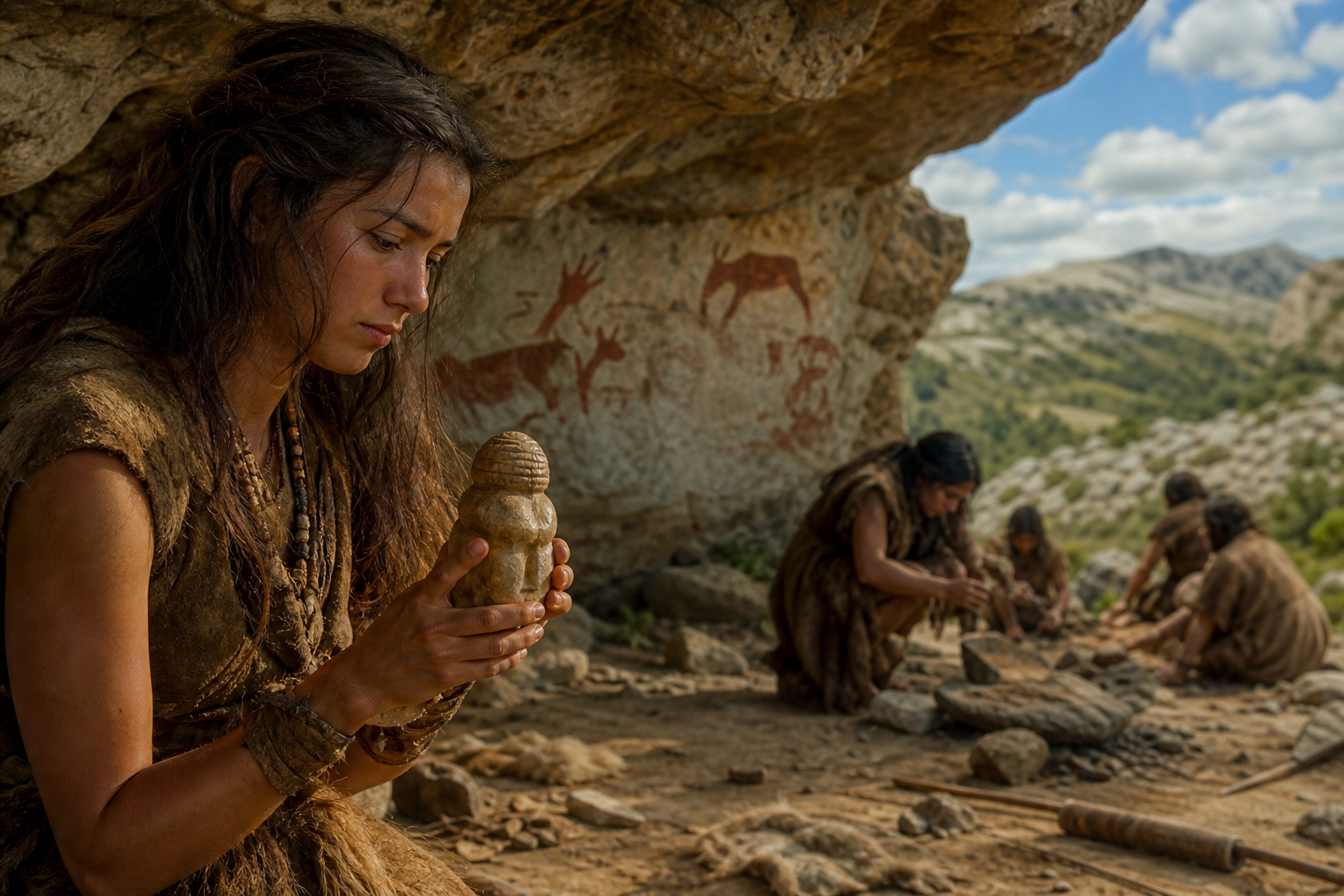
Secrets of the Stone Age: Unraveling the Mystery of Venus Figurines
The mists of time shroud many ancient echoes, yet few resonate with such captivating mystery as the Venus figurines of the Upper Paleolithic. These small, often exquisitely crafted statuettes, primarily depicting robust female forms, have been unearthed across the vast Eurasian landmass, spanning an immense chronological range from roughly 35,000 to 11,000 years ago. Their discovery, beginning in the mid-19th century, ignited intense academic debate and sparked the popular imagination, transforming these enigmatic objects into enduring symbols of a lost world. Far from being mere curiosities, these figurines offer a tantalizing glimpse into the minds, beliefs, and societal structures of our Stone Age ancestors. They challenge our modern preconceptions about primitive peoples, suggesting a complex inner life, sophisticated artistic sensibilities, and perhaps even a profound spiritual connection to the natural world. Each curve, each exaggerated feature, whispers stories across millennia – tales of fertility, motherhood, ritual, or perhaps something even more fundamental to human existence that we are only now beginning to comprehend. The sheer persistence of their form across diverse geographic regions and vast epochs of time speaks volumes about their significance, indicating a shared symbolic language or a common thread of human experience that transcended tribal boundaries and ecological zones. To study these figurines is to embark on a journey deep into the human past, a detective story where archeologists and anthropologists piece together fragments of evidence, trying to decode the unspoken messages left by artists who lived tens of thousands of years before the dawn of written history. Their very existence forces us to confront the question of what it means to be human, and how our earliest ancestors grappled with the fundamental forces of life and death, creation and sustenance. The fascination endures, because with every new discovery and every fresh interpretation, the Venus figurines continue to defy easy categorization, remaining potent reminders of the enduring enigmas of our shared prehistoric heritage.
The Discovery and Geographic Spread of Venus Figurines
The story of the Venus figurines truly begins in the latter half of the 19th century, amidst the burgeoning field of prehistoric archaeology. The first significant discovery, often cited as the Venus impudique (Impudent Venus), was found in 1864 by the Marquis de Vibraye at Laugerie-Basse in France. This small, headless ivory figure, with its pronounced breasts and buttocks, immediately raised questions about its purpose and significance. However, it was the subsequent finds that truly solidified their place in archaeological discourse. Perhaps the most famous, and certainly one of the most aesthetically striking, is the Venus of Willendorf, unearthed in 1908 by Josef Szombathy near Willendorf in Austria. Carved from oolitic limestone and standing just over 11 centimeters tall, her exaggerated features, intricate coiffure or headdress, and lack of facial details became iconic, almost synonymous with the entire genre. Subsequent discoveries followed rapidly across Europe and parts of Asia, revealing a remarkable distribution. From the caves and open-air sites of France (like the Venus of Lespugue) and Italy (Venus of Savignano), through Central Europe with the finds in Austria and Czech Republic (Venus of Dolní Věstonice), and extending eastward into Russia (Venus of Kostenki, Avdeevo), these figurines emerged from the earth, each with its unique characteristics yet sharing striking typological similarities. This vast geographic spread, stretching over thousands of kilometers from the Atlantic coast to the Siberian plains, is one of their most perplexing and intriguing aspects. It suggests either an astonishing degree of cultural diffusion across extremely vast and sparsely populated landscapes, or perhaps independent invention stemming from universally shared human experiences and cognitive processes. The raw materials used also varied widely, reflecting local availability: mammoth ivory, various stones (limestone, steatite, serpentine), bone, and even ceramic-like fired clay, as seen in the groundbreaking fired clay figures from Dolní Věstonice, representing some of the earliest known ceramics. These materials, often difficult to work with using Stone Age tools, attest to the considerable skill and dedication of their creators. The meticulous carving, polishing, and sometimes even painting (traces of red ochre are frequently found) further highlight their importance to the people who made them. The contexts of their discovery are equally varied, sometimes found in ritualistic settings within caves, other times within dwelling sites, hinting at a multifaceted role in prehistoric life. The sheer number of these objects, now in the hundreds, from dozens of different sites, underscores their pervasive presence in the symbolic landscape of the Upper Paleolithic. The discovery of these objects has not only shaped our understanding of early art but also fundamentally altered our perception of the intellectual and aesthetic capabilities of Ice Age hunter-gatherers, proving their capacity for abstract thought and complex symbolic expression.
Typology and Artistic Characteristics
The most striking feature uniting the diverse collection of Venus figurines is their consistent exaggeration of female anatomical features associated with fertility and childbearing. Breasts, buttocks, hips, and abdomen are often voluminous and prominent, sometimes to an extreme degree. Conversely, other parts of the body, such as the head and feet, are frequently deemphasized or entirely absent. Faces are rarely rendered with specific features; instead, heads might be abstract, featureless, or adorned with elaborate hairstyles or headdresses, as famously seen in the Venus of Willendorf. Arms are typically short and small, often resting on the breasts or barely discernible, while legs taper to small, unarticulated feet or are simply broken off at the knees or ankles, suggesting that many were not intended to stand upright but perhaps to be held or suspended. This deliberate artistic choice – the hyper-focus on reproductive anatomy and the minimization of individual identity – is central to understanding their potential meaning. It suggests that the figures were not portraits of specific individuals, but rather archetypal representations, embodying broader concepts. While there is a common underlying theme, there is also considerable variation. Some figures are highly naturalistic, albeit with exaggerated features, such as the Venus of Laussel (a bas-relief on a rock face), while others are highly abstract, verging on geometric forms. The famous "Venus with the Horn" from Laussel, dating to France and made from stone, shows a woman holding what appears to be a bison horn, possibly signifying abundance or a lunar cycle. The materials themselves contribute to their visual diversity. Some are meticulously carved from hard stones like steatite, exhibiting smooth, polished surfaces and precise detailing. Others, like many of the mammoth ivory figurines from Siberian sites, possess the unique grain and color of ancient ivory, often exhibiting a warm, aged patina. The fired clay figurines from Dolní Věstonice are particularly intriguing, showcasing experimentation with pyro-technology tens of thousands of years before the widespread adoption of pottery, and displaying a rough, earthy texture. The scale of the figurines also varies, though most are relatively small, fitting comfortably in the palm of a hand, suggesting portability and personal significance. Their compact size may have facilitated their transport across vast distances by nomadic hunter-gatherer groups. The level of craftsmanship displayed in many of these pieces is extraordinary, especially considering the limited toolkits available to Upper Paleolithic artisans. The skill required to carve intricate details into mammoth ivory or hard stone with flint tools speaks to a sophisticated understanding of materials and artistic intent. Traces of red ochre, a pigment frequently associated with life, blood, and ritual in many ancient cultures, are often found on or around the figurines, suggesting they may have been painted or ritually adorned, adding another layer to their symbolic complexity. The artistic consistency across such a vast chronology and geography speaks to a deeply ingrained and widely understood symbolic system, a shared cultural grammar that transcends language and locality.
Did you know? The Venus of Hohle Fels, discovered in Germany in 2008, is currently the oldest undisputed Venus figurine, dated to at least 35,000 years ago, pushing back the timeline for these enigmatic objects significantly.
Interpretations: Fertility, Mother Goddess, or Something Else?
The enduring mystery surrounding the Venus figurines has naturally led to a myriad of interpretations, none definitively proven, but each offering valuable insights into the possible cognitive and cultural landscapes of the Upper Paleolithic. The most prevalent and long-standing interpretation posits them as fertility symbols or representations of a "Mother Goddess." The exaggerated breasts, hips, and abdomen strongly suggest a focus on reproduction, childbearing, and sustenance, faculties critical for the survival of small, nomadic bands in harsh Ice Age environments. In this view, the figurines might have been used in rituals to promote successful pregnancies, safe childbirth, or the general abundance of resources. The Mother Goddess hypothesis extends this idea, suggesting they represent a revered deity or ancestral figure embodying the regenerative power of nature itself. This interpretation finds resonance in later agricultural societies where goddess figures associated with fertility became central to religious practices. However, some scholars argue against attributing modern religious concepts like "goddess" to such ancient objects, warning against anachronism. Another compelling interpretation views the figurines as self-portraits made by women, representing their own bodies or the bodies of other women they observed. If viewed from above, as a pregnant woman might view her own body, the foreshortened perspective and emphasis on certain features could align with such a hypothesis. This perspective shifts the focus from external religious practice to internal experience and artistic expression. Other theories suggest they were pedagogical tools, used to teach young women about pregnancy and childbirth, or perhaps mnemonic devices for storytelling or tracking lunar cycles, given the frequent absence of specific facial features which might imply a general rather than an individualistic purpose. Still others suggest a magical function, perhaps used in sympathetic magic to ensure hunting success or to ward off evil. The discovery of many figures in domestic contexts, within ancient living spaces, has led some to propose they served as protective charms or representations of family ancestors. The frequent presence of red ochre, a symbol of life and blood in many ancient cultures, further fuels the ritualistic interpretations. It is also important to consider that their meaning might not have been singular but multifaceted, evolving over time and varying across different groups and contexts. A figurine might have held different meanings for individuals within a community, for different age groups, or depending on the specific ritual or everyday use. The debate continues, without a definitive answer, which is perhaps part of their enduring allure. The absence of written records means we are forever confined to archaeological inference, but the richness of potential meanings speaks to a complex spiritual and symbolic world that was vibrant and active tens of thousands of years ago. Their very ambiguity allows for a continuing engagement with these objects, prompting new questions and hypotheses with each passing generation of researchers.

Social and Cultural Context
To truly appreciate the Venus figurines, one must situate them within the broader social and cultural landscape of the Upper Paleolithic. These were societies of nomadic hunter-gatherers, living in relatively small bands, constantly adapting to often challenging Ice Age environments. Their survival depended on an intimate knowledge of their surroundings, successful hunting strategies, and the ability to reproduce and raise healthy offspring. In such contexts, concepts of fertility, protection, and group cohesion would have been paramount. The prevalence of female imagery suggests a significant role for women in these societies, even if the precise nature of that role is debated. It is not necessarily indicative of matriarchy, as some early theories proposed, but rather points to the fundamental importance of female reproductive capacity for the perpetuation of the group. The act of creation itself—carving and shaping these figures from raw materials—would have been a communal or at least a highly valued individual activity, requiring significant skill, time, and effort. The materials used, particularly mammoth ivory, often came from difficult-to-acquire sources, indicating the preciousness and value placed on the finished objects. Some figurines show signs of wear, suggesting they were handled frequently, perhaps passed down through generations, or carried as personal amulets. Other figures appear pristine, possibly indicating a more ritualistic or restricted use. The widespread distribution of similar types of figurines across vast distances, even across different cultural groupings, hints at a shared symbolic system, a common understanding of visual language that transcended immediate tribal boundaries. This could have facilitated communication and cultural exchange between diverse groups, perhaps indicating a network of interactions and shared beliefs that extended far beyond individual campsites. The context of their discovery—sometimes in caves associated with elaborate cave art, other times in open-air settlements, or even buried intentionally—provides further clues. Their presence alongside utilitarian tools, hunting implements, and evidence of daily life suggests they were not esoteric objects confined to specific ritual spaces, but rather integrated into the fabric of everyday existence. The care taken in their creation, the materials chosen, and their widespread adoption all point to a culturally significant phenomenon that resonated deeply with the psychological and spiritual needs of Upper Paleolithic peoples. These objects may have served to reinforce social norms, transmit cultural knowledge, or provide spiritual comfort in a challenging world. The fact that their production continued for millennia, across changing climates and evolving technologies, speaks to their enduring power and relevance to the human experience.
The Artistic and Symbolic Legacy
Beyond their archaeological significance, the Venus figurines stand as some of the earliest and most compelling examples of human artistic expression. They demonstrate that our ancestors, tens of thousands of years ago, possessed not only the technical skill to create durable objects but also the cognitive capacity for abstract thought, symbolism, and aesthetic appreciation. Their art was not merely functional; it was imbued with meaning, purpose, and a profound connection to the human condition. The emphasis on the female form, with its powerful resonance of creation and life-giving, reveals a deep engagement with fundamental existential themes. These small sculptures are far more than crude carvings; they are sophisticated works that convey complex ideas without the aid of written language. They represent a significant milestone in human artistic development, predating the monumental art of later civilizations by tens of thousands of years. The figurines offer a window into the origins of art itself, suggesting that the impulse to create, to represent, and to imbue objects with symbolic meaning is an inherent part of human nature. Their legacy extends beyond archaeological circles, influencing modern art, feminist discourse, and popular culture. They have become symbols of prehistoric matriarchies (even if historically debated), of female power and fertility, and of the enduring mystery of our primeval past. Artists and thinkers continue to be inspired by their primal forms and enigmatic presence. The very act of gazing upon a Venus figurine, whether in a museum or through an image, evokes a powerful sense of connection to our distant ancestors, prompting reflection on our shared humanity and the continuity of human experience across vast spans of time. They remind us that for tens of thousands of years, humans have sought to understand and represent the world around them, to express their fears, hopes, and beliefs through tangible forms. The enduring questions they pose—who made them, why, and what did they mean—ensure their continued relevance and fascination. Each new discovery, each refined dating technique, each innovative interpretation adds another layer to their compelling story, allowing us to slowly chip away at the layers of time and draw closer to the minds of the people who brought these remarkable objects into being. Their silent presence in museums worldwide continue to provoke wonder and introspection, connecting us directly to the dawn of human creativity and the enduring power of symbolic expression. The fact that these objects have survived harsh climates, geological shifts, and millennia of neglect speaks to their inherent resilience and the profundity of the messages they were intended to convey. They are, in essence, tangible echoes of a distant past, inviting us to contemplate the origins of human culture and spirituality.
Did you know? Some scientists propose that the uniformity of many Venus figurines, particularly their robust features, might reflect the realities of female body types in Ice Age diets, where fat reserves were crucial for survival and reproduction.

Dating and Archaeological Contexts
The precise dating of Venus figurines is crucial for understanding their chronological development and their place within the broader Paleolithic timeline. Radiocarbon dating (C14) of associated organic materials, as well as thermoluminescence dating for fired clay objects, have been instrumental in establishing their impressive antiquity. The vast majority of Venus figurines belong to the Upper Paleolithic period, specifically within the Aurignacian, Gravettian, and Mal'ta-Buret' cultures, spanning a period from approximately 35,000 to 11,000 years ago. The oldest reliably dated figure, the Venus of Hohle Fels, from southwestern Germany, is a prime example of an Aurignacian-era artifact, with dates placing it firmly at approximately 35,000-40,000 years BP (Before Present). This pushes the origins of figurative art significantly further back than previously thought and places it contemporaneous with some of the earliest evidence of modern human presence in Europe. The Gravettian period (c. 30,000-20,000 BP) appears to be the peak of Venus figurine production, with most of the iconic examples—such as the Venuses of Willendorf, Dolní Věstonice, Lespugue, and Savignano—originating from this time. These Gravettian sites often provide rich archaeological contexts, revealing not just the figurines themselves but also associated tools, faunal remains, fireplaces, and evidence of hut structures, allowing archaeologists to reconstruct aspects of daily life. For instance, the site of Dolní Věstonice in the Czech Republic has yielded an extraordinary collection of not only Venus figures made from fired clay but also numerous animal figurines and evidence of complex hunting strategies for mammoth. The presence of these objects within dwelling sites or nearby suggests they were integral to the daily lives of these prehistoric communities, rather than solely confined to ceremonial or sacred spaces far removed from habitation. Eastward, in Siberia, sites like Kostenki and Avdeevo have yielded incredible collections of mammoth ivory figurines, often found associated with elaborate burials and evidence of sophisticated living structures, again dating largely to the latter part of the Upper Paleolithic. The specific archaeological context—whether found in a cave, an open-air settlement, or an intentional burial—offers vital clues about possible function. Finds in burial contexts might suggest a funerary or ancestor cult role, while those in living areas could point to personal amulets, domestic rituals, or pedagogical tools. The sheer depth of time spanned by these objects underlines their enduring cultural significance and adaptability. They persisted across immense climatic shifts, including glacial maximums and subsequent warming trends, and across different human migratory patterns. This longevity suggests that whatever their primary meaning, it was deeply embedded in the human psyche and served a fundamental purpose for many generations of prehistoric peoples. The ongoing process of discovery and re-evaluation of existing collections, coupled with advancements in dating technologies, continues to refine our understanding of their chronology and archaeological settings, adding further chapters to the unfolding story of these remarkable artifacts. Each new piece of data reinforces the narrative of complex, symbolic-minded ancestors who left an indelible artistic mark on the landscape of early human history.
Prehistoric Venus Figurines: Enduring Enigmas and Our Connection to the Past
The Prehistoric Venus figurines continue to enthrall and mystify, serving as powerful symbols of human creativity, ingenuity, and spiritual depth from the deepest reaches of our past. Despite decades of intense archaeological research, their true purpose remains elusive, sparking vigorous debate and prompting new theories. This very ambiguity, however, is paradoxically one of their greatest strengths. It allows for a richness of interpretation that invites ongoing engagement, forcing us to constantly re-evaluate our understanding of early human societies and their relationship with the world. Whether they were fertility cult objects, representations of a powerful Mother Goddess, self-portraits, teaching aids, or personal amulets, they undeniably held profound significance for the people who meticulously carved and venerated them. Their widespread distribution across Eurasia and their persistence over thousands of years speak to a shared human experience, a common symbolic language that transcended immediate cultural boundaries. These small sculptures are not merely archaeological curiosities; they are direct links to the minds and beliefs of our ancestors, offering a tangible connection to the dawn of human consciousness and symbolic thought. Each curve, each exaggerated form, each trace of ochre, whispers stories across the immense chasm of time, reminding us of the enduring human impulse to create, to connect with the sacred, and to grapple with the fundamental mysteries of life and death, creation and sustenance. Through these figurines, we glimpse a world where art and ritual were inextricably intertwined with daily survival, where the symbolic realm was as real and impactful as the physical one. They challenge us to look beyond simplistic notions of "primitive" people and to recognize the profound intellectual and emotional complexity of our Paleolithic forebears. The fascination continues because the Venus figurines force us to confront not only the mysteries of the past but also fundamental questions about ourselves. What drives the human need for art and symbolism? How did our ancestors understand their place in the cosmos? And what universal messages, if any, do these ancient masterpieces still hold for us today? As we continue to unearth new fragments of evidence and develop new interpretative frameworks, the conversation surrounding the Venus figurines will undoubtedly continue to evolve, enriching our understanding of the earliest chapters of the human story. They stand as enduring testaments to the power of human imagination and the timeless quest for meaning, beckoning us to continue our journey into the enigmatic heart of the Paleolithic. Their silent vigil across the ages ensures that their mysteries will captivate generations to come, forever cementing their place as some of humanity's most precious and profound artistic legacies.
How we verify this article
By the History Unlocked editorial team
This text is built on historical facts stored in our database and drafted with AI assistance. No signed human review is recorded for this article. Report any inaccuracy: we correct it and update the modified date.
Updated on
AI-assisted drafting.
Read our editorial standardsEnjoyed this? Discover more articles in the category Prehistory