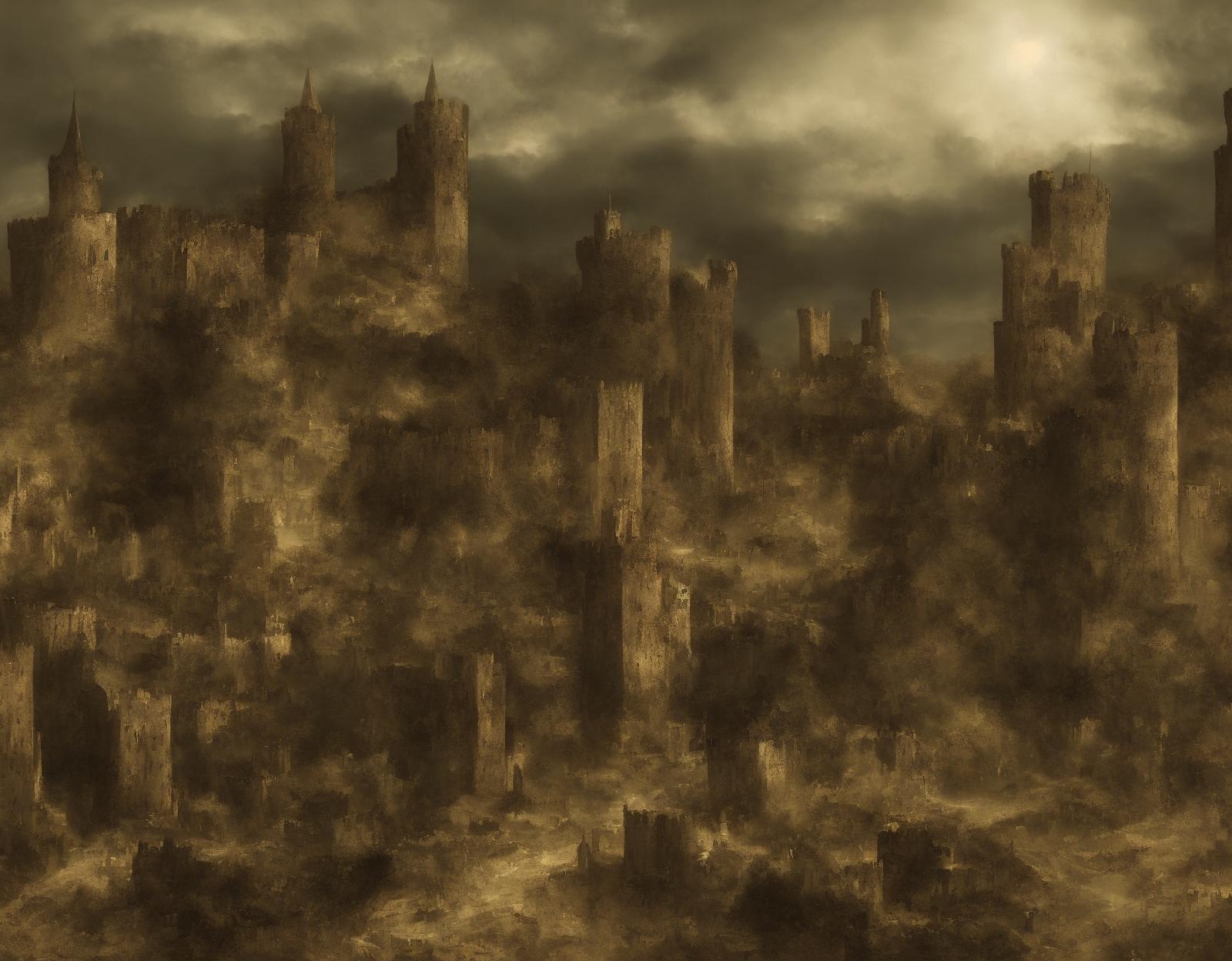
The Scourge of God: How the Black Death Wiped Out Half of Europe
In the middle of the 14th century, Europe stood at a precipice, though it did not know it. The continent was, by its own standards, prosperous. Great cathedrals reached for the heavens, universities were centers of fervent debate, and trade routes hummed with the flow of goods and ideas. The population had boomed, putting pressure on the land, but life, for all its medieval hardships, followed a predictable rhythm dictated by the seasons and the church bells. Yet, far to the east, something was stirring. A silent, invisible enemy was on the move, an agent of such profound and indiscriminate destruction that it would not just bring an era to a close, but shatter the very foundations of Western civilization. It was a pestilence that would be whispered about in terrified tones for centuries, a cataclysm that would earn a name as dark as the growths it left on its victims: the Black Death. This was not a war fought with swords and shields, but a biological siege on a continental scale. It was a killer that respected no borders, no class, no piety. It crept aboard merchant ships, traveled in the fur of rats, and passed from one breath to the next, turning bustling cities into silent graveyards in a matter of weeks. Within five short years, it would erase nearly half of Europe’s population, leaving a world irrevocably altered. The story of the Black Death is more than a grim tally of the dead; it is the story of a world plunged into an existential crisis, a society forced to confront its deepest fears about God, nature, and its own fragility. It is a mystery that begins with a single bacterium and ends with the birth of a new world on the ashes of the old.
The Unseen Invader: Origins and Transmission
The ultimate source of the great pestilence was a bacterium, Yersinia pestis, a microscopic organism of immense power. For centuries, this pathogen had existed in a relatively stable cycle among populations of wild rodents, particularly marmots, in the arid grasslands and steppes of Central Asia. The bacterium was transmitted between these animals by fleas. In this isolated environment, it posed little threat to humanity. However, a confluence of factors in the early 14th century—climate change, ecological disruption, and the expansion of human trade networks—pushed infected rodents and their fleas into closer contact with people. The Mongol Empire, which controlled a vast territory stretching from China to the Black Sea, had facilitated unprecedented levels of trade and communication along the Silk Road. While this fostered economic growth, it also created a perfect highway for disease. Sometime in the 1330s or early 1340s, the plague began to spread, cutting a deadly swathe through China and the Mongol heartlands. The pivotal moment for Europe came in 1346 at the Crimean port city of Caffa (modern Feodosiya), a bustling Genoese trading hub on the Black Sea. The city was under siege by the Mongol army of Jani Beg. As the siege dragged on, a devastating plague broke out among the Mongol troops, decimating their ranks. In an act of what might be the earliest recorded instance of biological warfare, the Mongol commander ordered the corpses of plague victims to be catapulted over the city walls. The defenders, horrified, threw the bodies into the sea, but the damage was done. The disease was now inside Caffa. Panicked Genoese merchants boarded their galleys and fled, hoping to outrun the pestilence. They did not. Instead, they became its unwitting couriers. Their ships, laden with silks, spices, and a hidden cargo of infected black rats (Rattus rattus) and their fleas (Xenopsylla cheopis), were floating incubators for the apocalypse. The fleas, having feasted on infected rats, would see their digestive tracts blocked by the multiplying bacteria. Starving and agitated, they would bite any warm-blooded host they could find, regurgitating a deadly dose of Yersinia pestis into the wound. This was the mechanism for the bubonic plague, the most common form of the disease. But this was not the only way it spread. The plague could manifest in three terrifying forms, each more deadly than the last. Bubonic was the first, named for the agonizingly painful swellings, or "buboes," that appeared in the lymph nodes. If the bacteria invaded the bloodstream directly, it caused septicemic plague, leading to skin turning black and dying, the likely origin of the name "Black Death." And most terrifyingly, if the infection reached the lungs, it became pneumonic plague, which could be transmitted directly from person to person through respiratory droplets, making it almost impossible to contain.

A Continent in Agony: The Plague's Arrival and Spread
In October 1347, twelve Genoese galleys sailed into the harbor of Messina, Sicily. The townspeople who gathered at the docks were met with a sight from a nightmare. Most of the sailors aboard were either dead or gravely ill, covered in black boils that oozed blood and pus. The Sicilian authorities, in a panic, ordered the "death ships" out of the harbor, but it was too late. The plague was ashore. From Messina, the disease spread with terrifying speed. The chronicler Michele da Piazza wrote, "seeing what a deadly plague this was, they drove them away from the port as fast as they could, yet the sickness remained in the city and subsequently caused widespread death." The experience of Messina was a template for what was to come. The plague leaped from port to port, following the major trade arteries of the medieval world. It reached Genoa and Venice in January 1348, the twin hearts of Europe’s maritime economy. From there, it pushed inland, devastating Florence, the cradle of the Renaissance. The city would lose up to 60% of its population, an event vividly chronicled by Giovanni Boccaccio in the introduction to his masterpiece, The Decameron. In France, the plague arrived at the bustling port of Marseille, also in early 1348. It moved up the Rhône valley to Avignon, then the seat of the papacy, where it killed up to half the population, including Pope Clement VI’s own cardinal. By springtime, it had reached Paris, a city of over 100,000 people. The death toll was so high that the city ran out of consecrated ground for burials, and the Pope had to consecrate the Rhône River itself so that bodies could be thrown into it. From France, it crossed the English Channel, arriving in the south of England in the summer of 1348. It spread through the West Country and then to London, where it raged through the winter and into the following year. By 1349, it had penetrated into Wales, Ireland, and the depths of the Holy Roman Empire (modern-day Germany). Cologne, Hamburg, and Bremen were all devastated. The plague continued its relentless march northward, reaching Scandinavia by 1350 and finally spreading into Russia by 1351. In less than five years, no corner of the continent was left untouched. The speed of the contagion was incomprehensible to the medieval mind, seeming to defy all natural laws. It moved faster than a person could travel, appearing in one village while the next remained inexplicably safe, only to be struck down months later. Whole families vanished in days, villages were left deserted, and fields lay fallow as the hands that once worked them were stilled forever. The French chronicler Jean de Venette lamented, "It is said that in many places, not one in twenty people remained alive... The mortality was so great that, for a considerable time, more than 500 bodies a day were carried in carts from the Hôtel-Dieu in Paris for burial in the cemetery of the Holy Innocents."
Did you know? While the plague was devastatingly effective, some areas were mysteriously spared the worst of its fury. The city of Milan, for instance, implemented a ruthlessly effective quarantine by immediately walling up houses where the plague was detected, leaving the occupants—sick and healthy alike—to die inside. Similarly, large parts of Poland and the Basque country reported far fewer casualties, reasons for which are still debated by historians.
Symptoms of the Apocalypse: The Body and the Mind
The physical suffering of the plague’s victims was matched only by the psychological terror it induced. The onset of the bubonic form was sudden and violent. It began with chills, a high fever, and extreme fatigue, quickly followed by vomiting and excruciating pain. Within a day or two, the tell-tale symptom appeared: the bubo. These were hard, painful swellings of the lymph nodes, typically in the groin, armpits, or neck, that could grow to the size of an apple. The skin over the bubo would often turn a dark purple or black, a result of subcutaneous hemorrhaging, lending the pestilence its grim name. If the bubo did not rupture and drain, the victim usually died within three to five days. The Florentine chronicler Agnolo di Tura, who buried his own five children with his own hands, described the scene: "The victims died almost immediately. They would swell up under the armpits and in the groin, and fall down dead while talking. Father abandoned child, wife husband, one brother another; for this illness seemed to strike through the breath and sight." This breakdown of familial bonds was one of the most terrifying social consequences of the plague. The fear of contagion was so absolute that it overwrote the most fundamental human instincts of compassion and duty. Parents refused to care for their sick children; the dying were left to fend for themselves, alone and terrified. Giovanni Boccaccio wrote that in Florence, "such terror was struck into the hearts of men and women that brother abandoned brother, uncle nephew, sister brother, and very often wife her husband; nay, what is more, and almost incredible, fathers and mothers refused to nurse and assist their own children, as though they were not theirs." While bubonic plague offered a slim chance of survival, the other forms offered none. Septicemic plague occurred when the bacteria multiplied in the bloodstream. It caused high fevers and purple-black skin blotches, but its progress was so rapid that victims often died within hours, sometimes before any classic symptoms could even develop. The most feared of all was pneumonic plague. With the infection seated in the lungs, it caused a bloody cough, and every exhale filled the air with deadly pathogens. Unlike the bubonic form, which required a flea bite, pneumonic plague spread directly from person to person. Its mortality rate was effectively one hundred percent. The psychological impact was devastating. The randomness and horror of the disease shattered any sense of security. The air itself was thought to be poisoned, a miasma of death that could strike anyone at any moment. People walked around holding flowers or pouches of herbs to their noses, hoping to ward off the "bad air." The constant tolling of funeral bells, the rumbling of death carts, and the sight of mass graves created an atmosphere of unrelenting dread and despair. Society was on the verge of collapse.

Desperate Measures and Divine Wrath: Medieval Responses
Faced with an enemy they could not see or understand, medieval people scrambled for answers and remedies, turning to the pillars of their society: medicine and faith. The medical knowledge of the time, however, was tragically ill-equipped to handle the crisis. The prevailing theory was that disease was caused by an imbalance of the four bodily humors (blood, phlegm, yellow bile, and black bile) and by exposure to "miasma," or corrupted air. Doctors, clad in their now-iconic beaked masks, offered a range of useless and often harmful treatments. They prescribed bloodletting and the lancing of buboes, practices which likely only spread the infection further. They advised patients to avoid bathing (believed to open the pores to miasma) and to consume complex potions made from crushed emeralds, powdered unicorn horn, or ten-year-old treacle. They lit fires and burned aromatic woods like juniper and rosemary to purify the air, filling the streets with a cloying, smoky haze.
More effective were the public health measures, born of desperation rather than scientific understanding. Cities like Venice and Ragusa pioneered the concept of quarantine, isolating incoming ships and their crews for a period of 40 days (quarantena in Italian) to see if the sickness would manifest. Many towns shut their gates to outsiders, effectively cutting themselves off from the world. Authorities organized corps of gravediggers to collect the dead from houses marked with a red cross and transport them to mass burial sites, known as "plague pits," outside the city walls. While medicine failed, faith was tested to its absolute limit. The plague was almost universally interpreted as an act of God, a divine punishment for the sins of a corrupt world. To appease God’s wrath, people flocked to churches. Public prayers, processions, and religious rituals multiplied. Some sought salvation through extreme acts of piety, most notably the Flagellants. These were groups of penitents who marched from town to town, whipping themselves with leather scourges tipped with iron spikes. They drew huge crowds, chanting and singing as they performed their bloody rituals, convinced that their self-inflicted suffering could atone for the sins of humanity. Initially tolerated, the movement grew increasingly radical and was eventually condemned by the Pope. In the search for a cause, however, piety often gave way to paranoia and hatred. Desperate for a tangible enemy to blame, many turned on minority groups. Across Europe, Jewish communities became the primary scapegoats. Vicious rumors spread that they had caused the plague by intentionally poisoning the wells of Christian towns. This baseless accusation ignited a wave of horrific pogroms. From Switzerland to Germany and France, thousands of Jewish people were rounded up and massacred, often burned alive. Despite Pope Clement VI issuing papal bulls denouncing the violence and pointing out that Jewish people were dying of the plague just like Christians, the persecutions continued, wiping out entire communities and representing one of the darkest chapters of the entire pandemic.
Did you know? The famous beak-like mask worn by plague doctors was a later invention from the 17th century but was based on 14th-century miasma theory. The long beak was intended to be filled with aromatic substances like herbs, spices, and dried flowers, which were believed to protect the doctor from inhaling the poisonous air thought to carry the disease.
The World Reborn: Social and Economic Aftermath
The Black Death burned itself out in Europe by 1351, though it would return in recurring, less virulent waves for centuries. The world it left behind was emptier, quieter, and fundamentally transformed. The most immediate consequence was the staggering loss of life. Modern historians estimate that between 30% and 60% of Europe’s population perished in the space of five years—a figure that could be as high as 60 million people. In some regions, the death toll was closer to 80%. This demographic collapse sent shockwaves through the rigid social and economic structures of the medieval world. With so many dead, the continent faced a severe labor shortage. This drastically altered the balance of power between the landowning aristocracy and the surviving peasantry. Suddenly, labor was a valuable commodity. Peasants and artisans could demand higher wages, better working conditions, and greater freedom. Many serfs, tied to the land for generations, simply abandoned their feudal obligations and sought out better opportunities. Landlords, desperate for workers to till their fields, were forced to offer more favorable terms, including cash wages instead of labor service. This process accelerated the decline of serfdom and the feudal system itself, paving the way for a more modern, wage-based economy. Social mobility, once nearly impossible, became a reality for some. With entire families wiped out, unexpected inheritances fell into the hands of distant relatives or even commoners, creating new wealth and disrupting the old social hierarchy.
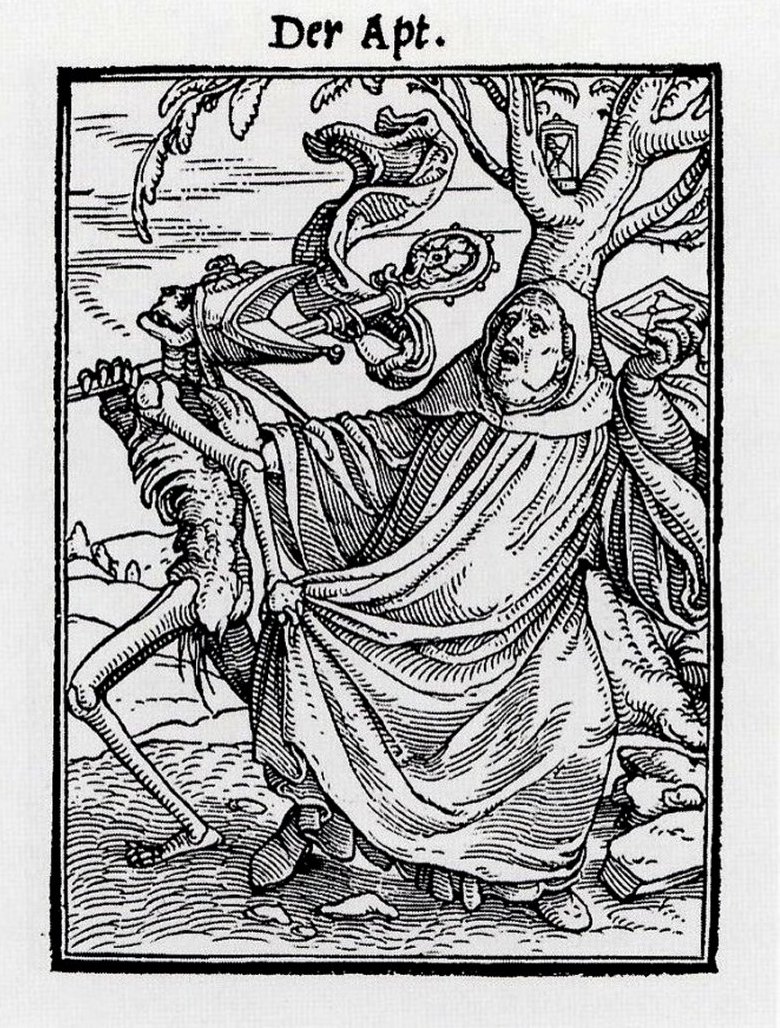
Culturally, the plague infused European consciousness with a deep-seated obsession with death and mortality. The experience of sudden, arbitrary death gave rise to a new artistic sensibility. The themes of memento mori ("remember you must die") and the Danse Macabre ("Dance of Death") became pervasive. Art and literature depicted skeletons and corpses dancing with the living—popes, kings, knights, and peasants alike—a stark reminder that death was the great equalizer. The authority and prestige of the Church also took a heavy blow. Its prayers had been powerless to stop the pestilence, and the deaths of thousands of clergy members (who were often on the front lines) created a crisis in faith and a shortage of educated spiritual leaders. The questioning of the Church’s power and efficacy that began during the plague is seen by some historians as a contributing factor to the intellectual currents that would eventually lead to the Protestant Reformation a century and a half later. The plague also had unforeseen effects on knowledge. The death of so many Latin-speaking monks and scholars contributed to the rise of vernacular languages in education and literature, bringing learning to a wider audience. In medicine, the failures of scholastic theory prompted a slow but steady shift toward a more empirical approach based on direct observation and anatomy.
In conclusion, the Black Death was far more than a historical tragedy. It was a crucible. It subjected the medieval world to a test so severe that it broke it apart, clearing the way for something new to be built. The plague acted as a brutal, terrifying accelerator of change, hastening the end of the High Middle Ages and ushering in the intellectual, artistic, and social dynamism of the Renaissance. It dismantled the rigid structures of feudalism, empowered the common person, challenged the monolithic authority of the Church, and forever altered the European psyche. The invisible invader that arrived on a Genoese galley in 1347 did not just kill millions; it remade a civilization. The world we inhabit today was shaped in profound ways by the ashes of that 14th-century apocalypse, a grim but powerful testament to the fragility of societies and their remarkable capacity for renewal in the face of unimaginable catastrophe. It remains a haunting echo from the past, a reminder that the course of history can be changed not just by kings and empires, but by the smallest of creatures and the invisible forces they carry within them. The Black Death was a scourge, an agony, and ultimately, a beginning.
Did you know? In the wake of the plague, many landowners switched from labor-intensive grain farming to sheep farming, which required far fewer workers. This led to a boom in wool production, particularly in England and Spain, which had significant long-term effects on their economies.
How we verify this article
By the History Unlocked editorial team
This text is built on historical facts stored in our database and drafted with AI assistance. No signed human review is recorded for this article. Report any inaccuracy: we correct it and update the modified date.
Updated on
AI-assisted drafting.
Read our editorial standardsEnjoyed this? Discover more articles in the category Middle Ages