Silk and Shadows: The Medieval Silk Road Unveiled
The Silk Road, in medieval imagination and material reality, was more than a ribbon of commerce crossing deserts and mountains: it was a network of stories, techniques, contagions and beliefs, stitched together by merchants, pilgrims, soldiers and rulers. From the oases of Central Asia to the flourishing ports on the Indian Ocean, the routes that historians cluster under the name "Silk Road" carried silks, spices and silver, certainly—but even more potently, they carried ideas, technologies and people whose paths altered the arc of Eurasian history. In the Middle Ages this network expanded, contracted, split and rejoined according to climate, polity and the alternations of war and peace. The medieval Silk Road is at once an economic system and an encounter zone, a place where the ordinary life of towns and caravanserais met the extraordinary movements of empires.
To approach the medieval Silk Road is to listen closely to multiple spoken languages—Sogdian middle Iranian tongues, Turkic dialects, Persian, Arabic, Chinese, and later Mongolian renderings. It is to see the architectural fingerprints of mosques and madrasas, Buddhist monasteries, Zoroastrian fire temples and Nestorian churches in the same trading towns. It is to sense, often in the historical sources, a strange mixture of routine bookkeeping and mysterious rumor: ledgers listing silk bolts and camel loads, alongside reports of secretive guilds, travelogues describing marvels and perilous deserts, and administrative decrees that attempted to regulate trade across thousands of kilometers. This dual nature—mundane commerce entangled with cultural cross-pollination—gives the Silk Road its mythic quality. Historians must be careful to separate literary glamor from verifiable data, but the verifiable record itself is rich: archaeological finds of Chinese silks in Byzantine tombs, coin hoards demonstrating far-reaching monetary exchange, and documentary records from the Abbasid chancery to Tang and Song imperial registries.
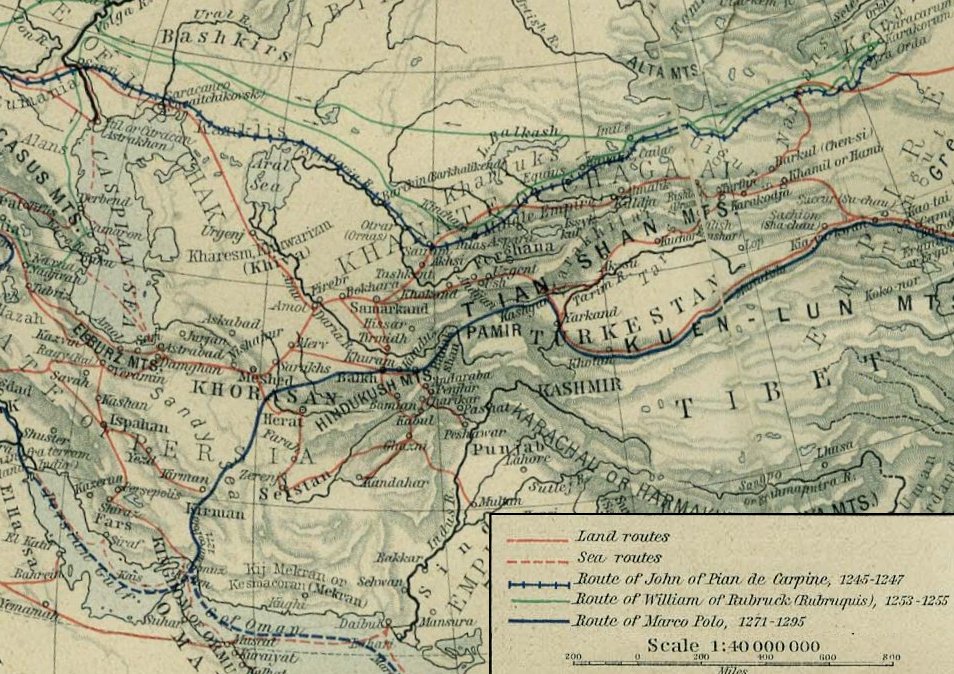
Medieval travelers often framed their journeys as tests of endurance, spiritual trials even, and many wrote accounts that blend factual description with moralizing and wonder. The traveller’s narrative shapes modern perception: Marco Polo’s late thirteenth-century account cast the Mongol-controlled trans-Eurasian routes in a particular light, while Arab geographers and Chinese bureaucrats offered bureaucratic snapshots and local color in their own registers. Together, these voices let us reconstruct a world where trade was an engine of both wealth and cultural transformation. The story that follows will trace the routes, the actors and the goods of medieval Silk Road commerce, but it will also trace the hidden conduits: the legal and institutional frameworks, the technological transfers—from papermaking to navigational techniques—and the darker currents such as the transmission of disease that braided through commercial traffic. This narrative is attentive to verified facts and archaeological evidence, but it retains a sense of mystery: the Silk Road was a place where the exchange of seemingly tangible objects carried intangible legacies across continents.
Did you know? The Hexi Corridor served as the main artery linking eastern China with Central Asia, and Dunhuang's Mogao Caves preserve manuscripts in multiple languages that testify to the corridor's multicultural traffic.
Geography and the Tangled Web of Routes
The medieval Silk Road was not a single road but a complex lattice of land and maritime corridors that connected East Asia, Central Asia, South Asia, the Middle East and, by extension, Europe. Overland routes across Eurasia adapted to terrain, climate and political control. From the Chinese capitals of Chang'an (Tang dynasty) and later Kaifeng and Hangzhou (Song dynasty), caravans pushed westward through the Hexi Corridor, flanked by the Gobi and the Tibetan Plateau. The Hexi Corridor funneled traffic into oasis cities—Dunhuang, Turfan, and subsequently Kashgar—each of which functioned as nodes where trade networks branched out. The northern steppe routes ran across Kazakhstan and the steppes of Siberia, frequented by Turkic and later Mongol nomads, while the southern routes skirted the high Pamirs and the Hindu Kush into the Indian subcontinent and Iran.
Crucially, the land routes interfaced with maritime networks. From ports such as Quanzhou and Guangzhou in southern China, goods could be shipped by monsoon across the South China Sea and the Indian Ocean to ports like Calicut, Hormuz and Aden. By the medieval period, the so-called Silk Road must be understood as a maritime-land hybrid system: goods and ideas moved by both camel caravan and dhow. The relative importance of land versus sea shifted with political power and technology. For instance, when Mongol rule created more secure overland links in the thirteenth and fourteenth centuries (the Pax Mongolica), overland routes flourished; in other periods, maritime trade offered more efficient and safer channels.
Topography and climate structured which corridors would be used at particular times. The Taklamakan Desert presented an obstacle that forced caravans to skirt its edges via northern and southern routes; the High Pamirs formed another barrier requiring specially equipped caravans and experienced guides. Alternating periods of drought or cold could make a route impassable for months or years, while warfare and banditry could render a previously prosperous artery deadly. Political considerations were equally important: the fragmentation of the Tang state in the ninth century, the rise of Islamic polities in Central Asia, and later the Mongol conquests all reconfigured the geopolitical map and the safety of trade. Thus, the medieval Silk Road was as much a story of geography as it was of negotiation between sedentary states and mobile steppe powers.
Did you know? During the Song dynasty, China's monopoly on silk weaving gradually weakened as sericulture techniques spread westward, partly through smuggling and the migration of sericulture knowledge.
But geography was also humanized by the landscape of settlement: oasis cities like Samarkand and Bukhara in Transoxiana were not mere waypoints. They grew into intellectual and commercial centers where craftsmen, moneychangers, translators and religious scholars coexisted. These towns were connected not only by bulk cargo but by networks of credit and trust—letters of credit and bills of exchange are attested in documentary finds—and by family and ethnic networks such as the Sogdians, who acted as middlemen across linguistic and political borders. The result was a braided, adaptive transport network whose apparent chaos imposed surprising order, enabling goods and ideas to traverse vast distances.

Goods, Economies and the Mechanics of Trade
The material history of the Silk Road is anchored in goods: silk, of course, but also spices, precious metals, textiles, ceramics, glassware, and less glamorous commodities like salt and horses. Silk from China, prized in Byzantium and later in Western Europe, remained a luxury good that carried high status and value over long distances. Chinese porcelain became a global commodity in later medieval centuries; its technical qualities and the aesthetic preferences it embodied ensured sustained demand. From India came spices (pepper, cinnamon, cardamom) and textiles; from the Middle East and Mediterranean came glassware and bullion; Central Asia provided horses—especially the famed Turkic and Persian breeds—and pastoral products.
Monetary and credit instruments matured alongside these flows. The Song dynasty saw the first major use of government-issued paper money in China, a development that transformed local economic transactions and, in certain cases, influenced long-distance trade by easing the movement of value. In the Islamic world, a sophisticated system of coinage—dirhams and dinars—interacted with local currencies and weights, and money changers in cities like Samarkand and Nishapur facilitated bullion conversion. Documentary evidence, especially from the later medieval period, shows the use of credit instruments resembling bills of exchange and letters of credit; such mechanisms reduced the need to carry large quantities of coin, thus mitigating robberies and easing large transactions across borders.
Did you know? Sogdian traders served as cultural brokers, and Sogdian inscriptions and documents found in sites like Turfan confirm their use of a written script and their role in Central Asian commerce.
Commodities circulated in different volumes and cycles. Luxury items like silk and spices moved in relatively small quantities but at high unit values, often accompanied by elaborate gift-giving and diplomatic exchange. Bulk items—grain, timber, raw metals—moved more regionally, less often across the whole Eurasian span. The trade in horses and military animals was of strategic importance; acquiring superior mounts could alter the balance of power in frontier polities. Trade also included knowledge goods: papermaking techniques, mathematical and astronomical knowledge, and artisanal skills traveled with artisans, prisoners of war and itinerant scholars. This flow of intangible commodities arguably had the most durable consequences.
Markets, fairs and caravanserais provided the institutional scaffolding for trade. Caravanserais—roadside inns scattered across deserts and steppe fringes—offered secure lodging, storage for goods and sometimes administrative services for desert traffic. Large fairs, such as those that periodically took place in Central Asian cities, attracted merchants from a wide radius and concentrated demand in ways that made long-distance trade viable. Local taxes, tolls and customs frameworks regulated entry into particular political territories; rulers could profit handsomely from trade, which in turn made the control of trade routes a political objective. Competition among cities and entrepôts—e.g., the Levantine ports versus Italian maritime republics—reflects the globalizing economic dynamics already present in the medieval period.

Merchants, Middlemen and the Social Networks of Exchange
No account of the medieval Silk Road can ignore the human networks that enabled trade. Merchants belonged to diverse ethnicities and religions, with a handful of groups—most famously the Sogdians—occupying crucial intermediary roles. Sogdian merchants, active from late antiquity into the early medieval period, established diasporic communities across Central Asia and China; their language and commercial practices influenced how trade was conducted, particularly in the early medieval centuries. In later medieval centuries, Turkic traders, Uyghurs, Persians, Arabs and Chinese merchants all took part in the complex web of exchange.
Did you know? The Mongol postal relay system (yam) included relay stations that provided horses and lodging, significantly increasing the speed of communication across Eurasia during the thirteenth century.
Merchant communities were bound by a mix of legal frameworks, commercial customs and trust. Guild-like organizations and family networks underpinned long-distance trade: kinship ties could be as important as formal contracts for ensuring business continuity across generations. Merchants often operated through agents, employing local factors to manage transactions and provide local intelligence on market conditions. Merchant accounts, contracts and archival documents (for instance, the Cairo Geniza fragments or merchant letters discovered in Central Asian cache) reveal the day-to-day calculations and negotiations.
Religious and cultural identities also mediated commercial practice. Muslim merchants facilitated the spread of Islam along trading routes, while Christian, Buddhist and Hindu communities similarly participated in trade and missionary activities. Syncretic urban cultures emerged in trading towns, where multilingualism and multi-religious coexistence were pragmatic tools for commerce. Such coexistence is visible in the architectural record—mosques adjacent to Buddhist stupas or Christian churches—suggesting that urban life on the Silk Road necessitated and fostered religious tolerance, at least in commercial quarters.
Travel accounts amplify the social texture of the road. Marco Polo’s narrative describes the organizational scale of Mongol imperial provisioning and the logistical capacities available to long-distance travelers. Arab geographers like al-Idrisi provided descriptions of cities and routes that were used by merchants, offering both practical guidance and cosmographical detail. These accounts, while occasionally colored by rhetorical flourish, provide corroboration to archaeological and numismatic data that together build a composite picture of merchant life: caravans organized by leaders who contracted guides and camel drivers, markets where languages mixed, and inns where deals were struck after nights of negotiation.
Did you know? Papermaking technology had reached Samarkand by the eighth century after the Battle of Talas (751 CE), where captured Chinese papermakers are traditionally said to have helped establish Muslim paper mills.

Political Frameworks: Empires, Protection, and the Pax Mongolica
Trade along the medieval Silk Road depended on the political environment. Empires could enable commerce by providing security and infrastructure; conversely, political fragmentation often produced new checkpoints and barriers. The Abbasid Caliphate (8th–13th centuries), the Tang dynasty (618–907) and later the Song dynasty shaped trade through taxation, coinage and diplomatic arrangements. The political topography of Central Asia, with its succession of Persianate, Turkic and Mongol regimes, meant that merchants had to negotiate an evolving patchwork of legal and fiscal regimes.
The period most historians identify as the high point of overland Silk Road traffic is the era known as the Pax Mongolica, roughly the thirteenth and early fourteenth centuries. The Mongol Empire, created in the early thirteenth century under Genghis Khan and consolidated under his successors like Ögedei and Kublai Khan, unified much of the Eurasian landmass. This unprecedented political integration, combined with Mongol policies that encouraged trade—such as the issuance of paiza (metal tablets granting safe-conduct and privileges) and protection of caravan routes—reduced the costs and risks of long-distance trade. The Mongols also improved physical infrastructure in places, maintaining roads and supporting postal relay stations (yam) that facilitated communication and movement across the empire.
However, the Pax Mongolica should not be romanticized as uninterrupted tranquility. Banditry persisted in many regions; local rulers still exercised authority and could impose burdensome taxes. Moreover, the Mongol integration brought new administrative systems and population movements—war, forced relocation and the movement of artisans and scholars—which altered local economies and reshaped urban demography. The result was a mixed picture: on the one hand, expanded markets, lower transit friction and greater long-distance connectivity; on the other hand, the disruptive social consequences of empire-building and the unpredictability of imperial succession.
Did you know? Venetian merchants, operating through Levantine intermediaries, were central to the medieval European luxury trade in silks and spices, fueling demands that later motivated Atlantic explorations.
Rulers also saw the control of trade as a revenue source. Cities along the Silk Road flourished when political authorities invested in urban amenities, markets and security, but could decline sharply under warfare or unfavorable policy. Competition for control of routes sometimes precipitated diplomatic efforts—treaties and alliances among states seeking stable commerce—and sometimes open conflict. Thus, political institutions and their policies were central to the rise and fall of Silk Road corridors.
Technology, Religion, Disease and the Ties that Bound Continents
Beyond goods and money, the Silk Road was a conduit for technologies, religious ideas and biological agents. One of the most consequential transfers was papermaking. Originating in China by the second century CE and further developed in the early medieval period, papermaking spread westward—via Central Asia and through contacts with the Islamic world—reaching Samarkand and Baghdad by the eighth century. The establishment of paper mills in the Islamic heartlands changed the landscape of literacy, administration and intellectual exchange, facilitating the proliferation of books and bureaucratic documents.
Similarly, technologies such as gunpowder and certain metallurgical techniques moved along trade and diplomatic channels. While the military and social impact of gunpowder would grow more fully in later centuries, medieval transmission of technical knowledge set the stage. The transfer of navigational knowledge and shipbuilding techniques across the Indian Ocean altered maritime trade patterns, complementing overland routes and creating alternative corridors for long-distance exchange.
Did you know? Evidence of Chinese silk found in Byzantine tombs demonstrates that luxury textiles traveled the full length of Eurasia well before the late medieval maritime era.
Religions traveled the same paths. Buddhism spread from India into Central and East Asia in multiple phases, carried by monks, pilgrims and lay merchants. Islam’s expansion into Central Asia and beyond was closely tied to trade networks: merchants, Sufis and missionary activity helped establish Islamic polities and communities across the region. Christianity—especially Nestorianism—appeared in Central Asia and China in the early medieval period, evidenced by inscriptions and church remains, underscoring the plural religious landscape of the Silk Road.
The darker side of connectivity was the spread of disease. The Black Death (bubonic plague) of the mid-fourteenth century represents the starkest example: while its precise pathways remain debated, evidence suggests that plague moved along trade networks, carried by fleas on rodents aboard ships and possibly through caravan routes. The demographic and economic catastrophes that followed the Black Death reverberated across Eurasia and contributed to the reconfiguration of trade patterns and labor relations.
The late medieval shift toward maritime routes—accelerated by the political fragmentation following the collapse of the unified Mongol domain, the rise of powerful maritime polities and improvements in ship technology—represents a rebalancing rather than an abrupt end of overland trade. Seafaring merchants provided cheaper bulk transport for certain goods, while overland routes continued to carry high-value luxury commodities and cultural exchange. The interplay among technological innovation, religious expansion, epidemics and shifting political authority made the medieval Silk Road an arena of continuous transformation.
Decline, Transformation and the Legacy of Medieval Silk Trade
The notion of the Silk Road's decline must be nuanced. There was not a single terminal event but a sequence of transformations across the late medieval to early modern periods. The disintegration of the Mongol Empire in the fourteenth century increased political fragmentation, and the demographic shock of the Black Death altered markets and labor systems. At the same time, maritime routes across the Indian Ocean and later European Atlantic explorations offered efficient alternatives for certain commodities, especially bulk goods and spices.
European demand for Asian luxuries nevertheless continued to drive historical changes. Mediterranean intermediaries—Venetian and Genoese merchants—linked with Levantine ports to import silks, spices and Eastern goods into Europe. The desire for more direct access to Asian commodities became a key factor behind the fifteenth-century Portuguese and Spanish maritime ventures. While these maritime strategies gradually redirected a portion of the trade previously carried overland, they did not erase the Silk Road’s influence. The exchange of techniques, crops (such as the spread of certain fruit varieties), and scientific knowledge had already reshaped societies across Eurasia.
Archaeological and textual evidence confirms the persistence of overland corridors into the early modern period. Caravan routes adapted to new political entities, while some Silk Road towns reinvented themselves as regional hubs rather than continental entrepôts. The cultural legacy—artistic motifs, architectural forms, religious pluralism and linguistic borrowings—remains visible in material culture across Central Asia, the Middle East and beyond. Modern historians now often emphasize the Silk Road as a network of networks, whose legacy is not simply economic but deeply cultural and institutional.
The medieval Silk Road also provides a historical lens for contemporary issues: globalization, cross-cultural contact, and the unintended consequences of interconnectivity (including disease spread) are not mere modern novelties but historical continuities. To study the medieval Silk Road is to appreciate a long process of exchange that made Eurasia a shared historical space. Its decline in some respects opened new routes and transformed old ones, but the web of connections woven during the medieval centuries persisted in altered forms, continuing to connect people, goods and ideas across vast distances.
Conclusion: The Silk Road as Story and Structure
The medieval Silk Road resists a single narrative. It is at once an economic infrastructure—routes, markets, caravanserais and instruments of credit—and a cultural tapestry, where languages, faiths, technologies and people mixed in ways that shaped the medieval world. Examined closely, the road reveals patterns of resilience: cities that adapted to changing political realities, merchants who reinvented networks of trust, and technologies that traversed borders and altered institutions. It also reveals fragility: human mobility could transmit plague as well as papermaking; political unity could protect commerce but also intensify the reach of conflict and imperial control.
In a mystery-driven sense, the Silk Road’s most enduring quality is how ordinary objects—bolts of silk, a caravan’s string of camels, a handful of coins—carried with them imprints of empire, religion and human ambition. The medieval period was a time when these imprints layered upon each other, leaving a palimpsest that historians read through texts, artifacts and the landscape itself. The medieval Silk Road did not merely connect markets; it connected minds and practices in a way that permanently altered Eurasian civilization.
For historians the challenge remains to disentangle myth from evidence, and to recognize that the Silk Road’s magic lay in its messiness: in the contingent negotiations, the unexpected meetings and the slow diffusion of techniques that together shaped an interconnected world. The medieval Silk Road, in its mixture of commerce and culture, provides a powerful example of how long-distance exchange can both produce wealth and create profound, sometimes unintended, global consequences.
How we verify this article
By the History Unlocked editorial team
This text is built on historical facts stored in our database and drafted with AI assistance. No signed human review is recorded for this article. Report any inaccuracy: we correct it and update the modified date.
Updated on
AI-assisted drafting.
Read our editorial standardsEnjoyed this? Discover more articles in the category Middle Ages