Feudalism Unveiled: Secrets of Medieval Hierarchy
In the dim light of a candle, where wax drips like time itself, the medieval world begins to make sense in the most paradoxical way: through networks of obligation rather than maps of territory. Feudalism is often presented as a rigid ladder—king at the top, peasants at the bottom—but the reality is a web: overlapping loyalties, personal bonds, and rituals that bound men and women to one another in ways both legal and intimate. To step into the Middle Ages and study feudalism is to follow threads of oath and promise into courtly halls, timbered manors, and stone keeps. It is to feel the weight of a written charter and the hush that falls when a vassal kneels before his lord to pledge his hands and his sword.
This article does not seek to simplify or elegize; it aims to reveal. We will trace feudalism from its fragile beginnings amid the collapse of centralized power during the ninth and tenth centuries, follow the codified gestures of homage and investiture that legitimated rule, and descend into the quotidian world of the manor where obligations were measured by bushels of grain and days of labor. Along the way we will examine the knights whose martial prowess shaped both war and culture, compare regional variations across England, France, and the Holy Roman Empire, and confront the slow attrition of this system as towns, taxes, and plague reshaped medieval society.
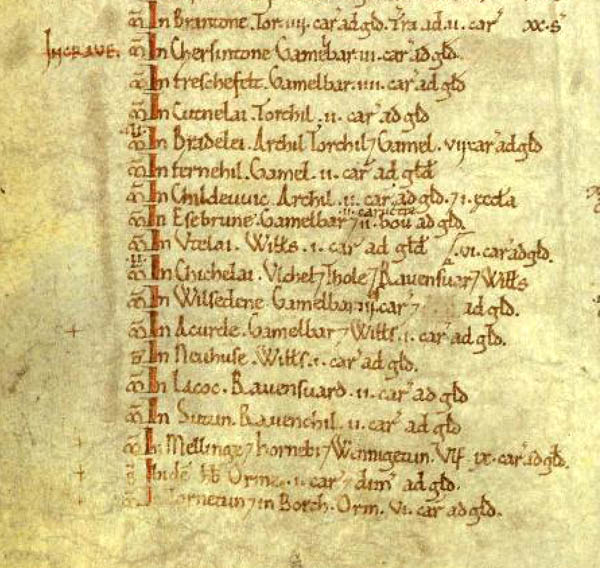
The story of feudalism is stitched together from charters, chronicles, legal formularies, and artifacts: the Domesday Book's painstaking lists, the vivid scenes of the Bayeux Tapestry, the parchment of the Magna Carta, and the records of manorial courts. Each of these sources reveals a layer of life: how land became a currency of obligation, how personal fidelity translated into political authority, and how rituals such as homage and investiture made intangible loyalties tangible. We proceed with a narrative curiosity-driven tone, peering into legal formulas as if they were spells, and treating the medieval past as a landscape of secrets waiting to be read.
Did you know? The Domesday Book was completed in 1086 and recorded landholding and resources across much of England to inform taxation and feudal obligations.
This introduction will open the doors. In the sections that follow we will illuminate the origins and evolution of feudal structures, dissect the legal rites that created vassalage, explore the manorial economy that underpinned everyday existence, follow the knight’s path from oath to battlefield, map the variations between regions and the reasons behind them, and finally unravel the multiple causes that led to feudalism’s transformation. Expect mystery in the margins, unexpected continuities, and concrete facts anchored in documents and archaeology. We begin in the ninth century, when Europe was being remade by invasions, fragmentation, and new forms of power.
Origins and Early Development of Feudal Ties
Feudalism did not arrive fully formed like Roman law; it emerged slowly as the structures of authority that had held the Carolingian empire together began to crumble. The Treaty of Verdun in 843 split Charlemagne’s empire among his grandsons and set the stage for smaller, local centers of power. By the ninth and tenth centuries, external pressures—Viking, Magyar, and Saracen raids—combined with weakened central authority to push landholders into arrangements where military protection and local governance flowed through personal bonds. Lords could no longer rely solely on royal power; they needed retainers and supporters with whom they formed mutual obligations.
The term "feudum" (fief) appears in written records by the ninth century, and the practice of granting land in exchange for service can be traced to late Roman and early Germanic traditions. Yet the practice acquired new significance in a Europe of fortified manors and emergent castles. A land grant, or fief, became not just an economic resource but the legal guarantee of a vassal’s capacity to support a lord militarily, administratively, and politically. Over decades, the holding of land and the ritualization of loyalty—homage, oath, and investiture—crystallized into a system scholars commonly call feudalism.
Did you know? The Investiture Controversy (c. 1075–1122) culminated in the Concordat of Worms (1122), which differentiated spiritual from temporal investiture and reshaped church-state relations across Europe.
Important early developments include the increased reliance on mounted warriors. The rising importance of cavalry, tied to technological and tactical innovations, made horses and the gear to support them valuable. Lords needed reliable fighters and therefore had to secure their loyalty—often through the grant of a fief. The capacity to field a retinue of armed men became a measure of power that was more immediate than a distant king’s writ. Local magnates—counts, dukes, and increasingly autonomous viscounts—exercised judicial powers, collected rents, and raised military forces from among their vassals.
The ninth and tenth centuries also saw the construction of fortifications—motte-and-bailey castles and later stone keeps—that physically symbolized the new order. These strongholds helped local lords control surrounding territories and offered refuge during raids. They also became nerve centers of manorial administration where labor obligations were counted and sold, fines were imposed by local courts, and the rituals of lordship were performed. As such, the castle was not merely a military installation but an institutional core of feudal society.
Legal documents from this period are fragmentary, but where they survive they suggest an increasing formalization: charters specifying the terms of land grants, the obligations attached to them, and the inheritance rules. By the eleventh century, the architecture of feudal relations had become complex: layered lordships, subinfeudation (where vassals could themselves become lords by granting parts of their fief), and the occasional conflict between overlapping claims. The logic of reciprocal obligation—land for service, protection for loyalty—underpinned political legitimacy.
Did you know? In many English manors, court rolls recorded not only fines and obligations but also local disputes over boundaries and communal rights, offering historians invaluable micro-histories of medieval life.
The English case after the Norman Conquest of 1066 offers a particularly clear snapshot: William I’s survey, the Domesday Book of 1086, catalogued landholdings precisely, revealing an organized hierarchy of land tenure with tenants-in-chief, mesne lords, and sub-tenants. In France, the long-term weakness of royal authority compared with powerful regional magnates meant feudal bonds could be more diffuse and localized. Meanwhile, in the German lands of the former Carolingian realm, emperors often relied on a complex patchwork of duchies and bishoprics to maintain influence, leading to different configurations of lordship and vassalage.
The Legal and Ritual Framework: Homage, Investiture, and Oaths
To call feudalism a system of "customs" is to understate the degree to which ritual and legal formality mattered. Feudal bonds were created and reinforced by ceremonies—homage and investiture—that combined elements of contract, sacred vow, and political theater. A vassal’s obligation began with homage: a public act of submission whereby the vassal knelt, placed his hands between those of the lord, and swore an oath of fidelity (the oath of fealty). This ritual made the relationship personal; it bound the vassal’s honor to the lord and created moral and legal duties that could be enforced by both social pressure and legal mechanisms.
Investiture complemented homage by transferring the tangible sign of the fief—often a clod of earth, a twig, a charter, or symbolic object—to the vassal. This symbolic handing-over represented the grant of rights to land and resource use. By the eleventh and twelfth centuries, investiture and the symbols attached to it could become points of contention, especially when high-ranking offices like bishoprics carried both spiritual authority and temporal resources. The Investiture Controversy of the late 11th and early 12th centuries, centered on whether secular rulers or the papacy could appoint bishops, is an emblematic crisis revealing how feudal forms intersected with ecclesiastical power.
Did you know? The practice of scutage—paying money instead of providing military service—became widespread in England from the 12th century onward and helped fund royal armies.
The legal language of charters was precise: they specified the terms under which a fief was held, the rights and burdens attached, and the succession rules. In many cases, feudal contracts included clauses on wardship (the lord’s rights over an underage heir), marriage (control over heiresses and the political uses of marriage), and relief (a payment upon inheritance). These provisions show that feudal ties were as much about property law as they were about military obligation.
Homage and fealty were not empty rituals; breaking an oath could have severe consequences. A vassal who betrayed his lord risked forfeiture of his fief and loss of status. Conversely, lords were expected to provide protection and justice; failure to do so could be construed as a breach of duty. This reciprocal expectation provided a fragile equilibrium: the lord’s power was legitimate only insofar as he fulfilled his obligations to his vassals and dependents.
The ceremonies themselves were laden with symbolism. Kneeling before a lord invoked religious overtones—many investitures took place in a chapel—and the vassal’s oath was understood to be solemn before God. This fusion of the sacred and the secular made feudal commitments both politically enforceable and morally binding. In practice, the flexibility of custom allowed for local variation: the precise words of an oath, the symbols used in investiture, and the obligations attached to a fief could differ from one region to the next, producing a landscape of legal pluralism across Christendom.
Did you know? The Magna Carta of 1215, while often seen as a foundational constitutional text, originally addressed baronial grievances and feudal rights; its clauses dealing with feudal reliefs and wardships reflected the legal texture of the period.

Manorialism and the Everyday Life of Peasants
While the high drama of knightly oaths and episcopal investiture grabs attention, the economic backbone of feudal society lay in manorialism—the organization of agricultural production and rural life around a manor controlled by a lord. The manor was a unit of production and jurisdiction: the lord held courts, regulated customary duties, and extracted rents and labor services from dependent peasants. It is within the manor that we find the concrete mechanics of feudal obligations: how many days a year a villager owed to the lord’s demesne, what fines might be levied, and how common fields were organized.
Peasants were a heterogeneous group. Free peasants, serfs (villeins in England), and coloni or copyholders in other regions occupied different legal statuses. Serfs were not slaves in the ancient sense: they were bound to the land, could not freely leave without permission, and owed labor or dues to their lord. However, serfs could possess personal property, marry (often with the lord’s consent), and sometimes purchase freedom. Manorial courts—frequent and detailed in surviving records—revealed a tapestry of local custom: rules regarding trespass, inheritance, common rights to pasture and wood, and penalties for failing lordly obligations.
The open-field system, prevalent in many parts of northern Europe, organized arable land into large common fields subdivided into strips cultivated by individual households. Crop rotation systems, including two- and later three-field rotation, governed the agricultural calendar and productivity. Lords extracted a portion of peasants’ produce (the tithe for ecclesiastical lords or various rents for lay lords) and required labor service on the demesne—known as corvée labor—where peasants worked the lord’s land for set days per week or season.
Did you know? After the Black Death, many European regions saw laborers negotiate better terms, and some manorial courts recorded commutations of labor services into fixed rents in the late 14th century.
Manorial records like account rolls, court rolls, and customs tracts provide detailed data on these obligations. For example, English manorial court rolls from the 12th and 13th centuries enumerate fines, customary payments, and the names of tenants, offering a granular view of rural life. These documents dispel the notion of a monolithic serfdom; instead they show a spectrum of rights and duties negotiated locally. The economy of the manor was deeply embedded in customary law, and this legal culture often proved remarkably durable.
Beyond the economic, manorial life shaped social identity. Community obligations—work on shared infrastructure like mills and bridges, communal handling of grazing rights—created habits of cooperation and dependence. The church, often located at the manor or nearby, was a focal point of communal life: baptism, marriage, burial, and festal cycles knitted villagers into a religious and social rhythm.
Yet the system had limits. Population growth from the 11th to the early 14th centuries increased pressure on land, and markets expanded, creating opportunities for monetization of rents and substitution of money for labor service. The rise of towns and trade provided alternatives to rural serfdom, and over time these economic shifts would erode manorial constraints.
Did you know? The Bayeux Tapestry, completed in the 11th century, is a near-contemporary visual record of the Norman Conquest and shows aspects of feudal relations and military practice.

Military Culture and the Knightly World
Feudalism's martial dimension has long fascinated historians and the public alike. Knights—mounted, armored warriors—were central to feudal military arrangements. Their status was linked to their role as professional fighters. The creation of a knight required sometimes expensive equipment: horse, lance, mail or plate, and training. The economic basis of knighthood derived from land: a fief provided the income necessary to maintain horse and arms. Thus the social identity of the knight fused economic base, military function, and cultural code.
The ethos often associated with knights—chivalry—grew over centuries, absorbing elements of Christian piety, courtly behavior, and martial excellence. Literary productions such as chansons de geste and later romances shaped popular ideals. However, the reality of warfare was less glamorous: sieges, raiding, and small-scale private wars between magnates were common. Kings sought to harness feudal military resources through scutage, a money payment that allowed monarchs to hire professional troops or mercenaries in lieu of a vassal’s personal service. Scutage demonstrates the increasing monetization of military obligations and hints at longer-term transformations.
The obligation to provide military service was usually quantified: a knight’s service might be defined as forty days per year, the period a knight’s resources could sustain field service. Yet this formula varied across regions and over time. Castles and fortifications required garrisons; lords had to maintain troops for local defense. In some cases, lords relied on stipends or the raising of infantry rather than purely on mounted knights. The Hundred Years’ War (1337–1453) between England and France highlighted such shifts: the pivotal role of infantry, longbowmen in English service, and evolving siegecraft contributed to military changes that lessened the dominance of the armored knight.
Knighthood also entailed obligations beyond warfare. Knights served in retinues, attended their lord’s court, and participated in tournaments—events that combined training, social display, and sometimes political signaling. The relationship between knight and lord could be intimate: personal loyalty was expected, but knights could and did navigate multiple loyalties when the web of feudal ties overlapped or conflicted.
The military pressures of the late Middle Ages—prolonged wars, fiscal demands of monarchs, and the need for standing forces—contributed to the decline of strictly personal feudal levies. As kings centralized power, they increasingly relied on taxation and paid soldiers, diminishing the relative importance of feudal military service and altering the incentives for lord-vassal relations.
Regional Variations: England, France, and the Holy Roman Empire
Feudalism was not uniform across medieval Europe; local traditions, secular power, and ecclesiastical structures produced significant regional variation. England, France, and the German lands of the Holy Roman Empire provide instructive contrasts. Each region’s political geometry and social fabric shaped how feudal relations were organized and how they evolved.
England offers a relatively well-documented model, particularly after 1066. William the Conqueror’s redistribution of lands to his followers created a clearer hierarchy of tenants-in-chief who held land directly from the crown. The Domesday Book’s meticulous record-keeping in 1086 displays an administrative clarity that helped the Norman kings assert fiscal and judicial control, even as local magnates retained considerable power. Over centuries English kings worked to centralize justice and revenue, culminating in legal developments and political tensions—Magna Carta in 1215 stands as a pivotal document limiting royal prerogative and affirming certain rights for barons, though its immediate effect was contested.
France presented a different trajectory. The Capetian kings began with limited power, often confined to the Île-de-France; much of France consisted of powerful duchies and counties exercising sovereign-like authority. Feudal bonds in France were therefore often more fragmented. By the 12th and 13th centuries, French kings slowly extended royal justice and jurisdiction, incorporating feudal lords into a hierarchical monarchy. The process was uneven and frequently negotiated through warfare, marriage alliances, and feudal law.
In the Holy Roman Empire, the imperial center never achieved the centralized control seen in later French or English monarchies. Instead, emperors ruled a mosaic of duchies, bishoprics, free cities, and princely territories. Imperial authority rested on a complex network of imperial immediacies and privileges, with princes often exercising near-sovereign powers. Feudal customs in these lands adapted to a political environment where local autonomy was the norm, and the emperor’s power depended on negotiated consent and the cooperation of powerful territorial rulers.
Other regions introduced further variations. In Iberia, the Reconquista shaped feudal relations, with military orders and frontier lordships granting particular forms of tenure. In Italy, the rise of communes and mercantile cities led to different dynamics: urban elites developed systems of patronage and lordship distinct from rural manorialism. Even within these broad regions, local legal customs—such as the custom of partible inheritance in some areas versus primogeniture in others—shaped the longevity and stability of feudal holdings.

Decline, Transformation, and Legacy of Feudal Structures
By the later Middle Ages feudalism did not simply vanish; it transformed. Multiple, often overlapping causes contributed to the erosion of feudal arrangements. Economic change—expanding trade, the growth of towns, and monetization of rents—reduced the centrality of land as the sole measure of wealth and power. Politically, monarchs in many regions sought to centralize authority, creating professional bureaucracies and standing armies funded by taxes rather than by the sporadic military service of vassals.
Demographic catastrophe played a decisive role. The Black Death (1347–1351) killed an estimated one-third to one-half of Europe’s population, creating acute labor shortages. In the aftermath, surviving workers found greater bargaining power. Wages rose in many regions, and lords faced pressure to commute labor services to money payments or release serfs from certain customary obligations. In England, the Peasants’ Revolt of 1381 expressed social tensions exacerbated by taxation, labor controls, and legal constraints, though its immediate consequences were limited. Across Europe, these upheavals accelerated the breakdown of rigid manorial obligations and facilitated transitions toward wage labor and tenant farming.
Military changes also undermined feudal military arrangements. The effectiveness of infantry, new missile weapons like the English longbow, and advances in siegecraft all reduced the decisive advantage of armored cavalry. Kings increasingly recruited mercenaries and developed standing forces financed through regular taxation. These shifts weakened the link between landholding and military service that had been central to feudal order.
The legal residues of feudalism persisted. Titles, land-tenure forms, and customary obligations remained embedded in many European legal traditions. In some areas the language of fiefs and vassalage continued to structure aristocratic identity well into the early modern period. Yet the substance of power shifted: economic capital, bureaucratic office, and royal favor became more important than personal ties of homage.
Culturally, feudal motifs endured: chivalric literature, heraldry, and noble rituals continued to shape elite identities. Modern historical memory of feudalism, however, has often simplified its complexity—presenting it as a system of oppression or a quaint hierarchical relic. The truth is more nuanced: feudalism was a flexible, evolving collection of practices that varied by place and time, an improvised solution to the political and military challenges of a fragmented medieval world.
Conclusion: Reading Feudalism’s Shadows
To conclude, feudalism is best understood less as a monolithic "system" and more as a patchwork of practices—legal formulae, rituals, economic arrangements, and personal loyalties—that together produced medieval political order. From the fractured stage of the ninth century to the transformations of the black death and centralized monarchies, feudal bonds adapted to pressure and opportunity. Homage and investiture codified personal loyalty; manorial courts disciplined rural life; knights embodied martial service; and regional variations reflected local political ecologies.
The mystery of feudalism lies in its durability and adaptability. A tapestry woven of oaths and payments, it could mend ruptures in social order by translating personal fidelity into political legitimacy. Yet it also produced tensions: overlapping obligations could provoke conflict, and the economic constraints of manorialism could stifle innovation. The late medieval shifts—monetization, demographic shocks, military change, urban growth—were not singularly decisive but cumulative, progressively undermining the old logic of land-for-service.
Modern readers often ask: what remains of feudalism today? Its direct institutions largely dissolved, but its legal and cultural residues influence property law, aristocratic identity, and public memory. Castles and records, charters and chronicles remain as ruins and archives—silent witnesses to a mode of authority that once made sense in a world of fragmented power and personal bonds. Understanding feudalism requires patience with nuance, attention to local detail, and a willingness to lift documents out of the archives and listen for the echoes of oath and obligation.
In the end, the medieval world was less a static ladder and more a house of rooms—some private, some public—connected by corridors of duty and ritual. Feudalism made those corridors habitable for centuries; its slow unraveling transformed them into new spaces of power. The past is not a tidy narrative but an accumulation of living practices and legal arrangements. To read those practices closely is to find not only a system of rule but also traces of human negotiation, invention, and resilience.
How we verify this article
By the History Unlocked editorial team
This text is built on historical facts stored in our database and drafted with AI assistance. No signed human review is recorded for this article. Report any inaccuracy: we correct it and update the modified date.
Updated on
AI-assisted drafting.
Read our editorial standardsEnjoyed this? Discover more articles in the category Middle Ages