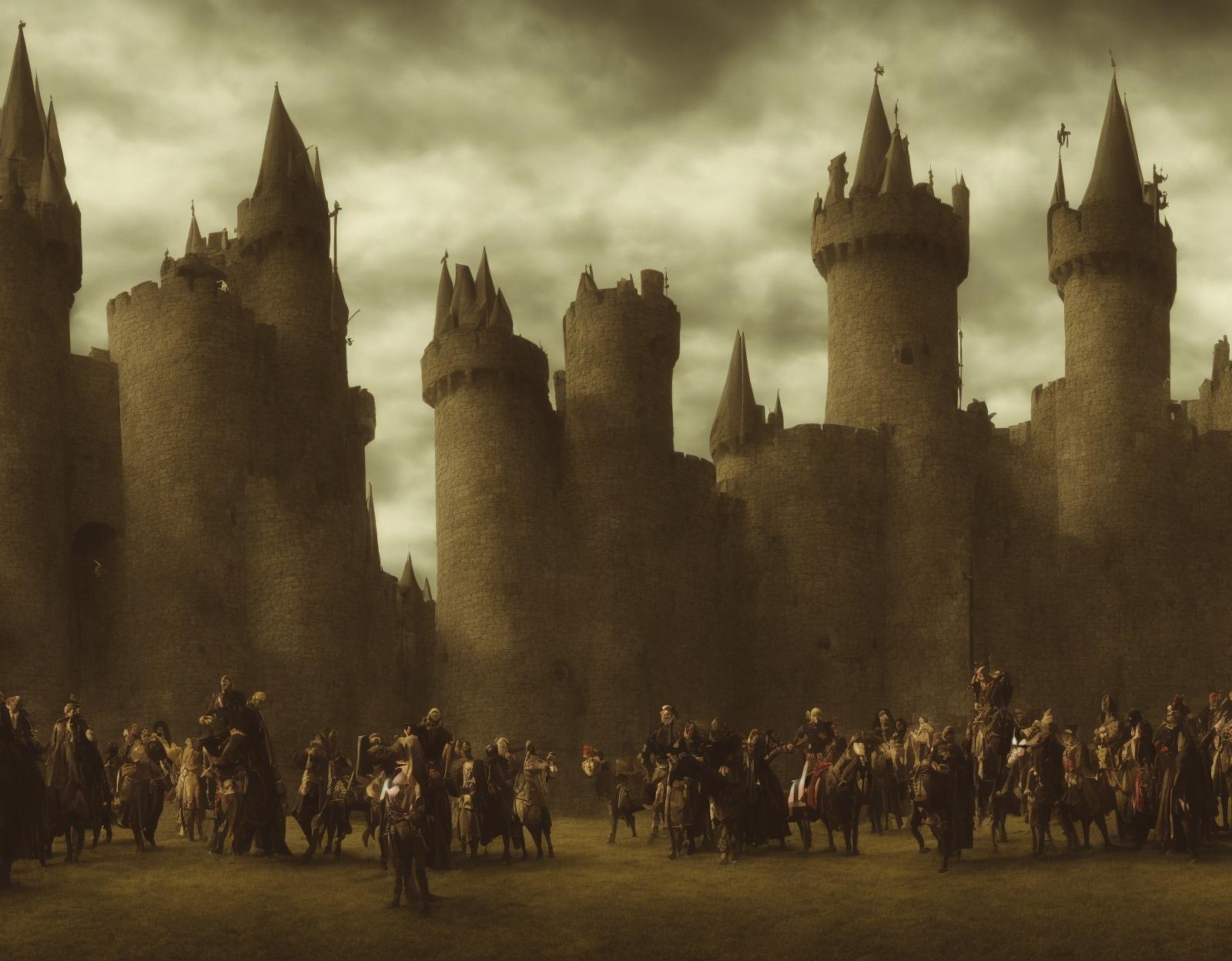
Court Fools: Jesters and Medieval Entertainment
In the dim corridors of medieval palaces and the candlelit naves of parish churches, an odd figure moves with a peculiar license: the jester. To modern eyes he is a hybrid of clown, satirist, musician and social barometer — a performer whose painted face and motley coat masked a complex social role. Medieval jesters were never merely comic relief. They existed at the fragile border between sanctioned mockery and dangerous truth-telling, at once insiders and outsiders who could reflect and refract the anxieties of their age. This essay wanders through that world, following the cap and bells from ritual parades to illuminated manuscript margins, from royal chambers to tavern squares. Along the way we will meet named jesters, trace ceremonial practices like the Feast of Fools and the Lord of Misrule, and consider how images and literature preserved a tantalizing, often contradictory memory of these figures.
The medieval jester remains enigmatic because he inhabited contradictions: empowerment in marginality, speech protected by humor, and a kind of sanctioned subversion tolerated only because it entertained. Some were highly educated, skilled in languages and rhetoric; others were welcomed for physical oddities or a natural gift for folly. Their presence was recorded in household accounts, legal records and chronicles, and their caricature dances across the margins of illuminated manuscripts such as the Luttrell Psalter. This is a story of survival and cunning, of social negotiation through laughter. It is also the tale of how laughter itself became a political instrument. The narrative that follows seeks to restore nuance to the fool’s role in medieval culture — a role neither merely servile nor wholly free, but paradoxically powerful in its very ambiguity.
Origins and Early Roles of the Medieval Jester
The jester's lineage is older than medieval Europe. Roots can be traced back to ancient Rome, where the cicerone of banquets and actors occupied a marginal but visible place, and to Near Eastern trickster figures who combined performance with moral commentary. By the high Middle Ages the figure had been adapted into a variety of social functions across Europe. The earliest medieval jesters appear in accounts of royal households and monasteries, and their presence is attested by payments, clothing allowances and occasional legal references. Jesters were not a monolith: their roles differed according to region, period and the temperament of their masters. In some contexts they served as musicians and storytellers, in others as mock-ritual specialists who presided over inversion festivals that temporarily overturned social hierarchies.
Did you know? The Luttrell Psalter (c. 1325–1340) contains some of the most vivid medieval marginal images of fools, including grotesques and mock-processions that reveal contemporary attitudes toward folly.
Feasts and Carnival-like rituals — most famously the Feast of Fools and the Lord of Misrule — provided institutional spaces for sanctioned disorder in the medieval calendar. The Feast of Fools, which developed in parts of France and then more widely in Europe between the 12th and 16th centuries, allowed clerical subordinates to elect a grotesque substitute who would parody the church's liturgy for a brief period. Likewise, the English Lord of Misrule governed the household revelries at Christmas, overseeing games and comic subversion. These practices were not mere entertainments: they functioned as social safety valves that permitted brief, controlled release of tension in rigidly hierarchical societies. Through them, fools enacted a form of collective catharsis.
Jesters also appear in parish and municipal contexts. Festivals, guild gatherings and civic ceremonies often employed jesters, mummers or “holy fools” who performed masked processions and improvised sketches. The jongleurs and minstrels who traveled from town to town sometimes doubled as jesters when employed by a patron. Their repertoire could include music, acrobatics, storytelling, and satirical verse targeted at local figures of authority — though the edges of acceptable satire were always precarious.
What sustained the institution of the jester was its usefulness to patrons. A jester could liven a court, distract a bored monarch, and offer a safety-valve for critique. In the archives one finds entries that document pensions and clothing for court fools, indicating their recognized and sometimes substantial role within household economies. The record suggests that the jester was both useful and regulated: paid to perform, but expected to adhere to an unspoken code that defined the boundaries of permissible mockery.
Did you know? The medieval legal concept that a fool’s speech could carry less retribution sometimes appears in court records, where jesters were treated differently in trials or punishments, reflecting their ambiguous legal status.
The Social Mechanics: Between Privilege and Marginality
To comprehend the jester is to move beyond a simple entertainer archetype and into a complex social mechanism in which irony and license functioned as political tools. The jester often occupied a liminal status: intimately present at court yet legally and socially marginal. Contemporary observers and later historians have emphasized a recurring dichotomy in medieval sources: the “natural fool” and the “artificial fool.” Natural fools, often individuals with cognitive disabilities or eccentricities, were sometimes kept at courts or by households ostensibly out of charity, amusement or superstition. Artificial fools, by contrast, were performers trained in wit, music and verbal dexterity. This distinction is important because it shaped expectations and protections — or lack thereof — surrounding the fool.
Artificial fools were valuable because their comedy could be calibrated. They could be witty interlocutors who deflected tension with laughter, advising through paradox, or provoking a monarch to reveal private opinions. The English court records show payments and clothing allowances for named fools, indicating that they were integrated into household economies. Those named jesters who have survived in collective memory — figures like Will Sommers in Tudor England — exemplify the artificial fool who navigated court politics by wit and proximity.
The “privilege” of the fool was often practical rather than juridical. In many courts jesters were informally allowed a degree of impunity: to mock, to speak truth in a way others could not. This license, however, had limits; it depended on the temperament of their patron and the political context. If a monarch or lord found the mockery unbearable, the fool could be dismissed, punished or even slain. Thus, the jester’s protection was precarious, often contingent upon the continued favor of those they entertained.
Did you know? The fool’s bauble is a recurring motif in medieval inventories and iconography; in some English household accounts the bauble was recorded alongside payments for livery and food for a court fool.
Traces of this ambivalence survive in laws and chronicles. Some sources remark on the fool's ability to testify in court because his words were considered less threatening, while others record episodes where jokes had serious repercussions. The social calculus of humor — what can be said, how and by whom — became a crucial part of governance. Jesters could be used by courtiers as a political instrument: their ability to mock rivals or to veer conversation away from dangerous subjects made them subtle agents in palace intrigue.

Costume, Symbols, and the Material Culture of Folly
The jester’s visual identity is among the most enduring legacies of medieval entertainment. The motley coat, cap with ass’s ears or horns, and the bauble (a mock-scepter topped with a carved head) are iconic. These items were not mere fashion; they were symbols that communicated a role and a license. Archaeological and textile records are sparse, but illuminations, woodcuts and household inventories provide vivid testimony. The cap-and-bells, for example, is often depicted in manuscript margins and plays an important symbolic role in medieval art: the ass’s ears and bells signify the wearer’s status as a sanctioned fool, a walking badge of inversion.
The bauble itself serves as an emblem of authority inverted. Where a sovereign holds a sceptre, the fool brandished a bauble that mocked royal regalia. In some courts the fool’s bauble was richly carved, demonstrating that even mock-sceptres could be objects of craftsmanship. Household accounts sometimes list purchases for fool’s costumes, indicating that nobles invested in high-quality garments for their jesters. Costumes could be multicolored — hence “motley” — but they could also be more subtle, depending on the individual’s role and the tastes of the patron.
Did you know? Many jongleurs who served as itinerant jesters were multilingual, allowing them to perform across regions and to carry news in song from one court to another, acting as informal information networks.
Material objects also shaped performance. Bells sewn to garments provided rhythmic accompaniment to physical comedy; a fool’s cap might conceal props or trick items used in sleight-of-hand. Instruments such as small harps, tambourines, and pipes were part of the traveling entertainer’s kit, while court jesters might perform songs in multiple languages, recite verse or present quick retorts that displayed verbal dexterity.
Beyond attire, certain gestures and routines were codified. Imitations of rituals, parodies of liturgical music, and grotesque dances formed part of a recognized repertoire. Yet the same symbols that made fools immediately legible could also constrain them: the cap and bauble signaled a permission to tread on sensitive topics but also marked the fool as socially expendable.

Performance, Music, and the Language of Satire
The medieval jester’s art was composite: music, mimicry, storytelling, acrobatics and sharp repartee. Their performances were tailored to audiences that ranged from a single monarch to a crowded market square. Jongleurs and minstrels, itinerant entertainers often conflated with jesters, carried news and rumor as well as songs. Their role in shaping public opinion should not be underestimated: ballads about local events, satirical songs aimed at corrupt officials, and comic sketches were all media through which social critique could be disseminated.
Did you know? Stańczyk, a famed Polish court jester of the early 16th century, was later memorialized in Polish art and literature as a figure of political conscience, demonstrating how jesters could be recast as moral voices after their time.
Court jesters, in particular, had to master a nimble language. They used parody and double entendre to critique without direct confrontation. The rhetorical tools of the fool — irony, paradox, and feigned ignorance — allowed them to voice uncomfortable truths under the veil of entertainment. This technique is visible in literary works where fool-figures deliver pointed commentary: medieval drama and later Renaissance plays continued the tradition of using fools to expose hypocrisy and folly.
Music was central. Plucked instruments like the lute or small harp were common; rhythmic accompaniment supported songs and mock-melodies. Some jesters were reputed to compose verses or to improvise topical satires on the spot. Their songs could memorialize events, lampoon a neighbor, or translate complex political situations into digestible anecdotes for a court audience.
Improvisation was also a survival skill. A jester’s wit had to respond to the moods of the court, deflect sharp anger and broker favor. They could be employed strategically: a witty quip might soften a monarch’s rage or redirect blame. Conversely, a misjudged jest could end in humiliation or dismissal. The performative space of the jester was thus deeply political and always precarious.
Did you know? Shakespeare’s Fool in King Lear is often read as a direct heir to medieval court jesters, using irony and paradox to challenge royal authority and offer moral commentary amid tragedy.
Jesters in Political Life: Power, Censorship, and Risk
Behind the motley and laughter lurked a political calculus. The jester could be both a tool and a threat. Monarchs sometimes relied upon jesters for candid counsel precisely because their jokes provided plausible deniability: a rebuke dressed as a joke could be ignored or laughed off, even as it lodged an idea in the monarch’s mind. Conversely, courtiers could weaponize jesters, granting them lines of satire that undermined rivals while shielded by the fool’s aura of frivolity.
There are documented cases where jesters influenced decisions by shaping what could be said in court. Conversely, there are also episodes of severe punishment when limits were transgressed. The tolerance extended to jesters was a form of negotiated immunity; it was not absolute. During times of political or religious crisis, satire could become dangerous. The Reformation and the increasing centralization of monarchical power in the late medieval and early modern periods narrowed the space for public inversion. Authorities who once indulged carnival laughter began to fear the destabilizing potential of mockery.
But the jester’s political role was not only risk. In many households, jesters functioned as trusted servants with practical roles: relaying messages, entertaining visitors, and even performing administrative tasks. Their proximity to sovereigns gave them unique insight into the rhythms of power. Because they spoke a language of paradox, their words could sometimes cut through formal rhetoric and expose truths that flatterers would not. This made them useful to rulers who valued unvarnished perspectives, especially in private moments.
Did you know? The Lord of Misrule, an English tradition connected to Christmas revelries, institutionalized temporary inversion in noble households, allowing a subordinate to preside over festive disorder.
The figure of the jester also intersects with larger cultural transformations. As printing spread and literacy slowly increased, satire found new outlets. But the live immediacy of the jester’s performance — the ability to react in real time to the court’s mood — remained distinctive. Even as some courts began to favor more polished entertainers, the political potency of public mockery retained its edge.

Visual and Literary Echoes: Manuscripts, Margins, and Drama
The grotesque faces and awkward postures of fools populate the margins of medieval manuscripts in astonishing profusion. The Luttrell Psalter (c. 1325–1340) and the margins of other Books of Hours often include scenes of mockery, hybrid creatures, and fools engaged in parodies of courtly life. These images are not simply decorative; they encode attitudes toward social inversion, corporeal humor, and the world beyond the book’s sacred center. Marginalia could be subversive, obscene, whimsical and instructive — a visual echo of the jester’s performance.
Literature preserved and transformed the jester’s voice. Medieval drama, with its mystery plays and farces, incorporated fool-figures who broke the fourth wall, addressed the audience and commented on human vice. By the time of the Renaissance, the tradition had matured into dramatic masterpieces: Shakespeare’s fools — from the witty Feste in Twelfth Night to the sardonic Fool in King Lear — carry forward the medieval license to speak truth cloaked in jest. These characters exercise an almost philosophical authority: their mockery unmasks hypocrisy and probes moral ambiguity.
Did you know? Some household accounts from late medieval England itemize payments for jesters, including clothing and food, providing hard evidence of their formal role in court life.
Beyond individual characters, the jester’s presence in art served as a cultural signifier. Painters in later centuries depicted jesters as symbols of folly or conscience, depending on the artist’s intent. Stańczyk’s representation in Jan Matejko’s nineteenth-century painting, for example, recasts the jester as a solitary, reflective figure troubled by national misfortune — a far cry from the bawdy entertainer. Such reinterpretations reveal the elasticity of the jester’s image: he could be comic, tragic, prophetic, or pathetic depending on the cultural lens.
The persistence of foolish imagery into printed broadsides and caricature shows the jester’s adaptability. As European societies transitioned into the early modern era, the functions of public mockery migrated into pamphlets, political cartoons and later theater. Yet the original live interplay of court, performer and audience remains a central chapter in the history of European satire.
Conclusion: The Lasting Resonance of Medieval Fools
The medieval jester survives in our imagination as a paradox: the licensed fool who could tell truth through laughter, a marginal figure with surprising access to power. He reminds us that humor is not merely diversion; it is a social technology that negotiates boundaries, communicates risk and permits critique in constrained contexts. Through ritual, performance and material culture, jesters played a measurable role in court life and in the broader public sphere. They were entertainers, yes, but also social interlocutors, political instruments and cultural mirrors.
Did you know? Nasreddin Hodja, a folkloric wise fool figure from the Islamic world, shares striking thematic similarities with European fools though he emerges from distinct cultural contexts.
As institutions changed — with the Reformation, the rise of print, and the consolidation of centralized states — the fool’s role evolved. Some aspects faded: the communal revelry of feasts gave way to more regulated ceremonies. Yet the jester’s rhetorical devices lived on. Satire became a printed weapon; theatrical fools became literary devices that continued to expose hypocrisy. Modern clowns, satirists and political cartoonists inherit a lineage that traces back to the motley coats and baubles of medieval courts.
The historical jester resists easy categorization because he was everywhere and nowhere: a named household servant in some accounts, a marginal figure in others, an emblem in art, a character in drama, a social safety valve in ritual. To study jesters is to study the politics of laughter itself — how societies permit, manage and fear mockery. The medieval fool teaches a fundamental lesson about human institutions: that restraint and inversion are often two sides of the same coin, and that laughter can be both a balm and a blade. Today, when satire is an instant, global force, recalling the subtleties of the medieval jester helps us remember the long, ambiguous history of speaking truth to power through the art of folly.
How we verify this article
By the History Unlocked editorial team
This text is built on historical facts stored in our database and drafted with AI assistance. No signed human review is recorded for this article. Report any inaccuracy: we correct it and update the modified date.
Updated on
AI-assisted drafting.
Read our editorial standardsEnjoyed this? Discover more articles in the category Middle Ages