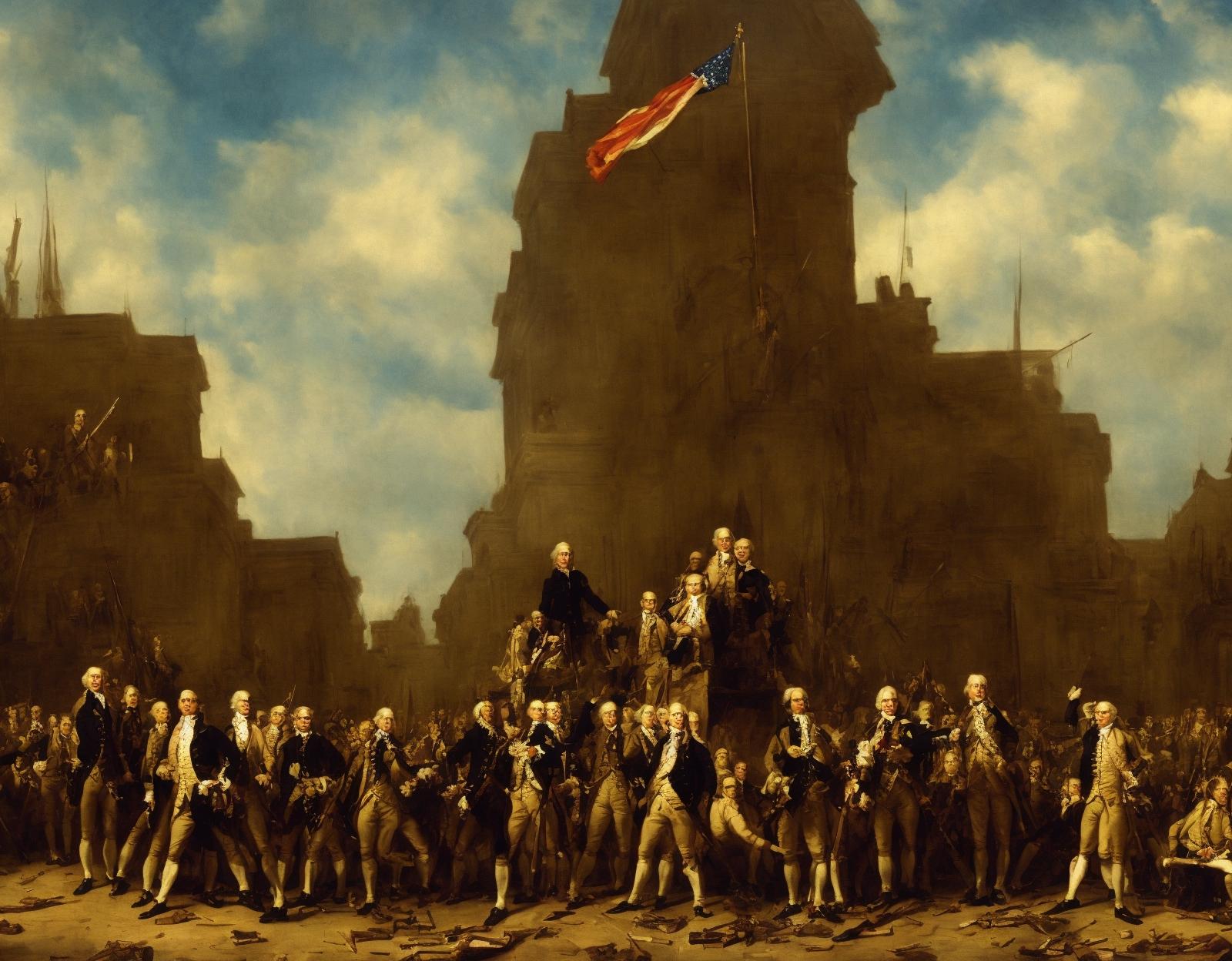
The Secret Origins of the US Declaration of Independence
The summer of 1776 hangs in history like a hinge between two worlds: an empire that believed itself unassailable and a handful of colonies that chose, through words and will, to risk everything. The air in Philadelphia was heavy with more than heat—there was the metallic tang of tension, the rustle of papers, the murmur of committees, and the secret conversations in taverns and private rooms. Into that charged atmosphere came a document that would not merely announce a political decision but attempt to articulate a universal language of rights, grievances, and legitimacy. It was at once a legal proclamation, a philosophical statement, and an act of theatrical defiance.
Thomas Jefferson is often remembered as the document’s principal author, and rightly so—his elegant prose carries the Declaration’s voice—but the story of the Declaration’s creation is less the solitary flash of genius and more the product of a small constellation of actors, edits, and compromises. Benjamin Franklin and John Adams were the leading guardians of the revolutionary cause; the Continental Congress served as crucible where ideas were tested and altered; and a cluster of committees and printers transformed drafts into broadsides that could be read aloud to anxious crowds.
That July, the Continental Congress performed a rare and dangerous experiment: it sought to justify, to the world and to itself, the unprecedented act of a people dissolving political ties. The Declaration had to do many things at once. It had to persuade wavering colonists, to rally potential allies abroad, to chastise a king and a Parliament, and to give moral cover to men who were, in many cases, about to commit acts labeled treason. Its creation involved both the lofty philosophy of John Locke and the grinding particulars of trade regulations, taxation acts, and legal precedents. The mystery embedded in the parchment is not only what it says but how it came to say it—whose words were kept, whose were excised, and what that reveals about the fragile republic being born.
Did you know? Thomas Paine's Common Sense, published in January 1776, dramatically increased public support for independence and helped shift merchant and rural opinions.
As we follow the threads of authorship, debate, printing, and signing, we uncover the Declaration as a living document—born in haste, polished by politics, and haunted by the compromises that would shape the new nation. This is a story of political theater and private conscience, of conspicuous signatures and absent signers, of the lofty language of natural rights standing beside the stubborn realities of slavery and empire. It is, in short, a story of revolution told through the intimate mechanics of drafting and dissent.
The Political and Intellectual Context of 1776
To understand the Declaration, we must first stand inside the tangled political landscape that preceded it. The thirteen American colonies did not awaken to rebellion in 1776 without a long season of grievance. The seeds of dissent sprouted in acts and laws: the Stamp Act (1765), the Townshend Acts (1767), and most famously the Tea Act (1773), each of which chipped away at colonists' tolerance of parliamentary authority. The slogan 'no taxation without representation' crystallized a constitutional argument: if Parliament could tax the colonies without their direct consent, then the traditional rights of Englishmen were being denied. That argument carried legalistic force, but beneath it lay deeper currents—economic distress after a costly global war, a sense of distinct colonial identity, and an emerging print culture that made pamphlets and newspapers potent vehicles for agitation.
Intellectual currents also mattered. Enlightenment thought—especially the works of John Locke—supplied a vocabulary for rights and consent: life, liberty, and property were framed as natural rights that governments existed to protect. Colonists did not craft that vocabulary in a vacuum; they translated European philosophical debates into the language of practical resistance. Pamphleteers such as Thomas Paine, whose Common Sense was published in January 1776, forced the public imagination to accept the possibility of independence. Paine’s blunt rhetoric moved many who had previously sought reconciliation to contemplate separation.
Did you know? The Committee of Five included Roger Sherman, a lawyer and politician who often worked behind the scenes but contributed to the compact phrasing that characterized many early American documents.
The Continental Congress itself had been convened in earlier years as a forum for intercolonial coordination. By 1775 and 1776, it had evolved from a gathering focused on redress to a government improvising at the edge of legitimacy. Military engagements—Lexington and Concord in April 1775, the siege of Boston—had hardened positions. Meanwhile, diplomacy sought recognition and support abroad. The question before delegates by mid-1776 was stark: should they declare themselves a separate people with the right to political self-determination? The answer required not only courage but also a persuasive and principled defense.
This was no mere legal motion; it was an act intended to be heard by multiple audiences. It needed to justify revolution to colonial subjects who might hesitate, to foreign powers who might provide aid, and to posterity. That the Declaration would blend legal argument with moral philosophy is no accident: the cause demanded both law and legitimacy. Thus, the framing of grievances—specific, documentary complaints against the Crown—sat alongside sweeping claims about unalienable rights. The document would become, in effect, an attempt to make revolution respectable.

The Committee of Five and the Drafting Process
On June 11, 1776, the Continental Congress appointed a 'Committee of Five' to prepare a declaration explaining the colonies’ decision to sever ties with Great Britain. The committee consisted of Thomas Jefferson of Virginia, John Adams of Massachusetts, Benjamin Franklin of Pennsylvania, Roger Sherman of Connecticut, and Robert R. Livingston of New York. This small group's mandate was practical and urgent: produce a document comprehensible to a wide audience that would justify the step of independence and persuade both domestic and foreign observers.
Did you know? John Adams believed July 2 would be the nation's great holiday; instead, July 4 became the annual celebration because of the printed Declaration's date.
Jefferson was chosen to write the first draft—a decision shaped by his reputation for clear and elegant prose and the political politics of the delegation. He retreated to a quiet room in Philadelphia and composed the initial text. Jefferson later insisted that he had relied on the best political philosophy of his age, and his language would interweave Enlightenment notions with a distinctly American clarity. The committee then met to revise the draft; Adams and Franklin proposed edits, but in the crucial passages the basic thrust of Jefferson’s prose remained.
What followed was a process of committee refinement and broader congressional revision. When Jefferson’s draft was presented to the Congress on June 28, debate began. Some of Jefferson’s passages were praised, some questioned for tone and accusation. On July 2, Richard Henry Lee’s resolution for independence had already been adopted, and the delegates were prepared to move from resolution to explanation. Over the next two days, the Congress debated phrases and grievances, excising and softening some sections while reaffirming others. The result adopted on July 4 was the product of both Jefferson’s pen and the collective will of the body.
Yet the process involved losses as well as gains. Delegates objected to inflammatory language, and certain passages—most notably a condemnation of the slave trade and an accusation that the King had incited slave revolts—were removed. That excision reveals something important: the Declaration is not only the articulation of ideals but also the outcome of political bargaining among colonies with divergent economies and interests. The presence of Southern slaveholders among the delegates meant that unity required compromise, and the text ceded certain moral claims to secure a national consensus.
Did you know? Jefferson's original draft included a passage condemning the slave trade and blaming the king for promoting it; that passage was deleted by Congress during revisions.

The Continental Congress, Debates, and the Vote
The theater of revolution in Philadelphia was a mix of oratorical fervor and painstaking procedural work. Congress deliberated in the Assembly Room of the Pennsylvania State House—now Independence Hall—where delegates spoke at length, proposed amendments, and recorded their votes. On July 2, 1776, the Congress voted in favor of Richard Henry Lee's resolution favoring independence. John Adams famously wrote to his wife Abigail that he expected July 2 would be celebrated as the nation's great anniversary, predicting fireworks and public rejoicing. Yet the document we now commemorate as the Declaration would be formally adopted on July 4 after further revisions.
The debates over the Declaration were at once ideological and intensely pragmatic. Delegates worried about the international implications—would France or Spain support the colonies? Would the declaration provoke harsher reprisals from Britain? They also had to craft a document that would persuade colonists across a wide social spectrum. Balancing rhetorical flourish with legal argument required careful wording. Melancholy or impassioned speeches from figures such as John Adams and Benjamin Franklin did not merely ornament the proceedings; they shaped the tone of the final text.
Another practical issue was the dissemination of the Declaration. On the night of July 4, John Dunlap, a Philadelphia printer, was commissioned to produce broadsides—single-sheet prints—bearing the text adopted by Congress. These 'Dunlap broadsides' were distributed to armies, committees, and towns, becoming the first public copies many colonists read. The now-celebrated 'engrossed' parchment copy, carefully written out by a professional scribe for formal signing, would be prepared later and is the artifact preserved today in the National Archives. Most delegates signed that engrossed copy on August 2, 1776, not July 4, a detail that complicates simple narratives about the day of independence.
Did you know? The Dunlap broadside was printed on the night of July 4, 1776, and became the primary means by which the Declaration was first disseminated across the colonies.
The Text’s Philosophy and the Influence of Enlightenment Thought
The Declaration’s opening paragraphs fold together moral philosophy and political argument in a manner designed to justify revolution. The famous assertion that 'all men are created equal' and are endowed with 'certain unalienable Rights' speaks to an Enlightenment inheritance—ideas largely traceable to John Locke and other contemporaries who argued that legitimate government arises from the consent of the governed. Jefferson’s phrase 'life, liberty and the pursuit of happiness' echoes Locke’s 'life, liberty, and property,' yet the substitution is meaningful. 'Pursuit of happiness' carries broader moral and civic resonances, opening the door to interpretations that transcend mere property rights.
Beneath the soaring assertions, the Declaration enumerates grievances—concrete accusations against King George III designed to portray systemic abuse: dissolving colonial legislatures, imposing taxes without consent, maintaining standing armies in peacetime without colonial approval, obstructing justice through biased judges, and cutting off trade, among others. These complaints were not rhetorical excesses; they referenced specific acts like the Coercive Acts (also known as the Intolerable Acts) of 1774 and other parliamentary measures that colonists experienced as coercive intrusions on their accustomed rights.
The document also sought to place the colonies’ action in a universal framework. By asserting that governments derive 'their just powers from the consent of the governed,' the Declaration tried to frame the American cause as part of a broader human struggle for legitimate rule. This framing was strategic: it aimed to attract international sympathy and possibly material assistance. French philosophers and officials paid attention, and, indeed, France’s eventual decision to support the American cause after the Battle of Saratoga in 1777 had roots in the moral and political claims first articulated in 1776.
Did you know? Fifty-six delegates signed the Declaration of Independence; each signature carried significant personal risk during the continuing Revolutionary War.
Yet contradictions persist. The Declaration speaks of equality even as many signers owned slaves or represented colonies where slavery was entrenched. Jefferson himself was a slaveholder who would later struggle privately and politically with the issue. The deliberate removal of an anti-slavery passage from the draft exposes the tension between universal ideals and political necessity.
Printing, Broadside Distribution, and Public Reception
Words on parchment mattered little without circulation. The Dunlap broadside, printed on the night of July 4, 1776 by John Dunlap of Philadelphia, provided tangible public evidence that Congress had acted. These broadsides were hurriedly distributed to military commanders, local committees, and tavern readings. The act of public reading—the Declaration aloud from town squares and meeting houses—transformed legal language into political spectacle. People heard the grievances enumerated and the claim of independence announced, and in many places the Declaration’s language catalyzed popular action.
Public reception was varied and regionally contingent. In New England, where resistance had been strongest, the Declaration was lauded and celebrated. In other colonies, where loyalties were more ambiguous or where economic ties to Britain remained strong, reactions ranged from cautious acceptance to outright hostility. Loyalists—colonists who remained faithful to the Crown—saw the Declaration as treasonous, while many neutral citizens worried about the economic and military repercussions.
Did you know? Both John Adams and Thomas Jefferson died on July 4, 1826, exactly fifty years after the adoption of the Declaration—a coincidence that fed the document's mythic aura.
For foreign powers, the printed Declaration offered both caution and opportunity. European governments and intellectuals read the American assertion of rights with interest, curiosity, and calculation. France, in particular, viewed the American struggle as both a chance to undermine British power and to ally with a movement claiming to be based on universal principles. The public diplomacy of the Declaration thus played a role in the transatlantic politics of the era.
Finally, the materiality of the Declaration—the parchment, the broadsides, and the signatures—helped create a ritual of legitimacy. When the engrossed copy was signed, the act of inscribing one’s name bound a delegate to the cause in a way that mere votes did not. The physical marks of signature later carried symbolic power: John Hancock’s large, confident pen stroke became emblematic of boldness; signatures of men who later died for the cause became relics of sacrifice.

Signatures, Sacrifices, and the Immediate Aftermath
Signing the engrossed Declaration was not a ceremonial afterthought: it was a dangerous act. To sign was to mark oneself as a public enemy of the Crown and to place one's life, fortune, and honor at risk. The 56 men who eventually added their names represented a variety of backgrounds—planters, merchants, lawyers—and a variety of fates. Some, like John Hancock and Samuel Adams, were leaders who managed to avoid capture. Others later paid dearly: several signers lost property, were imprisoned, or saw family members suffer. A number of signers died during the Revolutionary War or in its immediate aftermath.
Did you know? The original engrossed Declaration is preserved in the National Archives in Washington, D.C., and has been subject to conservation efforts to protect the fragile ink and parchment.
The timing of signatures is also revealing. While July 4 is the date the Declaration was adopted, most delegates did not sign the engrossed parchment until August 2, 1776, when Congress reconvened and the formal signing took place. Some delegates signed later; others never signed the engrossed copy but nevertheless were recorded as having voted for independence. New York’s delegation, for example, initially abstained from signing and its delegates were authorized later to sign.
Internationally, the Declaration did not produce immediate recognition, but it was a first step toward an American nation seeking alliances. The Continental Army, engaged at the time around New York and New Jersey, would face difficult campaigns in the months that followed. Independence did not equal immediate success; it invited harsher British pursuit and required fragile states to build governments, resources, and diplomatic connections from scratch.
Yet the symbolic force of the Declaration endured. Its rhetoric shaped revolutionary mobilization and remained a touchstone for later political movements. Even those later critical of the Revolution would return to its language to press claims for reform and rights. In this sense, the Declaration achieved both a short-term political purpose and a long-term moral resonance.
Myths, Mysteries, and the Declaration’s Enduring Legacy
The Declaration of Independence arrived clothed in myth almost as soon as it was printed. The popular imagination flattened the complex timeline into a single dramatic moment when delegates gathered, debated, and signed on July 4. Paintings and commemorations reinforced this tidy narrative. Yet the historical record is messier. The actual process involved drafts, edits, committee work, and staggered signings. The mythologized single-night signing makes for great drama but obscures the longer, more political story of how unanimity and consensus were engineered.
Beyond timing myths lie questions of authorship and intent. Jefferson’s voice predominate in the prose, but the Declaration is a collaborative political product. The excision of the anti-slavery passage raises enduring questions about the extent to which the founding rhetoric of equality was limited by economic and regional compromises. Historians continue to debate Jefferson’s intentions, whether he hoped for gradual emancipation, and how to reconcile his rhetorical commitment to liberty with his status as a slaveholder.
Conspiracy and mystery have also clung to the Declaration. Handwritten drafts—what survives of Jefferson’s papers, Franklin’s annotations, and early printed broadsides—have been scrutinized for clues about editorial choices. The story of the 'lost' or 'missing' drafts occasionally surfaces in popular accounts, but archivists have recovered significant primary materials: the engrossed parchment, Dunlap broadsides, Jefferson’s rough drafts, and correspondence among delegates. These documents allow historians to trace how phrases were chosen and which grievances were contested. What emerges is neither a single great mind nor a monolithic conspiracy, but a political community negotiating the shape of its own revolution.
The Declaration’s long-term impact is both moral and political. Its phrases have been invoked by abolitionists, suffragists, civil rights leaders, and international movements seeking self-determination. Abraham Lincoln turned to the Declaration in arguing for the nation’s moral unity; Dr. Martin Luther King Jr. quoted its promises in the struggle for civil rights. Internationally, the text inspired other peoples seeking independence or reform. Thus, despite its compromises and contradictions, the Declaration has circulated as an emblem of human aspiration.
Conclusion: The Declaration as Covenant and Question
The Declaration of Independence remains at once a founding covenant and a perpetual question. Its soaring lines promise equality and rights while the historical record reveals the limits of those promises in practice. The document’s creation story—drafted in haste, revised by a committee, debated in the crucible of Congress, printed by a night watchman-printer, and signed by men taking great personal risks—shows how revolutions blend idealism and pragmatic compromise. Its language has lived well beyond its specific legal force; it has served as a moral mirror in which Americans have repeatedly examined themselves.
To read the Declaration as purely an inspiring text is to exaggerate; to read it only as a political instrument is to underestimate its moral reach. The true power of the Declaration lies in this duality. It established a rhetorical baseline against which future generations could press claims for a more inclusive and just nation. The document’s mysteries—the edits, the excisions, the signatures—invite scrutiny because they reveal the messy human processes that generate political ideals.
In the end, the Declaration is a story about risk and imagination. A group of colonial representatives, facing a powerful empire, chose to express their claim to self-rule in words that proclaimed a radical premise: that political legitimacy rests on consent and rights. That premise has been contested, expanded, and reinterpreted across centuries. The Declaration’s parchment sits in the National Archives as a fragile relic, but its sentences continue to be read, debated, and invoked. Each reading renews not only the historical memory of 1776 but the enduring question the founders left behind: what does it mean to secure the blessings of liberty for all?
How we verify this article
By the History Unlocked editorial team
This text is built on historical facts stored in our database and drafted with AI assistance. No signed human review is recorded for this article. Report any inaccuracy: we correct it and update the modified date.
Updated on
AI-assisted drafting.
Read our editorial standardsEnjoyed this? Discover more articles in the category Great Revolutions