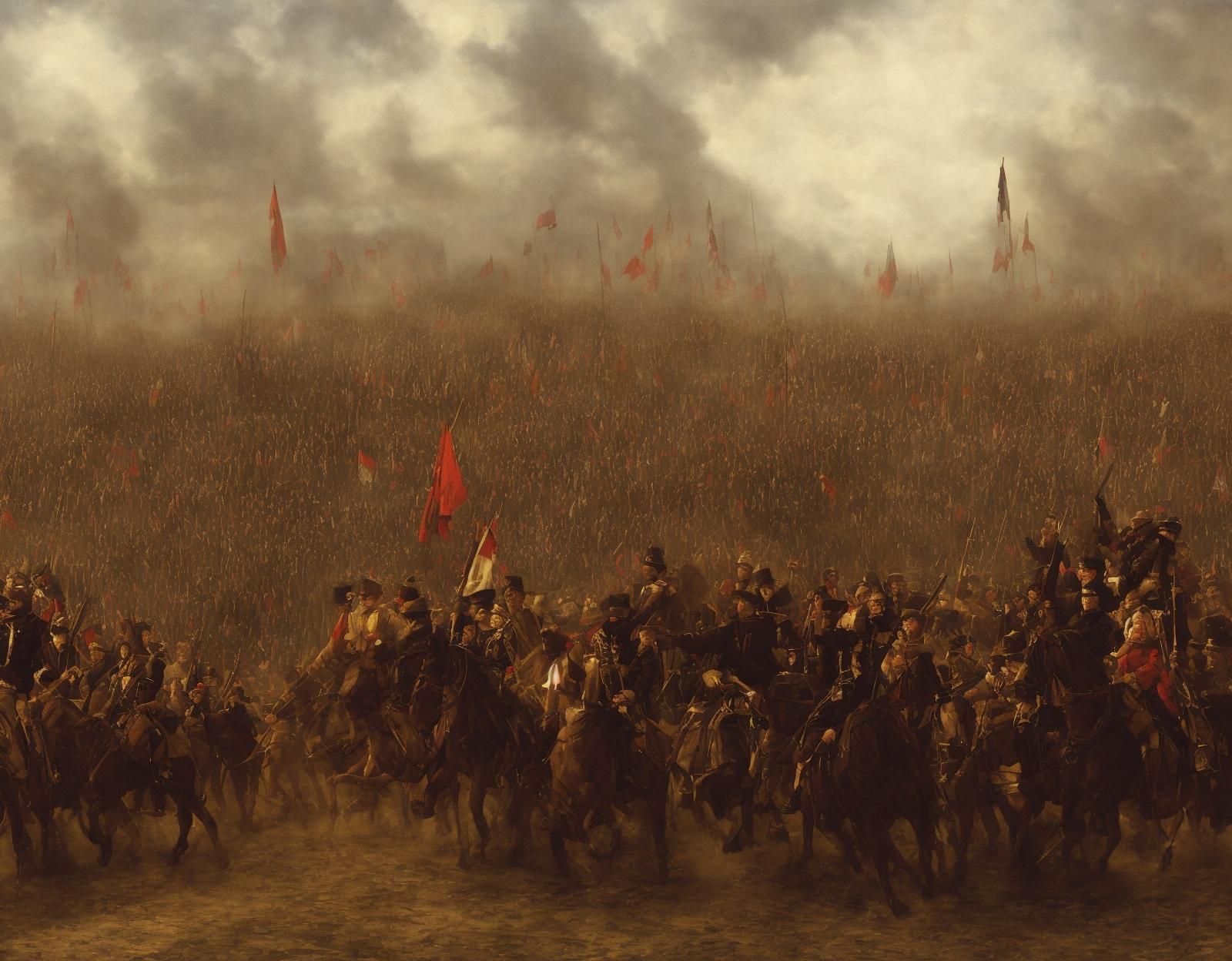
The Quiet Execution: The Assassination of Tsar Nicholas II
In the dim light of a July night in 1918, a household that had once symbolized imperial grandeur ceased to exist—not with a public collapse on a battlefield or a formal sentence in a courtroom, but in the hush of a cellar where bullets and secrecy did the state’s final work. The murder of Tsar Nicholas II, his wife Alexandra, their five children, and four loyal attendants has continued to haunt historians, novelists, and clerics for more than a century. It reads like a forensic puzzle and a political parable: how a family that for generations sat at the apex of Russian life was extinguished in a single, small room in Yekaterinburg, and how the body of that event was concealed, contested, and finally reopened to the light of modern science.
This story is not merely about violence; it is about revolution turned private, about the ways a regime severs its past. It is also a tale of human drama—of a Tsar who had abdicated, of a mother tending a hemophiliac boy, of servants who did not abandon their charges, of provincial functionaries navigating directives from Moscow. The assassination has been written about in countless books and papers, but the details still carry the flavor of mystery because the killers attempted, with a bureaucrat’s efficiency, to erase the trace of their deed. Yet paper and soil do not keep secrets forever: bones, bullet trajectories, witness testimonies, and later DNA have gradually transformed rumor into a documented chain of events.
As we examine the assassination with both narrative imagination and forensic precision, the aim is to bring forward the human contours without letting conjecture become fact. The following account traces the last years of Romanov power, the family’s captivity and movement to the Urals, the night of 16–17 July 1918 when the execution squad carried out its grim duty, and the long, contested aftermath that culminated in the discovery and identification of remains decades later. This is a story shaped by ideological fury and by small, intimate acts—letters, prayers, the knocking of boots in stairwells—that together illuminate one of the twentieth century’s defining moments.
Did you know? The abdication of Nicholas II in March 1917 named his brother, Grand Duke Michael, as his successor; Michael declined the throne, effectively ending the Romanov dynasty's rule.
From Imperial Crown to Provisional Government: The Road to Captivity
The fall of the Romanovs did not happen overnight. Nicholas II’s reign had been strained by military setbacks, social unrest, and the corrosive influence of scandal—most famously the presence of Grigori Rasputin in the imperial household, whose murder in December 1916 became a symbol of a decaying court. World War I proved the final strain on imperial legitimacy: poor logistics, staggering casualties, and economic breakdown undermined the Tsar’s authority. In 1917, political upheaval reached a breaking point. On 15 March (2 March Old Style) 1917, Nicholas II abdicated in favor of his son Alexei, but then changed the document to name his brother, Grand Duke Michael Alexandrovich. Michael deferred acceptance pending the will of a Constituent Assembly, which amounted to a non-acceptance and a practical end to the monarchy.
Under the Provisional Government, the imperial family was first held at the Alexander Palace in Tsarskoye Selo and later moved to Tobolsk in Siberia for their own "safety," a euphemism that masked political vulnerability. Their removal eastward was the product of political calculation: the government and many in the anti-monarchist camp feared the family’s potential use as a rallying point for counter-revolution. Tobolsk, chosen for its remoteness and relative tranquility, did not guarantee freedom; rather, it presaged the family’s slow descent into isolation, with increasing restrictions placed on their movement and communications. The Provisional Government had fallen by October 1917, replaced by the Bolsheviks, who viewed the Romanovs as enemies of the revolution. The new regime’s priorities included eliminating threats, which, in the febrile atmosphere of civil war, meant that the royal family’s fate became a matter of security policy as much as ideology.
The move from Tobolsk to Yekaterinburg in April 1918 represented a decisive change in the family's circumstances. Yekaterinburg was under the control of the Ural Soviet, a local Bolshevik authority that proved both suspicious of White Army advances and fiercely determined to prevent rescue attempts. The family’s confinement in the Ipatiev House—an ordinary, provincial domicile repurposed as a prison—had the psychological effect of reversing their previous world: the trappings of imperial life removed, the family forced into an intimacy that exposed every personal sorrow and political fracture. Letters and diaries from that period show a family alternating between hopeful longing for safety and the grim recognition of their precariousness. Outside, the civil war tightened its vise; the proximity of anti-Bolshevik forces made the Ural Soviet fear that the Romanovs could be liberated. The decision to relocate them eastward—ostensibly for health and security—was, for many Bolshevik officials, an inadequate answer. The Urals’ local leadership began to consider more drastic measures.
Did you know? Grigori Rasputin's murder in December 1916 intensified public distrust of the imperial family, especially Alexandra, who was seen as unduly influenced by Rasputin.

Life Behind the Bars of Ipatiev House
The Ipatiev House was unceremoniously ordinary—two stories, a basement, a garden—yet its walls witnessed extraordinary events. The building was requisitioned by the Ural Soviet in April 1918 and quickly converted into what officials called a "special house" for prisoners. The Romanovs were kept on the second floor, and guards were positioned around the clock. Testimonies and later memoirs suggest that, while the family’s movements were severely limited, they maintained structured routines: morning prayers, reading, needlework by Alexandra, and the children’s games in rooms that had been stripped of most regal ornamentation. Servants who accompanied the family—Dr. Eugene Botkin, Anna Demidova, Alexei Trupp, and Ivan Kharitonov—remained loyal, sharing the family's confinement and comfort work until the end.
Within the Ipatiev House, tensions were both external and internal. The family’s psychological state varied: Nicholas often read about the war and held private conversations with staff; Alexandra remained preoccupied with Alexei’s health—his hemophilia was a constant, dangerous shadow—and with spiritual consolation; the daughters clung to one another and to routines of dress and propriety that recalled their imperial upbringing. Guards reported that the daughters—Olga, Tatiana, Maria, and Anastasia—often resisted seeing the degrading intimation of prison life and tried to sustain dignity. Alexei, the young heir, could sometimes be seen playing quietly or being tended by his mother.
The Ural Soviet’s attitude toward the family combined bureaucratic procedure with political calculation. Orders and discussions were often mediated through local leaders such as Yakov Sverdlov in Moscow and regional figures like Alexander Beloborodov and Filipp Goloshchyokin, who visited or corresponded with Yekaterinburg. The fear of a White Army advance—real and present—deepened, particularly as the anti-Bolshevik Czech Legion and other formations moved irregularly through Russian territories. The Romanovs' presence in a contested city struck many Bolsheviks as a liability; it was a magnet for counter-revolutionary sentiment. Meanwhile, the family wrote letters pleading for clemency or rescue, and sympathizers attempted to negotiate; none of these efforts bore fruit.
Did you know? The Ipatiev House was later known among locals as the "House of Special Purpose," a euphemism used by the Bolsheviks for the site of the family's imprisonment.
The household’s physical conditions deteriorated: food shortages, the constant surveillance and noise, and the emotional toll of isolation. While not starved, the family was restricted in diet and movement; more devastating was the knowledge that their custody might be temporary—and that a political decision could change everything. Guards noted that the family believed in formalities and ceremonies to the end, which only heightened the tragedy: these gestures of dignity countersigned their loss of power. In late June and early July 1918, as military events turned against the Whites and rumors circulated about imminent transport or execution, the local Bolshevik leadership took the fateful step of ordering the family’s removal. The details of those orders, whether issued from Moscow or the Ural Soviet, remain the subject of historiographical debate, but the chain of custody for the decision runs through known participants whose later statements would be central to reconstructing the events of July 1918.
The Night of Execution: Sequence, Actors, and Methods
In the early hours of 17 July 1918 (some witnesses report the operation beginning late on the 16th), the Romanovs were summoned to the cellar under the pretense of a family portrait or as a precaution while alleged anti-Bolshevik forces approached the city. Yakov Yurovsky, the commandant of the house, led a group of executioners composed of local Cheka (Bolshevik secret police) members and other militia. Yurovsky’s later memorandum provided the most detailed account of what happened: he wrote of a quick move to the cellar, the sudden opening of a machine-gun covering position, and a volley of close-range shots. The first rounds did not all have the intended fatal effect. Some of the imperial family were protected by jewels sewn into clothing—reportedly diamonds hidden in the hems of the women’s dresses—which deflected bullets.
What followed, according to Yurovsky’s own recounting and subsequent investigations, was chaotic and brutal. When small-arms fire failed to immediately silence all victims, the executioners resorted to pistol fire, bayonets, and blunt force. Contemporary accounts and later forensic analysis corroborate this pattern: that initial firing combined with close-contact stabbing and blunt trauma. After the killings, the perpetrators sought to hide their deed. Yurovsky and his men stripped the bodies, removed valuables, and attempted to burn and disfigure the corpses. They transported the remains in trucks to a shallow grave near Koptyaki, where further attempts were made to destroy evidence—burning, dismemberment, and attempts to use acid and incendiaries are reported in multiple accounts. Finally, to conceal the grave, the men scattered acid and irregular materials and interred the remains under earth and local industrial detritus.
Did you know? Diamonds sewn into the hems of the Romanov women's dresses reportedly deflected some bullets during the execution, complicating initial attempts to kill them quickly.
Who ordered the execution has been debated: Ural Soviet minutes and correspondence point to local leadership’s responsibility, but Moscow’s awareness is highly probable. Historians generally agree that the execution was authorized by the Ural Soviet, possibly with approval from higher Bolshevik organs. Yakov Sverdlov, a high-ranking Bolshevik leader, is often cited as a figure who knew of or sanctioned the action; Lenin’s role remains contested, though many scholars argue that the Bolshevik center would not have been entirely unaware of such a consequential decision. What is indisputable is the local nature of the act: a provincial Soviet faced with a potential military threat, deciding that the existence of the Romanov family in their city posed an unacceptable risk.

Concealment and Discovery: Graves, Guilt, and Silence
The Bolsheviks’ efforts at concealment were, for decades, partly successful. The initial site near Koptyaki was used to bury most of the victims, but because the group could not fully account for all bodies—or perhaps due to haste and internal debate—two bodies were missing. For many years, Soviet authorities officially denied that the imperial family had been executed; the official narrative either evaded the subject or framed it as counter-revolutionary blood libel. Yet rumors persisted, and White investigators, most notably the Sokolov commission in 1919, gathered testimonies and produced reports that circulated among émigré communities. Those early probes were fragmentary and conducted in the aftermath of civil war, producing more questions than definitive answers.
In 1979, a clandestine discovery of one grave site was made by amateur historian Alexander Avdonin (also spelled Avdonin) and others. They documented bones and artifacts but kept their find secret because Soviet authorities were still hostile to such inquiries. It was only after the Soviet Union’s political thaw and the tumult of 1991—when the Ural regional authorities allowed an official excavation—that the world learned the gruesome details of the burial. A full exhumation took place, and forensic teams, including international scientists, studied bone fragments, ballistic evidence, and artifacts. In the mid-1990s and late 1990s, DNA testing—comparing mitochondrial DNA from the remains to living maternal relatives such as Prince Philip, Duke of Edinburgh (a matrilineal relative through the Romanovs' maternal line), and other known Romanov maternal-line relatives—established a compelling match. The discovery provided long-sought empirical closure on what had been as much rumor as fact.
Did you know? The first grave site containing most Romanov remains was discovered clandestinely in 1979 by Alexander Avdonin but remained secret until the Soviet collapse.
The second smaller grave containing the missing two bodies—widely believed to be the Tsarevich Alexei and one of his sisters—was located in 2007 by Avdonin and others. Those remains underwent separate forensic and genetic verification and were confirmed in subsequent years. The confirmation allowed the Russian Orthodox Church and the state to confront what had been a half-hidden history. Yet even with DNA confirmation, debates over the exact sequence, authorization, and moral responsibility lingered. The scientific closure on the identities did not fully resolve the ethical and political questions about culpability. That unresolved nature has fed both conspiracy and apology in Russian memory politics.
Trials, Memory, and the Politics of Remembrance
The Romanov murders have inspired legal, ecclesiastical, and historical reckoning. After the fall of the Soviet Union, questions of justice surfaced in Russian courts and public debate. No comprehensive legal trial of Bolshevik perpetrators occurred in a manner that satisfied the families or many historians. Some local executioners were prosecuted in absentia or in post-Soviet trials, but the passage of time and deaths of principal actors complicated legal closure. In an evocative turn, the Russian Orthodox Church Outside Russia canonized the family as martyrs in 1981, while the Moscow Patriarchate canonized them in 2000 as passion-bearers—people who met death with Christian humility rather than explicitly for their faith.
In 1998, after DNA confirmation of the remains, the bodies were interred in the Peter and Paul Cathedral in St. Petersburg with a state burial that combined elements of ceremony and controversy. For some Russians, the ceremony represented a form of national reconciliation with a violent past; for others, it represented an insufficient accounting for political crime. The long arc of memory has been uneven: in some quarters the Romanovs are humanized as victims of revolutionary excess; in others they are remembered as symbols of an autocratic system that had failed millions.
Did you know? The Romanov remains interred in 1998 at Saints Peter and Paul Cathedral were identified via mitochondrial DNA comparisons with living maternal relatives.
Historians continue to debate responsibility and motive. Some emphasize the urgency of the civil war context and the belief among Bolsheviks that the family’s existence could spark uprisings. Others underscore the ideological element: executing a royal family symbolized a definitive break with the past. The question of directive—from Yekaterinburg alone or with Moscow’s imprimatur—remains partially open. New archival discoveries and scholarly readings have nuanced the story: it was not a simple order from a single leader but a concatenation of local fear, central indifference, and revolutionary ruthlessness.
The Legacy: Myth, Science, and the Continuing Mystery
The assassination of Nicholas II and his family is a mirror reflecting the twentieth century’s darkest tendencies: ideologically driven violence, state secrecy, and the slow work of scientific truth-telling. The story feeds novels, films, and scholarly debates precisely because it sits at the intersection of monarchy’s end and revolutionary zeal. For monarchists, it is martyrdom; for revolutionaries, a necessary elimination of counter-revolutionary danger; for witnesses and scientists, a puzzle solved gradually by bone, bullet, and archive.
The Romanovs' deaths changed how Russians and others imagine the stakes of political transition. They demonstrated that symbolic acts—killing a dynasty—could become instruments of policy and that revolutions often attempt to erase inconvenient pasts in visceral ways. The event also highlighted the way modern forensic science can intervene in political memory. DNA tests did not merely identify remains; they reshaped debates about national identity and culpability. The cultural life of the story is significant: plays and films recast the Romanovs’ final days, museums display artifacts and clothing, and the Ipatiev House itself—once a locus of terror—was demolished in 1977 by order of the local Communist Party to prevent pilgrimage. In 1991, after official acknowledgement of the graves, a memorial was eventually established near Yekaterinburg.
Did you know? The Ipatiev House was demolished in 1977 to avoid it becoming a pilgrimage site; a church and memorial complex now stand nearby.
The moral complexities endure. Some historians ask whether retrospective judgments about the execution can fully take account of the Febrile conditions of civil war; others argue that murder remains murder regardless of context. The Romanovs’ assassination refuses the neat closure many historians crave: it is both an episode of brutal suppression and an emblem of broader historical transformations. The more we learn—through archives, exhumations, and interdisciplinary scholarship—the more the event clarifies the interplay between ideology, fear, and the human costs of political change. Yet certain elements remain irretrievable: the private thoughts of the executed, the precise chain of authorization in some instances, the interior dynamics of the Ural Soviet in the crucial hours. That remainder is part of what keeps the story alive, turning what might be a closed case into a continuing moral and historical investigation.
The assassination of Tsar Nicholas II and his family stands as one of modern history’s starkest episodes: a moment when political calculation translated into intimate violence and when secrecy attempted to bury both deed and memory. Yet the slow work of witnesses, scientists, and historians rendered the event legible, turning rumor into a documented account grounded in ballistic analysis, mitochondrial DNA, and archival papers. To understand this episode is to confront not only the particulars of July 1918 but also the broader moral question of how states move against those they deem threats. The Romanovs were at once symbols and human beings—parents and children, servants and patients—whose final hours in a Yekaterinburg cellar were as banal in setting as they were catastrophic in consequence.
The story’s contours—captivity, execution, concealment, and eventual revelation—reveal something about the modern world: that violence performed in the small rooms of history can have repercussions that resonate through decades, shaping memory and identity. It also shows the limits and power of historical inquiry: while forensic tests and documents can verify identity and sequence, they cannot fully restore voice or intent. What remains to readers and scholars is a dual responsibility: to honor the empirical record while retaining a humane curiosity about the people involved. In that way, the Romanov assassination continues to act as both a historical case study and a moral mirror, asking us how societies reckon with their past and with the violent means by which political change is sometimes obtained.
How we verify this article
By the History Unlocked editorial team
This text is built on historical facts stored in our database and drafted with AI assistance. No signed human review is recorded for this article. Report any inaccuracy: we correct it and update the modified date.
Updated on
AI-assisted drafting.
Read our editorial standardsEnjoyed this? Discover more articles in the category Great Revolutions