The Ramessids: Egypt’s Last Great Builders
The air over the Nile once vibrated with the hammering of stone and the songs of thousands: the echo of an empire in the full tilt of its ambition. The Ramessids—kings who claimed the name of Ramesses as their eternal banner—stand among Egypt's most striking and paradoxical dynasties. They were architects of colossal dreams, builders of temples the size of cities, generals who carved their likeness into rock to declare dominion over foes real and imagined. Yet they also presided over the beginnings of the old kingdom's long unraveling, a thread of decline that would, over centuries, transform pharaonic Egypt into something other than it had been.
To walk through the story of the Ramessids is to move between two truths that look almost like mirror images: one of unrivaled monumental creativity and international diplomacy, the other of political fragmentation, foreign pressure, and economic strain. This duality is personified in the lives of the dynasty's greats—Ramesses II with his towering statues and the grand narrative of Kadesh; Merneptah with his stele whispering of the earliest references to Israel; Ramesses III with bloodied defenses against the Sea Peoples and the scandalous court intrigues that ended his reign. Their tombs, temples, and royal decrees are the bones through which we reconstruct the story: a civilization battling time, rivals, climate difficulties, and internal decay while still producing art and architecture that continue to inspire awe.
The following pages aim to guide you through the rise and rule of the Ramessids: how they fashioned a golden era of spectacle, how they negotiated peace and fought wars, and how their legacy splintered into mystery and myth. We will examine archaeological evidence, contemporaneous inscriptions, and later Egyptian memory to forge a narrative both scholarly and compelling—one that honors the verifiable facts while embracing the mystery that surrounds the twilight of Late Bronze Age Egypt. Expect monuments, treaties, conspiracies, labor strikes, and the quiet human details often lost behind colossal stone—because it is in those details that the dynasty's late grandeur and slow fragility become most clear.
Did you know? Ramesses I was not of royal blood but rose through military and administrative ranks, illustrating how late New Kingdom succession could reward competence and loyalty over lineage.
Origins and Rise: The Making of the Ramessid Name
The Ramessid epoch emerges from a narrow corridor of history in which military prowess, dynastic marriage, and pragmatic court politics coalesced to produce a new line of rulers. Its formal beginning is conventionally dated to the reign of Ramesses I (c. 1292–1290 BCE), a soldier and courtier elevated by the powerful vizier and then-pharaoh Horemheb to succeed the preceding dynasty. Ramesses I's reign was brief, but his significance lay in establishing a dynastic name that his son Seti I (c. 1290–1279 BCE) would amplify with both battlefield success and artistic patronage. Seti I’s campaigns in Syria and Libya and his grand mortuary temple at Abydos set a tone of military prestige paired with monumental religious architecture.
Seti I's son and successor, Ramesses II (the Great, reigned c. 1279–1213 BCE), epitomized this new royal ideal. Ramesses II's long reign—more than six decades—allowed unparalleled opportunities for construction, diplomacy, and self-presentation. He rebuilt cities, sponsored colossal temples, and expanded Egypt’s influence in the Levant. But underlying these public displays were older currents: the consolidation of a royal ideology that linked kingship to both divine favor and military legitimacy, and the use of monumental construction to anchor the pharaoh's name in the landscape for eternity. The name Ramesses itself—meaning "Ra is the one who bore him"—was an explicit invocation of the sun-god's sanction, a theological claim as much as a political brand.
Ramessid ascendancy cannot be divorced from the geopolitical context of the Late Bronze Age: a landscape of competing states—Hittites, Mitanni earlier, Assyrians rising later—and networks of trade and war that connected the eastern Mediterranean, Anatolia, and the Levant. Egyptian influence in Canaan waxed and waned as military campaigns and diplomatic marriages negotiated control rather than annihilation. The narrative of rise is therefore not merely a series of triumphs but also a story of deft negotiation and adaptive leadership. The Ramessid kings were masters of image-making, deploying inscriptions, monumental sculpture, and religious patronage to project stability and divinity even as they navigated a shifting and often dangerous world.
Did you know? The peace treaty between Ramesses II and Hattušili III survives in both Egyptian hieroglyphic and Hittite cuneiform versions—one of the first known bilateral documents in history.

Ramesses II: Colossal Visions, Kadesh, and the Art of Memory
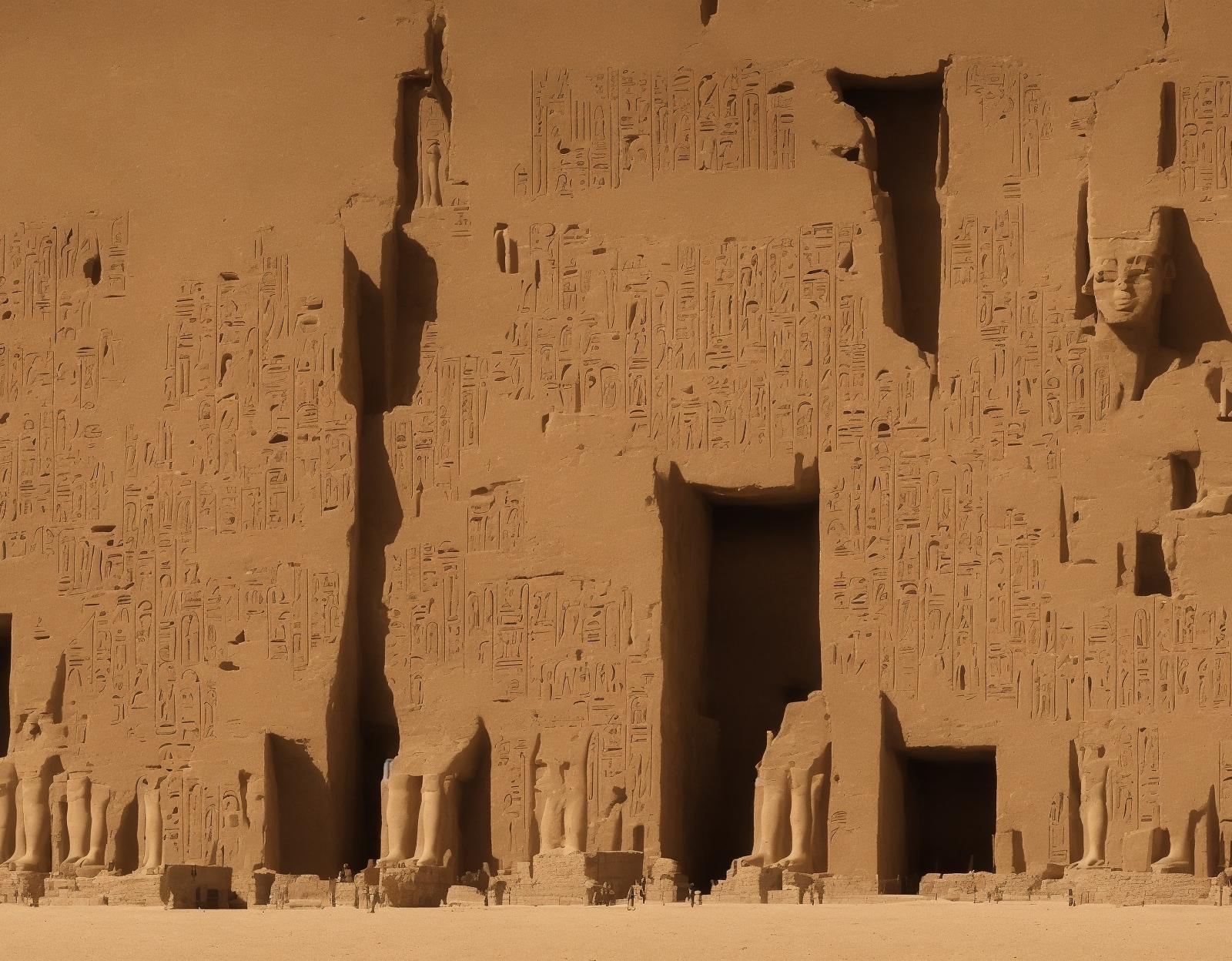
Ramesses II stands as the most famous—and often most misunderstood—figure of the dynasty. His reign is a case study in statecraft focused on spectacle. Abu Simbel, with its four seated colossi carved into the cliff face, the Ramesseum mortuary temple in Thebes, and the vast expansion of the temple districts at Karnak are physical declarations of his ambition. Yet alongside these monuments are records of military conflicts and sophisticated diplomacy. The Battle of Kadesh (c. 1274 BCE), fought against the Hittite king Muwatalli II, is one of the best-documented battles of the ancient world. Ramesses' own inscriptions present the encounter as a sweeping triumph—complete with a narrative of personal heroism and a dramatised account of cavalry maneuvers—but modern historians see a more balanced outcome: a hard-fought engagement that ultimately resulted in a stalemate and a prolonged contest for influence in Syria.
The later peace treaty between Ramesses II and Hattušili III of the Hittites (often dated to c. 1258 BCE) is the real diplomatic masterpiece. One of the earliest extant international treaties, its terms included extradition clauses, mutual defense agreements, and recorded oaths invoking the gods. Copies were preserved by both sides and were inscribed in temples—indicative not only of the treaty's political importance but also of the role of divine legitimacy in cementing interstate agreements. This pact underscores the sophistication of Late Bronze Age diplomacy: it was possible to reach accommodation even after fierce military confrontations.
Ramesses’ penchant for memory-making extended to his self-representation in art. He commissioned colossal statues that dwarfed earlier monarchs, often depicted twice life-size, and staged scenes of divine endorsement. Yet the archaeological record gives a more nuanced picture. While his reign saw enormous building activity, it also placed heavy demands on the economy: wood, metal, and labor had to be mobilized on a massive scale, and quarries and workshops in Aswan and elsewhere worked relentlessly. The long-term effects of these demands are debated, but they certainly contributed to the material context in which later Ramessid and post-Ramessid crises would unfold.
Did you know? Archaeologists have uncovered enormous stables at Qantir, suggesting Pi-Ramesses could house hundreds of chariot horses—underscoring the city’s role as a military and chariotry center.

The Capital and Craft: Pi-Ramesses and Monumental Logistics
The Ramessid obsession with stone and space found its urban expression in Pi-Ramesses, the riverine capital the dynasty established in the eastern Delta. Traditionally associated with the ancient site now identified as Qantir, Pi-Ramesses served not only as a political center but as a hub for resources, troops, and international trade. Archaeological excavations at Qantir have revealed the remains of a sprawling city, stables large enough for hundreds of horses, workshops, and evidence of imported materials—underscoring Pi-Ramesses’ role as both a military staging point and an economic engine.
Monumental construction was underpinned by a complex administrative machinery. Quarrying operations at Aswan, transport logistics along the Nile, the provisioning of craftsmen, and the orchestration of thousands of laborers required bureaucratic oversight and skilled record-keeping. The Ramessid state maintained depots and workshops, used standardized block sizes in many projects, and relied on vast corvée labor mobilizations. This system demanded resources: timber from Lebanon, metal from Anatolia and Nubia, and grain from the Delta. As a result, Egypt’s prosperity—and the ability to undertake grand projects—was intimately connected to foreign trade routes and the stability of its sphere of influence.
Yet cities like Pi-Ramesses also highlight vulnerabilities. The capital's location in the Delta made it subject to shifting waterways and agricultural stresses. Over time, Nile branch silting and environmental change may have contributed to the city's decline and relocation of administrative centers. Moreover, the concentration of resources at the court—luxury goods, manpower, and grain—could exacerbate regional inequalities and put pressure on provincial administrations, especially in tougher climatic years. The archaeological layers of Pi-Ramesses also record destruction and rebuilding episodes, suggesting phases of instability that mirrored the political turbulence of the late Ramessid age.
Did you know? The Merneptah Stele (c. 1208 BCE) contains the earliest known extra-biblical mention of "Israel"—a single line noting the defeat of peoples in Canaan.
Dusk and Disorder: Merneptah to the Twilight of the 19th Dynasty
Following Ramesses II's extraordinary longevity, the succession of his later heirs reveals the fragility hidden beneath the dynasty’s grandeur. Merneptah (reigned c. 1213–1203 BCE), Ramesses II’s thirteenth son, ascended to the throne in his elder years and faced pressures on multiple fronts. His famous Merneptah Stele (often called the Israel Stele) makes a rare extra-Egyptian reference—mentioning a people called “Israel” in Canaan, a datum that has fueled centuries of scholarly debate about the historical context of early Israelite presence in the Levant. Merneptah also confronted Libyan incursions and uprisings in the Nile Delta, signaling a widening pattern of external pressures.
The remainder of the 19th Dynasty was marked by contested successions, shorter reigns, and political fragmentation. Amenmesse, Seti II, Siptah, and Queen Twosret represent a period where court factions, military leaders, and regional administrators vied for influence. Inscriptions and later king-lists hint at erasures and alterations—evidence of damnatio memoriae where successors sought to obliterate the memory of rivals. The administrative center that had sustained the Ramessid rise began to show cracks: fiscal strains, potential food shortages, and delegations of authority that emboldened provincial powers, including Libyan chiefs who would later press into Egyptian politics.
These decades of instability were not unique to Egypt; the broader Late Bronze Age world experienced a wave of disruptions—some environmental, some political—that reshaped eastern Mediterranean polities. Trade networks faltered, towns contracted, and new powers such as the Sea Peoples and various Libyan groups tested old frontiers. For Egypt, the combination of internal succession crises and external pressures meant the centralized, monumental ethos of the Ramessid age could no longer be sustained with the previous ease.
Did you know? The Deir el-Medina strike under Ramesses III (c. 1152 BCE) is the earliest documented labor strike in history, with preserved petitions and administrative replies.

Ramesses III: Last Great Defender and the Court of Conspiracy
The 20th Dynasty opens with Setnakhte, who reasserted central authority after a period of chaos, but it is Ramesses III (reigned c. 1186–1155 BCE) who is often cast as the last great pharaoh of the New Kingdom. He faced invasions that threatened Egypt’s very survival. Inscriptions at his mortuary temple in Medinet Habu record clashes with Libyan groups and the so-called Sea Peoples—maritime confederations that ravaged coastal sites across the eastern Mediterranean. The records present a decisive Egyptian defense: ships sunk, camps routed, and the pharaoh triumphant. Modern scholarship reads these accounts as reflecting both actual military successes and careful propaganda designed to shore up royal authority.
Yet victory came at a cost. The prolonged military campaigns and defensive mobilizations placed enormous fiscal strain on the state. Papyrus records and administrative documents indicate rising grain prices, shortages, and the strain of provisioning the army and the temple complex. It was in this climate that Egypt experienced one of its earliest recorded labor strikes: in Year 3 of Ramesses III (c. 1152 BCE), workers at Deir el-Medina, who crafted and decorated royal tombs, protested late rations and delayed pay—forcing local officials to negotiate. This labor action is extraordinary not only for its antiquity but because it is so vividly documented: petition letters, official responses, and issue resolution are preserved, allowing historians to glimpse the human toll behind monumental production.
The end of Ramesses III’s reign was shadowed by scandal. The Harem Conspiracy—a plot involving secondary wives of the pharaoh aiming to place a favored son on the throne—resulted in the attempted assassination of the king and the subsequent trial of conspirators. The Judicial Papyrus of Turin records the proceedings and punishments, detailing a sensational episode of palace intrigue. Forensic examination of Ramesses III’s mummy in modern times reveals cut marks and evidence of throat-slitting, providing gruesome confirmation that the pharaoh suffered violent death—an instance where archaeological science intersects with textual record to illuminate a dramatic finale.
Did you know? Forensic study of Ramesses III’s mummy indicates he suffered a fatal wound to his neck, supporting ancient trial records about the harem conspiracy.

Culture, Religion, and the Ramessid Afterlife in Memory
Despite the political storms that buffeted the late New Kingdom, Ramessid culture bequeathed a durable corpus of religious, artistic, and administrative innovations. The Ramessids continued the New Kingdom tradition of temple-building as a religious and political act—temples were repositories of royal propaganda, state ritual, and economic power. The rituals performed at Karnak, Luxor, and regional shrines reinforced the king’s role as intermediary between gods and people, while also functioning as central nodes in an economy that controlled land, craft, and labor.
Artistically, the period is marked by both continuity and bold personalization. Ramessid art retained conventions of proportion and iconography but also proliferated colossal royal portraiture and an assertive visual rhetoric that emphasized the warrior-pharaoh and divine patronage. At the same time, craftsmen continued techniques of stone masonry, inlay, and pigment work that show both high skill and an evolving taste for public spectacle. In funerary practice, royal tombs in the Valley of the Kings continued to be elaborately decorated with religious texts—such as the Book of Gates and portions of what modern scholars term the Book of the Dead—designed to guide the king through the afterlife.
Yet the Ramessid legacy is also a story of memory edited by later generations. Successive rulers and priests sometimes defaced names, repurposed statuary, or had complex relationships with the past. The Third Intermediate Period that followed saw the fragmentation of centralized power and the rise of powerful priesthoods—especially that of Amun at Thebes—that reinterpreted the past and reshaped the cultural landscape. Nonetheless, the physical echoes of the Ramessids—colossi, temple reliefs, and city ruins—continued to exert a psychological hold on the Egyptian imagination and on later archaeologists and tourists.
Did you know? Many Ramessid statues and reliefs were later re-carved or usurped by subsequent pharaohs, a practice that both preserved and altered the original royal images.

Conclusion: The Ramessids Between Monument and Memory
To stand before the hushed colossi of Abu Simbel or to trace the carved reliefs at Medinet Habu is to confront the paradox of the Ramessid age: a civilization that could marshal staggering artistic resources and still buckle under the combined weight of external pressures and internal disarray. The Ramessids were masters of impression—of making stone sing with eternal claims—yet those monuments tell only part of the story. Beneath the carved narratives lie traces of economic challenge, contested successions, and social stress. The dynasty's successes—its treaties, its victories, its cities—were genuine, but they occurred within a precarious balance where a single bad harvest, a wave of invaders, or factional violence could tip the scales.
This ambivalence is the source of the dynasty's enduring fascination. For archaeologists and historians, the Ramessids offer an opportunity to study how empires negotiate legitimacy in times of stress: how kings deploy myth and material power to maintain authority, how bureaucracies strain and adapt, and how ordinary people—craftsmen, laborers, soldiers—experienced the imperial project. For the general reader, their story is a tapestry of spectacle and strife: a last great flowering of pharaonic absolutism that, for all its grandeur, also foreshadowed transformational change in the eastern Mediterranean. The monuments remain, the inscriptions endure, and modern science continues to refine our understanding: in bones, in pottery, and in papyri we find the human contours of a dynasty that sought to make itself eternal and, like all human endeavors, succeeded only in part.
The Ramessids are thus a study in contrasts: colossal temples and fragile administration, diplomatic sophistication and violent intrigue, artistic mastery and economic overreach. They occupy a pivotal chapter in Egypt’s long history—one where the brilliance of monumental achievement sits alongside the first tremors of systemic change. Their legacy is not simply stones and statues but questions: How do empires preserve themselves? How do they fail? And how do memory and monument shape the story we tell about power? In seeking answers, we keep alive both the grandeur and the mysteries of the Ramessids.
How we verify this article
By the History Unlocked editorial team
This text is built on historical facts stored in our database and drafted with AI assistance. No signed human review is recorded for this article. Report any inaccuracy: we correct it and update the modified date.
Updated on
AI-assisted drafting.
Read our editorial standardsEnjoyed this? Discover more articles in the category Egypt & Lost Civilizations