
Whispers of the Rubber People: The Enigma of the Olmec Civilization
From the misty river basins of Veracruz and Tabasco, an ancient culture emerges in fragments: massive basalt heads, enigmatic jade masks, and low, earthen mounds that once sheltered priest-kings. The word "Olmec" itself—nahuatl for "rubber people"—captures both a material reality and a poetic image: a people who processed latex from Castilla elastica to produce balls for the ritualized Mesoamerican ballgame and possibly other uses, and a people whose legacy permeated later civilizations from the Gulf Coast to the Maya lowlands. Yet the Olmec left little in the way of long textual records; their voice speaks through stone and iconography, and through the archaeological record that scholars have painstakingly assembled since the nineteenth and twentieth centuries.
This article follows that faint voice through the major sites—San Lorenzo, La Venta, and Tres Zapotes—into the private chambers of rulership, into plazas where colossal heads once presided over public ritual, and into workshops where jade was carved into faces and faces into meanings. It explores the contested questions that keep the Olmec wrapped in mystery: were they a unified empire, a loose network of competing centers, or a civilization whose influence spread through trade and ritual emulation? What did their art communicate about identity, power, and cosmology? How did their innovations—possibly including early writing, complex iconography, and calendrical concepts—seed later Mesoamerican achievements?
The narrative that follows is grounded in archaeological evidence and mainstream scholarly interpretations: radiocarbon dates, stratigraphic sequences, typologies of monumental sculpture, and material analyses of jade, basalt, and ceramics. Wherever the evidence allows, claims are carefully stated; where debates persist, multiple perspectives are presented. Expect history with an undercurrent of mystery: the Olmec offer firm data points and tantalizing gaps, and it is in those gaps that imagination must remain disciplined by evidence.
Did you know? The basalt used for many Olmec colossal heads was quarried in the Tuxtla Mountains and moved dozens of kilometers by river and raft.

Origins and Environment
The Olmec heartland sits where the rivers—Coatzacoalcos, Tonalá, and others—spread into low, swampy coastal plains between the modern Mexican states of Veracruz and Tabasco. This environment, rich in alluvial soils, fish, and navigable waterways, fostered early complex societies during the Formative (or Preclassic) period of Mesoamerican chronology. The earliest phases associated with what scholars define as Olmec culture appear in the archaeological record roughly between 1600 and 1400 BCE, with major centers crystallizing by the Middle to Late Formative (c. 1200–400 BCE). These dates come from radiocarbon measurements, ceramic seriation, and stratigraphic relationships uncovered in long-term excavations.
San Lorenzo, often considered the earliest major Olmec center, is located inland on a bluff above a tributary of the Coatzacoalcos River. Its heyday is typically placed between roughly 1200 and 900 BCE, though earlier activity preceded this zenith. San Lorenzo is remarkable for its extensive use of imported basalt boulders, worked into colossal heads and thrones. The basalt used in many of the monumental sculptures at San Lorenzo and elsewhere in the Olmec world originates in the Tuxtla Mountains—tens of kilometers inland—demonstrating significant logistical organization. Basalt boulders were transported by river and raft, sometimes over great distances; the scale of quarrying and transport implies coordinated labor, leadership, and social complexity.
La Venta, closer to the coast and later in prominence, superseded San Lorenzo as a ceremonial and administrative nucleus around 900–400 BCE. Its monumental core included a massive earthen mound complex—often described as a pyramid-like mound—arranged plazas, and finely worked offerings. La Venta’s structures show careful planning and sustained architectural investment, raising questions about the nature of Olmec political authority: were these centers controlled by divine kings, priestly oligarchs, or broader community institutions? Archaeologists read the landscape—mounds, causeways, drainage works—as evidence of an organized civic-ceremonial economy that demanded both labor and ideological coherence.
Did you know? Many archaeologists interpret Olmec colossal heads as portraiture of rulers, possibly commemorating lineage or political authority.
The Olmec environment also provided essential raw materials beyond basalt. Rivers carried silt and clay for pottery; coastal environments offered abundant fish and shellfish; and the region was proximate to sources of fine jade and greenstone—materials that would become central to elite display. The presence of imported materials at multiple sites underscores regional interaction: trade, exchange of prestige goods, and the movement of ritual specialists likely knit the Gulf Coast communities into recognizable cultural networks. Climate and soil conditions also made sustained agriculture possible: maize, beans, squash, and other domesticates formed the subsistence base, supporting population growth and sedentism. Yet the swampy conditions and seasonal flooding required sophisticated land and water management, another driver of centralized planning.
The environmental setting therefore both enabled and constrained Olmec lifeways. Riverine mobility allowed for the movement of heavy stones and crafted goods; the abundance of resources permitted the specialization of labor; and the particular topography shaped the placement of ceremonial centers and causeways. At the same time, periodic flooding and the challenges of maintaining large public works likely contributed to social strategies for mobilizing labor—ritualization, competitive feasting, and the consolidation of authority.

Society and Political Organization
Reconstructing Olmec political organization is one of the discipline’s more delicate tasks. The material record—monuments, burial practices, the layout of plazas and mounds—suggests that societies in the Olmec heartland were hierarchical and that elites commanded labor for monumental projects. Yet the exact form of rule remains debated among archaeologists: the options include centralized chiefdoms, competing city-states engaging in network politics, or early forms of rulership with sacral-kinship foundations.
Did you know? Olmec jade carvings were highly polished and sometimes worn as pectorals or ear spools by elites as status symbols.
San Lorenzo and La Venta both reveal signs of elite control. At San Lorenzo, monumental sculptures—especially colossal heads—are often interpreted as portrait-like representations of rulers or high-status individuals. These heads, placed in public and ceremonial contexts, would have served as powerful symbols of authority. Similarly, the presence of large plazas, restricted offerings, and sumptuous burials—where present—indicate differential access to prestige goods. The Cascajal Block and other inscribed materials hint at complex ideological systems that bound communities together through shared symbols, titles, or mythic histories.
It is important to note that ‘‘Olmec’’ is a cultural label derived from archaeological markers (shared iconography, monument styles, and material culture) rather than evidence of a single political state. The distribution of Olmec-style artifacts—ceramics, figurines, iconographic motifs—across a wide area suggests that influence spread not just by conquest but also by trade, intermarriage, ritual performance, and the movement of artisans. Some scholars emphasize the role of ritual specialists who traveled between centers, disseminating a visual language that later polities adopted. Others point to economic mechanisms—control over trade routes or prized resources like jade—as the basis for regional power.
Social organization also left traces in settlement patterns. Surveys reveal nucleated ceremonial cores surrounded by smaller habitation sites and farms. Elite compounds at sites like La Venta contained specialized craft debris—stone tool production, jade working, and ceramic manufacture—indicating labor specialization. Meanwhile, the labor demands of constructing earthworks and sculpting stone imply methods for mobilizing large workforces: tribute, corvée labor, or religious feasting events that bound communities through reciprocal obligations.
Did you know? The Mesoamerican ballgame used rubber balls; the Olmec processed latex from Castilla elastica to manufacture early balls.
Gender roles in Olmec society are discerned mainly through iconography and burial contexts. While some figurines and depictions may emphasize masculine rulership with regalia, others show women in prominent ritual contexts, suggesting complex gendered divisions of ritual authority. Infant and adult burials with grave goods demonstrate status markers applied across age and sex categories.
The Olmec also cultivated long-distance interactions. Exotic materials—obsidian from highland sources, greenstone from western Sierra de las Minas regions, and even marine shells—appear in elite contexts. These materials likely circulated through complex exchange networks, reinforcing elite prestige and facilitating diplomatic ties between communities. In sum, Olmec political life cannot be reduced to a single model: it blended local chiefdoms with regional ceremonial centers, ritual economies, and interregional exchange, producing a tapestry of power that would influence later Mesoamerican polities.

Art and Iconography
Olmec art is among the most evocative and influential outputs in ancient Mesoamerica. Characterized by monumental portrait sculpture, finely carved jade objects, and an unmistakable repertoire of motifs—were-jaguar, downturned mouth, cleft headscapes, and baby-like features superimposed with jaguar elements—Olmec iconography combines realism with symbolic abstraction. The colossal heads, often weighing several tons and standing more than two meters high, are perhaps the most iconic expression of Olmec artistic mastery. Carved from single basalt boulders, they display individualized facial features and helmet-like headgear that some scholars read as markers of ritual role or identity, such as ballplayers, warriors, or rulers.
Did you know? The Cascajal Block, attributed to Gulf Coast people and dated to c. 900 BCE, may contain the earliest known Mesoamerican inscriptions.
Beyond colossal heads, the Olmec produced thrones and altars carved with complex narratives and figural compositions. Some of these sculptures show interactions between human and supernatural beings; others depict captives, processional scenes, or composite creatures. The recurrence of certain motifs—feathered serpents, maize imagery, and jaguar-human hybrids—suggests a shared cosmology in which animal and human realms were intimately connected. The ‘‘were-jaguar’’ motif, in particular, remains a subject of debate: interpretations range from a representation of a shamanic transformation, to an infant of supernatural parentage, to a deity associated with fertility and the maize cycle.
Small-scale art also reveals high technical skill. Jade and greenstone were meticulously carved into celts, masks, and beads, often perforated for suspension and worn as pectorals or ear spools. The polish and finish of these objects indicate sophisticated lapidary techniques. The use of serpentine and jade in elite contexts highlights the importance of color, translucency, and durability as signs of social status. Additionally, pottery, figurines, and incised stone show a refined aesthetic, with naturalistic depictions of human behavior alongside highly stylized supernatural forms.
Olmec artists also arranged their work in public landscapes: La Venta’s central mound complex contained buried offerings—mosaic pavements of serpentine blocks, caches of jade and iron-rich magnetite, and stone stelae—that articulated ritual narratives in the built environment. The act of burying these offerings under mounds or plazas may have been an intentional way to ritually ‘‘seal’’ power in the landscape, making permanent claims to sacred space.
Did you know? Some major Olmec centers appear to have been ritually buried or deliberately decommissioned rather than violently destroyed.
Importantly, Olmec art was not static. Over three or four centuries, styles evolved, and regional variations emerged. The rhythmic reuse of motifs across time suggests both conservatism and creativity: artists preserved meaningful symbols while experimenting with composition, scale, and medium. This visual language, once developed, resonated across Mesoamerica and can be traced in the iconography of later cultures, including the Maya and the Zapotecs, who incorporated and adapted Olmec symbols into their own ideological frameworks.
Religion and Rituals
The religious life of the Olmec is accessible mainly through their iconography, monumental architecture, and ritual deposits. These sources suggest a cosmology rich with supernatural beings, ancestor veneration, and transformational experiences—often expressed through hybrid creatures like the were-jaguar and through practices that integrated landscape, monument, and movement. The recurring motif of the cave—sunken plazas, chambers beneath mounds, and symbolic ‘‘underworld’’ spaces—indicates a worldview where subterranean realms were as important as the visible surface, a feature that would persist in Mesoamerican religion.
Rituals likely involved public ceremonies centered on plazas and mounds. The construction of monumental earthen pyramids at La Venta, the placement of colossal heads, and the interment of finely crafted offerings all point to elaborate communal rites. Some caches include deliberately broken objects, suggesting ritually ‘‘killed’’ offerings intended to accompany acts of dedication. The placement of greenstone mosaics and monumental altars in axial relationships to plazas implies choreographed ritual processions and focal points for communal attention.
Did you know? Olmec visual and ritual motifs directly influenced later Mesoamerican cultures, including the early Maya and Veracruz populations.
The Olmec also appear to have practiced forms of ancestor and elite veneration. Portrait sculpture—particularly the colossal heads—may have served as focal images for lineage claims or ancestor worship, embodying the continuing presence of powerful forebears. Other monuments depict rulers or supernatural patrons in association with captives or subjugated figures, visually reconstructing political and mythical histories.
Shamanism and altered states of consciousness are frequently proposed as central to Olmec ritual. The iconography of transformation—humans merging with jaguar features, amphibious creatures, and serpents—aligns with ethnographic patterns of shamanic experience in which ritual specialists cross boundaries between human and non-human realms. Material remains, including possible hallucinogenic plants and paraphernalia at later Mesoamerican sites, encourage speculation that Olmec priests used entheogens in ritual, though direct evidence remains sparse for the Olmec heartland specifically.
The ballgame, a ritual activity with deep cosmological significance across Mesoamerica, also finds probable roots in Olmec contexts. Ballplayer monuments and references to ballgame paraphernalia have been linked to the Gulf Coast region, and rubber use in ball manufacture is well documented in Mesoamerica. The interplay of sport, ritual, and political spectacle would become a recurring feature in the region, and the Olmec likely contributed to this tradition’s early development.

Writing, Calendars, and Cultural Influence
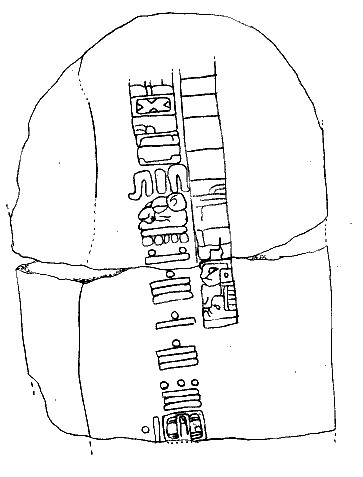
One of the most tantalizing aspects of Olmec studies is the evidence for early writing and calendrical thinking. The Cascajal Block—a serpentine slab recovered from a find-context in Veracruz and dated to roughly the late second millennium BCE—bears incised signs that several scholars argue represent the earliest known writing in Mesoamerica. While not universally accepted as a full writing system, the block demonstrates symbolic inscriptional practice among Gulf Coast peoples that predates later Maya script by many centuries.
Closely related are the beginnings of numerical and calendrical concepts that eventually culminated in the Long Count calendar and sophisticated astronomical traditions among the Maya. It remains debated how directly Olmec symbolic systems contributed to later Mesoamerican calendars, but the continuity of motifs and the early complexity of Olmec symbol clusters make it plausible that they laid conceptual groundwork. For example, certain numeral-like markings and cyclical symbols appear in later sites and might reflect an embryonic stage of time reckoning.
Beyond script and numbers, Olmec influence is visible in the diffusion of iconography and ritual practice. Olmec-style ceramics and figurines appear across the Gulf Coast and into the Maya lowlands, and motifs such as feathered serpents, jaguar symbolism, and certain ritual paraphernalia show up in later cultures. The direction of influence—whether direct colonization, missionary-style movement of religious specialists, or prestige-driven emulation—varies by region and remains contested. Most scholars now favor a model emphasizing complex interaction: elite networks adopted Olmec symbols to legitimize local authority, and artisans in distant regions produced Olmec-style objects to participate in a shared visual economy.
The Olmec role in the invention or early use of ballgame paraphernalia, writing, and calendrical concepts positions them as a ‘‘mother culture’’ in older scholarship—a view that has since been tempered. Contemporary researchers prefer to see the Olmec as a major formative influence among multiple contemporaneous traditions that together contributed to Mesoamerican civilization. The distinction matters because it reframes Olmec contributions as part of a mosaic of interacting groups rather than the product of a single dominant polity.
Decline and Legacy
By around 400 BCE, several of the great Olmec centers show declines in monumental construction and population. The reasons for this transition are multifaceted and debated: environmental change, river course shifts, political fragmentation, or the exhaustion of resources used to sustain elite centers are all plausible contributors. La Venta, for example, appears to have been deliberately buried in parts of its ceremonial core—a process some interpret as ritual decommissioning while others see it as the result of sociopolitical collapse.
Environmental explanations rest in part on evidence for shifts in river channels and sedimentation patterns that could have altered agricultural productivity and transportation routes. When key logistical nodes—riverine access points or passes through the landscape—change, the economic basis of centralized centers can falter. Conversely, political models emphasize that elite-centered economies relying on monumental construction are vulnerable to internal strife and shifts in elite ideology; if the symbol system that organized labor and tribute lost its purchase, then monumental programs could falter.
Yet decline does not imply disappearance. Olmec artistic vocabulary, ritual practices, and technological ideas persisted and resurfaced across Mesoamerica. Later societies absorbed and transformed Olmec elements into their own narratives: the Maya developed monumental stone stelae and complex writing systems that built on long-standing regional precedents; highland polities adopted jaguar iconography and elite display techniques inspired in part by Gulf Coast models. The continuity of certain materials—jade carving, greenstone ritual objects, and ballgame paraphernalia—speaks to persistent cultural channels across centuries.
The Olmec also left a more intangible legacy: they helped establish the template of paired ceremonial and residential spaces, monumental public art communicating lineage and authority, and a religious grammar full of animal-human transformations that shaped subsequent cosmologies. Their innovations in social organization, craft specialization, and symbolic communication seeded ideas that matured in later civilizations.
The Olmec civilization remains, in equal parts, an archaeological foundation and an alluring mystery. It is foundational because it offers the earliest clear instances of many cultural features that would define Mesoamerica: monumental public art, ritual centers, symbolic systems that verge on writing, and the integration of diverse communities through trade and ideology. It is mysterious because its surviving record is fragmentary and its people left few explicit textual explanations of their social order, beliefs, or historical narratives.
Approaching the Olmec requires balancing awe with caution. The colossal heads and jade masks evoke personalities and beliefs, but they cannot speak alone: they must be read in conjunction with settlement patterns, botanical and faunal remains, isotopic analyses, and careful stratigraphy. Recent advances—improved radiocarbon chronologies, petrographic sourcing of stone, and better contextual excavations—have clarified timelines and material flows, but they have also raised new questions about interaction, agency, and the pathways of cultural change.
The older narrative that labeled the Olmec simply as a ‘‘mother culture’’ has evolved into a more nuanced vision of multiple interacting traditions, in which the Gulf Coast peoples were catalysts for regional transformation rather than sole progenitors of later complexity. This reframing does not diminish their importance; it enriches our view of a dynamic preclassic world where ideas, people, and goods flowed in many directions.
As archaeology proceeds—through careful excavation, interdisciplinary science, and respectful collaboration with descendant communities—the Olmec story will continue to gain resolution. Every new discovery, from an inscribed slab to an overlooked cache, reconfigures how we imagine the early rhythms of Mesoamerican history. For now, the Olmec remain a civilization of impressive accomplishment and enigmatic traces: a society that carved faces from stone, polished greenstone with exacting hands, and left behind a visual language that would haunt and inspire the artistry and ritual of the Americas for centuries.
How we verify this article
By the History Unlocked editorial team
This text is built on historical facts stored in our database and drafted with AI assistance. No signed human review is recorded for this article. Report any inaccuracy: we correct it and update the modified date.
Updated on
AI-assisted drafting.
Read our editorial standardsEnjoyed this? Discover more articles in the category Egypt & Lost Civilizations