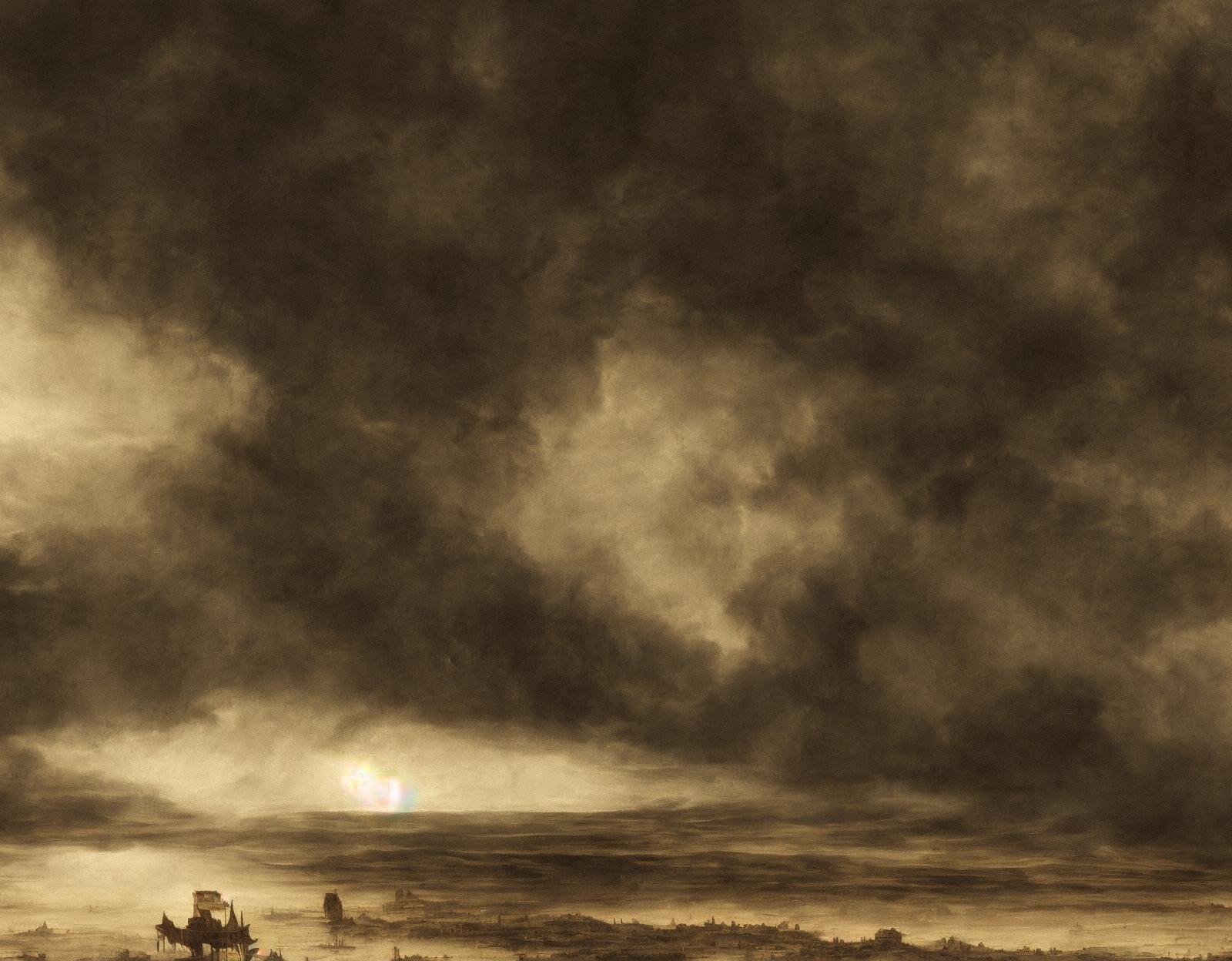
Sfumato: Leonardo’s Smoky Secret and the Art of Vanishing Lines
In the hush of a Renaissance studio, light did not so much fall as melt. Brushes hovered like conspirators, pigments were coaxed with oil and smoke, and the human face was rendered not through outlines but by the slow evaporation of borders. This slow evaporation is the secret heart of sfumato, an aesthetic and technical approach that stitched together shadow and form until edges became as uncertain as memory. To stand before a work that employs sfumato is to stand at the threshold of image and imagination: the eye believes it sees, but what it receives is suggestion—an invitation to lean in, to puzzle, to imagine.
Sfumato is not merely a manner of soft transitions between light and dark; it is a philosophy of painting that privileges the gradation of tone over the clarity of line. It thinks in atmospheres and breathes in the subtle shifts that indicate living flesh, distant hills, and the moist haze of the human eye. The technique has become most famously associated with Leonardo da Vinci, but its lineage is a web of northern glazing practices, Italian experimentation, and artisan experimentation with oils and varnishes. It emerged in a period when artists were not only illustrators but chemists, theoreticians, and natural philosophers, testing materials and tuning temperaments to craft a new visual language.
This long essay will move like the technique it describes—layer upon layer—revealing the origins of sfumato in northern glazing traditions, tracing Leonardo's technical notes and practice, exploring canonical works where sfumato transformed meaning, and following the technique's diffusion across Italy and beyond. Along the way we will visit laboratories where infrared eyes and X-ray lamps unmask underdrawings, a detective trail of pentimenti and pigment recipes. We will also linger on the symbolic freight carried by the smoky veil: why softness in a painted face became a mode of portraying inner life, and how sfumato feeds modern mysteries about gaze, identity, and the boundary between art and illusion.
Did you know? The Italian word "sfumato" comes from "fumo" (smoke); Leonardo described the effect as painting "without lines or borders, in the manner of smoke," a phrase later cited by Vasari.
Sfumato's story is, ultimately, the story of artists trying to render what they observed in the world: not simply contours and objects but the gradations of air, the halo of breath, the way a cheek receives light. It is a story of materials—lead whites and linseed oils—married to a manner of seeing that favored ambiguity. This account aims to be both technical and evocative, rigorous and atmospheric, because to describe sfumato is to do what the painters themselves did: to blur firm claims into plausible impressions.
Origins and the Rise of Sfumato
The technique we call sfumato did not spring fully formed from a single hand; it was the result of cross-cultural exchange and the slow accumulation of materials technology in fifteenth-century Europe. Oil painting techniques were revolutionized in the Low Countries in the early fifteenth century by artists such as Jan van Eyck and others in the workshop tradition surrounding him. These painters developed multilayered glazing—transparent oil layers laden with pigments—which allowed for unprecedented depth of color and subtlety of shadow. The glazing method permitted gradual shifts of tone that could suggest softness and atmospheric distance long before the Italian adoption of similar procedures.
At roughly the same time, an Italian painter, Antonello da Messina (c. 1430–1479), is often credited with bringing Netherlandish oil techniques to Italy. Travel and the exchange of works and treatises meant that northern methods were absorbed into Italian workshops. By the late fifteenth century, oil as a medium had become common in Italy, and painters were experimenting with the unique possibilities it offered: extended working times, thin transparent layers, and the optical effects of layered pigments. These technical advances set the stage for the emergence of sfumato as a conscious approach to modelling form.
Did you know? In his notebooks Leonardo wrote about "the way in which smoke causes outlines to be lost," using that analogy to think about painting and making the term sfumato part of the artist’s lexicon.
But the term sfumato itself—derived from the Italian fumare, ‘‘to smoke’’—evokes a particular aesthetic: the deliberate elimination of sharp outlines in favor of smoky transitions. The word came to prominence in the writings about painting; Giorgio Vasari, in his Lives of the Artists (first edition 1550), described Leonardo's method as a way to imitate nature by blending tones without lines or borders. Leonardo’s own notes—scattered across his notebooks and treatises such as the manuscript fragments that later formed part of his Treatise on Painting—contain passages that describe a similar principle: the soft transitions between light and dark as analogous to the effect of smoke. These passages are not manual-like recipes but perceptual aphorisms—reflections on vision and the painter's obligation to render the subtlety of human perception.
Italy's indigenous concerns aided the technique's adoption. Humanist interest in anatomy and optics drove painters to study the human body as a living machine and to attempt to depict the play of muscles and skin under light. The sfumato approach delivered a solution for rendering the delicate gradations of flesh: rather than delineate contours with a line, the painter modeled volumes by building up thin, carefully glazed shadows. This was both a technical and an epistemic shift: understanding form as a continuum instead of a set of discrete edges.

The rise of sfumato was thus a conversation between northern material practices and Italian intellectual currents: glazing methods enabled the look; humanist and anatomical studies provided the reasons to pursue it. From these converging streams emerged the painterly language that would define the High Renaissance—an age when surfaces became porous to light and artists sought to render the living body's nuanced responsiveness to illumination.
Did you know? The Mona Lisa’s smile effect is partly a consequence of sfumato—by avoiding hard outlines, Leonardo let local contrasts and viewer movement alter the perception of expression.
Leonardo's Alchemy: Materials and Method
Leonardo da Vinci stands at the center of the sfumato narrative not merely because he used it, but because he reflected on vision and materials with a natural philosopher’s intensity. His notebooks—Codex Atlanticus and the fragments that later formed the Treatise on Painting—reveal a mind intent on cataloguing visual phenomena and devising ways that paint could simulate them. Leonardo was interested in the physiology of the eye, the scattering of light in the atmosphere, and the way edges dissolve when observed at a distance; these studies shaped how he approached pigments and glazes.
Technically, sfumato is achieved through extremely thin, semi-transparent layers of paint, often glazed with oil-based media. Leonardo favored mixtures that allowed for slow drying and controlled transparency. Pigments such as lead white (for highlights), various earth pigments (raw and burnt umber, ochres) and carbon blacks for deep shadows were ground and suspended in oils such as linseed or walnut oil. The subtle brown-tinged tones often seen in Leonardo’s skin modeling come from earth pigments mixed in multiple transparent passages. Each glaze required great care: the painter applied a translucent brush touch, allowed the layer to set, and then applied another layer until a seamless transition was established.
Leonardo’s working process also involved pentimenti—visible traces of compositional change revealed by later imaging techniques. He often reworked surfaces, blended boundaries with fine brushes, and sometimes scumbled with thin whitish glazes to soften transitions. This cumulative approach contrasts with techniques based on swift, single-stroke modeling and instead implicates time: sfumato is patience codified into pigment.
Did you know? Antonello da Messina (c. 1430–1479) is often credited with introducing Netherlandish oil-glazing techniques to Italian painting, bridging northern material methods and Italian aesthetics.
But materials alone do not constitute technique. Leonardo's theoretical considerations about how the eye perceives form were integral to his method. He argued that the account of form must consider aerial perspective—the fading of color and detail with distance—and that the skin's appearance arises from microscopic variations in tone rather than from sharp outlines. His studies of the optic nerves, the retina, and the role of humidity and oils in altering reflection contributed to his sense that paint must simulate these subtle optical effects. Sfumato, then, is not merely soft edges; it is a deliberate mimicry of the way the world blurs at its margins.

Leonardo also experimented with the physical properties of varnish and its interaction with pigments. While the precise recipes he used are not always recoverable, conservation science has identified components such as natural resins and drying oils in Renaissance varnishes. Leonardo’s innovations did not remain purely technical; they reshaped the aims of portraiture and religious painting, persuading viewers to accept ambiguity as a cue for psychological depth.
Sfumato in Practice: Key Works and Case Studies
To see sfumato in action is to move from theory into a gallery and stand before paintings that seem to breathe. Leonardo’s Mona Lisa (Portrait of Lisa Gherardini, painted beginning around 1503) is the exemplar: her face emerges from a smoky shadow, lips barely chiaroscuro’d, eyes suggested by a symphony of soft tones rather than by a hard delineation. The result is famously enigmatic. The soft liminal space between her mouth and cheek allows for the illusion of a smile that seems to change as the viewer’s gaze shifts—a perceptual phenomenon fed by sfumato’s layered ambiguities.
Did you know? Infrared reflectography has revealed underdrawings and pentimenti in Leonardo’s paintings, showing he frequently reworked compositions as he sought softer transitions and truer effects of light.
Another crucial example is Leonardo’s Saint John the Baptist (c. 1513–1516), where the figure appears to rise from a dark, velvety field. The edges of the flesh dissolve into shadow, giving an almost sculptural presence while maintaining a painted softness. The curl of hair, the obscurely illuminated hand, the gleam in the eye—each is modeled through slow gradations rather than sharp brushstrokes. These works demonstrate how sfumato can both define form and suggest the spiritual or inner life of a figure.
The technique also appears in Leonardo’s earlier religious works. The Virgin of the Rocks exists in two versions (one in the Louvre and one in the National Gallery, London) with compositions that emphasize atmospheric depth and gentle blending of figures into landscape. In these paintings, sfumato helps integrate figure and environment, making rock, water, and skin part of a unified atmospheric field rather than discrete objects set against one another.
Other artists appropriated sfumato to different ends. Correggio (Antonio Allegri, c. 1489–1534) used soft transitions to create dynamic, luminous foreshortening in ceiling paintings, giving bodies a fleshiness that seems to float within painted skies. Raphael employed softer edges in some Madonnas and portraits, though he often combined sfumato with a more linear clarity. Titian and other Venetians, who favored colorito and dense, tactile brushwork, adapted aspects of sfumato in their own glazing traditions, creating luminous skins and smoky backgrounds.
Did you know? Giorgio Vasari, in his Lives (1550), credited Leonardo with advances in soft modeling and noted how his approach changed expectations about naturalistic representation.

Comparative study of works with scientific imaging often pinpoints sfumato practices: infrared reflectography can show underdrawings and the absence of strong contour lines; X-ray fluorescence maps reveal layered pigment concentrations; cross-sections of paint samples show microscopic stratigraphy of glazes. Such evidence confirms that sfumato was rarely a single stroke but a stratified process—many ultra-thin applications of color building an illusion of continuity.
From Italy to the North: Influences and Exchanges
Sfumato did not remain an isolated Italian secret. The Renaissance was a porous cultural moment: artists traveled, patrons collected, and the circulation of prints and drawings carried stylistic traits across borders. Northern masters' early glazing methods influenced Italian approaches, and later Italian softening techniques found their way into other European schools. The story of sfumato is therefore a story of feedback—northern material invention meeting Italian optical theory, producing a suite of practices that would migrate and hybridize.
Antonello da Messina’s role in this exchange is particularly notable. Born in Sicily, possibly exposed to Flemish painting either directly or through circulating works, Antonello is credited with demonstrating the expressive capacities of oil and glazes in Italy. His quiet, luminous portraits suggest a concern for subtle tonal transitions that would resonate in Venetian art a generation later. The Venetians—Giorgione, Titian, and others—were deeply invested in color (colorito) but also developed glazing methods that paralleled sfumato’s aims: making light look as if it passes through and around forms.
Did you know? The Mona Lisa was famously stolen in 1911 by Vincenzo Peruggia, an event that dramatically increased public interest in Leonardo’s technique and the painting’s material history.
Northern artists, for their part, continued to exploit glazing and developed their own modes of softening edges—think of the subtle atmospheres in works by Rogier van der Weyden or Hans Memling. The dialogue between north and south shaped individual practices and broader art-historical movements. By the seventeenth century, the Baroque emphasis on dramatic light did not obliterate the earlier taste for smoky transitions; rather, artists like Caravaggio may have preferred theatrical contrasts, while others synthesized strong chiaroscuro with sfumato-like modeling for figures and flesh.

The exchange also traveled in reverse. Italian prints, drawings and treatises reached northern ateliers, and collectors acquired Italian canvases that demonstrated the expressive possibilities of soft modeling. By the time of the later Renaissance and early Baroque, artists across Europe had absorbed and modified the visual language that sfumato had helped establish: an acceptance of graded tone as a primary generator of form.
The Science of Looking: Conservation, Imaging, and Modern Analysis
Sfumato invites scientific scrutiny because its stratified surfaces preserve a record of process. Conservation laboratories have applied tools ranging from infrared reflectography (IRR) and ultraviolet fluorescence to X-ray radiography and scanning electron microscopy to reveal how Renaissance masters built their effects. Infrared reflectography, in particular, can penetrate upper paint layers to reveal underdrawings and changes in composition. In Leonardo’s works, IRR has uncovered pentimenti—alterations made by the artist—that testify to his experimental and iterative approach.
Pigment analysis and cross-section microscopy reveal the microstructure of sfumato: alternating thin layers of pigment-rich and pigment-lean glazes, varnish layers, and sometimes residual organic varnish blends. These analyses confirm textual and anecdotal evidence from historic sources about layering and glazing. For instance, careful study of some of Leonardo’s paintings shows a prevalence of earth pigments in the modeling of flesh—an economical palette that transitions in tone when suspended in transparent oil glazes.
The famous theft of the Mona Lisa in 1911 had the paradoxical effect of focusing attention on the painting’s materiality. When works are removed, damaged, or restored, conservation becomes a public matter; the Mona Lisa’s travels and the subsequent security measures have embedded the painting in narratives about authenticity and condition. Conservation ethics today emphasize minimal intervention and the reversible application of consolidants, but historic restorations sometimes altered original surfaces—overcleaning or re-varnishing could flatten the subtle gradations sfumato depends on.
Modern imaging also helps disentangle myth from method. X-ray fluorescence (XRF) mapping can locate elemental compositions and thereby infer pigments; ultraviolet-visible spectroscopy can identify varnishes. These methods have shown that sfumato is not an optical trick conjured by mysterious formulas but a reproducible stratigraphic practice. Even so, some of Leonardo’s personal recipes for varnishes and varnish-paint mixtures remain elusive; the exact proportions and handling remain part of the craft knowledge that is transmitted through apprenticeships and empirical repetition rather than authoritative laboratory formulae.
Legacy and Symbolism: Why Smoke Became a Language of the Soul
Sfumato’s legacy lies less in rules than in sensibility. By dissolving edges, painters invited viewers to read expressions as unstable and to attribute inner states to slight modulations of tone. The smoky veil became a way to suggest thought, ambiguity, or spiritual presence. In devotional works, sfumato could imply ineffable holiness by integrating figures into luminous atmospheres; in portraiture, it made faces uncanny—familiar yet withholding, present yet half-concealed.
The psychological potency of sfumato was particularly evident in the way it handled the eyes and mouth—those loci of expression. Leonardo’s studies of musculature and the physiology of sight informed a practice in which the slightest tonal shift around an eyelid or the corner of a mouth would register as an emotional cue. Later artists and viewers associated these subtle inflections with depth of character. To see the effect was to feel the human subject as less a flat representation and more a being with an interior that the painting hinted at but did not declare.
Sfumato also raised aesthetic questions about truth and illusion. If painting aims to imitate nature, does the smoky blur better approximate human perception than clear contours? Many Renaissance theorists would have answered yes: the eye rarely perceives hard outlines in life; it perceives transitions modulated by air and distance. Sfumato thus claimed a certain epistemological primacy, suggesting that painting can model the way knowledge itself is felt—gradual, gradated, and suspicious of absolutes.
The technique’s resonance extends into modern times. Photographic soft-focus, cinematic depth-of-field, and contemporary painters’ use of glazing all echo sfumato’s aesthetic aims. Museums now present sfumato works with careful lighting and climate control to preserve delicate glazes, but the visual effect still exerts the same fascination: a mutual promise and denial—an image that offers itself while keeping certain things forever in shadow.
Conclusion: The Quiet Revolution of Vanishing Lines
Sfumato is a paradox: a technique of disappearance that marks a major appearance in art history. It belongs to a lineage of material invention and intellectual curiosity—northern glazes, Italian anatomy, Leonardo’s inquiries into light and vision—that together produced a way of making images that privileged ambiguity and gradation. The technique reshaped portraiture, renewed devotional painting, and provoked new questions about how viewers see and what painters must do to persuade them.
From the smoky contours of the Mona Lisa to the atmospheric expanses of the Virgin of the Rocks, sfumato transformed paint into a medium that could render the imperceptible—breath, thought, the moisture of an eye—without resorting to sharp delineation. The technique’s legacy is not only in its visual effects but in its invitation to contemplate uncertainty: to accept that some borders are meant to dissolve and that meaning often resides in the space where line fails.
Scientific analysis continues to reveal the stratified processes behind sfumato and to demystify ancient recipes, but the sensibility it encodes—a willingness to let the viewer fill in the gaps—remains as potent as ever. In a world hungry for definitions, sfumato reminds us that power sometimes lies in a softened edge, that the smoky whisper can be a more persuasive voice than the blunt proclamation.

How we verify this article
By the History Unlocked editorial team
This text is built on historical facts stored in our database and drafted with AI assistance. No signed human review is recorded for this article. Report any inaccuracy: we correct it and update the modified date.
Updated on
AI-assisted drafting.
Read our editorial standardsEnjoyed this? Discover more articles in the category Art & Symbolism