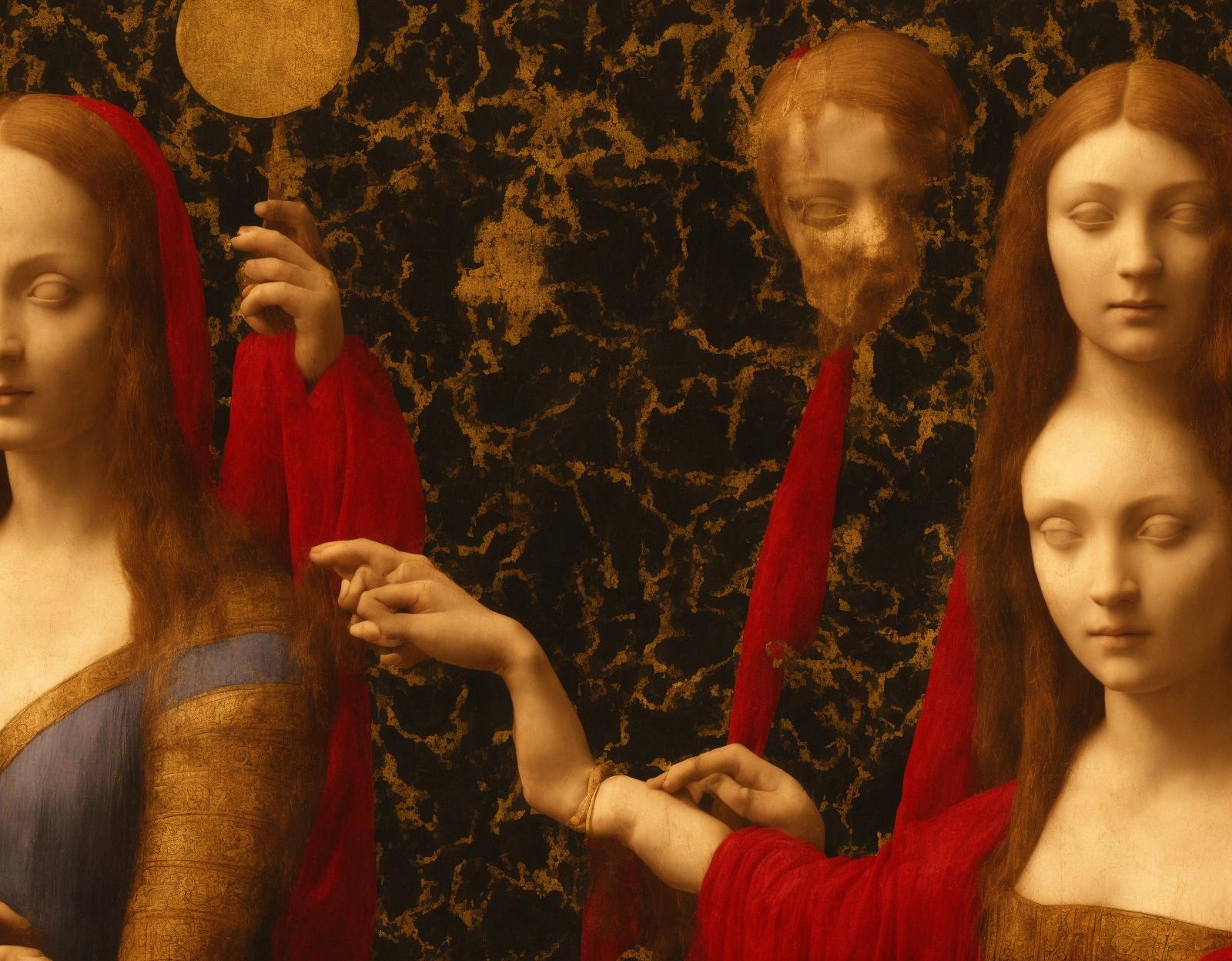
The Hidden Language: Decoding the Secrets of Medieval Symbolism
To the modern eye, the art and architecture of the Middle Ages can appear alien, a collection of stiff figures, disproportionate beasts, and strange, otherworldly scenes. We are accustomed to realism, to art that imitates life as we see it. But to step into the medieval mindset is to enter a world where reality was not merely what could be seen, but what was signified. For the medieval person, the entire cosmos was a divine text, the "Book of Nature," written by the hand of God. Every animal, every plant, every stone, and every ray of light was imbued with a deeper meaning, a symbolic resonance that pointed towards the eternal truths of the Christian faith. This was not a world of literalism, but of allegory and analogy. In an era when the vast majority of the population was illiterate, this visual language of symbols was the primary means of communicating complex theological ideas, moral lessons, and the grand narrative of salvation. It was a universal code understood by peasants and kings alike, a silent sermon carved into the walls of cathedrals and painted onto the pages of precious manuscripts. This symbolic worldview was not an intellectual game; it was the very framework of medieval perception. It provided order and meaning in a world that was often harsh, chaotic, and short. Understanding this lost language is the key to unlocking the true richness and intellectual depth of the medieval world, allowing us to see it not as a dark and primitive age, but as a period of profound spiritual and artistic creativity, where every image was a window into a deeper reality. This journey into medieval symbolism is not just an art history lesson; it's an exploration of a different way of seeing, a rediscovery of a world saturated with meaning.
The Divine Blueprint: Symbolism in Sacred Architecture Nothing embodies the symbolic worldview of the Middle Ages more powerfully than the Gothic cathedral. These soaring structures were far more than simple places of worship; they were conceived as microcosms of the universe, earthly representations of the Heavenly Jerusalem. Every element of their design, from the floor plan to the highest spire, was a carefully chosen symbol intended to elevate the soul and instruct the mind. The very layout of the great cathedrals was symbolic. Most were built on a cruciform (cross-shaped) plan, with the long nave representing the body of Christ on the cross, the transepts his outstretched arms, and the apse his head. The main entrance was almost always on the west facade, the direction of the setting sun, symbolizing the entrance of the soul from the darkness of the world into the light of the church. The altar, the most sacred space, was located at the eastern end, the direction of the rising sun and the Second Coming of Christ. It was a physical journey from sin to salvation.
This obsession with light was a central tenet of Gothic architecture, famously articulated by Abbot Suger of Saint-Denis in the 12th century. Influenced by Neoplatonic philosophy, Suger believed that light was the purest physical manifestation of divine radiance. He pioneered the use of ribbed vaults and pointed arches, architectural innovations that allowed for thinner walls and vast expanses of stained glass. This new aesthetic, which he called lux nova or "new light," was intended to dematerialize the stone and fill the sacred space with a transcendent, colored glow that would transport the worshiper from the material world to a spiritual one. The stained-glass windows themselves were the "Bibles of the poor." In intricate, jewel-toned narratives, they depicted scenes from the Old and New Testaments, the lives of saints, and the torments of hell. For the illiterate peasant, a walk through the cathedral was a lesson in sacred history and dogma, a constant reminder of the promise of heaven and the peril of damnation. Even the height of these structures was symbolic, their spires and towers reaching desperately towards the heavens, a physical manifestation of humanity's aspiration to connect with God.

The Book of Beasts: Animals as Moral Allegories In the medieval imagination, the animal kingdom was a living, breathing encyclopedia of Christian virtues and vices. This understanding was codified in a type of illuminated manuscript known as the Bestiary, or "Book of Beasts." These were not scientific texts in the modern sense; their purpose was not zoological accuracy but moral and theological instruction. Each animal, whether real or mythical, was described not by its natural habits but by its allegorical significance, its role in the divine drama of salvation. The lion, king of the beasts, was a primary symbol of Christ. It was believed that lion cubs were born dead and were brought to life on the third day by their father breathing in their faces, a clear parallel to Christ's Resurrection after three days in the tomb. Furthermore, the belief that the lion slept with its eyes open made it a symbol of Christ's divine nature, which never slept even when his human body rested in death.
The pelican, in one of the most enduring and poignant symbols, represented Christ's ultimate sacrifice. It was thought that in times of famine, the mother pelican would pierce her own breast with her beak and feed her dying chicks with her blood, reviving them. This act of self-sacrificial love made the pelican a perfect emblem of the Eucharist, where Christ offers his own body and blood to give eternal life to humanity. On the other hand, the serpent and the dragon were universal symbols of Satan, the great deceiver who tempted Adam and Eve in the Garden of Eden. Their slithering, earth-bound nature represented humanity's fallen state and the ever-present threat of evil. Perhaps the most famous mythical beast, the unicorn, was a powerful symbol of purity and the Incarnation. This fierce, untamable creature could only be subdued by a pure virgin. In the allegorical reading, the unicorn represented Christ, the hunting horn was the Archangel Gabriel, and the virgin was Mary. The capture of the unicorn in the virgin's lap symbolized Christ becoming human in Mary's womb. These stories, fantastic as they seem to us, were profoundly meaningful to the medieval mind, transforming the natural world into a constant sermon on Christian doctrine.
Did you know? The medieval Bestiary claimed the whale, or Aspidochelone, was so enormous that sailors would mistake its back for an island, dropping anchor and lighting fires, only for the beast to submerge and drown them—a potent allegory for the Devil, who tricks souls with false promises of safety before dragging them to hell.
A Spectrum of Meaning: The Language of Colors In medieval art, color was never merely decorative. Each hue carried a specific symbolic weight, creating a visual shorthand that communicated complex ideas about divinity, status, and morality. This chromatic language was not arbitrary; it was based on a combination of biblical descriptions, the perceived value of the pigments themselves, and long-standing cultural associations. At the top of the hierarchy was gold. Representing more than just the color yellow, true gold leaf was used for the backgrounds of icons and the halos of saints. It symbolized divine light, a window into the splendor of heaven itself. Its incorruptibility and preciousness made it the perfect material to signify the eternal, unchanging nature of God and the glory of the saints.
Blue, particularly the deep, rich ultramarine derived from the semi-precious stone lapis lazuli, became the color of Heaven, truth, and celestial love. After the 12th century, it became inextricably linked with the Virgin Mary, who was increasingly depicted wearing a brilliant blue mantle. This choice reflected her status as the Queen of Heaven and her role as a faithful intercessor for humanity. Red was a deeply ambivalent color. It was the color of Christ's Passion, representing the blood of sacrifice and the fire of divine love. It was the color of martyrs, signifying their courageous faith unto death. However, it was also the color of sin, of the fires of Hell, and the Whore of Babylon. This duality meant its meaning was highly dependent on context. White, the color of light without an earthly filter, was the symbol of purity, innocence, and holiness, associated with the Lamb of God and the robes of angels. Its opposite, black, predictably signified death, mourning, sin, and the demonic forces of darkness. Green represented hope, spiritual renewal, and the triumph of life over death, echoing the rebirth of nature in spring. These colors formed a rich and nuanced palette, allowing artists to convey intricate theological narratives without a single word.
The Order of the Cosmos: Numbers and Sacred Geometry Just as animals and colors were imbued with meaning, so too were numbers. Medieval thinkers, inheriting a tradition that stretched back to the Pythagoreans and was Christianized by saints like Augustine of Hippo, believed that numbers were the building blocks of creation. They saw the universe as an ordered, harmonious system governed by divine mathematics, and understanding these numbers was to understand the mind of God. Number symbolism permeated every aspect of medieval life, from theology to church architecture and manuscript illumination. The number three was paramount, representing the Holy Trinity—the Father, Son, and Holy Spirit. Everything from the trefoil arches in Gothic windows to the tripartite structure of Dante's *Divine Comedy* reflected the centrality of this number. The number four represented the earthly world: the four elements (earth, air, fire, water), the four seasons, the four corners of the Earth, and, most importantly, the Four Evangelists (Matthew, Mark, Luke, and John) who carried the word of God to the world.
Together, three and four were powerful. Their sum, seven, was a number of spiritual completion, representing the seven days of Creation, the seven sacraments of the Church, the seven gifts of the Holy Spirit, and the seven deadly sins. Their product, twelve, was the number of universal church, representing the Twelve Apostles and the Twelve Tribes of Israel. These numbers were directly encoded into the design of cathedrals. A church might have twelve columns in the nave, three portals on its main facade, or a rose window with twelve spokes. Another key number was eight. Because Christ was resurrected on the day after the seventh-day Sabbath, the "eighth day" became a symbol of renewal, resurrection, and new life. For this reason, baptisteries, the sites of spiritual rebirth, were very often built in an octagonal shape. This numerical framework was not a secret code but a way of making theological principles manifest in the physical world, creating a space where every proportion and every count was a reminder of the divine order that undergirded all of creation.
Flora, Figures, and Everyday Objects The symbolic lens of the medieval world extended to the smallest details of art and life. The study of plants, the gestures of figures, and the most mundane household items were all capable of carrying profound theological weight. In depictions of the Virgin Mary, the flora surrounding her was carefully chosen. The lily, with its white petals and golden stamen, was a ubiquitous symbol of her purity and chastity. The rose, particularly a red one, could symbolize Mary herself, who was known as the "rose without thorns," meaning she was born free from original sin. In another context, the red rose signified martyrdom, representing the blood shed for faith. The humble grapevine and its clusters of grapes were a direct reference to the Eucharist and Christ’s declaration, "I am the true vine" (John 15:1). Ivy, for its ability to cling and remain green throughout winter, symbolized eternity and fidelity.
Even everyday objects in paintings held layers of meaning, transforming domestic scenes into complex allegories. A book represented sacred law or learning. A lit candle could signify the presence of the Holy Spirit, while an extinguished one could mark the end of a life or a pact. A skull was the ultimate memento mori, a stark reminder of the inevitability of death and the vanity of worldly pursuits. A set of keys almost always identified the figure holding them as Saint Peter, to whom Christ gave the "keys to the kingdom of heaven." The positions and gestures of human figures were also part of this intricate language. The Hand of God emerging from a cloud represented divine intervention. A figure with hands crossed over their chest showed piety and submission, while a figure pointing upwards directed the viewer’s attention to a heavenly truth. One of the most famous examples of this dense domestic symbolism is Jan van Eyck’s Arnolfini Portrait, where nearly every object—the single lit candle, the discarded shoes, the dog, the fruit—has been interpreted as a symbol relating to the sacrament of marriage and the social contract.
Did you know? Before the 12th century, blue was not a high-status color in Europe. It was often associated with barbarians (the Celts and Germans used woad to dye their bodies blue) and mourning. Its elevation to the color of royalty and divinity is closely tied to the rise of the cult of the Virgin Mary and the increased availability of lapis lazuli pigment from the East.

In conclusion, the medieval world was a world read, not just seen. It operated on a system of layered meanings where the physical was but a shadow of the spiritual, and every object, creature, and color was a signpost pointing to God. For us, separated from that time by centuries of secularism and scientific rationalism, this worldview can be difficult to fully grasp. We have been trained to see a lion as a lion, not as a symbol of the Resurrection. Yet, to dismiss this symbolic consciousness as primitive is to miss the profound intellectual and spiritual sophistication of the age. It was a holistic system that integrated faith, art, and daily life into a coherent whole, providing a sense of order and ultimate purpose to existence. By learning to read this hidden language, we can begin to see the medieval world through the eyes of those who lived it: a place not of darkness, but of dazzling light; a world not of chaos, but of divine order; a universe charged with mystery, meaning, and the constant, overwhelming presence of the sacred.
How we verify this article
By the History Unlocked editorial team
This text is built on historical facts stored in our database and drafted with AI assistance. No signed human review is recorded for this article. Report any inaccuracy: we correct it and update the modified date.
Updated on
AI-assisted drafting.
Read our editorial standardsEnjoyed this? Discover more articles in the category Art & Symbolism